




 Video
Five-star eventer and Grand Prix dressage rider Laine Ashker discussed making it to the upper levels of two sports during the Practical Horseman+ Members-Only VIP Webinar “Learning From Multiple Disciplines” in October.
Here, she explains how she conditions Grand Prix dressage horse Zeppelin and four-star event horse Lovedance, and why both programs get her horses out of the arena.
Q: How do you manage two different training systems for eventing and dressage?
A: The horses have different feed regimens. They have different fitness regimens.
My dressage horses don’t need to go do gallops, but they also shouldn’t be stuck in the arena seven days a week. So I’m a big proponent of doing the dressage work that we need to, but there are also hack days and fitness days where I trot them for anywhere from 10 to 20 minutes up and down hills, because I think it’s important that dressage horses cross-train. It’s very easy to get stuck in the dressage arena, and then the horses begin to get sour.
The event horses have to do everything. They’ve got to jump. They’ve got to do dressage. They’ve got to longe; they’ve got to do trot sets and gallop sets. The balance is difficult.
With the event horses, typically they’re going to have more Thoroughbred blood in them, so I never have to worry about them being overweight with the amount of calories they work off. And you want them to be leaner. You don’t want a heavy horse doing the level “Lottie” [Lovedance] is doing. She’s already a heavy-built horse. You don’t want her to be overly heavy, but you don’t want her to be gaunt, because she has to have the muscles. There’s a fine line there.
The dressage horses can pack on a few extra pounds because they’re using that for muscle. When I first got into the sport of dressage, I thought the horses were trick ponies. I thought they were all overweight. I didn’t appreciate the amount of fitness those dressage horses have to have to do a Grand Prix test. It’s unbelievable. They’re not fat. They’re bodybuilders, whereas the event horses are CrossFitters. So you have to create a plan for those horses that facilitates the best body structure, fitness and soundness, both mental and physical.
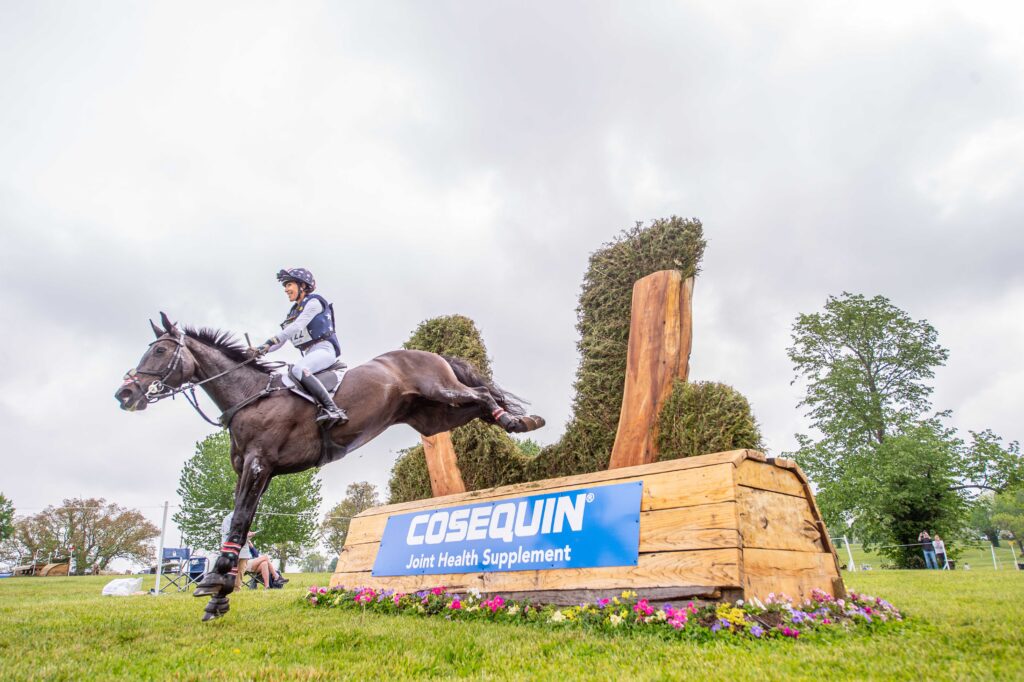
Q: What does fitness look like for Zeppelin versus Lottie?
A: You want a different muscle structure for the dressage horses versus the eventing horses. What it will look like for the eventing horse is a bit more endurance-based. When you’re doing a jump session and you’re jumping 10 jumps in a row, that’s a different sort of muscle structure they’re building versus doing leg-yields and half-passes and pirouettes.
Mondays are normally the days off, and Tuesdays are normally a longe day for my event horses. I really enjoy longeing. I like to physically put eyes on my horses and see how their bodies are feeling. I always start them without side reins. Some will never use side reins because I’m just getting them to stretch and work over poles; others may, depending on their work regimen. It also creates better communication between you and your horse. When you’re able to use your vocal commands and the horses understand them, I believe it creates a closer bond. It’s not to make them tired. It’s to create a better bond and to see what they look like.
Then we’ll normally do a dressage day for all the horses, followed by a jump day for the eventing horses. On jump day, Zeppelin does about a 15-minute trot up and down hills. It’s not a fast trot. He’s on the bit, and when he goes down the hills, he has to collect, maybe a few passage steps. When he goes up the hills, he stretches down and lengthens his body.
If anybody’s watched the Olympics or the shows these Grand Prix horses go to, they have to be so fit—not just physically, but endurance-wise. You’re doing a six-and-a-half-minute freestyle test with complete pressure the whole time. The horses have to be fit, so I take that very seriously.
For Lottie, she would do at least a 40-minute trot set preparing for the US Equestrian Open Eventing Final. You get really accustomed to listening to your Apple Music. Her final gallop was a 12-minute canter, but normally it would be three five-minute canters with a little bit of a sprint and a two-minute walk in between. It really depends.
My two young event horses won’t gallop until they’re getting ready for the three-star level, because the trot-set work we do for endurance makes them very fit. If it’s a proper warmblood, I would start gallop sets at the two-star level. If it has a bit more blood in it, like my two young ones, then they won’t do gallop sets until they’re doing the three-star level.
When I was in Wellington [Florida] this year, I really got accustomed to doing an aqua tread. If you go to a specific place that does it, it doesn’t need to be expensive. Obviously, none of us have $300,000 lying around to buy one, but it was very affordable to use. I’m pretty sure it ended up being $40 a session when I bought in bulk. There aren’t hills in Wellington, so to get Lottie fit to do the four-star level, it was incredible the amount of work she did over her topline in just 10 minutes on that aqua tread.
I will make sure I do it every single year. I think it’s imperative for the horses, whether they’re recovering from an injury or, like my horses, just getting fit and getting their baseline up without the concussion. Unfortunately, I don’t have access to that here in Richmond [Virginia], but when I’m in Wellington, I try to take advantage of it. People in Ocala or Kentucky have access to those aqua treads, and they’re just amazing.
I have at least one day in my horses’ work regimen to hack, and that’s for all the horses. They need to be able to go on trails. It’s important that my dressage horses also go through water. There are going to be shows where they’ve been rained out, and they have to trust me. I do a lot of bareback work with both horses, and I think that really helps me hone my seat. I’m a big relationship girl. I don’t do a lot of catch riding. I don’t get a lot of horses and take them right up the levels. I go pretty slow, and I just really enjoy the relationship part that’s created in horsemanship.
In addition to our VIP webinars, learn about all the benefits you’ll enjoy as a Practical Horseman+ member here.
For More:
This Q&A is an excerpt from our Practical Horseman+ Members-Only VIP Webinar: Learning From Multiple Disciplines.
Practical Horseman+ members can watch the full recording of the webinar here. To sign up for Practical Horseman+, click here.
For more articles with Ashker, click here.
About Laine Ashker
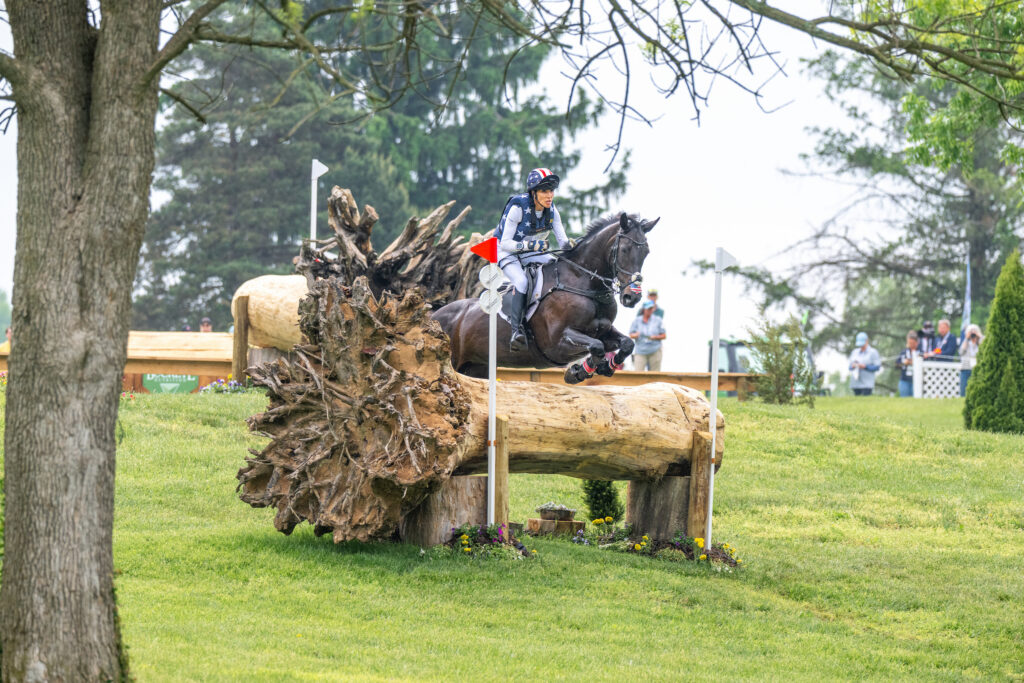
Horses were part of Laine Ashker‘s life before she was born thanks to her mother, Valerie. That early exposure shaped the rest of Ashker’s riding life, right down to her preference for off-the-track Thoroughbreds. Ashker made her five-star debut aboard off-the-track Thoroughbred Eight Saint James Place at 21.
She’s now ridden 16 horses in FEI events and logged more than 100 international starts, including several at the five-star level. With Lovedance, Ashker won the Maryland International CCI & HT CCI4*-S this summer and finished second in the Plantation Field CCI4*-S in September.
Ashker picked up upper-level dressage more recently, doing her first CDI in 2018. Since then, she’s earned her USDF gold medal, and her first CDI win aboard Zeppelin in May 2023. She’s also competed at the Grand Prix level with Boogie Woogie and Atlas.
Ashker is the first athlete to compete in both the US Equestrian Open of Dressage and Eventing.