




 Video
VideoAs women, accepting that our bodies are going to change in middle age, in ways that are almost completely out of our control, can feel maddening. This especially rings true if you’re an equestrian who wants to continue pursuing your riding ambitions throughout perimenopause and long after menopause.
But one of the many aspects we can appreciate about riding is that it’s a sport we can continue to pursue and improve in as we age. In fact, it wouldn’t be a stretch to argue that equestrians have some of the highest rates of performance longevity among modern-day athletes.
At the age of 66, Australian dressage rider Mary Hanna was the oldest Olympic athlete to compete in the 2021 Tokyo Summer Olympics. Japan’s then 80-year-old dressage powerhouse Hiroshi Hoketsu would have been the oldest Olympic athlete in history if his horse had been able to compete in Tokyo that same year. And Olympic show jumpers Laura Kraut, 60, and Margie Engle, 68, are still riding at the top of their game.
“If you can stay physically fit enough and don’t have too many injuries, you can keep going for as long as possible in our sport. The horses do a lot of the work, but riders still have to be very fit to ride correctly,” Engle said. “That’s why we definitely have to do a lot more working out than when we were younger.”
While changes in our bodies at middle age are inevitable as women, we can continue to pursue our riding ambitions by tailoring our fitness routines to meet our adjusting needs. We talked to five upper-level riders from across the English disciplines to get their real-world advice and top fitness tips to help you deal with mid-life changes while continuing to ride your best.
Coping With Fluctuating Hormones
Hot flashes, night sweats, sleep problems, mood changes, bone and muscle loss, weight gain, brain fog, dizzy spells and joint stiffness are just a few of the unpleasant and annoying symptoms that women experience during perimenopause and menopause. While some women have few symptoms, others have debilitating effects that can interfere with the quality of their daily life and derail their riding goals.
For women competing at the FEI level, standard menopausal hormone replacement therapy is not off the table. Estrogen and progesterone, the hormones most commonly prescribed for menopause symptoms, are not on the World Anti-Doping Agency’s Prohibited List and are permitted both in and out of competition.
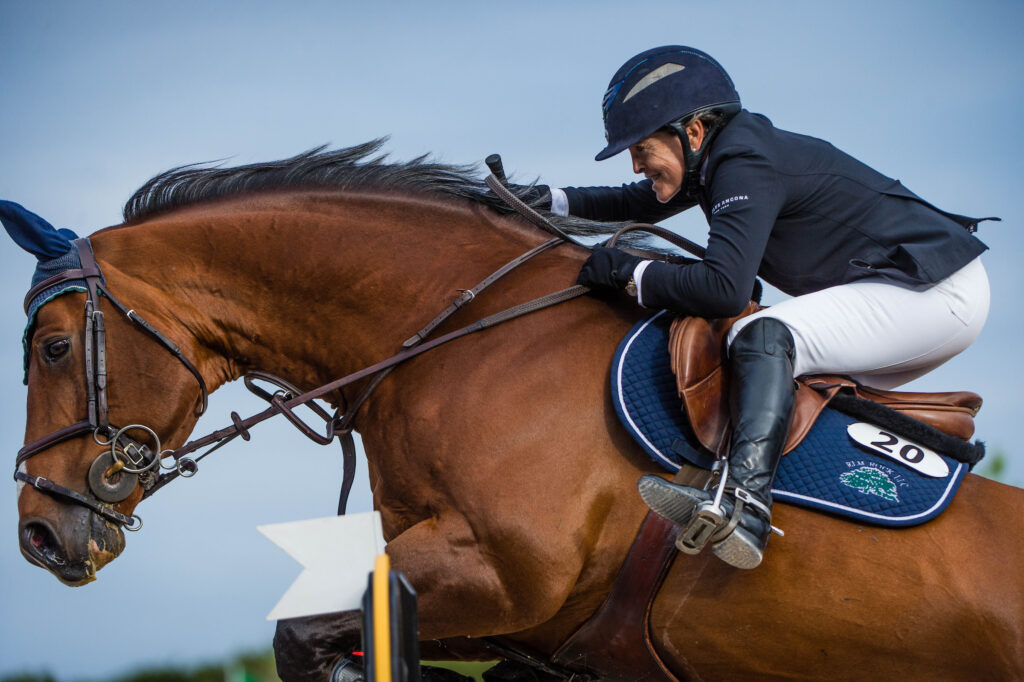
Testosterone therapy is treated differently: Testosterone falls under WADA’s anabolic agents category and is always banned, regardless of whether it’s prescribed for a legitimate medical reason. A rider who needs testosterone therapy would have to apply for a Therapeutic Use Exemption through the U.S. Anti-Doping Agency before competing under FEI rules. For most riders navigating menopause, though, the more commonly prescribed forms of HRT don’t require any special exemption or paperwork.
Engle was fortunate in that she didn’t experience severe symptoms during perimenopause and menopause that affected her show-jumping career, but she does take supplements for her bone health. “As women get older, we’re at greater risk of osteopenia, so I’m on different supplements for bone density and strength,” she said. “With riding, you definitely want your bones as strong as possible as you get older.”
For eventer Tamie Smith, the experience was different. Smith, now 52, became the first woman to win the Kentucky Three-Day Event CCI5* since 2011 with her 2023 victory.
“I don’t like to say that I’m at an unfair advantage being a woman in the sport because I genuinely don’t feel that way,” she said. “Equestrian is the only Olympic event where men and women compete equally, which is a testament to our sport in that it requires a high degree of skill and experience—not just strength.”
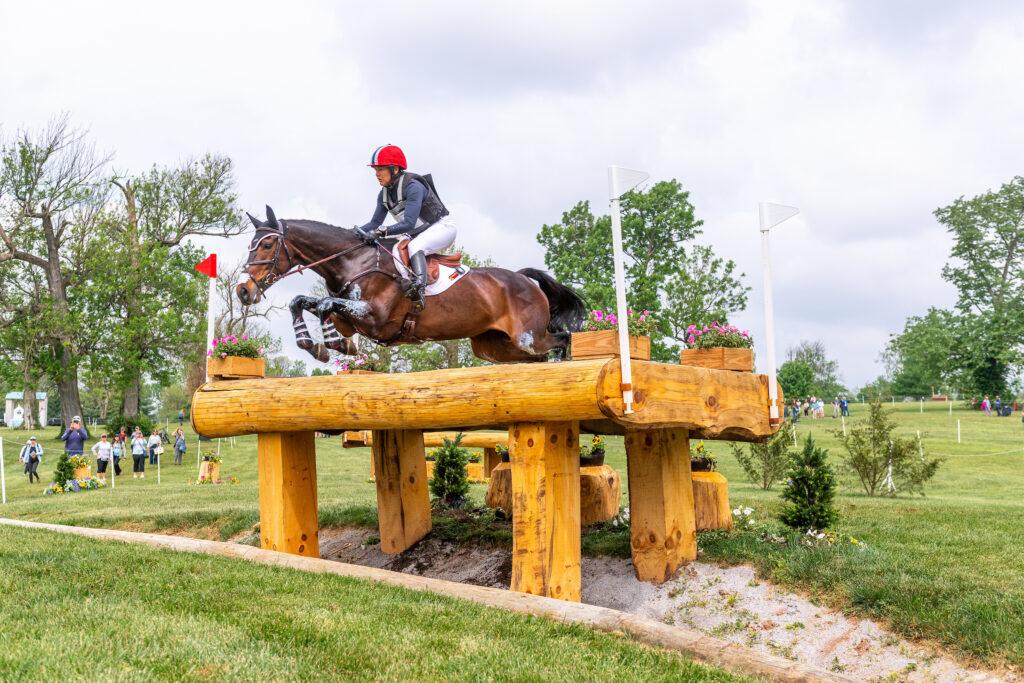
Smith noted that as she’s gotten older, she has to hit the gym more than her male counterparts in the sport, including her longtime friend and fellow eventer Phillip Dutton, who is 62 and still riding at the top of the sport.
“No matter how much we work out as women, we have to face the fact that men are naturally physically stronger than we are,” she said. “And if you’re galloping around a five-star cross-country track and aren’t on a Thoroughbred, strength matters.”
Tweaking Your Fitness Routine to Keep Riding at Your Best
While Grand Prix dressage rider Lauren Chumley spends many of her waking hours in the saddle, the 42-year-old also goes to the gym three to four times a week, depending on her competition schedule.
“Don’t get me wrong, I don’t like to get up at the crack of dawn and drag my sleepy self to the gym. But I just get up and do it,” she said. “I go to the gym and work with a trainer. She kicks my butt, but I love her.”
Chumley said this routine helps ensure she maintains flexibility, stamina and range of motion as a rider. “If riding is the only exercise you do, you’ll start to get overdeveloped muscle groups, so I find it’s important to do other things physically, too. I’m in my early 40s and have had a couple of injuries—nothing too crazy—but my body feels pretty good,” she said. “With the exercise I do now outside of my time in the saddle, I can keep riding horses well into the evening without being overly tired.”
Chumley added that she’s lucky to not experience a lot of pain even after her injuries and believes it’s a result of regularly working out. “When I started with my current string of horses, they were all babies and it was posting trot around the ring all day,” she said. “Now, they’re all at the FEI level, so we have to do fancy sitting trots, and it’s a lot of work. But the workouts have really helped me.”
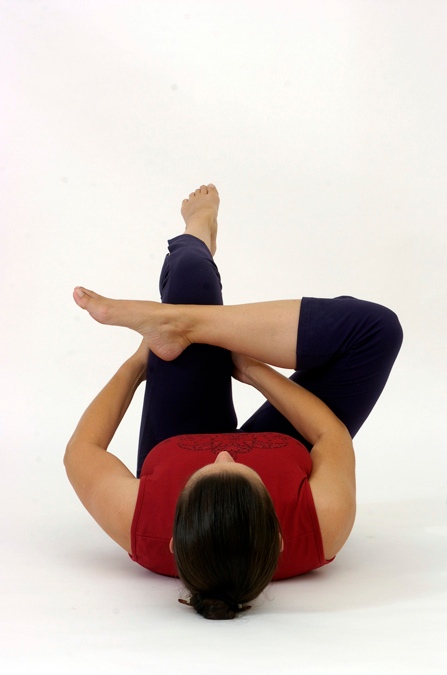
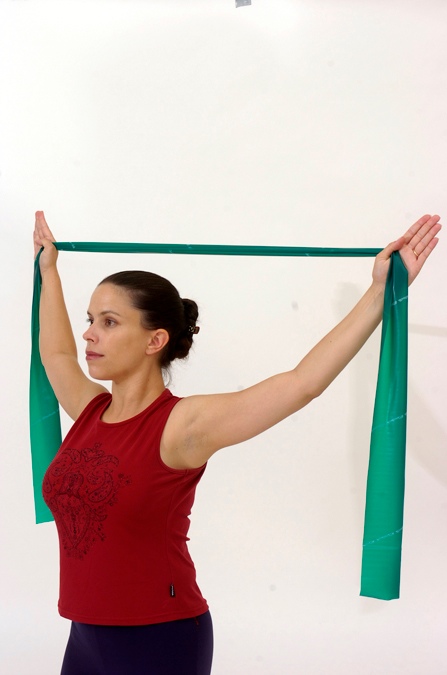
Engle’s fitness routine involves a variety of different exercises to help maintain her stamina, muscle strength and flexibility—and to keep her out of pain. Like many top riders, Engle has incurred a number of injuries over her more than six decades in the saddle, including fractures to her collarbone, neck and back. Throughout her recovery with each injury, she paid careful attention to the exercises her physical therapists prescribed and continues to do them almost daily.
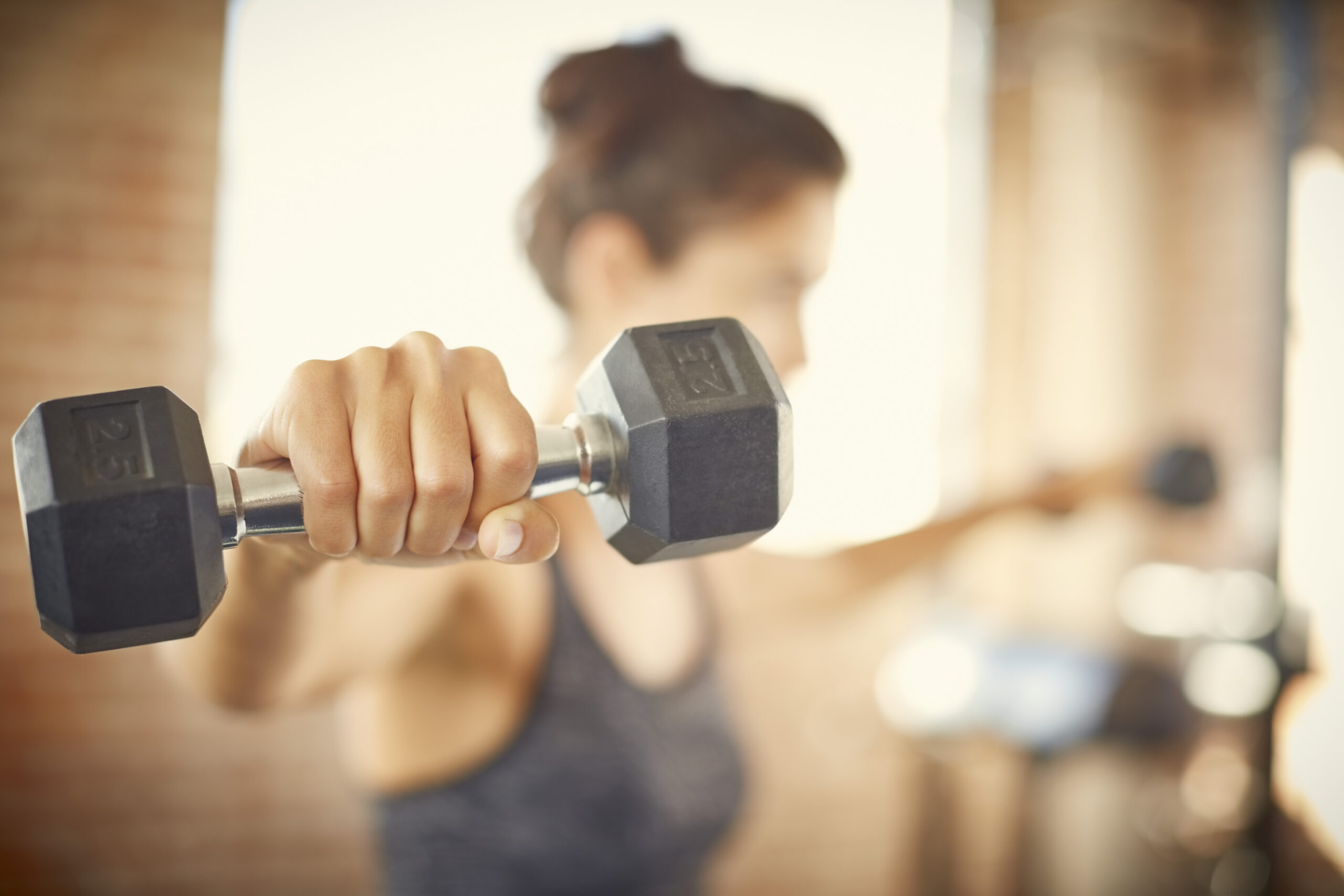
“They gave me exercises to work on at home and to do when I’m on the road showing. That makes it easy to stick to a routine because I don’t have to go to a specific gym. I can do them pretty much anywhere,” Engle said. “I also do a lot of weight training and have free weights and exercise bands that I travel with. The bands help with strength training, but I also use them to stretch.”
Additionally, she incorporates lots of walking into her daily routine and uses a stationary bike and other exercise machines when she’s home. “I for sure work out a lot more now than I did when I was younger,” she noted.
Engle said swimming is another great form of exercise for riders because it puts less stress on their joints. “A lot of my doctors had me do swimming exercises to come back from my injuries. It takes the weight off any injured joints or soft tissues, promotes circulation and keeps you moving without making anything worse,” she noted.
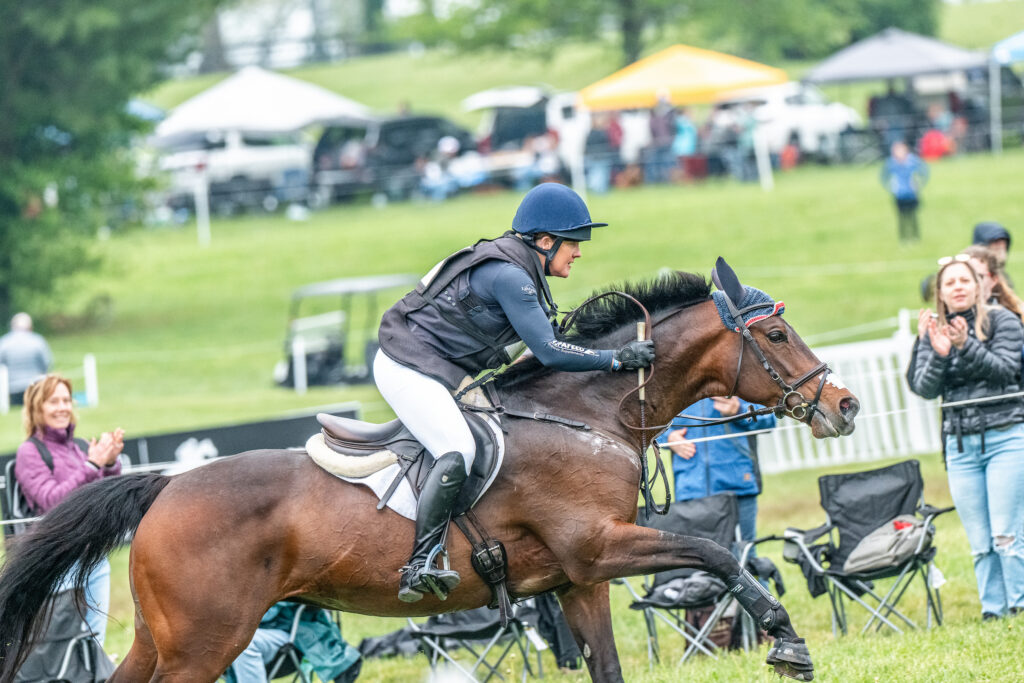
Five-star eventer Allison Springer is 52 and said that as she’s gotten older, she’s had to do more strength training to maintain muscle mass to stay in shape for the demanding sport.
“I’m overall a really active person and am pretty good with regularly riding my Peloton bike. I’ve also always been a stretcher and do yoga. But as I’ve gotten older incorporating strength training is more important than ever,” she said. “When I started to feel fatigued after riding a lot of my upper-level horses every day, it was more my strength than cardio. You have to be fit and strong to stay focused. If you can’t focus, it’s almost impossible to do your job for your horse.”
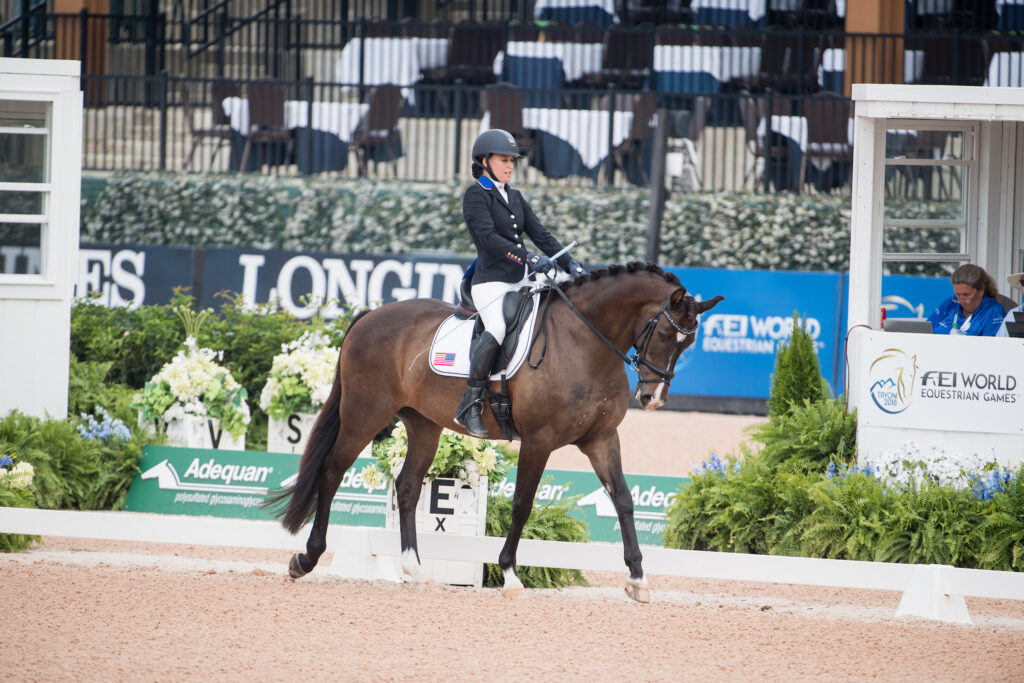
Five-time Paralympian Rebecca Hart—who won three gold medals at the 2024 Paris Games with Floratina and team gold at this summer’s FEI Para Dressage World Championships—has familial spastic paraplegia, a progressive condition that causes gradual weakness and severe muscle stiffness in the legs.
“This means that if I let my own physicality slip, it’s harder for me to build back any muscle I’ve lost. So, it’s easiest to try and maintain my fitness,” Hart said. “But like anyone, that was considerably easier to do at 20 than it is at 41. I enjoy swimming as a way to keep myself fit off the horses, but I am also blessed to be in a situation where I can ride multiple horses a day, so that’s also a big part of my fitness, too.”
Embracing a Healthier Lifestyle and Accepting Change
As she’s gotten older, Engle pays more attention to what she eats and strives to drink more water and get plenty of sleep. Her husband, Steve Engle, DVM, is an equine veterinarian who specializes in chiropractic work, and Engle said he is very disciplined with his diet and exercise because his job is so physically demanding. “It’s made me more health conscious, and I kind of follow along with what he does,” she said. “We even work with a physical therapist together.”
Engle has a rare, chronic condition called chronic active Epstein-Barr virus (CAEBV) that occasionally flares. When it does, it leaves her extremely fatigued and unable to ride. The flare-ups, she explained, are triggered by stress, lack of sleep and when her immune system is compromised. “When it hits me, it really knocks me out. So, I have to be very aware of my stress and make sure I’m getting as much sleep as much as possible,” Engle said.
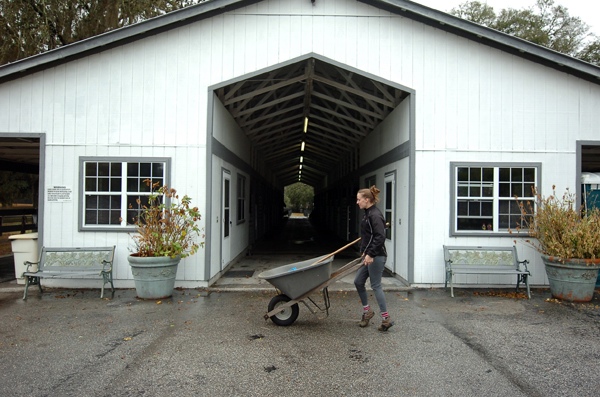
She noted that riders’ lifestyles in general tend to promote physical and mental health. Working with horses requires lots of low-intensity exercise—grooming, tacking up and feeding horses, doing barn chores—so riders tend to be constantly active.
“Moving as much as possible is the key ingredient as you age. If you stay still for too long everything kind of seizes up much faster when you’re older. I have the Oura Ring, so it alerts me if I’ve been sitting for too long and need to get up and stretch,” Engle said. “It’s a lot like we do with our older horses. We try to keep them moving as much as we can because it’s good for their joints, their circulation, their muscles—everything. And it keeps them fitter.”
Engle incorporates post-workout and riding recovery therapies into her overall health program, including the Pulse PEMF to help with muscle soreness and a magnet wave to promote circulation. She also finds soaking in hot baths with Epsom salts and the herb arnica helpful for muscle soreness and to promote relaxation.
“Steve and I occasionally use an ultrasound therapy with our physical therapist, and I have another back brace with heat and vibration that helps my back,” she said. “Even when we’re younger the constant impact and repetitive concussion of riding is hard on your back.”
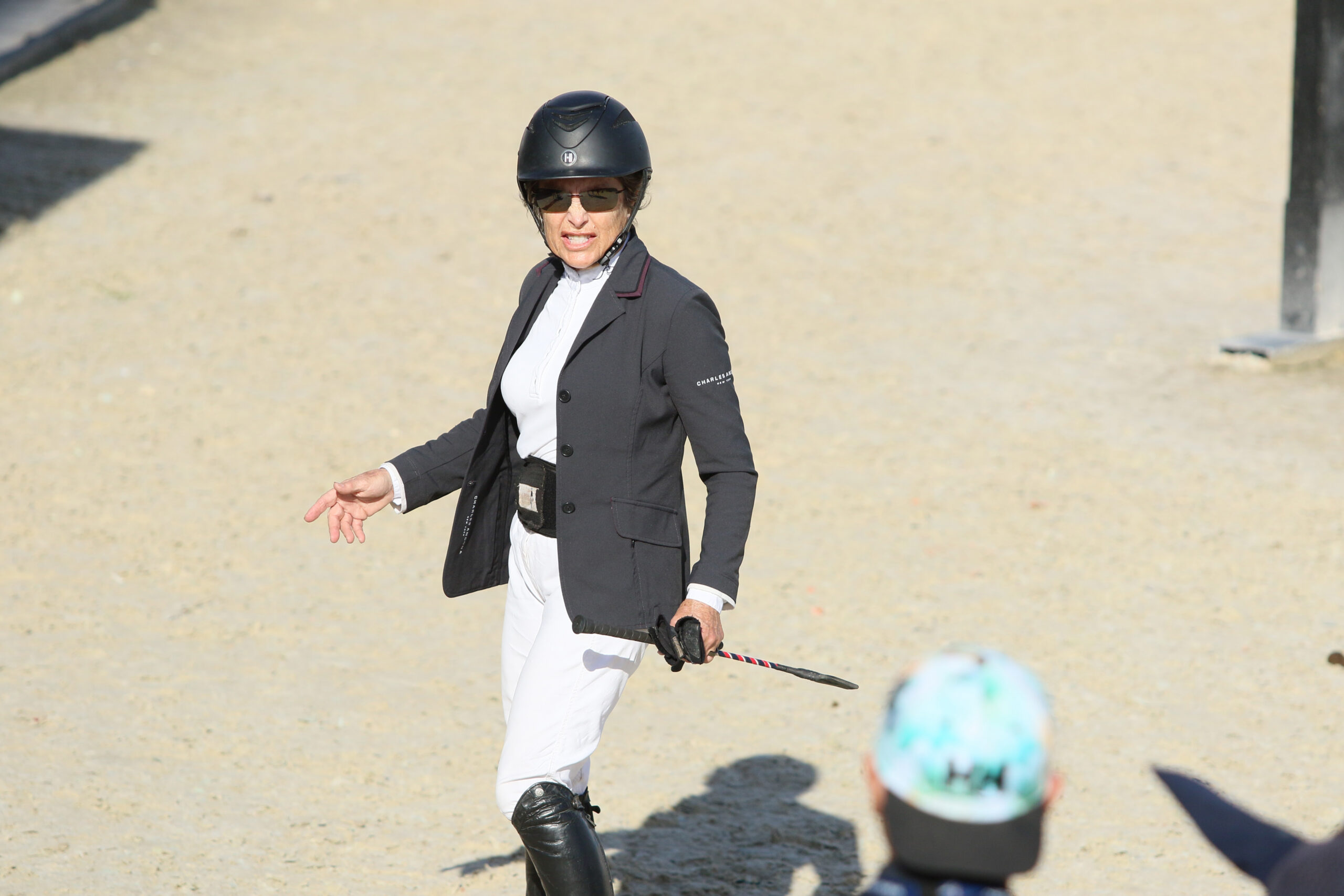
Dressage trainer and cohost of the Dressage Today Podcast Aviva Nebesky is 68 and said part of aging as an equestrian is learning how to continue enjoying horses even as your riding goals shift later in life.
“I’m just muddling along and accepting that some things are more challenging as we age—and also accepting that I no longer have the drive to achieve what I used to want,” she said. “I didn’t power through middle age. I’m not at the top of my game anymore, and I’m alright with that.”
4 Tips for Tackling Middle Age
1. Make motion the foundation of your day: If you have a desk job or sit in your car for hours every day, it works directly against your ability to maintain a correct riding position. Grand Prix dressage rider Shannon Peters said sitting for extended periods of time tightens your hip flexors, hamstrings and quadriceps.
“These are the very muscles you need to be flexible and supple in the saddle,” she said. “When these muscles are in a contracted state for too long, it also weakens the glute muscles, limits hip mobility, and puts undue stress on the lower back.”
If possible, try incorporating exercise “snacks”—a term coined by cardiologist and Harvard Medical School associate professor Howard Hartley—throughout your day. At least once an hour, get up from your desk and walk around for 30 seconds to 5 minutes. Any additional walking you can get in helps, too—at the grocery store, the barn, cleaning up the house, etc.
2. Take time to stretch: As we get older, we often get less flexible. But to ride effectively, we need to be supple in the saddle. Five-star eventer Boyd Martin’s longtime yoga instructor Biz Magarity explained that any time you do an activity that requires you to be in the same position or do a repetitive motion for a long time, like riding, your body is going to be more tense.
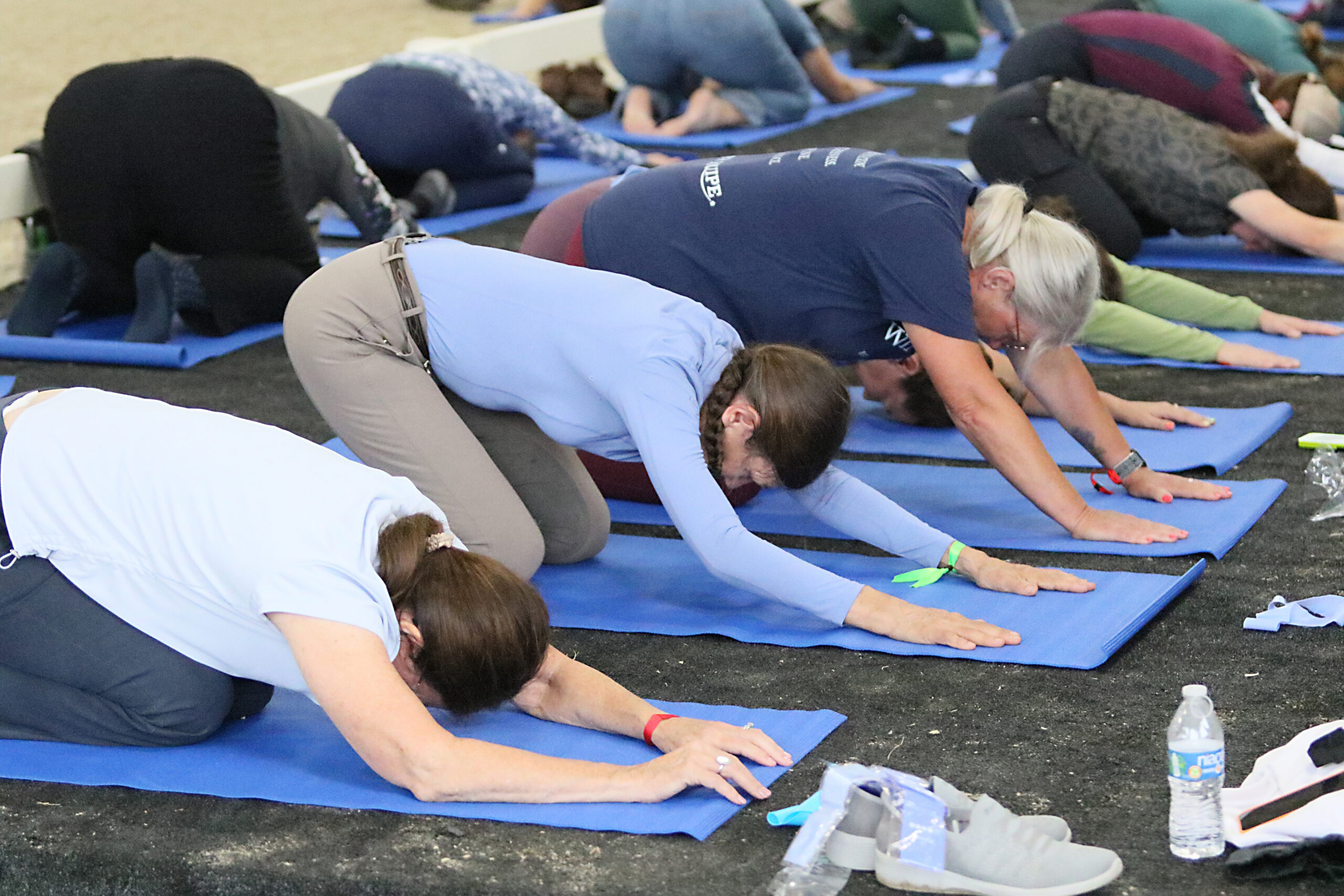
“With riding in particular, your hips are always in flexion, which results in stiffness,” she said. “So, it’s important to find a movement practice like yoga that kind of counteracts that tension and helps the deep muscles in the hips and back open up and relax in order for you to ride most effectively.”
Yoga, Pilates and stretching can all help balance the muscles that you over- or underuse in the saddle.
3. Tackle chronic stress: In mid-life, many of us are managing demanding careers while balancing our family and social lives and trying to get as much time in the saddle as possible. To minimize the negative impacts of chronic stress it’s crucial to carve out time every week to relax.
Jade Teta, ND, is an integrative physician, personal trainer and founder of Metabolic Renewal, a health and fitness program that addresses hormonal balances for women as they age. Teta said that slow-paced walking is an excellent tool for lowering stress levels, and it’s even better if you can walk in nature. In Japan, this is called shirinyoku, which translates to “forest bathing.” Walking, Teta added, helps lower the stress hormone cortisol and works synergistically with your other exercise.

Taking a hot bath or sauna—warm enough to get you sweating but cool enough to remain relaxing—are other good tools to manage chronic stress.
Additional relaxation tips:
- Prioritize sleep.
- Spend time with friends and family.
- Get a massage or do self-massage techniques like foam rolling.
- Practice meditation or Tai Chi, which combines mindfulness with slow rhythmic movements.
Teta suggested scheduling these rest, recovery and relaxation sessions into your daily life as much as possible.
4. Change as needed: While Magarity is a strong proponent of routines, she also advised changing your program when it stops working for you—and noted that this is especially true for women.
“When we start having major hormonal shifts as we get older, it affects the way our musculoskeletal systems work. So, stick with your routine until it doesn’t work. Then, reassess and make changes as necessary,” she said. “You might find that you need to make changes every couple of years.”