




 Video
VideoYour 4-year-old filly was shaping up nicely for her Training Level dressage debut, until she suddenly came up lame with a swollen ankle. Or maybe it’s your 20-year-old gelding who still jumps around at shows—but only after a lengthy warm-up and without his usual enthusiasm. These two very different horses might have one thing in common: joint trouble.
The reality is that in up to 60% of lameness exams, joints are found to be the underlying cause, says Charlotte Barton, BVetMed, MS, Dipl. ACVS-LA, a postdoctoral fellow in clinical sciences at Colorado State University. Not surprisingly, they’re more common in older horses, as years of wear and tear take their toll, just like in senior humans. But younger horses are not immune and, in fact, being active athletes can put them at risk for a variety of joint issues, says Kyla Ortved, DVM, PhD, Dipl. ACVS, ACVSMR, an associate professor of large animal surgery at the University of Pennsylvania’s New Bolton Center.
Still, while joint issues can impact horses of any age, there are some important differences in how younger and older horses are affected—and how their troubles might be managed for best results. We asked Barton and Ortved to give us the deep dive.
First Things First
Before we dig into differences, though, let’s set a baseline. First, we’re considering young horses to be 3 to 6 years old, either in early training or actively competing. We’re defining senior horses as 15 years old and up, either still in work or in retirement.
We’re also noting that trouble can hit nearly any joint, regardless of the horse’s age, from the more commonly affected hocks, stifles, pasterns, fetlocks, coffin joints, and cervical (neck) joints to the less commonly affected shoulders and elbows. And we recognize that the process of identifying a joint problem is largely the same, regardless of the horse’s age—although older horses with more advanced problems may have more noticeable symptoms, potentially making assessment easier, say Barton and Ortved.
With that level-set, let’s compare!
Diagnosing Joint Problems
Identifying the problem starts with noticing any changes in your horse. This may include joint swelling, heat, pain, reduced range of motion, or changes in gait, performance or attitude. For instance, your horse may not want to move forward, uncharacteristically refuse jumps, or show overall stiffness.
When is it time to call the veterinarian? “It’s always earlier rather than later,” says Ortved. “It is way easier to address early joint issues and hopefully get a really good prognosis and outcome.”
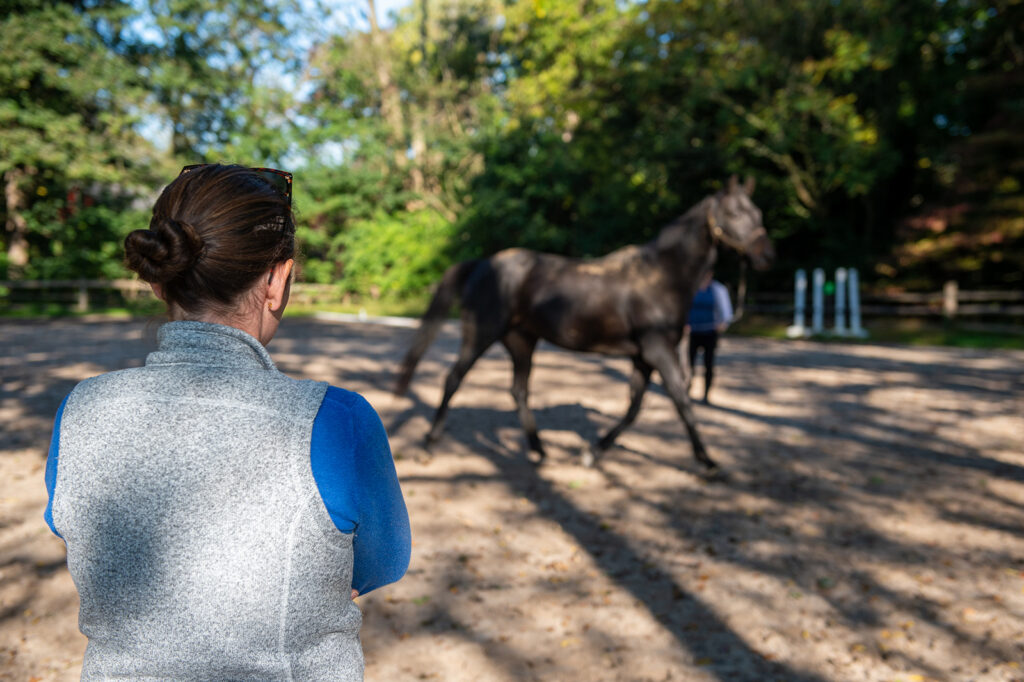
The vet’s exam will start with a physical exam, including a specific lameness evaluation where she will watch your horse in motion and likely perform flexion tests. The exam might then progress to joint or nerve blocks to narrow down the affected area.
From there, your vet may use imaging to pinpoint the specific cause. This typically means radiographs. In some cases, an ultrasound or even MRI, CT, or PET scan may be suggested.
Joint Issues in Young Horses
Like human athletes, young sporthorses use their musculoskeletal system in ways that can make joint injuries more common, says Ortved. That can mean a single traumatic injury or stress and strain from repetitive use, she says. Barton adds that developmental disease can also be an underlying cause of joint problems in young horses. The following tend to be the most common joint problems in young horses.
Synovitis. “This is inflammation of the lining of the joint, and it can be a precursor to the development of osteoarthritis,” says Barton.
Unfortunately, it can be difficult to diagnosis because it isn’t always associated with lameness or effusion (fluid accumulation around the joint). However, as it progresses, you may start to notice joint effusion with varying degrees of lameness. (Remember that 4-year-old filly with the swollen ankle? This could be the underlying cause.)
“Synovitis could grumble on getting progressively worse until you see clinical signs such as lameness, by which time there may already be joint changes associated with early osteoarthritis,” Barton says.
On the other hand, if you do notice inflammation around a joint—maybe after a hard training day—that could be a good thing, says Ortved. “If we recognize this … [and] if we treat those horses, then you can hopefully prevent it from developing into more broad or widespread osteoarthritis,” she notes.
Osteochondrosis (OCD). This is a developmental orthopedic disease. In other words, it impacts developing bones and joints, disrupting the growth of articular cartilage and potentially causing deformations such as cartilage flaps, osteochondral fragments, and subchondral cystic lesions. (Osteochondral defects affect both the cartilage and underlying bone. Subchondral defects affect the bone under the joint cartilage. In general, lesions in terms of bone and joints are abnormal or damaged spots.)
OCD can cause effusion but may not cause lameness at first, so Ortved suggests screening for OCD on prepurchase exams. In some OCD cases, surgery may be indicated to remove the defect, which should preserve joint health. While the full process of the disorder isn’t fully understood, Ortved notes that rapid growth, abnormal biomechanical forces and genetics can all contribute. Barton notes that mineral imbalances and high-carbohydrate diets may also play a role.
Juvenile osteoarthritis. While osteoarthritis is more prevalent in senior horses, it can also occur in young horses, says Barton. In many cases there may be no obvious inciting factor but, in some instances, she explains, “We may start to see problems early if there were developmental orthopedic problems when the horse was a foal. For example, things like severe angular limb deformities may lead to early onset osteoarthritis.”
Osteochondral fragments (bone chips) and interarticular fractures. While common in young horses, these issues tend to be more common in racehorses than in sporthorses, say both Ortved and Barton. Because of that, it may make sense to screen for them in a prepurchase exam if you’re considering an off-track Thoroughbred.
Joint Issues in Senior Horses
“In older horses we start to see more degenerative orthopedic disease. And the prevalence of osteoarthritis increases,” says Barton. In short, says Ortved, “Things have progressed.”
In advanced joint issues, you may see cartilage injury, which can lead to permanent cartilage loss. Plus, seniors may start to have changes in the bone around the joint and loss of range of motion. “A lot of senior horses have arthritis in many joints, simply, again, because of their history as an athlete and also the years of loading the joint,” Ortved adds.
Treating Young Horse Joint Problems
Joint problems can impact quality of life and performance ability for horses of any age. “Any sort of joint inflammation can cause some degree of lameness or decrease performance,” says Ortved. “We can treat those younger horses. When we start to get into the more moderate [to] severe osteoarthritis, that’s more difficult to treat and can cause significant quality-of-life issues.”
This stage is much more common in older horses and often involves lameness, pain, and even changes in weight-bearing—for instance, overloading the unaffected limb, she says.
Regardless of age, though, treating and managing joint problems depends largely on what you’re asking the horse to do, how advanced the issue is, and whether it’s in a high- or low-motion joint. “In all cases, we must ensure that the horse is comfortable with a good quality of life,” says Barton.
That said, with young equine athletes, “we are thinking about longevity, trying to slow the progression and keep the horse performing at their best for as long as possible,” says Barton. That means focusing on treatments that decrease inflammation, restore joint health and preserve it to help prevent the issue from progressing as the horse ages, says Ortved.
Treatment options abound, with the most common including:
- Intra-articular injections of corticosteroids, polyacrylamide gels, and hyaluronic acid
- Orthobiologic treatments such as platelet-rich plasma, autologous protein solution, interleukin-1 receptor antagonist, and stem cells are now as common as steroids, says Ortved.
- Intra-muscular injections of polysulfated glycosaminoglycans, with Adequan®, the only FDA-approved drug for treating equine osteoarthritis
- Intravenous injections of hyaluronate sodium, with Legend®, an FDA-approved brand for the treatment of knee or fetlock osteoarthritis
- Non-steroidal anti-inflammatory drugs (NSAIDs), such as phenylbutazone (commonly known as bute), fibrocoxib (sold under the brand name EQUIOXX®), and diclofenac sodium-based Surpass® topical cream
Currently, orthobiologic joint treatments are made by harvesting and culturing the affected horse’s own blood or stem cells. That can mean a wait time of several days to weeks until the treatment can be injected, says Barton. But, she adds, “There are lots of exciting treatments on the horizon that are being tested and developed.”
This includes off-the-shelf biologics that don’t require collecting and processing the horse’s blood or cells. “Things like gene therapy treatments are making progress into clinical trials in humans, and there is also research in horses showing good results,” Barton says. “So, I think there are going to be increasingly more treatment options available to us as we continue to make progress with research.”
In addition, says Ortved, “shockwave therapy, high-intensity laser therapy around the joint, and icing the joint after work can be helpful.” And, in some cases, surgery may be indicated.
There continues to be debate around the efficacy of oral supplements. Ortved notes that high-quality products that provide key ingredients like glucosamine, chondroitin sulfate, and hyaluronic acid may offer daily support for healthy joint fluid and tissues.
“It’s also important not to overlook things like strengthening and conditioning exercises, maintaining an appropriate weight with a good diet, [and] ensuring good hoof balance and angles,” advises Barton. In addition, horse owners must consider their budget and the horse’s response to any previous treatments when determining on a course of action.
Joint Treatment for Senior Horses
With older horses who have more advanced joint issues, owners may face a choice: continue an intensive treatment regimen to maintain a specific performance level or scale back the horse’s workload and treatment protocol. But even the latter option doesn’t mean total rest, says Ortved. “If you think about yourself with osteoarthritis, sitting on a couch is not going to help,” she explains. These horses may need exercise modification, but they still need movement.
One treatment caution, says Ortved, relates to corticosteroids, which can affect insulin and glucose levels. That can make them risky for horses that have underlying metabolic disease—like insulin dysregulation or pituitary pars intermedia dysfunction (PPID, formerly equine Cushing’s disease)—which tend to be more prevalent in older horses. If your horse has one of these disorders, talk to your vet about a blood test that can help determine if the injections are safe.
Preventing Joint Problems
If joint trouble is so prevalent, is there any way to prevent it? Yes and no. In general, sporthorses face the inherent risk of joint injury and cumulative wear just from intense athletic activity. Still, you can take steps to mitigate the risk—and starting when your horse is young gives you the best chance of safeguarding a long performance career.
“Proper nutrition is definitely key to maintaining health in general, but also joint health,” says Ortved. Barton agrees, noting this “is particularly important for young, growing horses to prevent future problems and also reduce the risk of developmental orthopedic disease.”
In particular, Barton adds, feeding foals excessive amounts of concentrate (grain) may impact bone development and increase the risk of OCD. Imbalances in copper, zinc, cadmium, and the calcium-to-phosphorous ratio may also impact bone health, she says.

A solid exercise plan is also beneficial, the vets agree. Ortved believes that should include cross-training rather than focusing on a single type of work that may put excess stress on particular joints. Also practice moderation; a show jumper doesn’t need to train over big jumps every day, for example. And, she says, make sure your horse has days off, too.
Low-concussion exercise can be a good choice to prevent joint stress while building muscle that supports the whole skeletal system. For instance, water treadmill work for core strength or hill work for quadricep strength, says Ortved. As a horses ages, though, rest days may become more important.
“Potentially incorporating other physical modalities, like massage [and] acupuncture may support the horse’s musculoskeletal system,” says Ortved.
Finally, overall good horse care translates to smart joint care. That includes paying close attention to your horse whenever you groom or ride, as well as ensuring well-fitting tack, proper foot care, and regular vet checks, says Barton.
If you’re lucky enough to have an older horse who is free from joint disorders—or whose issues are only mild—then these same strategies apply for maintaining that condition.
Planning for the Long Term
While joint problems are one of the most common equine ailments, they don’t necessarily have to alter your horse’s life, your performance plans, or your competition dreams. Wise young-horse management can go a long way toward minimizing trouble now and later. Early diagnosis and treatment combined with strategic management are crucial to stopping or slowing the progression of joint disorders—and optimizing your horse’s chance for a long career and a happy life.