




 Video
VideoOn the first morning of Boyd and Silva Martin’s Windurra Camp this summer, personal performance coach Natalie Hummel asked participating riders and auditors whether they considered Will Coleman a champion.
“No offense to the guy sitting in the back,” Hummel said, winking at Boyd. “Will is really meticulous, so it was a big deal when he went off course [in the CCI4*-S] at Tryon in 2025. But he recovered and won the five-star at Kentucky this spring.”
During the Martins’ third annual action-packed weekend of education and one-on-one instruction, Practical Horseman got to sit in on Hummel’s mental-coaching session where she introduced campers to what she refers to as the “champion mindset”—a set of performance standards that has helped propel Boyd to four Olympic Games.
As equestrians, being able to maintain a clear and present mindset is crucial to our success in the saddle. Our sport not only requires split-second decisions, but it’s also contingent on our partnership and ability to communicate with a living, breathing animal. “If you lack presence, your horse will know,” Hummel said.
Here, we share the strategies Hummel outlined during her session at this year’s Windurra Camp, including how to eliminate unnecessary drama and accept feeling uncomfortable to move toward your goals. She also discusses the five pillars of the C.H.A.M.P. Code to help you better understand the champion mindset.
Why is this important? If you participate in equestrian sports, failure is inevitable. That’s why, Hummel said, training yourself to immediately clear your mind of negative drama following mistakes is key to your ability to communicate with your horse—and your ultimate success.
What Defines a Champion?
“We all think of Boyd as a champion, and he is technically. But he’s not perfect. He has tons of failures,” said Hummel, Boyd’s longtime performance and sports psychology coach. “But he doesn’t get stuck on failure,” she said. “He recovers and moves on. That’s what a champion does: You fail and get back in the game.”
Hummel noted that holding yourself to an impossible standard of perfection gets in the way of making genuine progress.
“How many times have you made a mistake, and it spiraled out of control? Your brain will tell you all sorts of stories: You’re terrible; you’re not good enough; you shouldn’t be in this sport,” she said. “But those things aren’t true. Stay in reality and stick to the facts, even though this is hard for humans to do.”
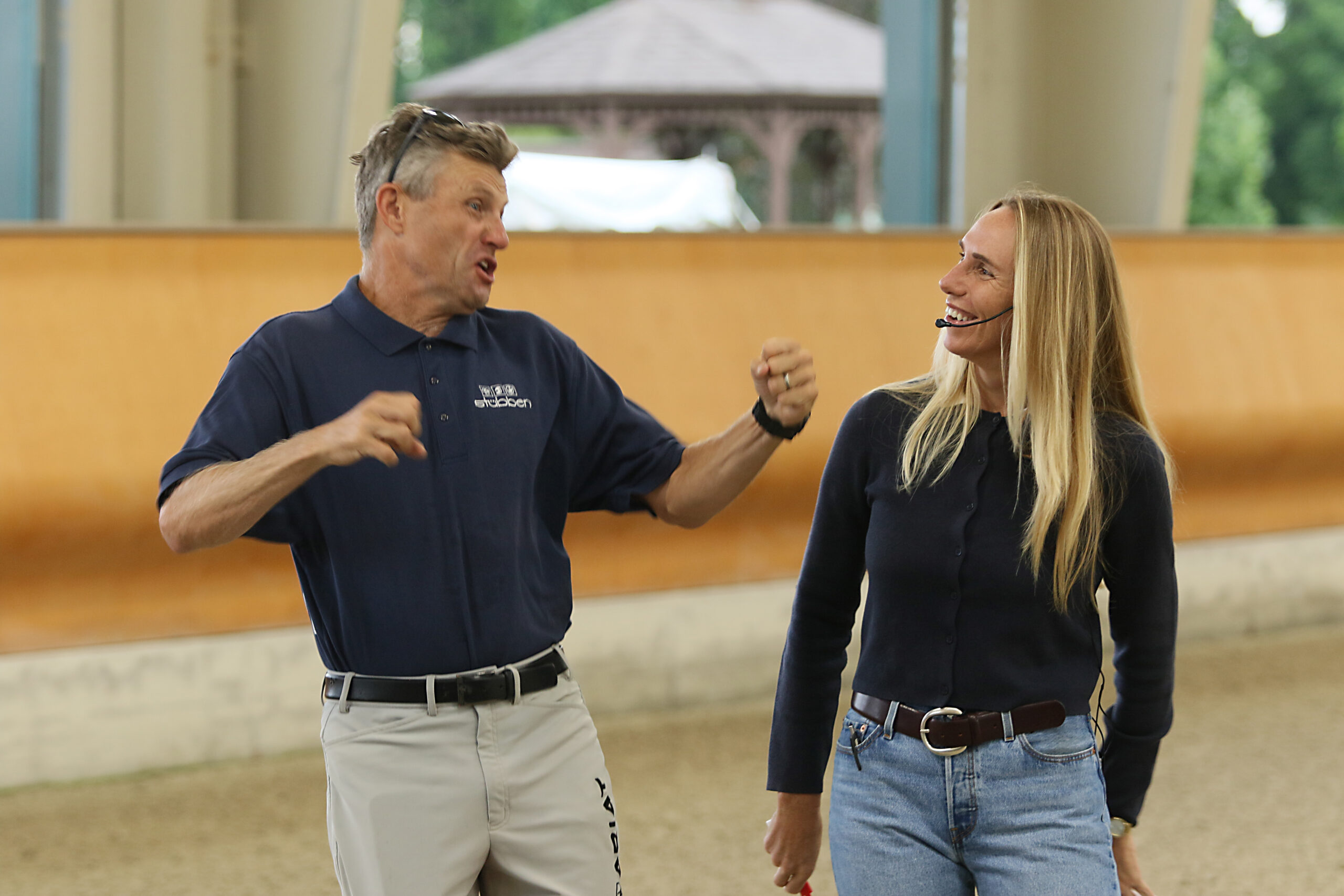
During his welcome speech, Boyd said the camp’s environment was designed to present opportunities to make mistakes and feel disappointed or even embarrassed.
“Go into it with an open mind knowing things aren’t going to be perfect,” he told campers. “When you’re put into a little bit of an uncomfortable situation, it mimics the feeling you get at competitions, and that’s often when you learn the most about yourself.”
Avoid Drama and Cut the Clutter
A few years ago, one of Hummel’s clients was walking the cross-country course at Kentucky with Phillip Dutton and reported there being quite a bit of drama among riders about the number of strides on one particular combination. So, Hummel decided to walk the question with Boyd.
“He said, ‘Come in, get a going four,’ and we just kept walking the line. I immediately thought—yes! This is living in reality and what I try to teach all the time,” Hummel said. “You can’t change the question. Are you going to jump it? Yes. Are you going to withdraw? No. Put your mind on figuring out the question, not complaining about it. The drama is such a waste of your energy.”
Humans are naturally drawn toward getting involved in other people’s drama, Hummel said. If they don’t think a jump is fair, for example, they might try to pull you into obsessing over it, too. Weather is another common drama-inducing topic for riders, especially for eventers.
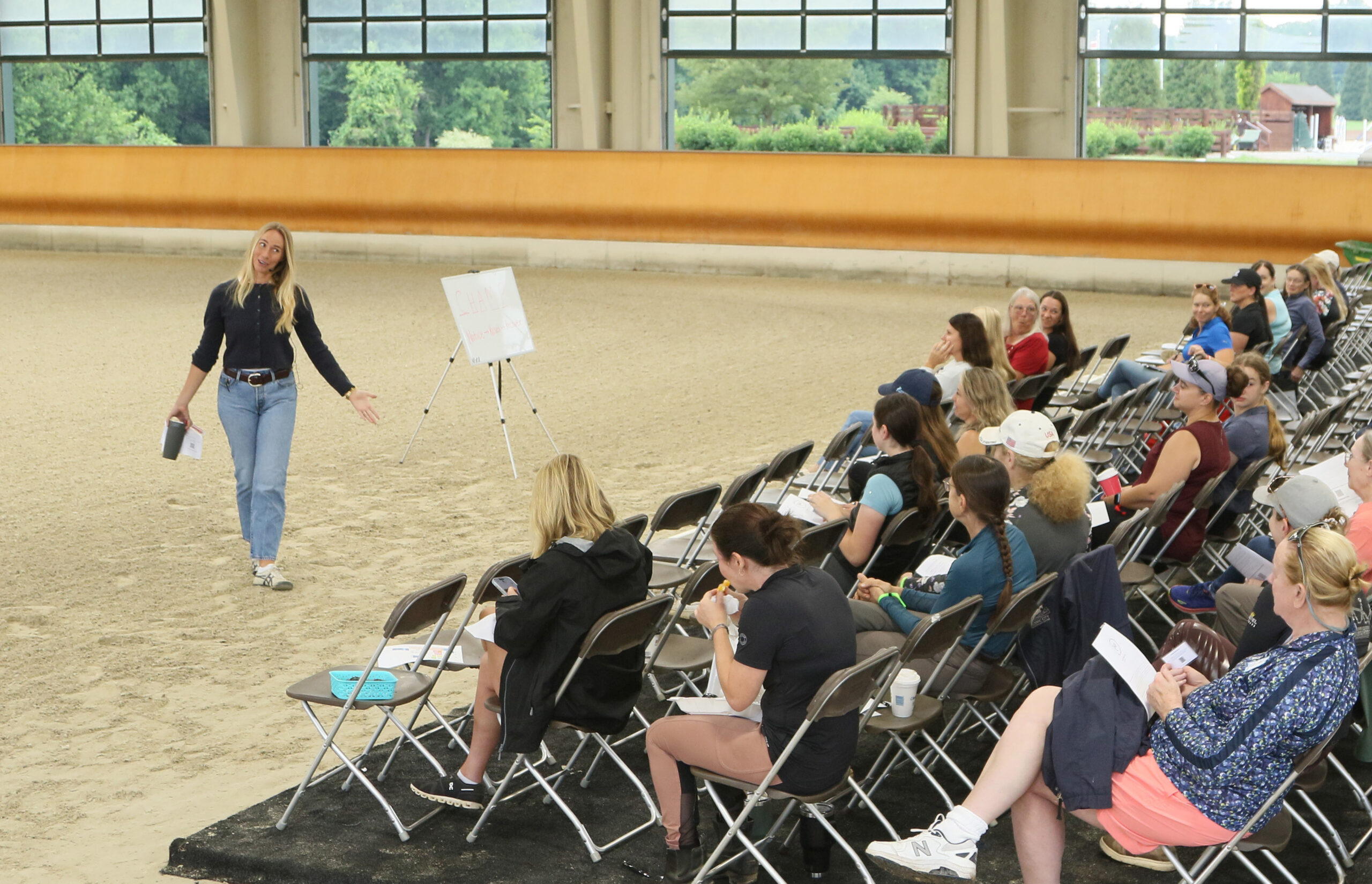
When the weather forecast looks bleak, Hummel noted that it can be tempting to tell yourself, “Well, I don’t think it’s a fair course anyway. And with the weather, I don’t think I’m going to run today because I’m a good horse person.”
Boyd, too, has found that riders seem to obsess over the weather as a collective group. “Whether it’s a bit warm or there’s rain in the forecast and everyone’s checking the radar, it can be super distracting,” he said. “In our sport, it doesn’t matter if it’s raining, hailing or the sun is shining. If your time is at 8:32, you go at 8:32.”
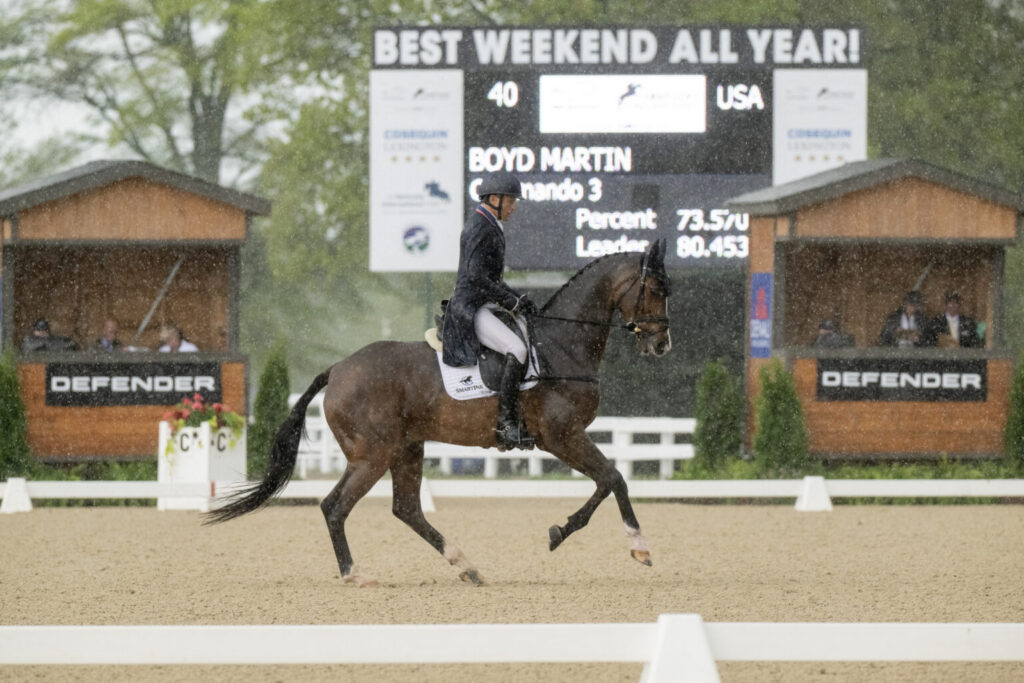
During dressage competition at the 2025 Defender Kentucky Three-Day Event CCI5*-L, Boyd and Commando 3 powered through a pouring rainstorm to surge into second on the overnight leaderboard. As the downpour saturated Rolex Stadium, and spectators and press ran for cover, Boyd remained laser-focused on the centerline.
“I remember thinking to myself, I can do anything for seven minutes,” Boyd said with a laugh. Afterward, he told Hummel that he didn’t even notice the rain. In fact, she suspects it may have helped him focus more.
Hummel stressed that it’s easy to overlook just how powerful your brain can be sometimes, and that avoiding drama can help you focus more acutely. But dodging others’ drama isn’t always enough. For example, if you make a mistake and beat yourself up over it, you’re creating internal drama, she explained.
“So, the question is how do you reset after that happens? I can’t teach you how to be perfect. You’re going to make mistakes. You’re going to fail. You’re going to be disappointed and maybe even feel embarrassed,” Hummel said. “The trick is not to try and prevent those things from happening.
“It’s about how you recover from them. How fast can you get out of the drama your mind has created that you’re not good enough; this never happens to so-and-so; if only I had a better horse or more money. It’s all noise and useless drama.”
The C.H.A.M.P. Code’s Framework
Before a potential downfall in performance, every athlete experiences red flags. The difference between riders who can’t overcome these warning signs and champions, Hummel said, is that top riders learn not to judge themselves or create drama when those red flags show up. “They simply recognize them and reset, so they can return to the next necessary action at hand,” she explained.
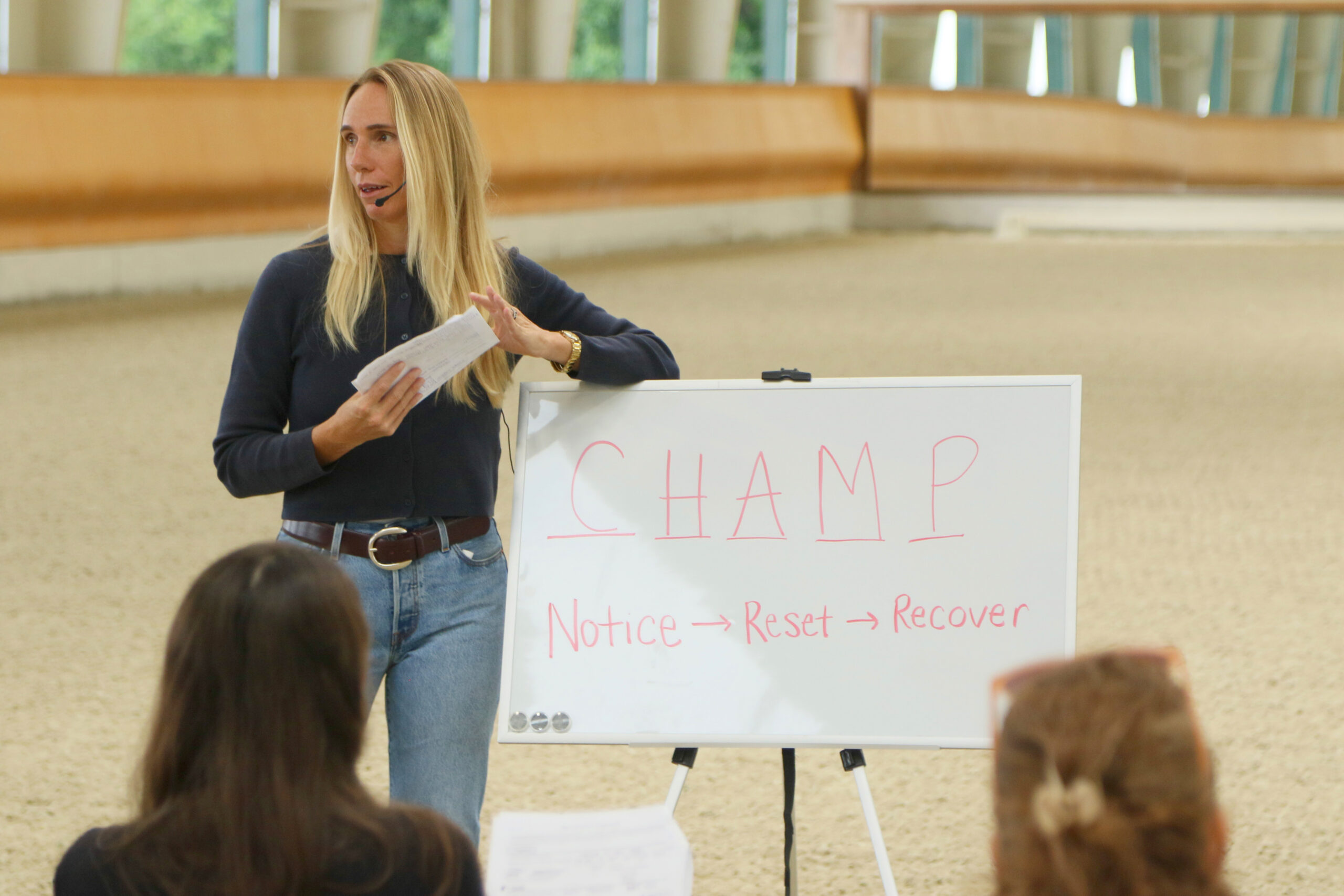
Hummel created the acronym C.H.A.M.P. through the masterclass she developed with Boyd, The Champion’s Code, to help riders better understand and navigate how champions think, how they behave, and what they hold themselves accountable for.
Composure
This refers to your ability to stay present when pressure, nerves, uncertainty or expectations rise, Hummel said. “Composure allows you to focus on what is within your control and take the next right action. This is super hard, but it’s so important to develop as a rider,” she noted. “You want to be able to trust your brain and your body in those moments.
“This might be something you always think you’ll get around to solving one day. But it starts in every moment—staying present no matter the pressure. So, how exactly can you train yourself to stay in the moment when the pressure increases?”
The green flags toward being present, Hummel explained, include trust, execution and focusing on what you can control. “Even focusing on small things, like where your hands, heels and eyes are, can help you find composure,” she added. “Thinking about the things you cannot control is never helpful in those moments.”
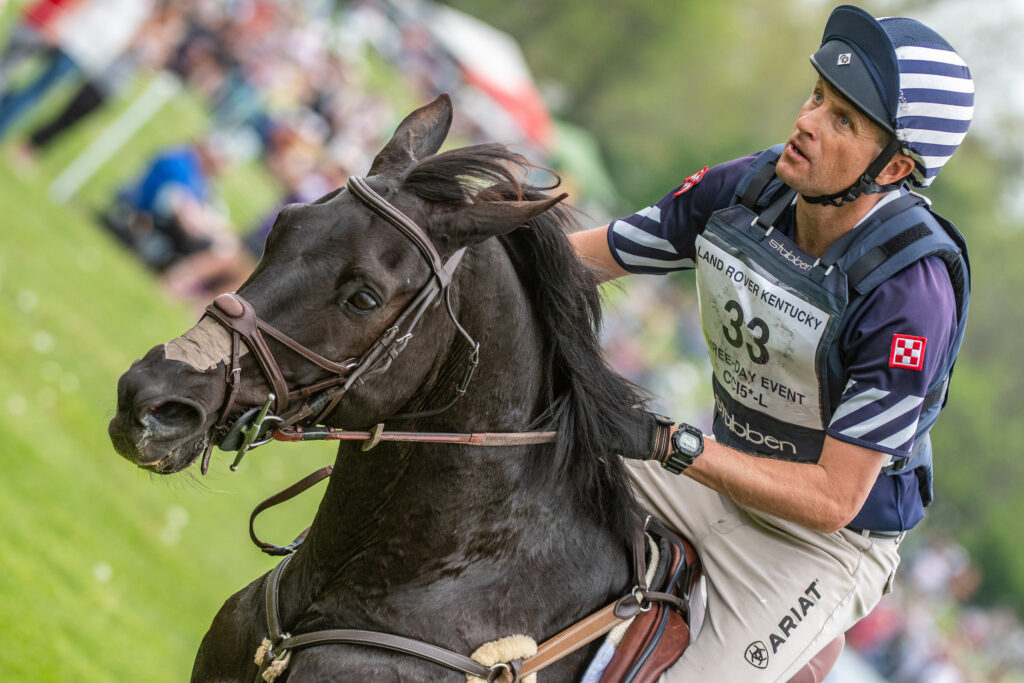
Hummel encouraged campers to think about a past moment when the pressure was on, and they lost their composure. Maybe you had a bad distance to a jump on cross country or made an error in your dressage test.
“Allow your mind to relive that moment and think about how it felt to lose your presence,” she advised. “Then ask yourself, ‘What is my job right now in that moment?’ Your brain probably gave you a million different answers. It’s up to you to choose a green flag of execution. Maybe that’s as simple as putting your heels down. Just envision yourself doing that.”
Humility
Especially for equestrians, Hummel said humility involves your willingness to learn, grow and improve without fearing mistakes or flooding yourself with negative feedback. “Even champions make mistakes. If Will Coleman can miss a fence on cross country, so can you. I’m sure Boyd has missed a fence or two,” she said. “You are human and are allowed to make mistakes.”
Humility doesn’t involve inflating yourself or exaggerating your capabilities, but it’s also not about deflating yourself, Hummel explained. “When you put yourself down, that’s your ego talking. This prevents you from being fully present,” she added. “Has beating yourself up about a mistake ever really worked for you? Probably not.
“It actually distracts from what you can control. In that moment, you can’t allow yourself to get trapped into believing a failure defines who you are. Instead, ask yourself what you learned from the mistake and how you can commit to avoiding it in the future.”
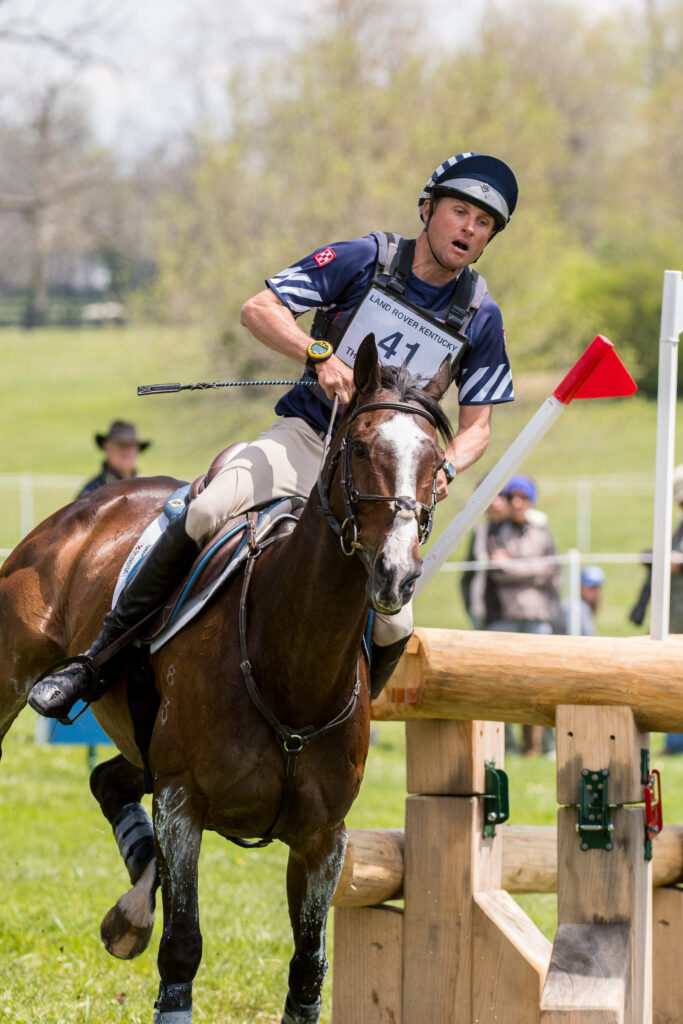
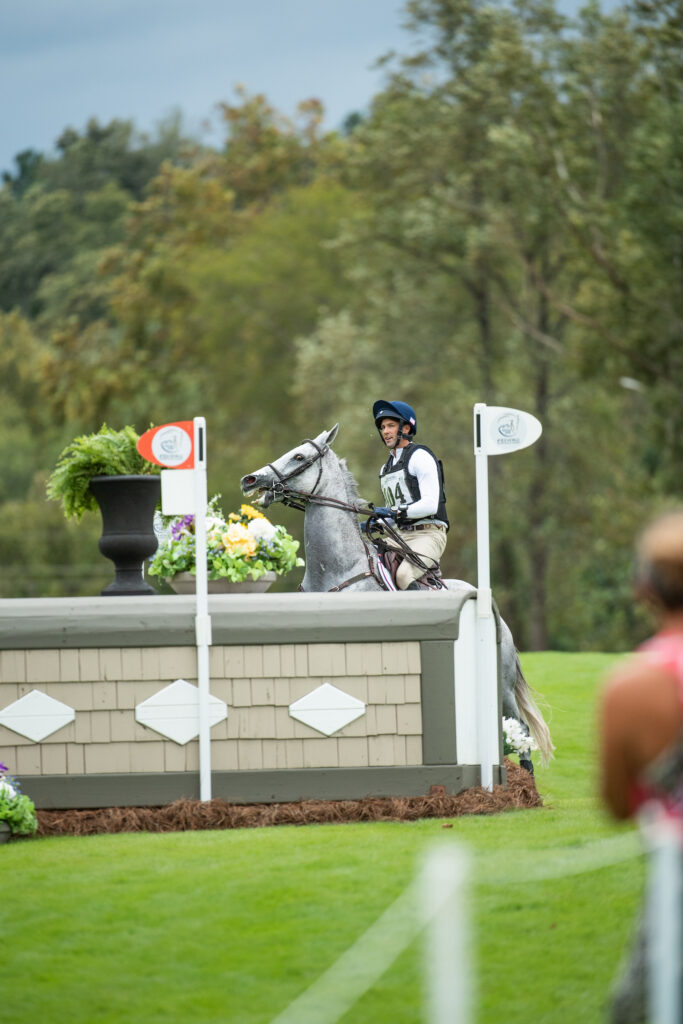
Hummel stressed the importance of genuinely feeling natural disappointment when recovering and resetting after a mistake. Many riders, she said, shove those feelings aside and just go on.
“From the moment we’re born, we’re trained to avoid our feelings. As you build up a greater capacity to sit with disappointments, they become less powerful and allow you to reset quicker,” Hummel explained. “Sometimes our minds are overly active to help us avoid feeling. That’s why you have to learn how to sit with it. If you bypass those feelings, that reset doesn’t work.”
Alignment
This, Hummel said, is about knowing who you are, understanding what you want and staying true to your own path. “I see a lot of young riders struggle with this. As we get older, we get more comfortable with who we are and what we want. But it’s easier for young riders to get stuck in comparison loops,” she explained. “I hear young riders comparing who has more or whose parents spent the most money. That can be seductive, but it won’t help you. Instead, remain present and maximize what you have.”
Mastery
Hummel explained that mastery involves your ability to acknowledge reality. “It’s about taking responsibility for your experience and leading yourself through challenges,” she said. “This allows you to respond intentionally instead of being driven by emotions, stories or circumstances. This is really hard to do and requires a lot of practice. That’s why it’s called mastery.”
Performance Standards
These standards, Hummel noted, refer to the level to which you hold yourself accountable as a rider, regardless of the situation, your mood or motivation. “It allows you to act based on commitment and consistency instead of waiting to feel ready,” she said. “Essentially, you have a plan and follow it.”
A few red flags to look out for here, Hummel said, include changing your plan at the last minute and avoiding setting goals or putting routines and habits in place to help you reach those goals. “You can’t wait for motivation to strike you. And you shouldn’t feel entitled. Your coaches, other people, the horses—they don’t owe you anything,” she said. “Instead, you owe it to yourself to show up for your standards.”
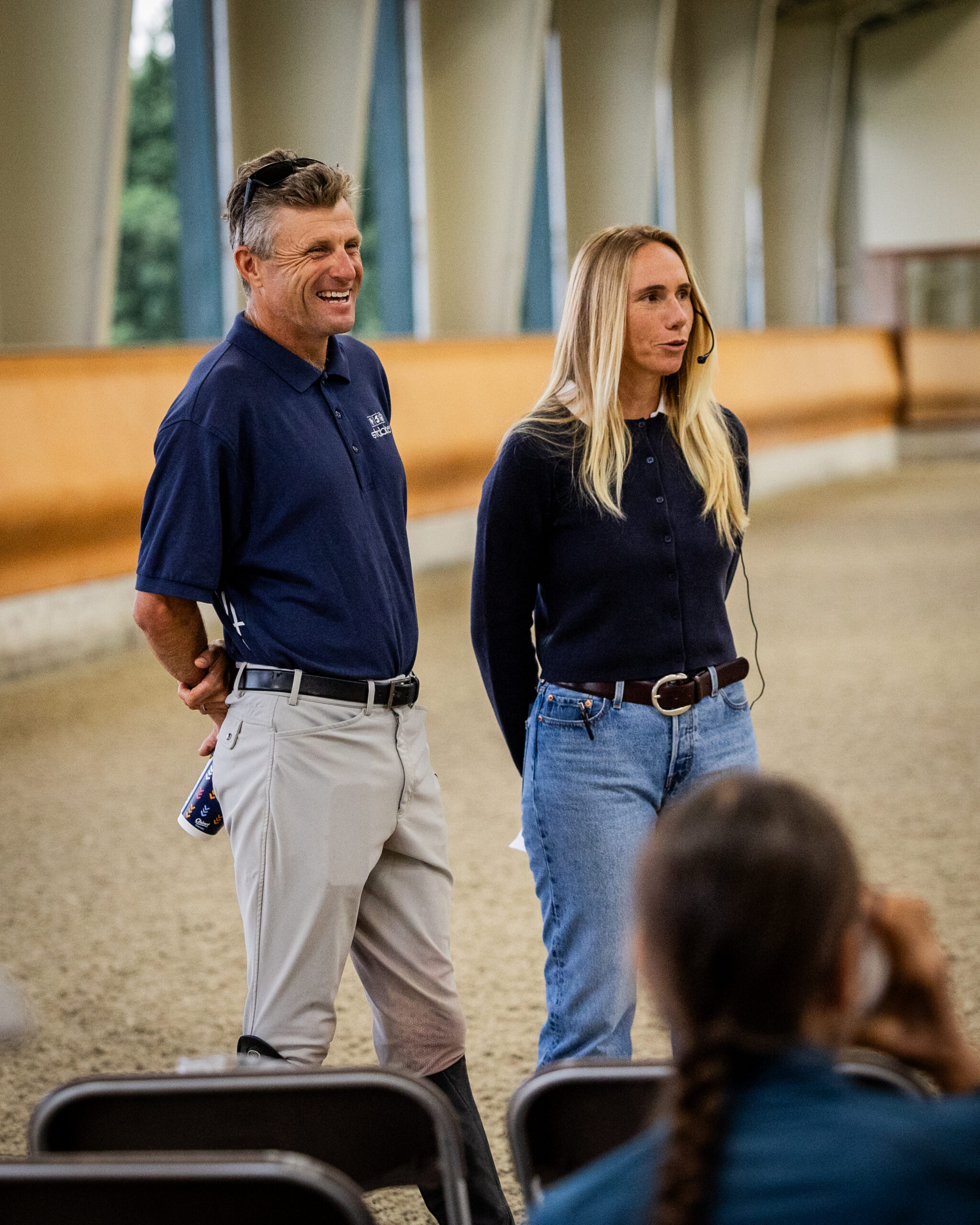

The green flags toward performance standards include discipline, commitment and believing you have the same chance as everyone else. For campers who may not yet have their own set of standards, Hummel encouraged them to consider other riders they admire.
“Think about someone like Boyd and what he would do next. His days, weeks and months are already set—the Boyd train is constantly rolling. It would actually take more effort for him to jump off the train than to just show up in the morning and get on it,” she said.
“But that doesn’t come from him waking up and basing what he does on how he feels that day. It comes from having a plan and giving 100% of his effort toward working on that plan. Champions take full responsibility, and they learn to be resourceful and use mistakes as building blocks for success.”
For More:
- Read more of our coverage from Windurra Camp 2026 here.
- You can listen to our Practical Horseman Podcast with Natalie Hummel here.
- Learn more about Boyd Martin and Natalie Hummel’s masterclass, The Champion’s Code, here.
- To learn more about Boyd and Silva Martin’s annual Windurra Camp, click here.
About Natalie Hummel
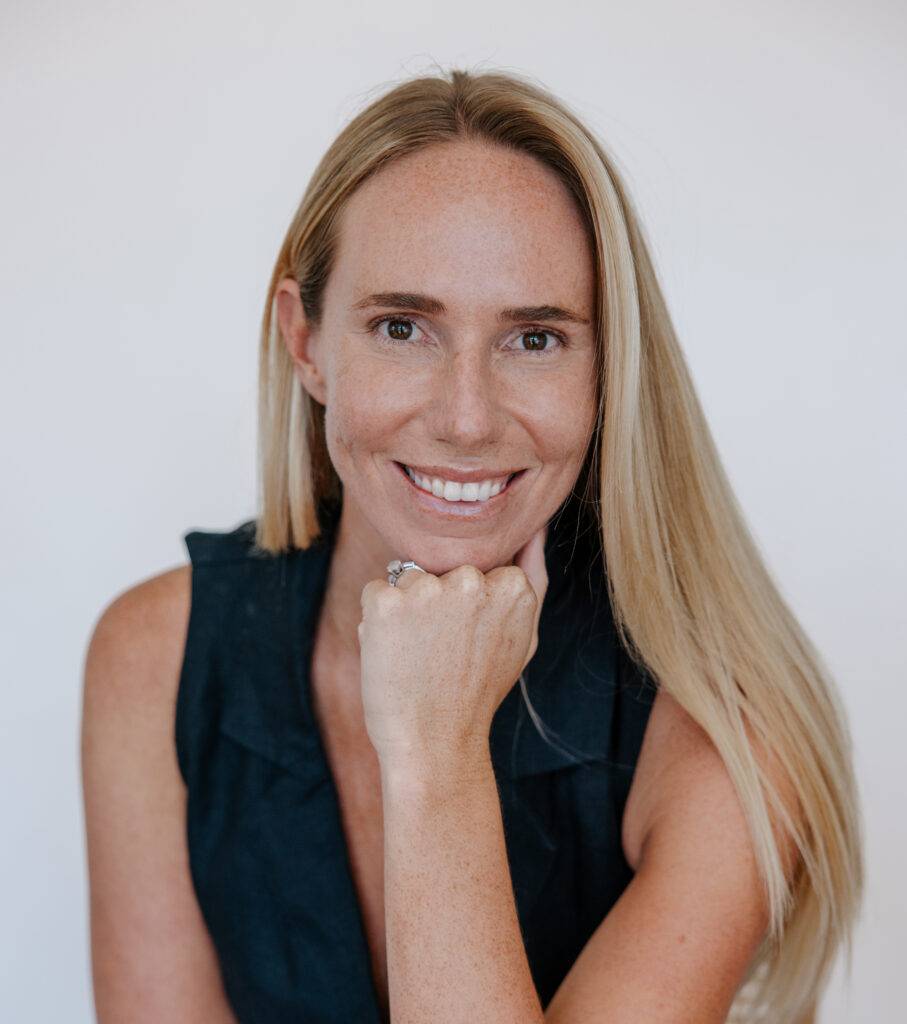
Natalie started riding at 10 and after moving up the ranks she eventually achieved three-star status and started working for Michael Pollard. But after back-to-back tragedies involving the unexpected death of several horses, her heart was too broken to continue in the sport and the energy and passion she’d felt for riding started to shift toward pursuing higher education.
After getting her PhD in clinical psychology, she went on to develop Natalie Hummel Coaching—her personal performance coaching program that aims to help equestrians break through mental and emotional blocks. Drawing from neuroscience and somatic integration, Natalie helps elite athletes rewire their physiological response to stress so they can access clarity, consistency and flow when it matters most.
She’s worked with a number of top eventers—including Boyd Martin and Hannah Sue Hollberg—and countless other riders who came to her stuck in negative repeating patterns that often surface at the worst moments—the centerline, in-gate or in the quiet corners of everyday life. Through her coaching methods, Natalie focuses on helping riders reset their baseline, release subconscious performance blocks and compete with more ease, power and purpose.