



 Video
VideoThis article is brought to you by Morton Buildings.
Have you ever imagined designing your own equestrian facility from the ground up—with the ability to customize the layout, amenities and functional and aesthetic design features? If building a barn is on your radar in the current or near future, there are many important factors to consider whether you’re looking to design a small-scale structure on your current property or a fully operational equestrian facility for your training business.
Your horses are like family, so you want to put as much attention into building their home as you would your own. A well-designed barn should be light, airy, enjoyable to work in, comfortable and easy to clean. Additional considerations include sound construction, labor-saving conveniences and designing a building style that complements the natural environment. Paying attention to these details will pay off in the long run with lower upkeep costs, fewer vet bills and added property value—and if you’re a professional, it will help attract and retain new clients.
To help you create your dream facility, Morton Buildings offers several new options and custom tools to help you navigate the overwhelming number of details involved when building a new barn structure. A leader in equestrian-facility construction for decades, Morton has a team of seasoned craftsmen who are known for designing and building safe, durable and functional facilities, with an additional emphasis on aesthetic appeal. Morton also prioritizes quality.
“We source and manufacture our own materials—from the smallest fastener to the overhead trusses—to ensure both safety and functionality,” Dennis Lee, equestrian product line manager for Morton Buildings, said.
Here we’ll look at the most important factors to consider when building an equestrian facility and the options available to help you create the perfect structures for your property.
Designing Your Dream Barn
When planning the design for your new barn, Morton suggests a layout that provides plenty of room for expansion and allows for specific needs like water access, manure disposal, feed storage, exercise spaces and trailer loading access. Additionally, your design will be based on the number of horses you plan to house.
Morton’s post-frame constructions are a popular choice for equestrian facilities of all scopes and sizes. Built with a variety of extensions, these quality-engineered, wood-framed buildings are designed for maximum efficiency, limited maintenance and efficient construction.
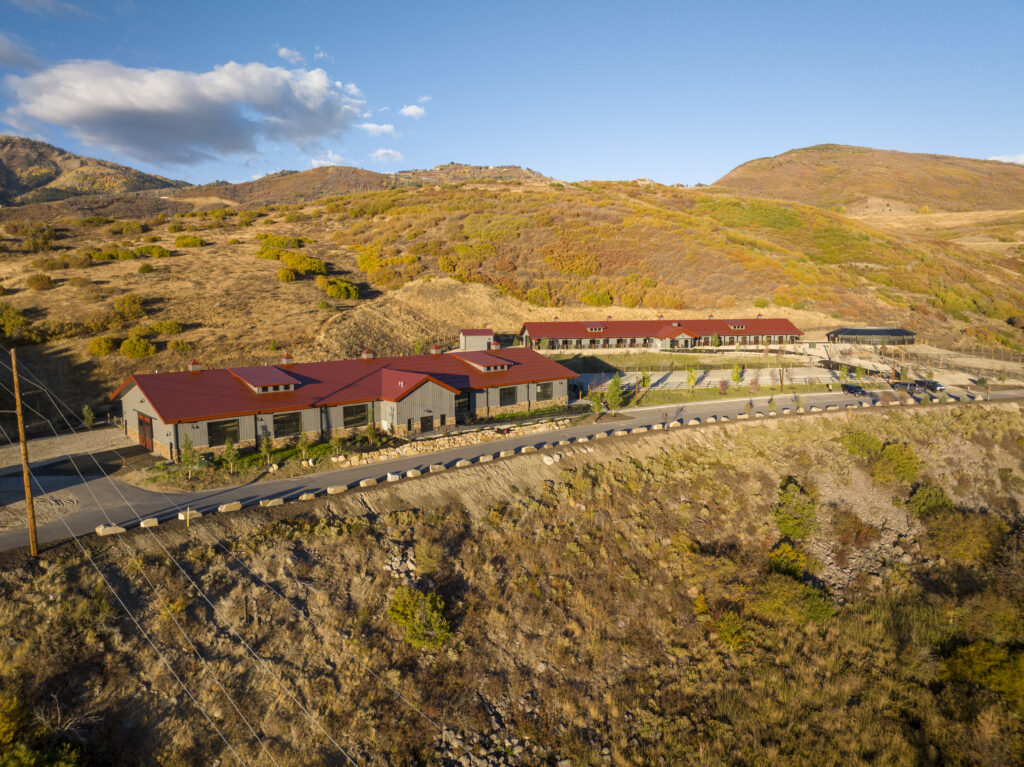
As your dream barn comes to fruition, here are some primary factors to consider:
Exterior and structural components : When it comes to exterior options and the primary building components, Lee explains that Morton’s Hi-Rib™ steel provides structural integrity and durability to help withstand wear and tear from the elements and horse traffic, and the Morton Foundation SystemⓇ uses concrete lower columns in the foundation, rather than wood, to create a stronger and more durable structure. Morton’s Energy PerformerⓇ insulation package provides energy savings and comfort in extreme temperatures, and the FluoroflexⓇ paint system protects against fading, chalking, paint peeling and rust. Stainless-steel screws and rust-resistant ring shank fasteners help prevent rust and corrosion.
Aisle size: A lot of builders make the mistake of designing barns with too-small aisles. This leaves doorways more prone to damage and can be tight for larger warmbloods to maneuver in. Stall aisles that are 16 feet wide (instead of the more common 12 feet) are ideal for commercial barns, as they provide plenty of room for equipment, tack trunks and horses.
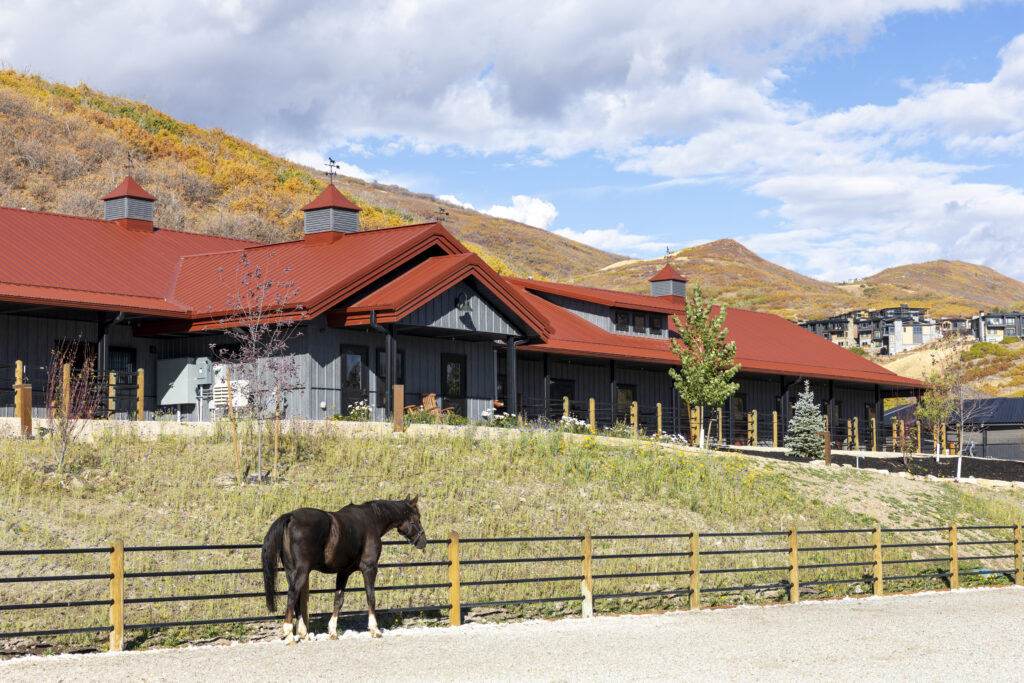
Airflow: Designing a barn with good airflow is crucial to your horses’ health and will create a more pleasant environment for everyone. Be sure to consider what type of windows and barn doors will promote the best airflow. Vent-style windows high in the outside walls pull in fresh air and additional light, but there are number of styles you can choose from. You might also consider installing ceiling fans.
Lighting: Good lighting not only boosts the ambience of your barn, but it also makes it easier and safer to work in. You can introduce natural light by adding windows and skylights wherever possible—increased natural light decreases dependence on artificial lighting and reduces energy use. You also might consider putting a light in every stall, so you can turn individual lights on without powering up the whole barn, which can also save on electricity.
Flooring: If concrete is used for stall aisles, it should have a coarse, broomed finish. Rubber interlocking pavers are a popular upgrade option, providing shock absorption and greater traction for both horse and handler.
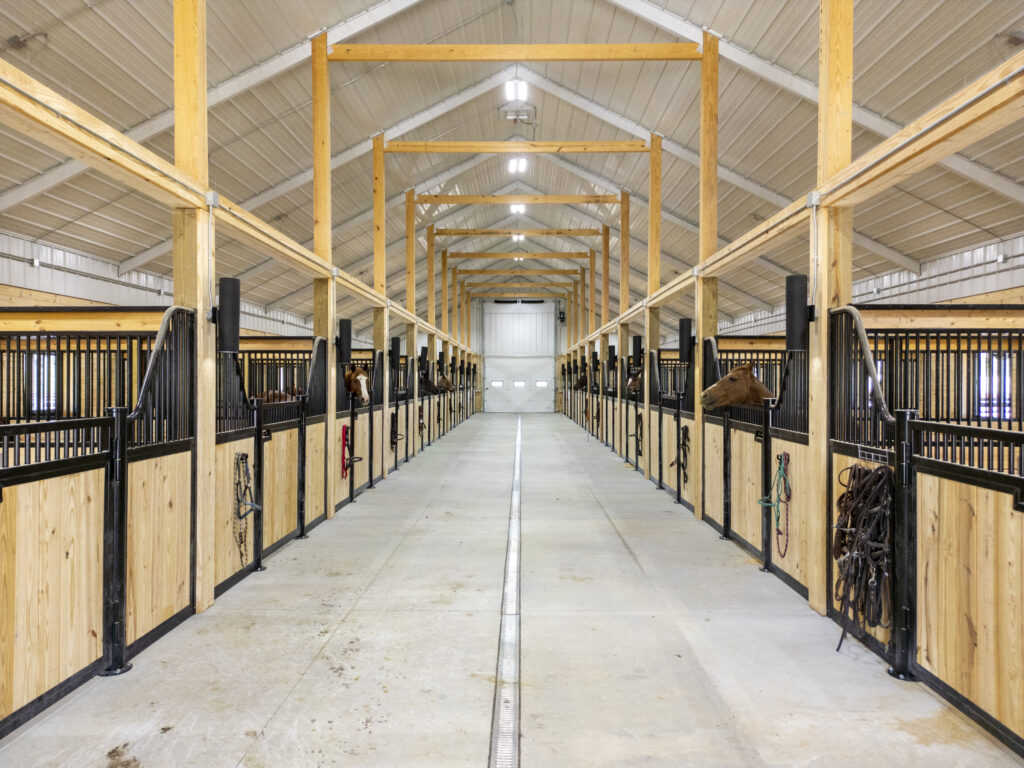
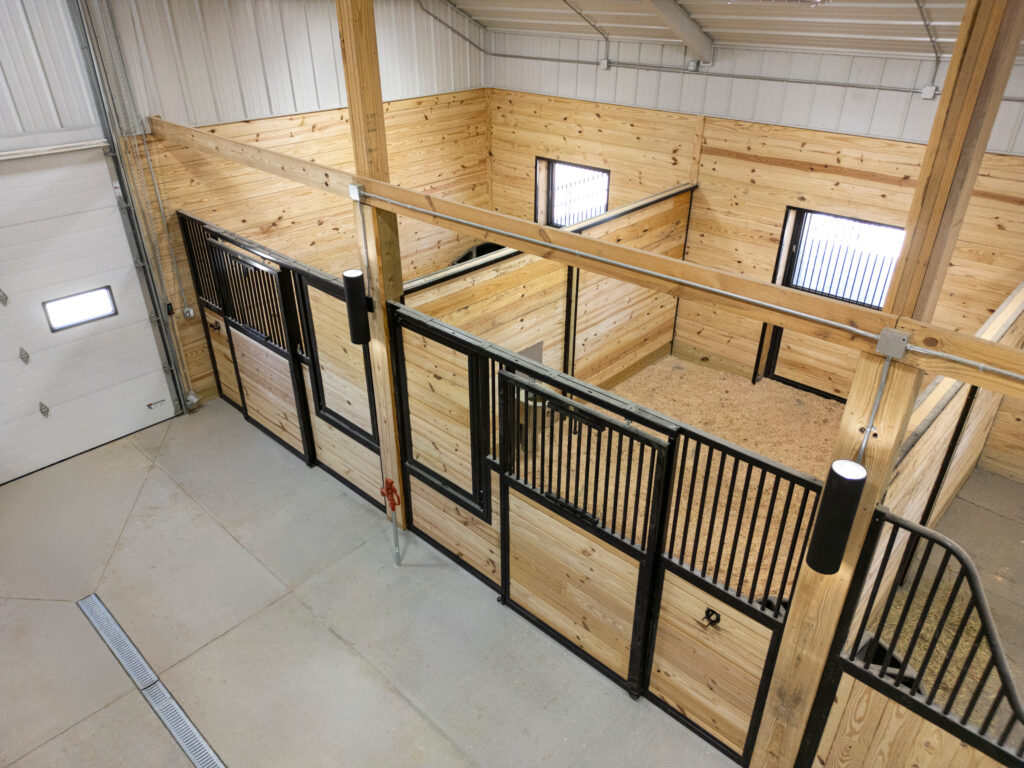
Stalls: Stall size is another crucial factor when considering your horses’ comfort. Stalls that are at least 12 by 12 feet are preferred, with 14 by 14 feet stalls also available. Prefab stall partitions are either solid or topped with bars that help promote airflow and allow horses to see the neighboring horses in the stalls beside them.
Customizable Barn Options
In addition to your stall area, you’ll also want to plan for any additional structures or rooms you might want to include with your barn such as a wash rack, tack room, feed storage, utility closet and restroom.
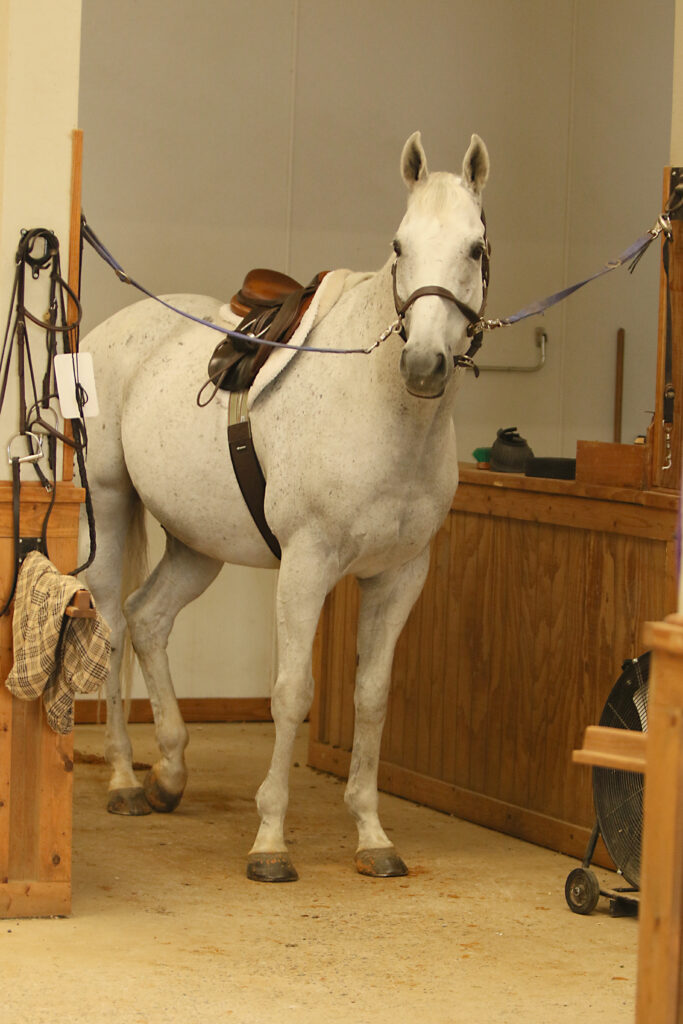
Bathing and grooming areas: You’ll need to determine how many wash racks you’ll need based on the size of your operation. These wash stalls can also double as tack rooms and grooming areas, and can be placed in one central location or throughout the facility. Wash stall placement will dictate the location of additional water sources. You’ll also want to include a space in your barn design to groom and tack up; this can be separate partitions with cross-ties or built-in grooming areas with cross-ties in barn aisles.
Feed room: You will also need a feed room included in your barn design to store grain, supplements and any other feed supplies. This room can serve double-duty to store grooming and first-aid supplies with built-in or portable shelving.
Tack room: The size of your tack room is determined by the number of horses and if the barn is for personal or commercial use. Horse owners often underestimate their storage needs. There are a number of customizable options within your tack room. Even if your budget is tight, it’s highly recommended to have separate tack and feed rooms—clean tack will quickly accumulate dust when stored in a feed room.
Utility room: Installing a utility-type sink to wash out feed buckets and mix medications is a necessity. In addition, the ability to wash blankets, pads, wraps and any equipment that is too muddy, bulky or smelly to wash in household machines on-site is more than handy, so you may consider a utility room with a washer and dryer hookup.
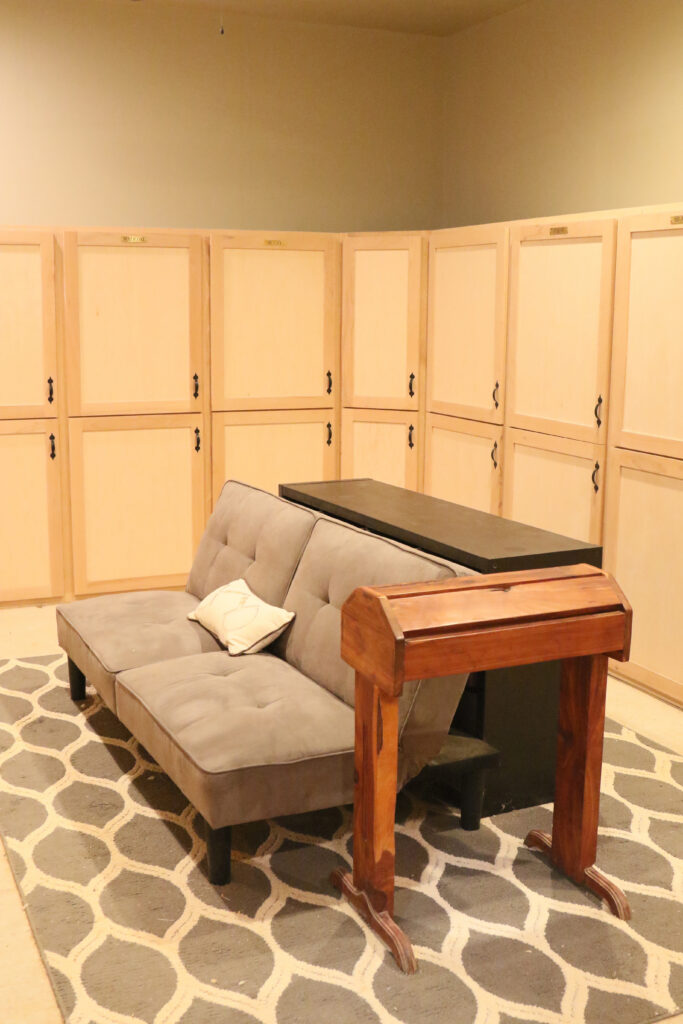
Lounge area: If it’s in your budget, adding a comfortable lounge area for your boarders and other guests is a great asset to include in your barn design. During extreme temperatures, an air-conditioned/heated room offers respite from the heat and cold and gives people the chance to relax or work between rides. Consider adding couches and tables and chairs for meals, as well as a refrigerator and microwave. (Tip: If you don’t include a lounge area with a refrigerator, consider springing for a mini fridge to put in your feed or utility room to store medications that require refrigeration.)
Restroom: You may choose to install a restroom somewhere in your barn. Some opt to put a bathroom in their lounge area, but you can choose where it would make the most sense in your design.
Aesthetic details: In addition to designing your barn’s floor plan, Morton offers an number of aesthetic decor options, such as steel and stone wainscots, cupolas, porches, Dutch doors, turkey tails and cedar accents.
Building Your Dream Arena
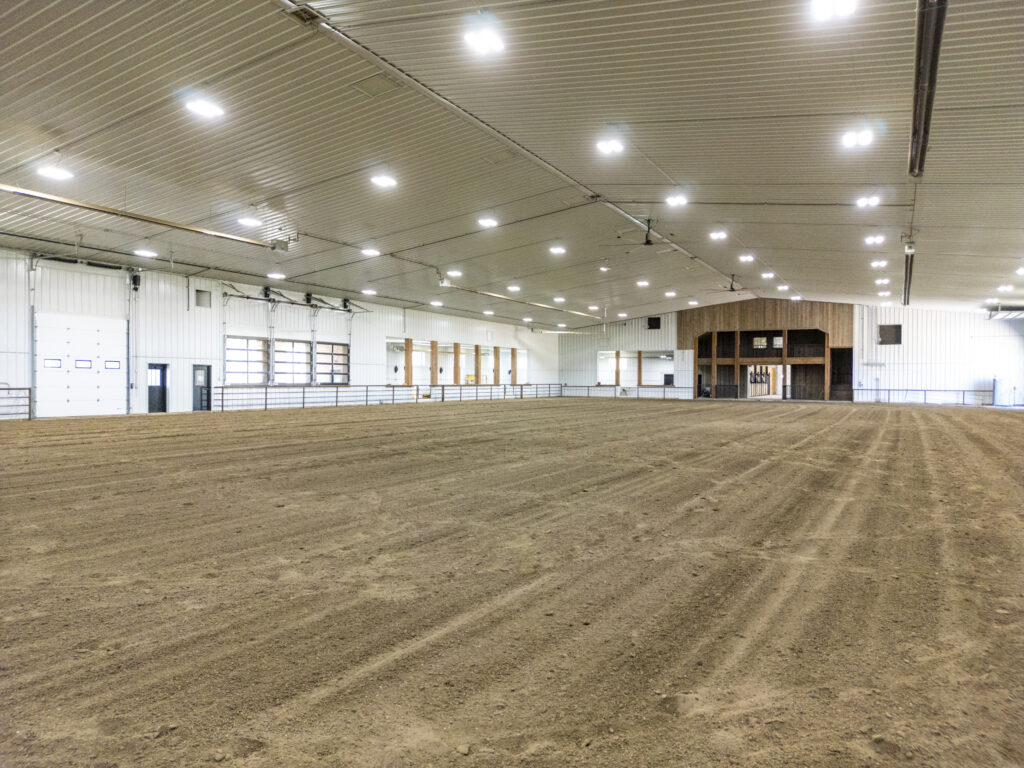
Investing in a covered arena allows you to safely ride and train your horses any time of year regardless of weather. Morton’s post-frame arenas can easily be customized for size, flooring, roof style, material types, ceiling systems, thermal insulation and interior wall configurations.
“From foundations to fasteners, every detail is designed for minimal maintenance,” Lee said. “That’s why we offer the industry-leading, five-year wind warranty and a 50-year snow warranty for most buildings with no weight limit.”
The clear-span design of a Morton post-frame riding arena provides great structural stability with ample space for riders and their sport. Fully enclosed riding arenas enable precise climate control and protection from the outdoor elements throughout the year, whereas open-walled arenas offer continuous ventilation and can be ideal in year-round warmer climates.
As you plan for your ideal arena, keep in mind the following:
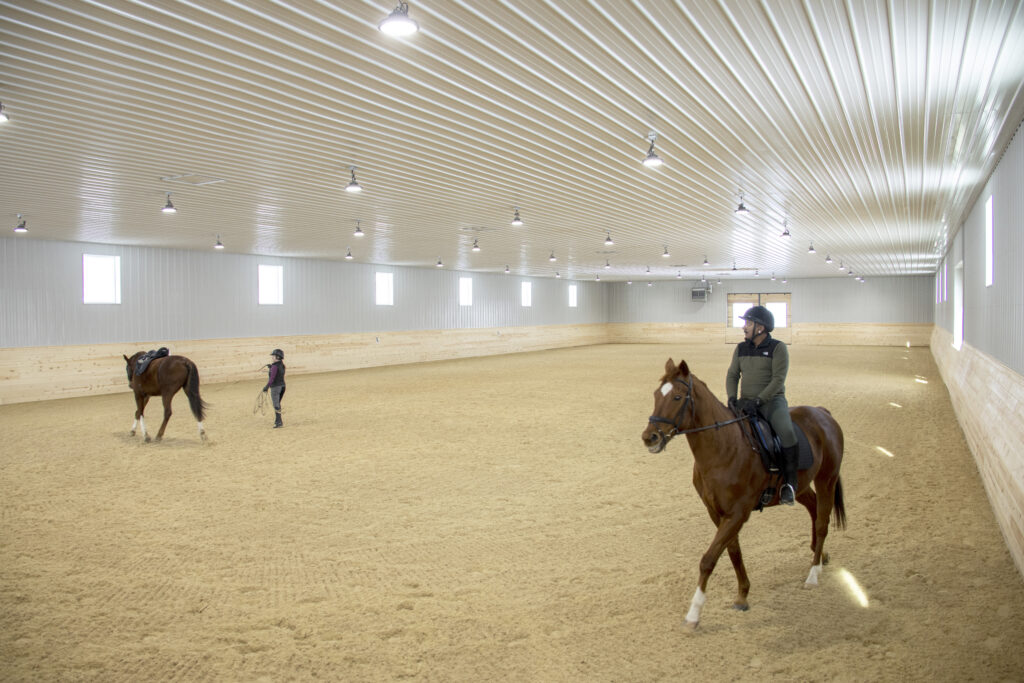
Size: Your arena size will be based on your discipline and particular training program. While widths between 42 and 60 feet are OK for exercise pens, the minimum width of your riding arena should be 66 feet. In general, Morton advises that arena length should be a minimum of twice its width.
Arenas should be a minimum height of 14 feet for safe horse-and-rider clearance, but for jumping arenas, a height of 16 feet is the minimum height requirement. Lights and fans hung from the ceiling should always be accounted for when calculating clearance height. Certain disciplines have specific guidelines regarding arena size, so be sure to check with your riding organization. For example, the regulation size for a large dressage arena is 66 by 132 feet.
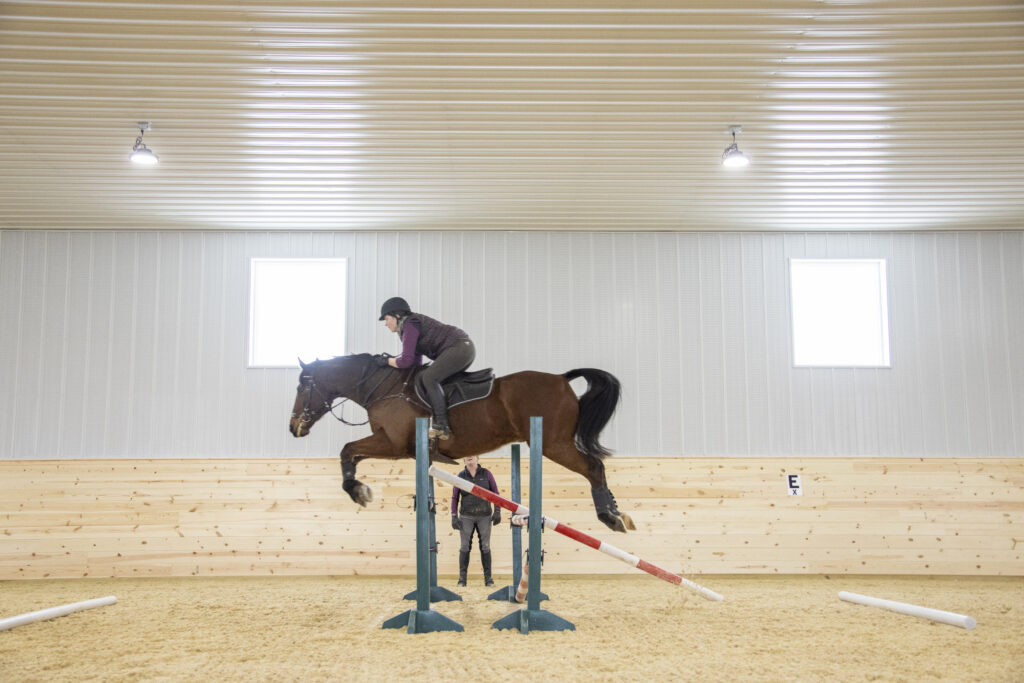
Ventilation and insulation: Morton’s Energy PerformerⓇ insulation works to keep arenas cooler during intense heat. The addition of ventilation tools such as vented overhangs, functional cupolas, and large end-wall or side-wall sliding doors will help improve ventilation and control condensation.
Light: Skylights will add natural light to your arena. Light from windows can create shadows that spook horses; adding a fiberglass sky belt instead will provide diffused light, creating a well-lit and safer training environment.
Customizable options: Morton also offers a number of custom choices for their arenas, depending on your discipline, training needs and aesthetic preferences. Some of those include:
- Arena liners
- Door types
- Artificial lighting
- Arena footing
- Additional rooms
- Insulation
- Roofing materials
- Siding
- Porches
- Cupolas
Takeaway
We hope these tips and barn-building advice helps you on your journey in designing your dream facility, especially with so many considerations to keep in mind. Morton’s team of experienced equestrian-facility specialists are also available to walk you through the entire building process, making construction both easy and fun as you customize your ideal barn. Learn how to get started here.