

 Video
VideoAny sport has safety risks, and equestrian sport is no different with its own set of challenges. Many safety improvements have been made to equestrian sport over the years, and new products and advancements in technology continue to evolve for enhanced rider safety. U.S. Equestrian Federation (USEF) Chief of Sport David O’Connor led a group of panelists at the 2026 USEF Annual Meeting in a session titled “Equestrian Safety: Are We Ready?” to review data, safety equipment, concussion protocols and other resources available to the equestrian community.
Safety at Horse Shows
O’Connor began the session by providing of an overview of USEF’s recent safety data. During the 2025 competition year, a total of 222 horse falls and 7,552 rider falls were reported at USEF shows out of 1.7 million starts. He noted that averages out to about four horse falls and 150 rider falls a week at USEF shows. Since non-injury fall data began being collected in 2024 from judges’ cards, more data is needed to determine if numbers are increasing or decreasing. While the inherent risk can’t be entirely eliminated from equestrian sport, O’Connor said the industry should do what it can to minimize risks and keep riders safe.
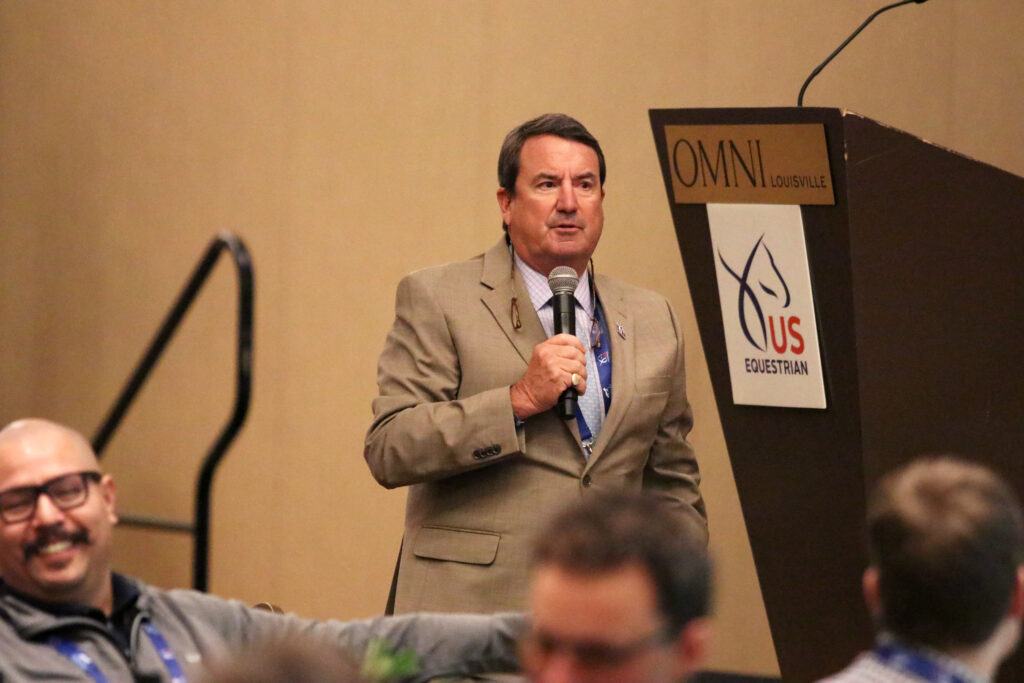
On the competition management side, USEF has several safety resources available to organizers. Katlynn Wilbers, USEF Director of Competition Operations and staff liaison to the USEF Human and Equine Safety Committee, shared the newly published Incident Response Guide for Competitions. The guide contains best practices, incident responses, plans for inclement weather and more. “It’s a great resource, not only for new competition management, but also existing competition organizers who are questioning if their response plans are robust enough to serve their needs,” Wilbers said.
Additionally, Wilbers reminded competition organizers and judges that accurate reporting of falls is essential for making decisions regarding best practices and potential rule changes. “We understand that the data that we are receiving is only as good as what’s reported in the field,” she noted. In the future, Wilbers hopes the data can highlight risks that may be associated with certain rider demographics, fence height or other variables.
Continuing Rider Safety Improvements
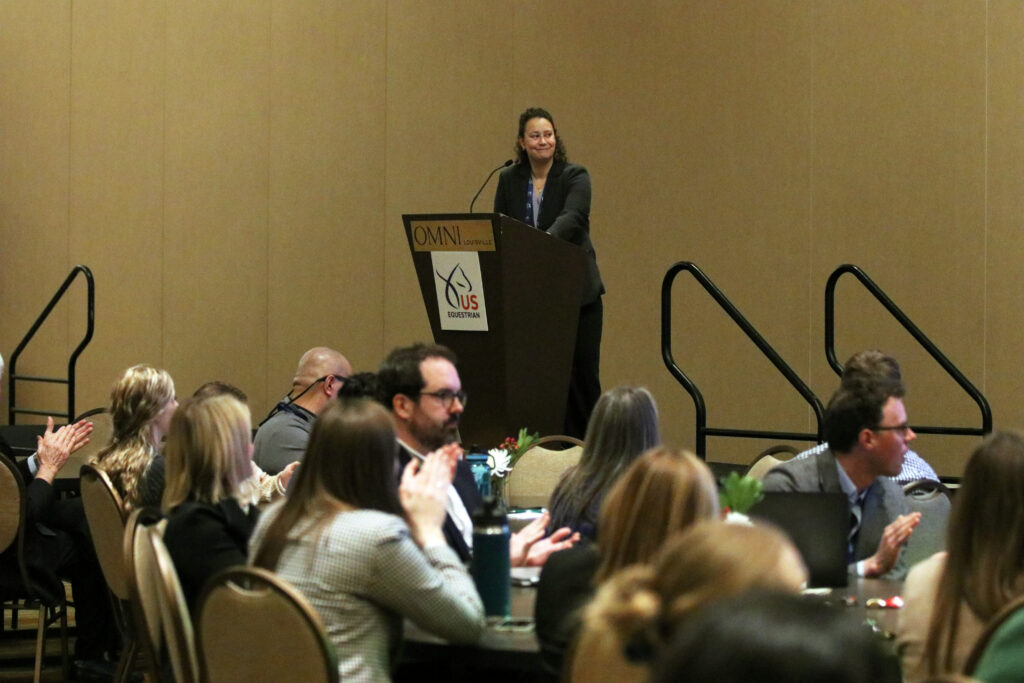
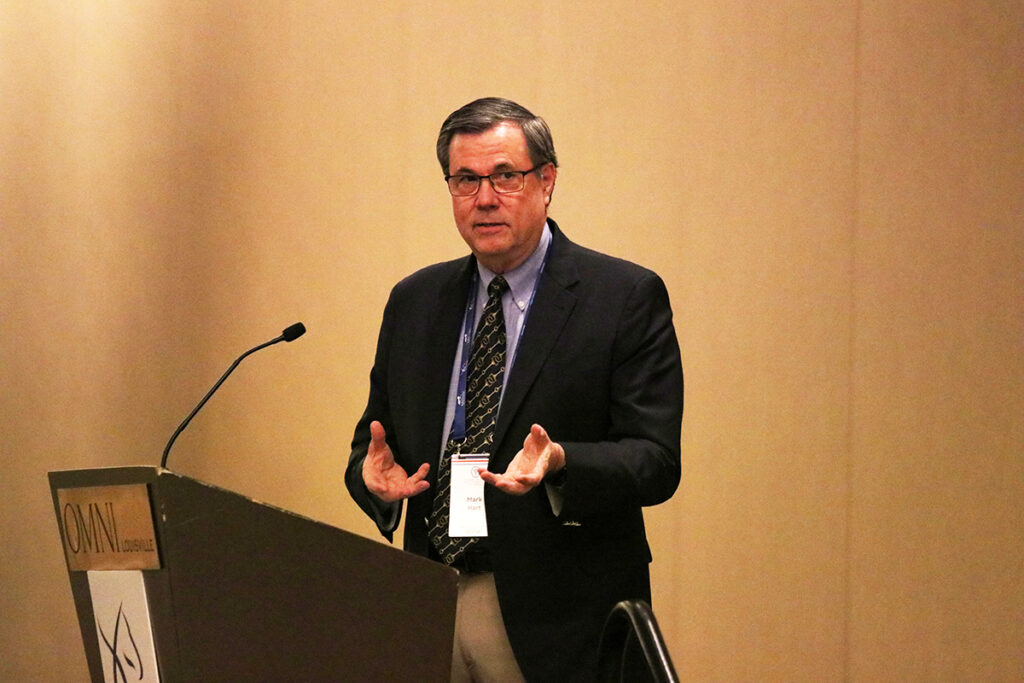
Mark Hart, MD, and chairman of the USEF Human and Equine Safety & Welfare Committee, explained that the safety goal for the USEF is to reduce horse and rider falls and injuries. Any policy changes or educational materials related to safety have that as their focus. “We don’t want to make rules unless it reduces a rider fall or a horse fall,” he said.
These safety considerations extend outside of competition because, as Hart pointed out, the majority of rider falls and injuries happen while training at home. “This is the tip of the iceberg for injuries, and the reason we know this is the U.S. [emergency room] registry data lists the number one sports-related injury seen in emergency rooms as equestrian-related,” he said.
While equestrian sport has evolved over the years from riders not wearing helmets and safety vests to many riders being supportive of safety equipment, Hart said there is still more work to be done. “It’s changed so often in 25-30 years, but that doesn’t mean we’re done and at the end stage,” he said. “It’s a work in progress as we learn more from this data and as materials get better.” Shifts away from traditions such as top hats in dressage have taken place, but Hart noted the adoption of safety changes can still be a challenge for reasons ranging from the initial and replacement costs of equipment to lack of “in-house” scientific expertise. Additionally, there aren’t harmonized safety certifications and standards across the globe.
Due to the need for continued safety improvements, the FEI created helmet and safety vest working groups to review existing studies and propose new testing standards and additional research. While a fair amount of research exists on helmet safety, there is very limited data on safety vests. “People don’t realize this, but none of the certifying bodies [such as ASTM or SEI] have any research capability whatsoever,” Hart said. “They’re basically beholden to whatever is out in the literature, who’s directing that and how we can get that information.”
With updated testing standards and research suggested by the FEI working groups, changes could be made to create a safer sport for riders in the future. Also, the USEF and other stakeholders have raised about $400,000 of the $700,000 goal to help fund such research in the years ahead.
Concussion Prevention
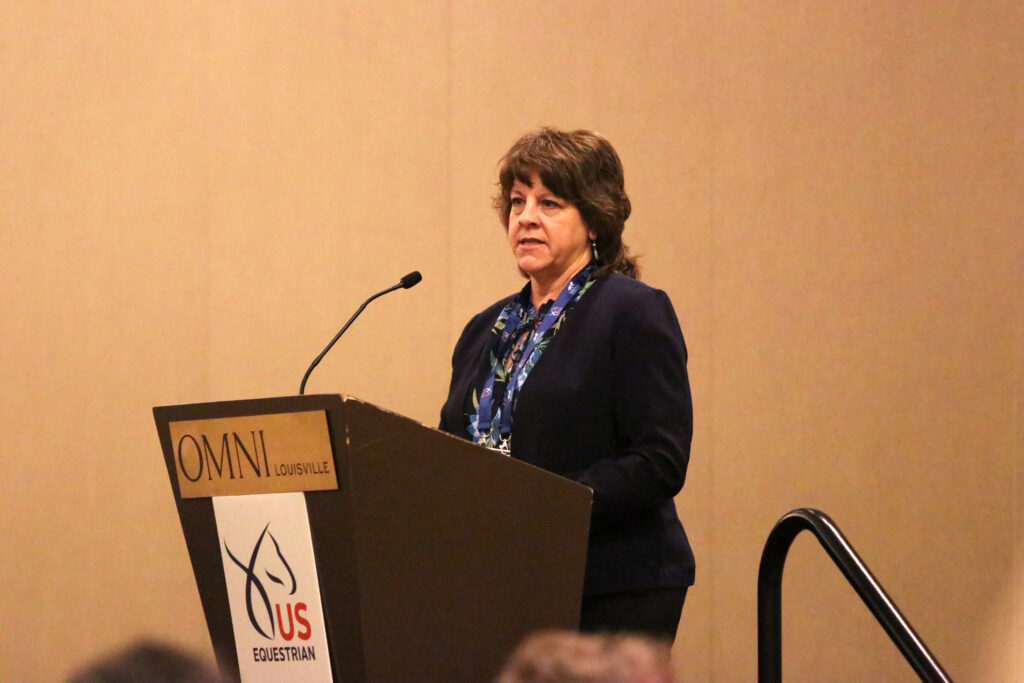
Kristy B. Arbogast, PhD, and Scientific Director of Children’s Hospital of Philadelphia (CHOP) Center for Injury Research & Prevention, shared that about 5,000 children come to CHOP each year for concussion injuries, leading to efforts to recognize, treat and prevent concussions. She noted that almost 20% of all adolescents will have sustained a concussion and approximately 30% of them had their symptoms last longer than a month.
Arbogast explained that the three E’s of injury prevention are education, engineering and enforcement. Then, a data-driven approach is used to help reduce injuries through equipment and infrastructure, rules and educational information. She said that additional steps to improve helmet safety involve characterizing the injury environment, converting to a lab test method, applying an injury metric and conveying findings to motivate change. These steps lead to equipment evaluation, which drives improvements in head protection.
A Helmet Safety Success Story
One of Arbogast’s other roles is being the co-chair of the Engineering Committee for the National Football League (NFL), and these steps have been used to improve helmet safety. The committee assists with creation of the NFL Helmet Posters every year, which are hung in each team’s locker room and ranks football helmets based on lab performance. The helmets are grouped based on statistical analysis with green for recommended, yellow for not recommended and red for prohibited. “It takes that detailed biomechanics and engineering information and conveys it in a way that can help people drive behavior change,” she said.
The first posters came out in 2015, though Arbogast said player buy-in took some work. However, when research showed that helmets that performed better in lab testing also performed better on the field with a lower concussion rate for players, then “moving up the poster” became a common phrase amongst players as they selected safer helmets. She added that manufacturers also responded when the posters became an annual occurrence with an increased rate of helmet innovation.
While football differs from equestrian sport, Arbogast believes a similar method could work for the horse industry. “All heads are created equal; it doesn’t matter if you’re playing on the football field or you’re riding a horse,” she said. “That relationship between those engineering measures and injury risk is translatable.” She noted that past research for equestrian helmets only looked at linear acceleration and equestrian helmet standards have had a pass-fail system. Now, the FEI is advocating for oblique testing that looks at both linear and rotational criteria for more thorough data. She also noted that the Virginia Tech Equestrian Helmet Ratings exist, which use a star rating similar in concept to the NFL Helmet Posters’ color-coded system.
Recognizing Concussions
Christina L. Master, MD, FAAP, CAQSM, FACSM, FAMSSM, shared insights learned from CHOP’s Minds Matter Concussion Program, which she co-directs with Arbogast. While the program focuses on children and adolescents, general guidelines on concussions apply to anyone. Since some concussion symptoms (fatigue, headache, etc.) can look like other health conditions, Master explained that visio-vestibular examinations, which use eye movement and balance tests, are key to identifying concussions. She added that the Concussion in Sport Group has created publicly available assessment tools for health care professionals in hopes that more concussion injuries can be easily recognized.
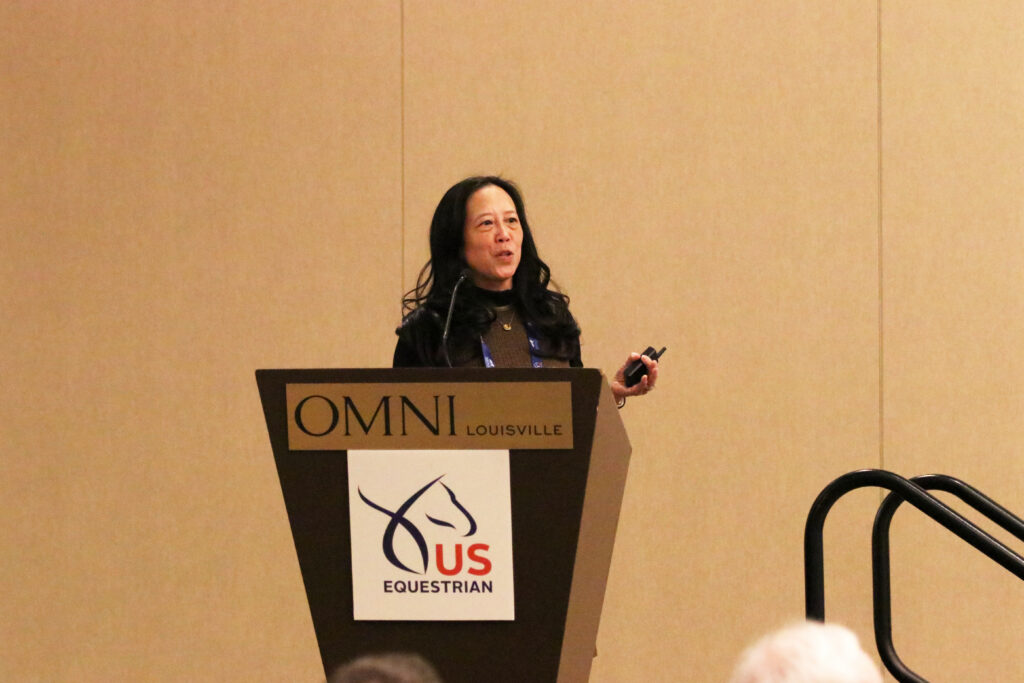
Master noted that more concussion research needs to be conducted with female athletes because most of the research has focused on male athletes. A 2020 study that she conducted with her colleagues and the CARE Consortium has provided more insights after looking at concussions in male and female student-athletes in National Collegiate Athletic Association (NCAA) Division I to Division III programs. “Interestingly, females more commonly sustained their injuries in practice versus competition, and the mechanism was more likely to due the equipment as opposed to being against an opponent,” Master said. “In contrast, males in this study … [were] more likely to sustain it in a contact sport [while competing]. And there, the mechanism of the injury is more likely to have involved an opponent opposed to equipment.”
The study also found that there was no difference in recovery rate between female and male student-athletes, which is contrary to other research findings. Master said digging deeper into the data revealed female student-athletes in the NCAA Division II and III levels took longer to recover from a concussion than Division I female student-athletes. While the study couldn’t prove it, a possible hypothesis is that Division I schools have better resources than the other schools.
Rehabbing After Concussions
Lastly, Master touched on the importance of resting after a concussion, though some physical activity is beneficial during the healing process. She referenced a study that found two days of rest was better than five days of rest before gradually returning to activities for children who experienced a concussion. A 2021 study found that light aerobic exercise (5-10 minutes) about two days after a concussion was more beneficial for children than a stretching program. “Aerobic exercise is good for your brain when you’re healthy, but it’s also good for your brain when you’re injured,” Master said.
She concluded by saying that there seems to be significant progress with concussion safety and treatment that positively affects outcome and performance for athletes. “A healthy athlete is really the best athlete,” Master said. “Someone who gets the best care and has the best outcome is going to be the best performer out there.”
Read more coverage of the 2026 USEF Annual Meeting here.
Editor’s note: the information in this article does not constitute medical advice. If you suspect you or someone you know has a concussion, seek medical attention from a health care professional.