


 Team Prac
Practical Horseman is thrilled to announce that James Alliston is a member of Team Prac! Team Prac—our group of top trainers representing hunters, jumpers, eventing and dressage—is here to provide useful and impactful advice to help you improve in your particular discipline and develop a harmonious partnership with your horse. Have a training question? Sign up for Practical Horseman+ here to submit a question to our team members.
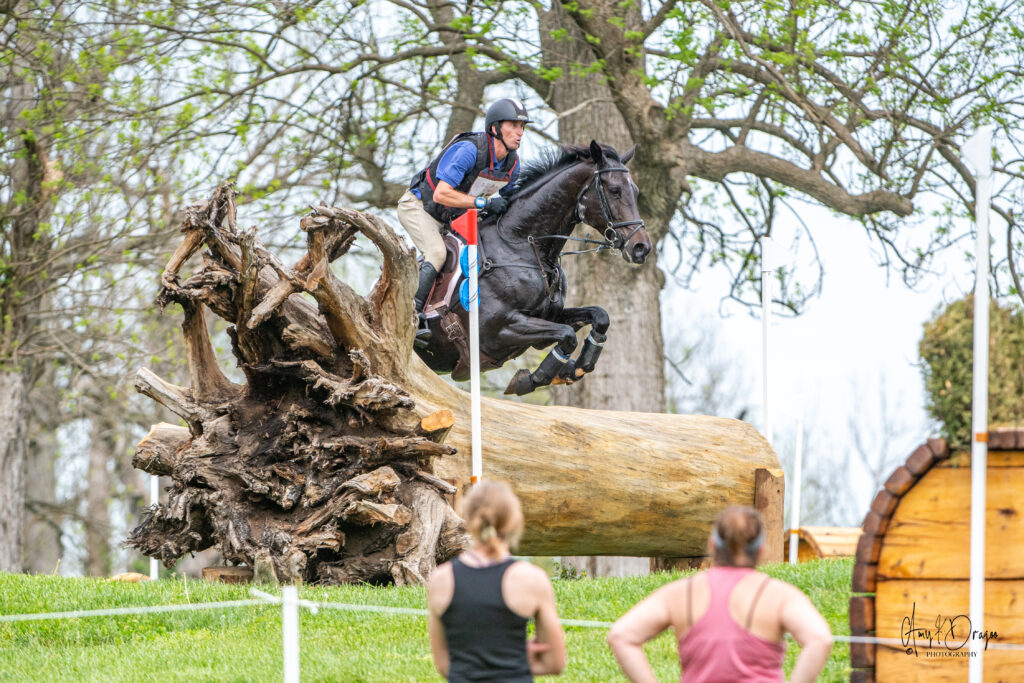
International eventer James Alliston has a solid resume after representing the U.S. on several Nations Cup teams. Alliston’s journey with horses began as a child riding in England to now representing the U.S. on the world stage. He has tallied numerous top international placings and CCI5*-L completions. He made his senior Nations Cup team debut at the 2022 Boekelo CCIO4*-NC-L in the Netherlands with Nemesis. Alliston returned to Boekelo the following year with Karma, and they finished as the top-U.S. combination in 14th place. In July 2024, the pair helped the U.S. Eventing Team earn a second-place finish at CHIO Aachen in Germany. Also, they finished as the highest-placed U.S. combination in ninth place. Alliston operates his training business, Alliston Equestrian, with his wife and fellow international eventer Helen Alliston in Castro Valley, California.
Below is an excerpt from a past Practical Horseman Podcast episode with James Alliston (Episode 101, released July 26, 2024). Alliston talks about his training philosophy and a favorite exercise involving a few ground poles.

A Passion for Eventing
Q: What do you like about eventing and why do you feel like you gravitated towards it rather than a different discipline?
JA: I love the all-around test of horsemanship and skills that eventing offers. I think you really need a wonderful partnership with the horse to do it. And there’s so much training that goes into it because there’s the three disciplines and the time spent working on the fitness with the horses. So, I just really like that part of it. I think there’s also many different sorts of horses that can succeed at the very highest level. You can take off-the-track Thoroughbreds. You can take horses that maybe aren’t necessarily superstar talents, and if they have the heart for it and the desire, they can be successful at the highest level.
Q: How would you describe your training philosophy?
JA: I tend to be quite slow and patient. I get a lot of my horses very, very young, and we break them and get them going. I’m all about building the partnership with the horses. I tend to not buy horses or get horses that have are already gone at a higher level. I’ve had most of my horses from their very first riding experiences, and then I go with them. I think that’s huge in in our sport, especially in the cross country—the partnership. To make them go and jump into the Head of the Lake [at Kentucky] or something like that they have to jump, I feel like you build that trust out hacking the first time when they are a three-year old. Does the horse go where you want him to go and does he trust you and believe in you? I think you generate that during the initial experiences. It sounds weird, but if they whip around out hacking, I really don’t like that for the cross country. If I can’t hack down the road, how am I going to jump that massive five-star fence away from the stables, you know?
Also, I rode for Gerd Reuter, a German dressage guy who worked closely with Will Coleman, and he always said, “Ride with love.” I love the horses. They’re all sort of my babies because I’ve had them most of them from a young age. So, we try to be patient, ride with love and see what happens.
Q: Do you have a favorite training exercise? If so, why is it your favorite, and can you describe it?
JA: I’ll chuck a few poles down in the arena set on bounce distances. It sounds very, very basic and easy, but the foundations of jumping and riding are coming in balance, having the horse where you can place him well at the jump and he’s rideable. And I think that translates to whatever level you’re doing, whether the horse is just learning how to jump or the horse is a five-star horse. Can you present the horse to a jump in a good way, in balance and at a speed appropriate for them to negotiate it? You don’t need to jump mountains to practice something simple as cantering a ground-pole exercise. You can really train your riding to be accurate and also train the horses to listen to you and be ridable. I normally have some poles on the ground in the ring anyway, and I’ll just pop through those quite a lot on all the horses.