




 Video
VideoPractical Horseman is thrilled to announce that Dave Thind is a member of Team Prac! Team Prac—our group of top trainers representing hunters, jumpers, eventing and dressage—is here to provide useful and impactful advice to help you improve in your particular discipline and develop a harmonious partnership with your horse. Have a training question? Sign up for Practical Horseman+ here to submit a question to our team members.
Modern stressors can create hidden tension that disrupts our muscle balance and connection with our horses. Sometimes even when we think we’re relaxed, chronic patterns can linger. The good news, however, is that by learning how to release stiffness and hit the reset button, you can restore harmony for a calmer, more balanced ride.
Riders spend years chasing improvements—hours of drilling exercises, training, making tweaks and corrections. But they never discover the often elusive, but fundamental principle that affects every ride: Your ability to engage your horse from behind to front, maintain collection and create a partnership that is joyful rather than tense.
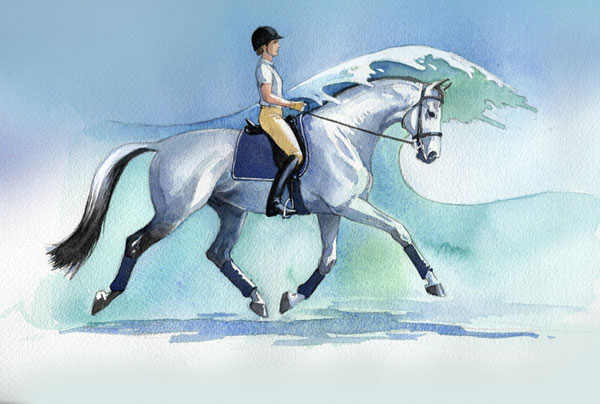
When your flexors and extensors work in harmony, your spine swings freely and your gaze guides your movement, you can unlock a capacity in yourself and your horse that transforms every ride, behavior and connection. Pain patterns—backaches, neck tension, hip stiffness and even shoulder or jaw discomfort—are often linked to imbalances in flexors and extensors. When these muscles aren’t working in harmony, the body compensates with tension, rigidity and chronic discomfort that can make even your best riding days feel out of reach.
Recalibrating flexors and extensors is not just about posture. It changes how your whole body moves, restoring freedom, reducing pain and allowing your nervous system to operate calmly and efficiently. The results can be profound: pain disappears, mobility returns and riding becomes effortless and joyful again.
Are You Overusing the Wrong Muscles?
Many riders work harder than they need to—not smarter. Other than flexors and extensors that are for smooth mobility, the body uses many other muscles and understanding them helps riders avoid common traps.
Stationary stabilizers: These are deep muscles designed to hold the joint in place, not move it. Many riders unknowingly over-recruit these when they try to sit “still,” brace for balance or attempt to be correct. When stabilizers grip too hard, the pelvis stops moving, the back becomes rigid and the rider loses the ability to follow the horse’s gait. Studies show that increased stabilizer tension directly reduces pelvic mobility and following ability.
Signs you’re overusing your stabilizers:
- Your seat feels “stuck” instead of flowing
- Your pelvis barely moves at the walk or trot
- You feel stable, but not elastic
- Your lower back is sore after riding
- Your horse feels tight, short or behind the leg
Deep core muscles: These corset muscles are meant to provide gentle support, not forceful bracing. When riders pull in the core—or “brace the belly” to feel secure—the spine and ribs lose their natural movement. Too much core tension diminishes shock absorption and increases stiffness, something research also confirms.
Instead, think about maintaining a soft belly, long back and breathing ribs to allow movement to travel through you rather than bracing against it.
Signs you’re overusing your deep core muscles:
- You’re holding your stomach in
- You can’t breathe deeply while riding
- Your ribs feel fixed instead of springy
- Posting feels effortful instead of buoyant
- Your upper body locks during transitions
Rotators and side-benders: These muscles twist or tilt the body. They’re essential for posture and steering, but not for the primary motion of following the horse. Overusing them, however, can create asymmetry, gripping or collapsing through one side of the body.
Your Goal: Effortless Harmony
When flexors and extensors are in balance, and the stabilizers and deep core work quietly in the background, the rider’s seat becomes:
- Soft yet supported
- Stable yet elastic
- Organized yet free
- Deeply connected to the horse
This harmony is what allows riders to move with their horses as one—light, fluid and completely in sync.
Do You Have a Question for Team Prac?
Team Prac—our group of top trainers representing hunters, jumpers, eventing and dressage—is here to offer useful and impactful advice to help you improve in your particular discipline and develop a harmonious partnership with your horse.
Click here to submit your question to our panel of pros. We’ll ask a little bit about you and your horse and what type of issue you’re seeking help with. From there, we’ll pass your question on to a Team Prac member who specializes in your discipline. If your question is selected, it will be featured in a future Practical Horseman and/or Dressage Today digital article and on our social media channels to help you and other riders who might be struggling with a similar issue.
We look forward to helping you and your horse on your personal journey together!
About Dave Thind
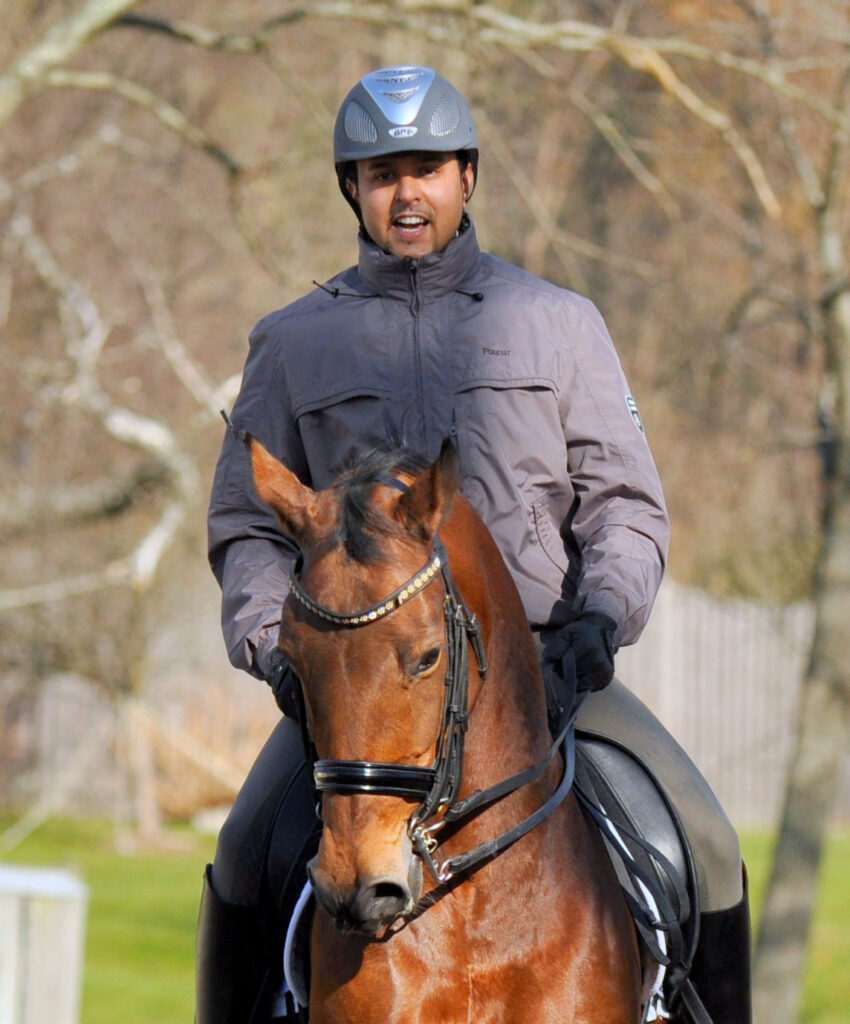
Born in Canada and trained in Germany, Dave Thind makes his home in Walpole, Massachusetts, as owner of Aspire Farm since 2013. Thind has himself competed at the Grand Prix level in dressage and jumping. He is a noted equestrian biomechanics authority, with several published articles and appearances as an expert guest or lecturer to his credit. He received his German ‘Trainer A’ license in 2007 with a nearly perfect score awarded to him from the German National Federation. He holds an International Trainer Passport Level III and is an Authorized Teacher of Feldenkrais Awareness Through Movement.
You can learn more about the Dave Thind Method here.