




 Video
VideoI developed an exercise for riders based on an observation I made one year in Florida. In the schooling area at the Winter Equestrian Festival, there were miscellaneous flower boxes, poles and small obstacles on the ground in different areas of the ring. I recognized a well-known grand prix rider on one of his equally well-known horses. They were cantering around and, as I call it, “hopping over” these small obstacles with the most relaxed, calm attitude from horse and rider you can imagine. It was almost hypnotic.
Nothing changed in the rhythm or balance of the horse, nor in the position of the rider. This was a classic example of doing flatwork with small jumps in the way. The rider maintained his position, keeping a light, following connection to the horse’s mouth. If the horse shortened his stride, the rider didn’t topple forward, nor did he fall back if he met an obstacle a little long. He was truly one with his horse.
If you weren’t looking for it, you wouldn’t even know they were going over obstacles. The rider would simply “hop over” them with his horse and then sometimes turn left to another, then right, then perhaps a longer approach, all the while maintaining a beautiful, rhythmic canter. There was no planned course—just flatwork incorporating small obstacles. Because he made no visible adjustments before or after, it was easy to maintain the same canter.
Setting Up the Exercise at Home
It looked so easy that I couldn’t wait to go home and have my students practice the same thing. I set up flower boxes, poles and small filler that were 2’ or lower and randomly placed them around the arena so they could be negotiated individually. That’s when I realized it was harder than it looked.
Some riders couldn’t grasp the concept and would immediately start making big adjustments, trying to create the perfect distance as if they were riding to a 3’6” oxer. For example, they would override to a long distance and change their position in the air, leaning unnecessarily forward and exaggerating their release. This often resulted in the horse speeding up—not only on the approach but after the obstacle as well. This isn’t something you want happening on course.
Conversely, when the next jump came up short, they would visibly shorten the stride, disrupt the rhythm, slow the horse and sometimes even break to a trot. All these overdone adjustments made the horse nervous and turned a simple exercise into something far more difficult than necessary.
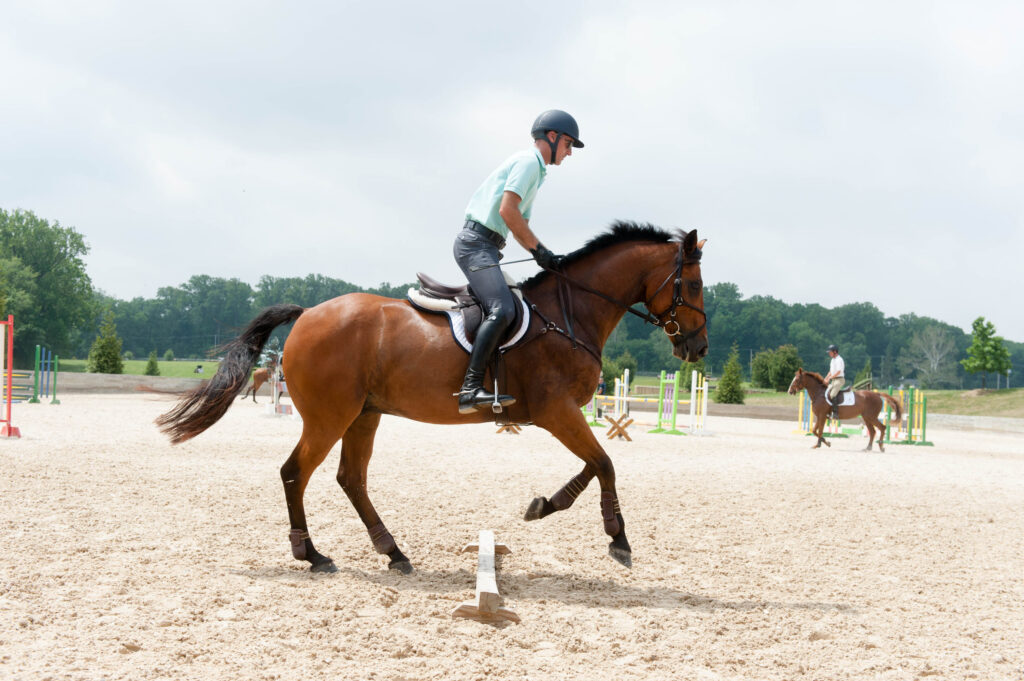
However, once riders took a deep breath and relaxed, the horse met everything in stride—almost as if by magic. When the horse is balanced, he can easily adjust his stride. This is very much a mental exercise, requiring both rider and horse to be relaxed. It is essential for riders to breathe normally, rather than hold their breath.
A means to an end, this exercise is ultimately how you want to ride a course. Confident, successful riders walk into the ring, pick up a canter and maintain their original pace from beginning to end, making the entire round look seamless. That is what this exercise teaches—and it can lead to a smooth, winning round. I hope you enjoy and benefit from it as much as my riders have.
About Holly Hugo-Vidal
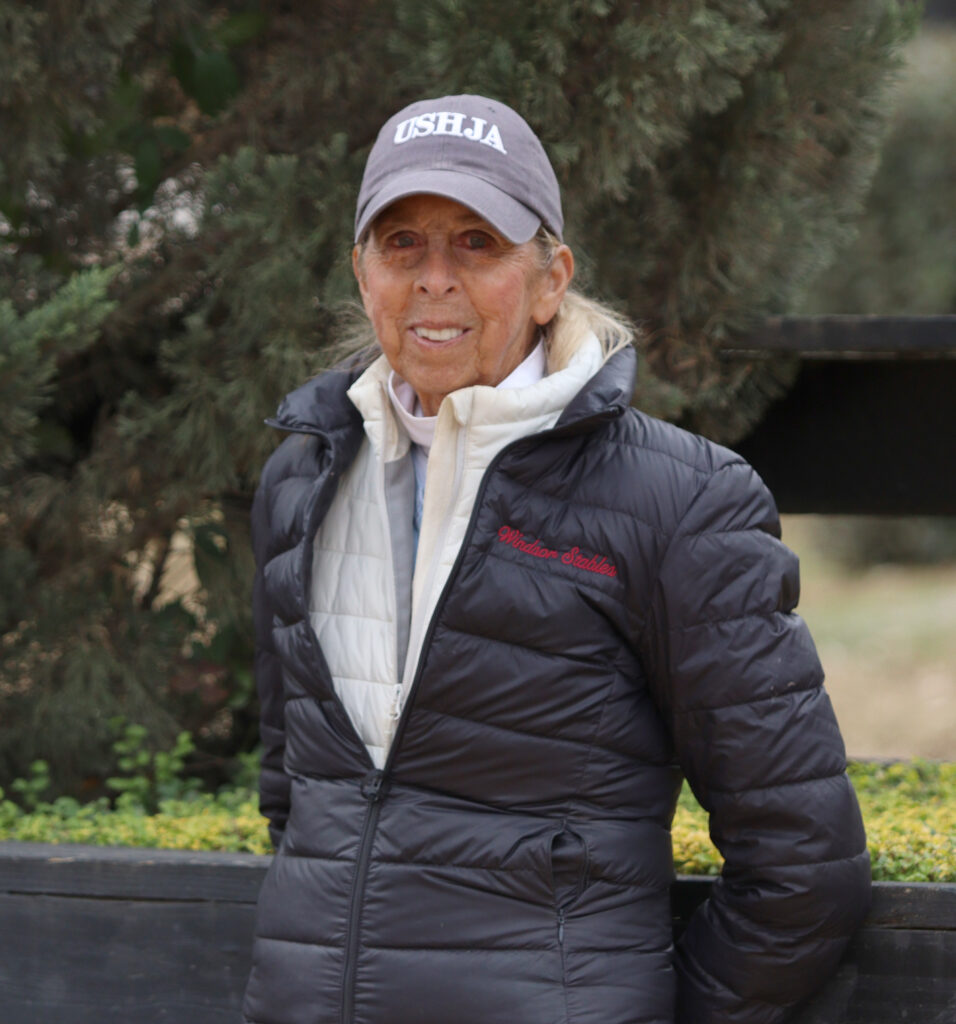
Trainer, judge and clinician Holly Hugo-Vidal is based out of Brownwood Farm in Milton, Georgia. Her mentors include former husband Victor Hugo-Vidal, with whom she ran successful show barn Cedar Lodge Farm in Stamford, Connecticut; and show jumper Rodney Jenkins. She is the author of the book “Build Confidence Over Fences!”