



 Video
VideoOnce you learn your diagonals, you’ve pretty much got them for life. But determining when you should be rising and when you should be sitting—all while still trying to get the hang of the posting trot and balance correctly in the saddle—is no easy feat.
Learning diagonals is a cornerstone to every beginner’s journey, and as you progress you’ll better understand and start to feel why posting on the correct diagonal is about more than points in the show ring.
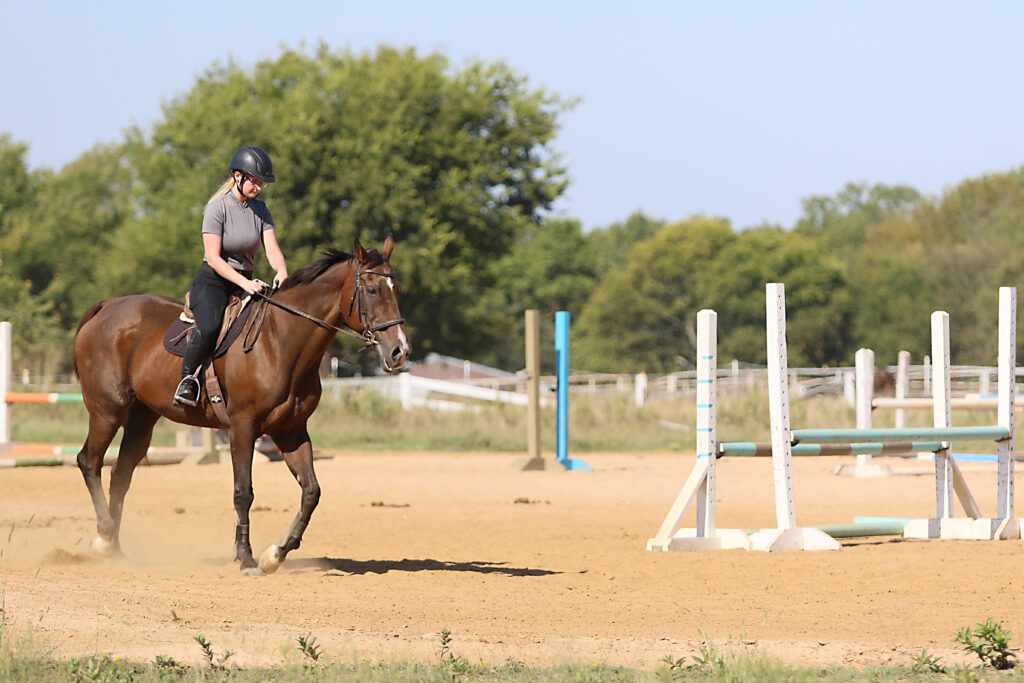
Whether you’re just starting out on your equestrian journey or you’re an instructor or mentor trying to teach your budding riders, we look at why diagonals are important and offer tips to help you (or your students) nail this key skill.
Diagonals Explained
The trot is a two-beat gait, meaning the horse’s legs move in diagonal pairs. The right front leg and left hind leg move together, as do the left front leg and the right hind leg. The USEF Rule Book explains that to be on the correct diagonal, the rider should be sitting when the horse’s outside front foot and the inside hind foot are on the ground. This is commonly referred to as the “outside” diagonal.
For beginners, this can be a lot to swallow. Essentially, diagonals are all about timing—the moment you rise and sit depends on what your horse’s legs are doing.
Years ago, when I taught young kids the basics and first introduced them to diagonals, I simply focused on helping them identify where exactly their horses’ shoulders are, understanding how the shoulders move at the trot (and what that looks like from the saddle) and then learning how to stand up in the stirrups when the horse’s outside shoulder is “forward.”
Why Riding on the Correct Diagonal Matters
You will lose points in your under-saddle or cross-rail trot classes for being on the wrong diagonal, but mastering this skill is about more than checking off boxes in the show ring. Riding on the correct diagonal helps your horse stay balanced through corners, turns, circles and while changing direction.
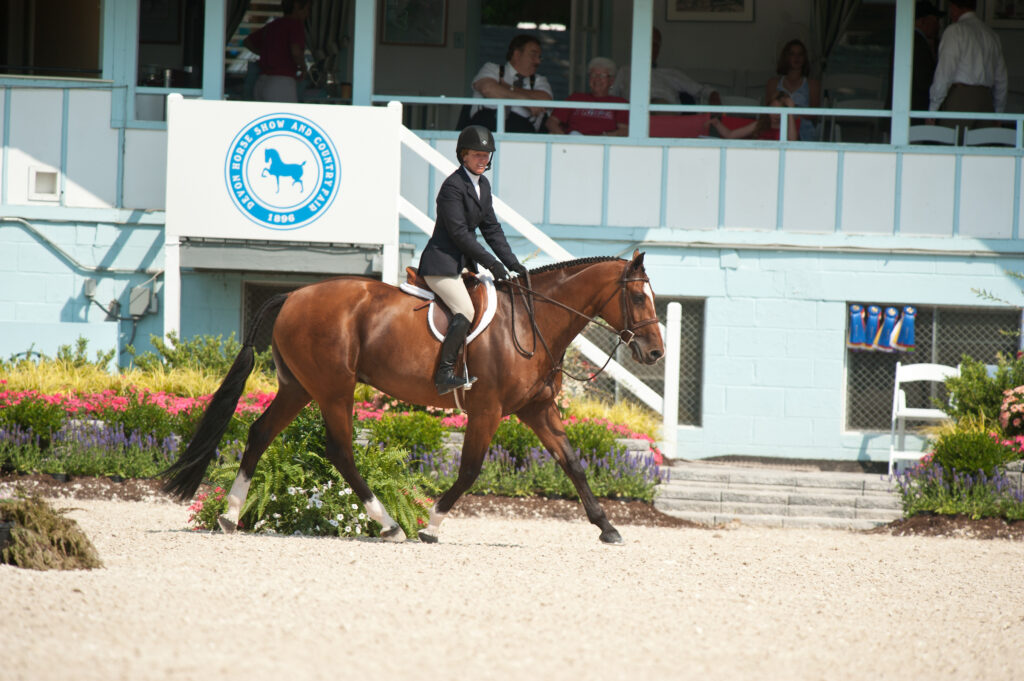
As you advance, you’ll also find that sitting when your horse’s inside leg is on the ground allows you to more easily influence his movement. You’ll be able to better use your inside leg in the sitting position to ask your horse for more engagement while his hind leg is still on the ground. Then, without your weight on the next step as your rise, your horse’s inside hind leg can move more freely as it leaves the ground. As the inside hind leg swings more under the horse’s body and becomes stronger, it improves his self-carriage, allowing the forehand to lighten and the horse to become more mobile and free in the shoulders.
Being on the correct diagonal and working in both directions also ensures your horse’s hind legs bear equal weight, helps his muscles develop evenly on both sides and promotes suppleness in his back.
Tips to Master Your Diagonals
Identify your horse’s shoulders: In my experience teaching young riders their diagonals, I often found they were looking at the wrong part of the horse’s body. At a standstill, make sure you can correctly identify both of your horse’s shoulders. Some horses have conformation that can make it more challenging to see and feel the shoulders in movement. If you (or your students) continue to have trouble seeing the horse’s shoulders, consider using some type of marker (stickers, Band-Aids, washable paint or chalk work well) on the shoulders that you can easily see from the saddle.
Once you’ve mastered your diagonals with the markers, remove them and see if you can still follow the motion of your horse’s trot without them. You can always reapply them if needed for as long as necessary—everyone learns at a different pace.
Practice at a walk: Even though the walk is a four-beat gait and the sequence of steps has a different rhythm than the trot, practicing at the slower pace can help you see the shoulders moving more clearly and will give you time to develop the necessary coordination to quickly change your diagonal when you’re wrong.
Fun phrase: To help you remember that you need to be concentrating on the outside shoulder, try remembering the phrase, “Rise and fall with the leg toward the wall.”
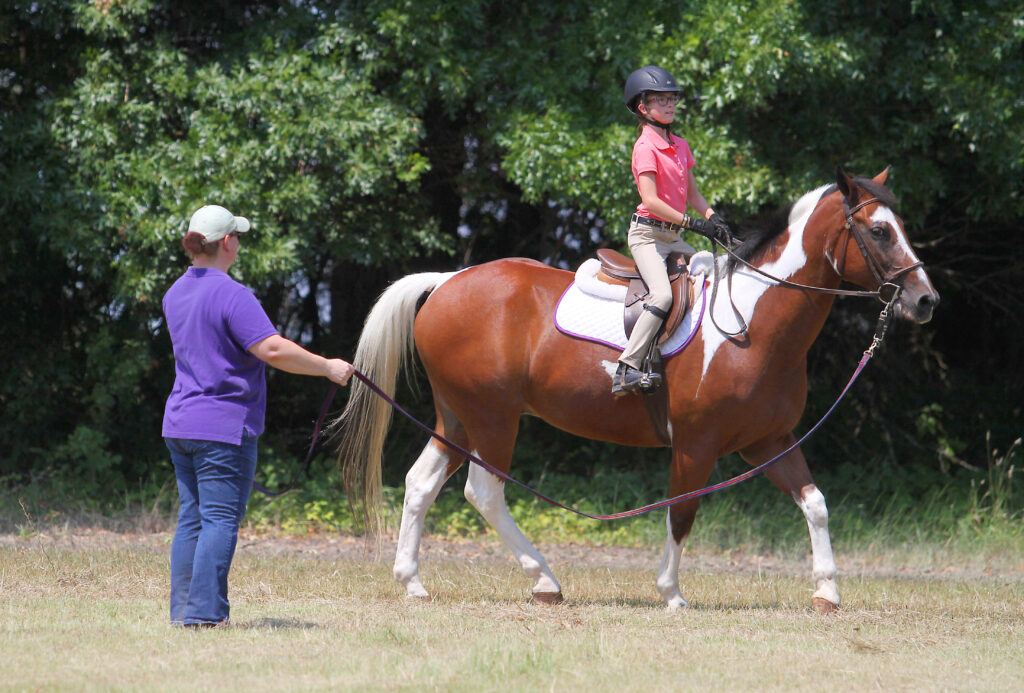
Work on the longe line: Riding on a longe line (where you instructor controls your horse’s movement on a circle) offers many benefits. Without having to worry about directing your horse’s movement, you can focus on your position, balance and feeling how your horse’s legs move at the trot. Your instructor can help you determine when you should be rising and sitting; and without having to steer, you’ll more easily be able to look down to see the movement of your horse’s shoulders. Once you gain more confidence, you can even practice closing your eyes on the longe line to better feel how your horse’s shoulders move at the trot.
Start from sitting trot: Simply starting from the sitting trot will allow you to see how your horse’s shoulders are moving and get a better feel for the timing of his trot steps and when you should rise and sit. Over time, you’ll find that trotting on the correct diagonal feels much more balanced, and the movement of your horse’s trot will naturally encourage you to rise when the outside shoulder his forward.
Practice changing diagonals frequently: To change your diagonal, simply sit for two beats of the trot; you might feel a little unorganized at first, but eventually, you’ll learn how to sit softly for the double beat before rising again. Once you start to get the hang of your diagonals, practice trotting on a straight line and change your diagonal every five steps or so. The number of steps isn’t important; just by changing your diagonals frequently, you’ll be able to better see and understand where your horse’s shoulders are at the trot.
Figure eights and serpentines: As you advance, incorporate figure eights and serpentines into your trot flat work. These exercises provide designated points where you should change your diagonal and are also great for practicing straightness. For example, in the figure eight, you can start on the centerline and pick up a posting trot tracking to the right (meaning you’ll be on the left diagonal to start). Focus on making a nice, round circle to the right back through the centerline; make sure your horse is straight through the center, sit for two beats to change to the right diagonal and make a circle to the left this time.
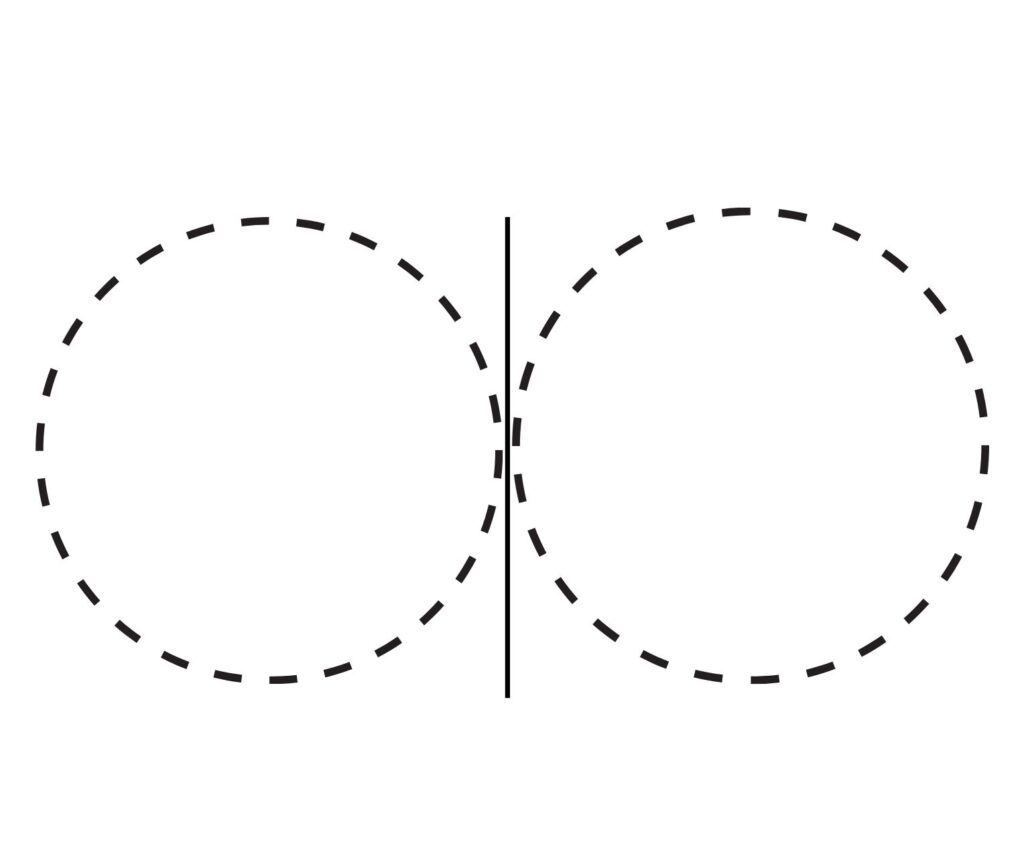
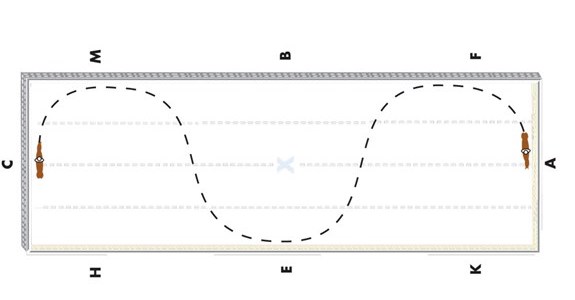
The serpentine includes a series of loops up and down your arena that requires you change your diagonal with every loop as you continue to change directions. Riding a three-loop serpentine (or as many loops as your arena allows) is another great exercise to practice changing your diagonals while also ensuring your horse works evenly in both directions.
We hope these tips help you master your diagonals as you and your horse continue your riding journey together!