




 Video
At any given time, Aubrey Graham, owner of Kivu Sporthorses, has 20 or 30 off-the-track Thoroughbreds (OTTB) at her farm in Lansing, New York. Graham has made a name for herself in the Thoroughbred industry not only for retraining and sales, but with her Thoroughbred Logic column for HorseNation.com and through various podcasts, including OTTB on Tap and Retired Racehorse Radio. She is a regular participant in the Retired Racehorse Project (RRP) and has presented at the RRP Thoroughbred Makeover. She also teaches Thoroughbred Logic clinics and is working on a book by the same name for Trafalgar Square Books.
Graham often purchases horses directly off the track and gets them started, sometimes pursuing a competitive career in eventing, and sometimes selling them as green prospects. She also runs a nonprofit organization called Stall 13, which targets Thoroughbreds who are “challenging cases” Thoroughbreds from two angles—those coming off the track in need of rehabilitation, and those who hit speed bumps in their second careers and need some figuring out before they can re-route onto a better path.
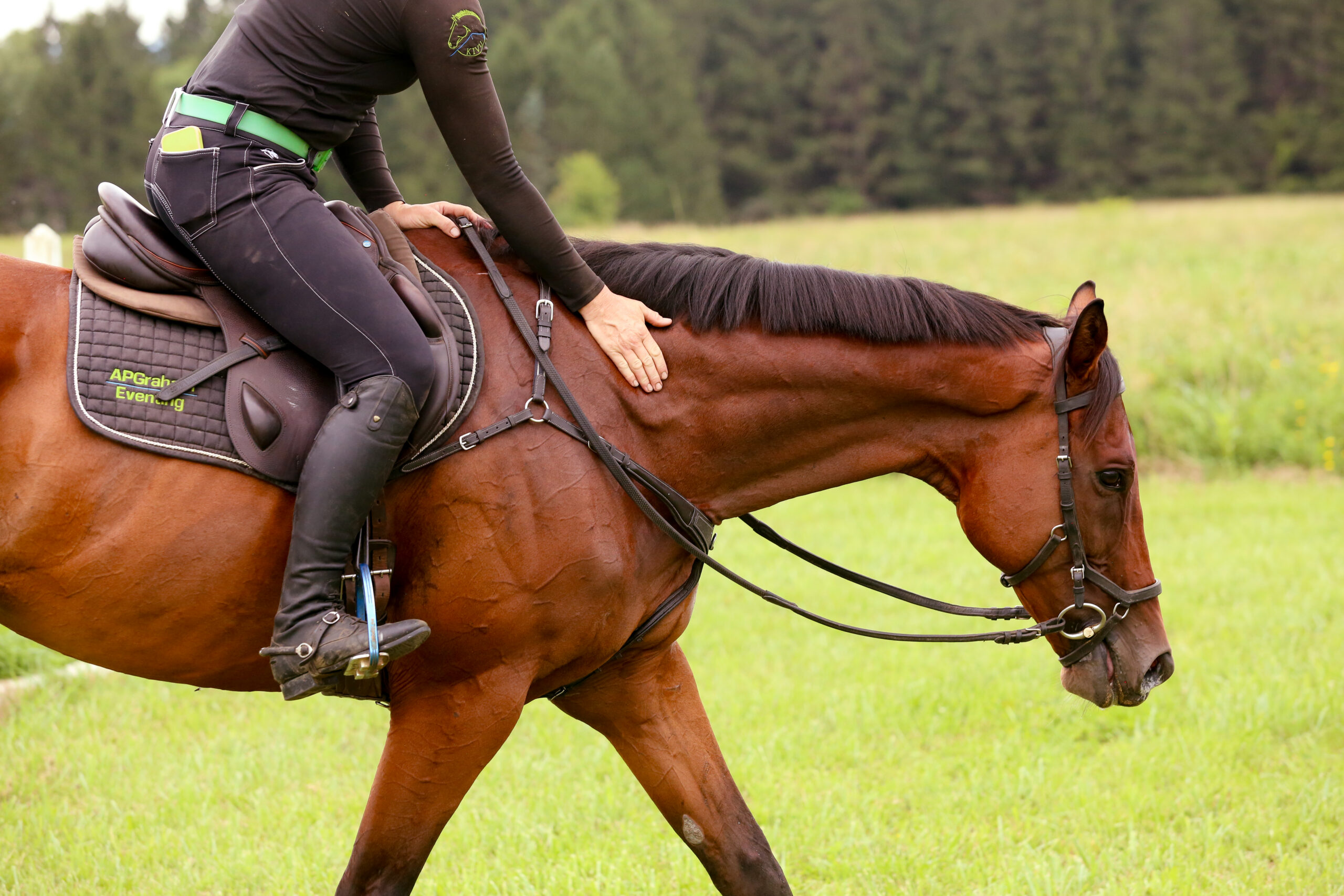
Her goal isn’t to turn every Thoroughbred into the same finished product. Instead, she wants to give each horse the tools to become balanced, confident and rideable. Here are five tips on how you can start retraining your OTTB as he adapts to his new career path.
1. Observe first—and let the horse show you who he is
Graham’s first training tool is observation. When a new horse arrives, she doesn’t immediately start drilling him under saddle. She watches how he handles his new surroundings, turnout, other horses and routine handling.
“The questions I’m asking by doing these things between turnout, leading them to and from, and then a first ride, is: Who is this horse, and what does he need to be safe and understand the ask enough to be happy with what we’re doing?” she says.
Depending on the horse’s personality and recent history, he may initially go into a small paddock with highly visible fencing. Once he understands the basics of turnout, Graham gradually introduces him to a herd, typically within the first couple of days at her farm, and then she watches closely.
Her background in cultural anthropology—including a PhD and years teaching at Emory University—has reinforced her belief in simply watching behavior before trying to change it.
“I will just stand there for 20, 30 minutes and just watch what they do, watch how they interact,” she says. “Because what a horse does in the field is what he’s going to do under saddle.”
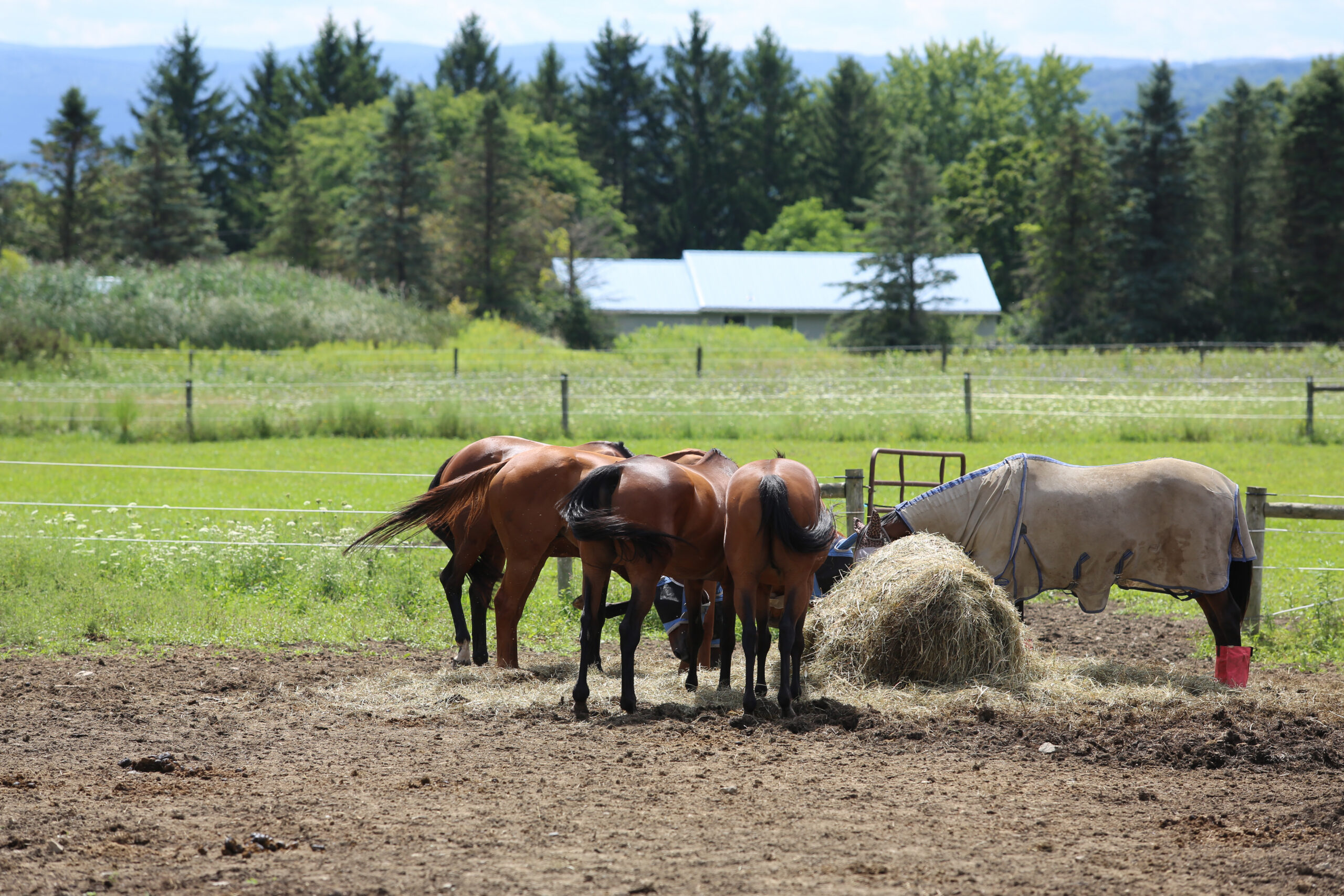
A reactive horse may need a different approach from a horse who immediately tries to take charge. Graham uses herd dynamics to help both; for example, she describes Explorer, a huge Thoroughbred who arrived as a consignment horse. His owner told Graham he was the dominant horse in his previous herd and could be pushy under saddle. Graham put him into a more dominant herd at Kivu and within several hours, he had moved toward the middle or bottom of the hierarchy—and became considerably easier to handle around the barn. A less confident horse might get the opposite treatment: a calm, easy herd in which he can gradually become more secure.
The same observation continues on the ground. How does the horse lead? Does he stop when the handler stops? Does he crowd the handler with his shoulder? Does he try to push through boundaries?
Graham’s observations are all part of the training process.
“Generally, I want my horses and my dogs trained about the same: if they’re super pushy, if they have no boundaries, if they try to hunt through my pockets for cookies, or push me around, it’s time to set some clear boundaries and start on the ground work,” she says.
Graham is particularly clear about boundaries. Horses are given enough room to make mistakes and discover the correct answer rather than being micromanaged.
“I will give you as much time as you need for your answer, but the answer has to be an effort, not a no,” she says.
Try it: Before riding a new OTTB, spend time watching him in turnout and handling him on the ground. Note his first responses rather than trying immediately to correct everything. Then use those observations to determine what kind of support and boundaries he needs.
2. Establish ‘forward’ before asking for complicated movement
Before that first ride, Graham has already taken stock of the horse’s personality during her observations in the field and she approaches the first ride with a plan. When she does get on, her first priority is simple: go forward. She generally doesn’t longe a horse before the first ride. Instead, she relies on her observations, her own riding skills and a helper on the ground when appropriate.
The mounting block itself can become part of the training. A racehorse may have had a jockey tossed onto his back thousands of times but never learned to stand quietly beside a mounting block. Graham doesn’t assume that a horse understands what she considers routine.
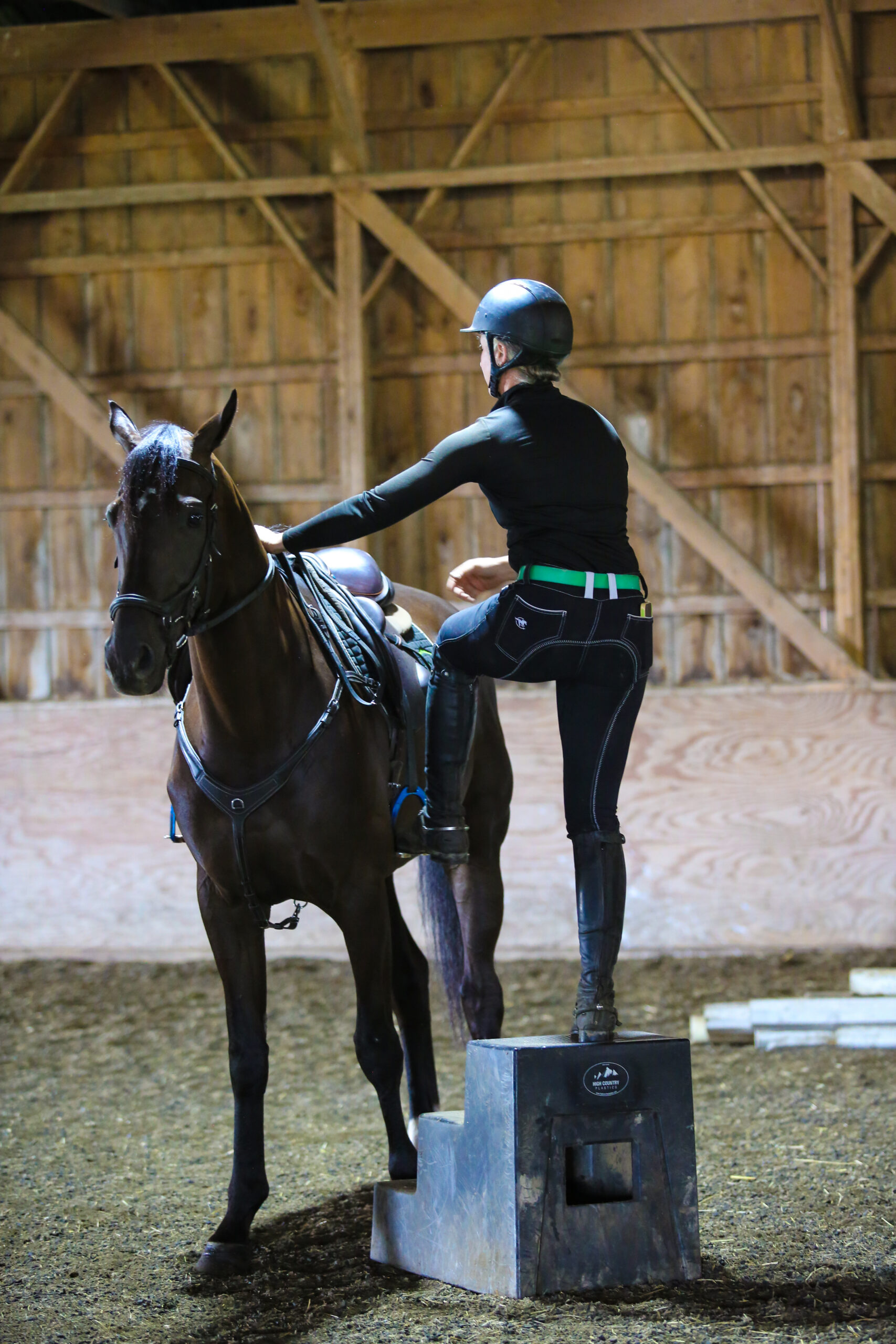
Once mounted, she asks basic questions: Can we walk? Can we go forward? Can we steer? Can we maintain a rhythm? The answers to these questions tell her where to begin. Some horses need a quiet rider who does very little, while others need a clear “go” command because they become stuck behind the leg.
Graham describes one of her horses, Humphrey, who initially became extremely reactive during his first ride. Rather than pulling, kicking or trying to force him into a response, Graham centered herself and sat quietly, “like a sack of potatoes,” and allowed him to work through the moment. Soon, he settled and walked forward.
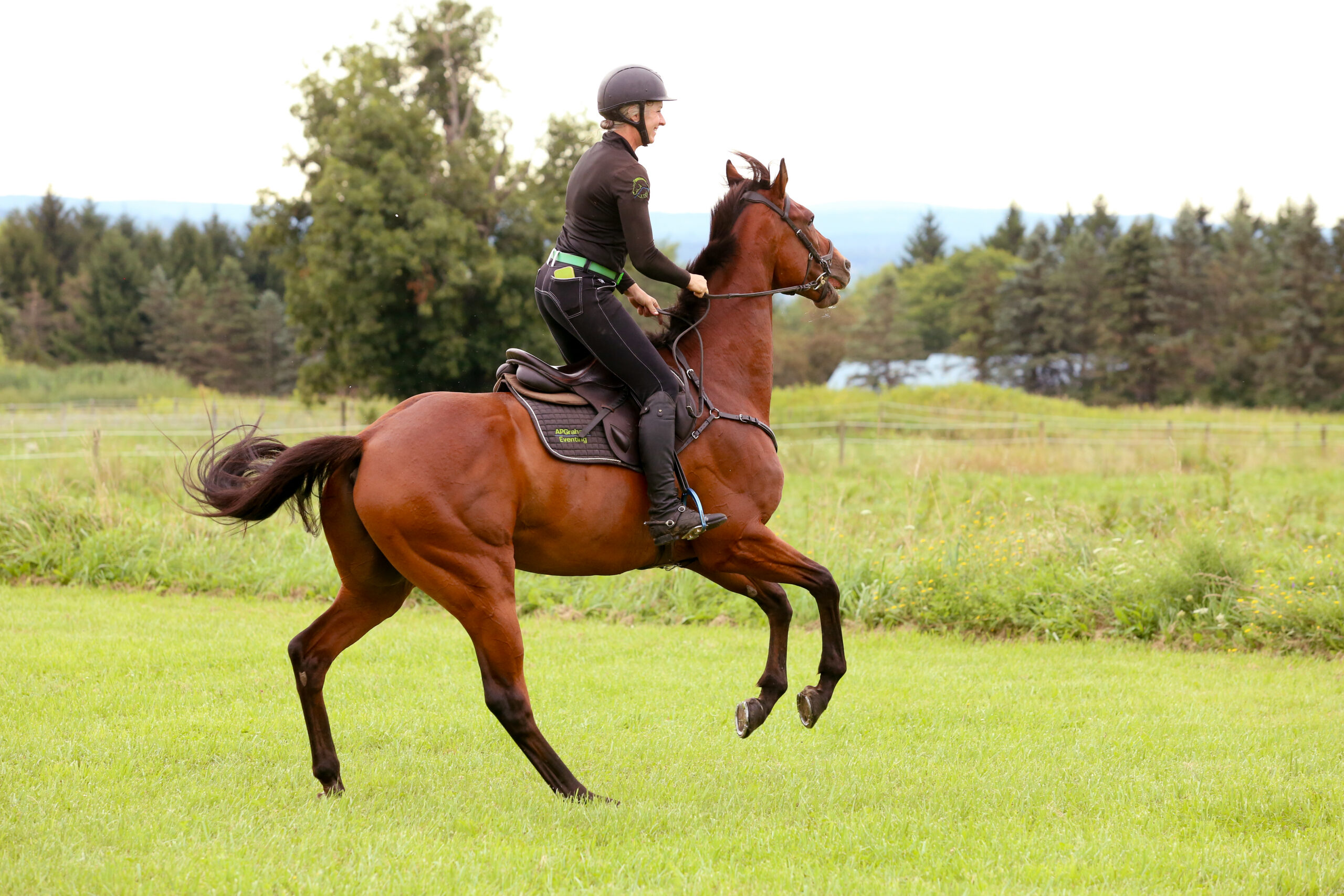
The lesson wasn’t that every green Thoroughbred should be ignored when he reacts—it was that the rider needs to understand what the horse is telling her before choosing an intervention. Once the horse is moving, Graham likes to push the horse forward into trot early in the ride because it quickly reveals the basics: rhythm, steering, balance and brakes.
And those brakes, she says, are often better than riders expect.
“Brakes are almost never from the reins,” she explains. “Brakes are from your body. If you pull on their face, they pull back; that’s like engaging the gas pedal!”
Many Thoroughbreds understand the body position associated with slowing down because it resembles what they experienced during racing. Graham encourages riders to use their whole body and leg rather than grabbing the horse’s mouth.
A common mistake, she says, is gripping with the ankle or lower leg. That can send a Thoroughbred forward rather than slow him down. Instead, the rider should think about connecting the calf, thigh, seat and upper body into a clear half-halt.
Try it: Establish a forward rhythm first. Once your horse is confidently moving, practice transitions and half-halts using your body and legs before resorting to the reins. Think of tightening your core muscles and sitting up tall rather than pulling on the reins to stop your horse.
3. Use the ‘disappearing triangle’ to teach the horse to come through
Once a horse is moving forward, Graham begins addressing one of the central pieces of her training system: helping the horse understand how to use his hind end and come over his back. Her simple visualization tool is called the “disappearing triangle.”
Start at the trot with an established rhythm and move the outside hand approximately 6 to 12 inches away from the horse’s neck. This creates a triangular space between the horse’s neck, the outside rein and the imaginary line between the rider’s outside hand and the withers. The rider then uses the inside leg to encourage the horse’s ribs and shoulders into that open space while maintaining supportive contact with the outside rein.
The goal is for the horse to make the triangle “disappear” by moving his shoulders and ribs into the space.
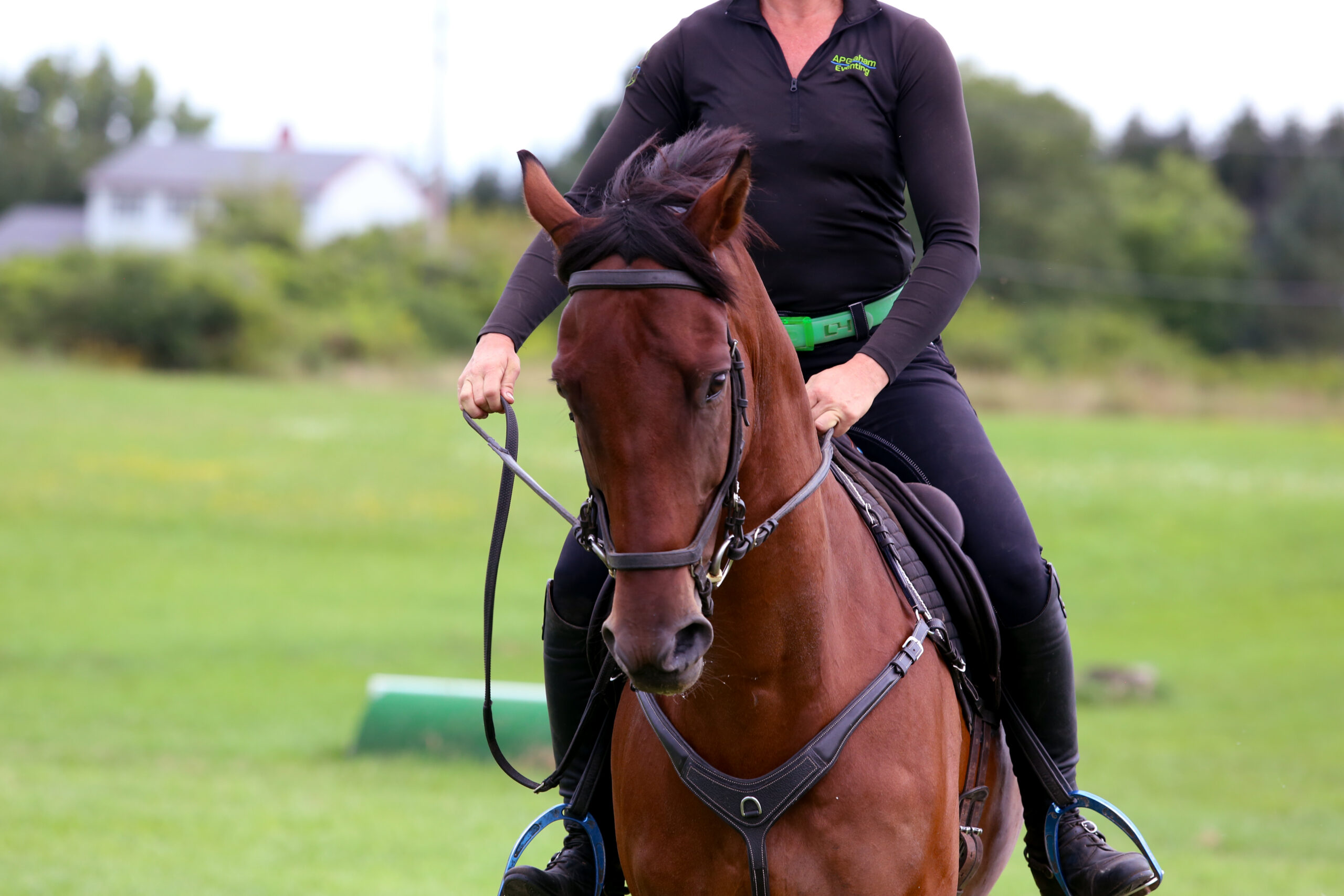
The exercise is essentially an exaggerated version of inside leg to outside rein, but Graham finds the visual concept particularly useful for green horses because it makes the desired movement clear. Note that the inside hand should not pull the horse’s head into position. Instead, it stays quiet and out of the way while the rider uses the inside leg and outside rein to influence the horse’s body.
“When you move a horse into the outside rein from the inside leg, you ask the horse to step through behind and balance over their outside hind leg,” Graham explains.
When the horse successfully fills the triangle, the rider can soften the inside aids while maintaining gentle support from the outside rein. The result may be a horse who feels more powerful and suspended at the trot. His head and neck may eventually lower, but Graham cautions riders not to make that the goal.
“Don’t evaluate success by their head and neck position,” she says. “Pay more attention to their ribs, shoulders and back.”
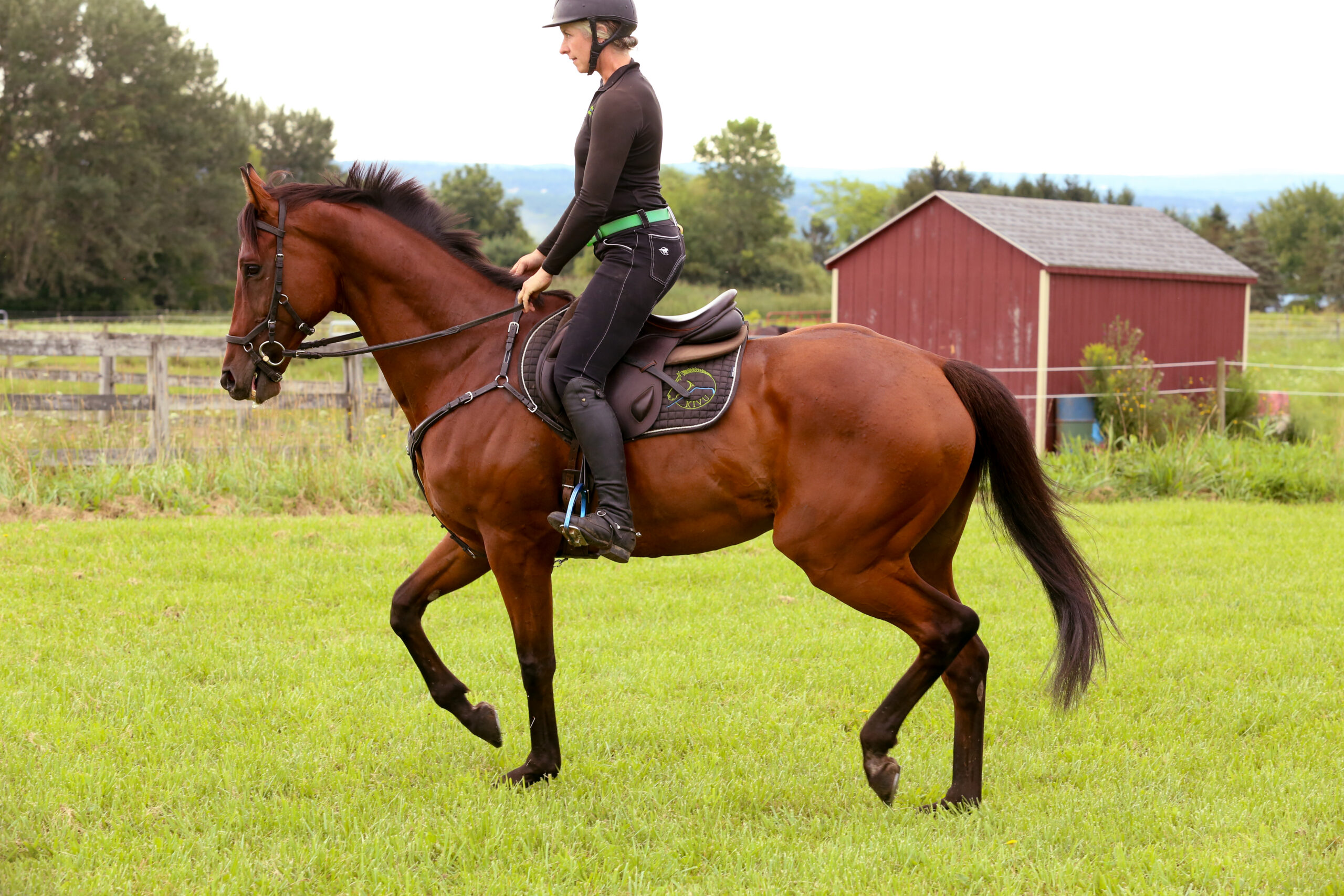
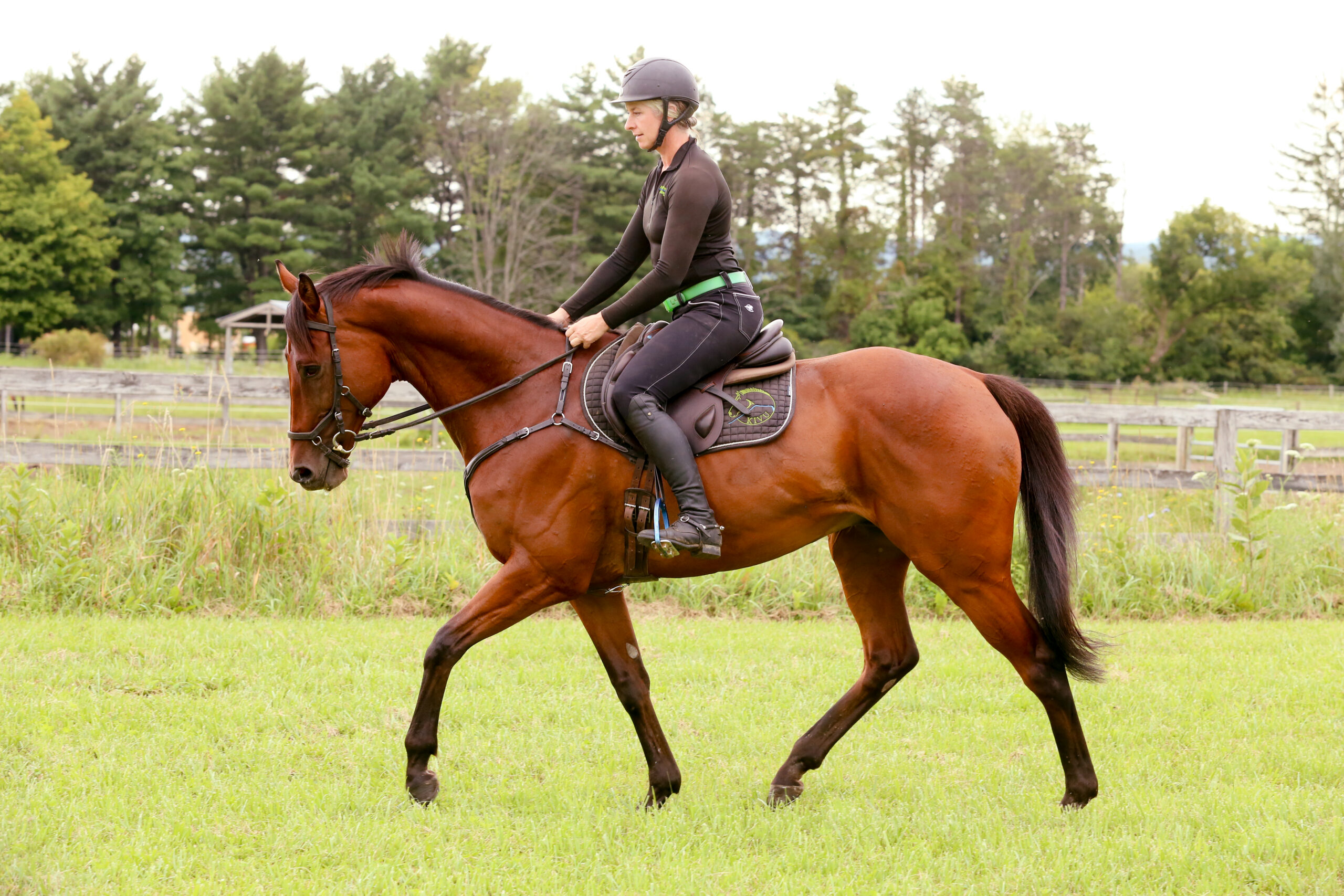
Try it: At a balanced trot, move your outside hand 6 to 12 inches away from your horse’s neck. Use your inside leg to encourage your horse’s ribs and shoulders toward that opening while keeping your inside hand neutral. When your horse fills the space, soften. The objective is a better connection through the body—not a particular head position.
4. Let circles teach balance
Graham does much of her early training on circles because they give a green horse one balance problem to solve rather than constantly asking him to reorganize himself. Her standard starting point is a 20- to 30-meter circle.
On a circle, she explains, the horse has to maintain a consistent bend while the rider can observe exactly where he changes tempo, falls in, falls out or loses balance. Those patterns become useful training information.
“If you know their patterns, you can predict them and use them to your advantage,” Graham says.
Suppose a horse consistently slows at one point on the circle. Rather than fighting that tendency, the rider can use it to teach a half-halt. Conversely, if a horse speeds up and leans through another portion of the circle, the rider can use that moment to reinforce forwardness while supporting the outside shoulder. The goal is to make the entire circle consistent.
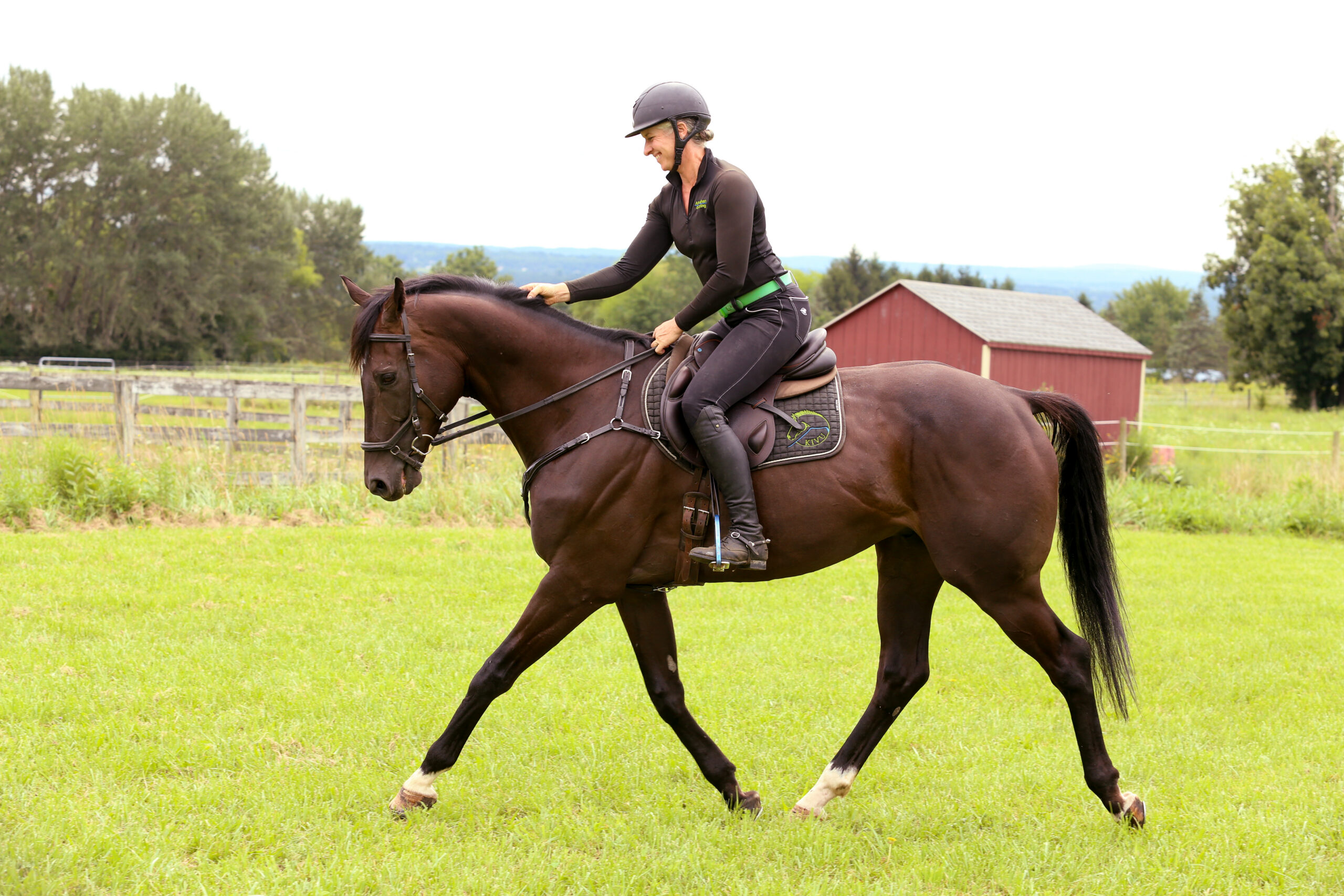
Circles also give the rider an opportunity to teach the horse that balance doesn’t have to come from speed. Thoroughbreds have spent their racing careers using speed to create balance, and Graham wants them to discover another option: using their hind end.
Try it: Establish a 20-meter circle at a steady trot. Notice exactly where the horse speeds up, slows down, falls in or falls out. Use those predictable moments as training opportunities. Gradually ask the horse to maintain the same rhythm and balance through the entire circle.
5. Connect the circles—and teach the horse to change balance
Once a horse can maintain reasonable balance on a circle, Graham introduces patterns that require him to reorganize himself. A figure eight is particularly useful because it connects two circles and requires the horse to change bend and balance.
Initially, Graham walks the diagonal between two half-circles, creating a figure similar to an ‘8,’ like two half-circles connected by diagonals. This gives the horse time to reorganize his body without using speed to compensate.
As the horse becomes more proficient, the diagonal can be trotted. Eventually, the two circles become rounder, and the figure eight is shaped more like a snowman, and the transition between them is more fluid, with the horse changing balance efficiently through the center rather than rushing across the middle.
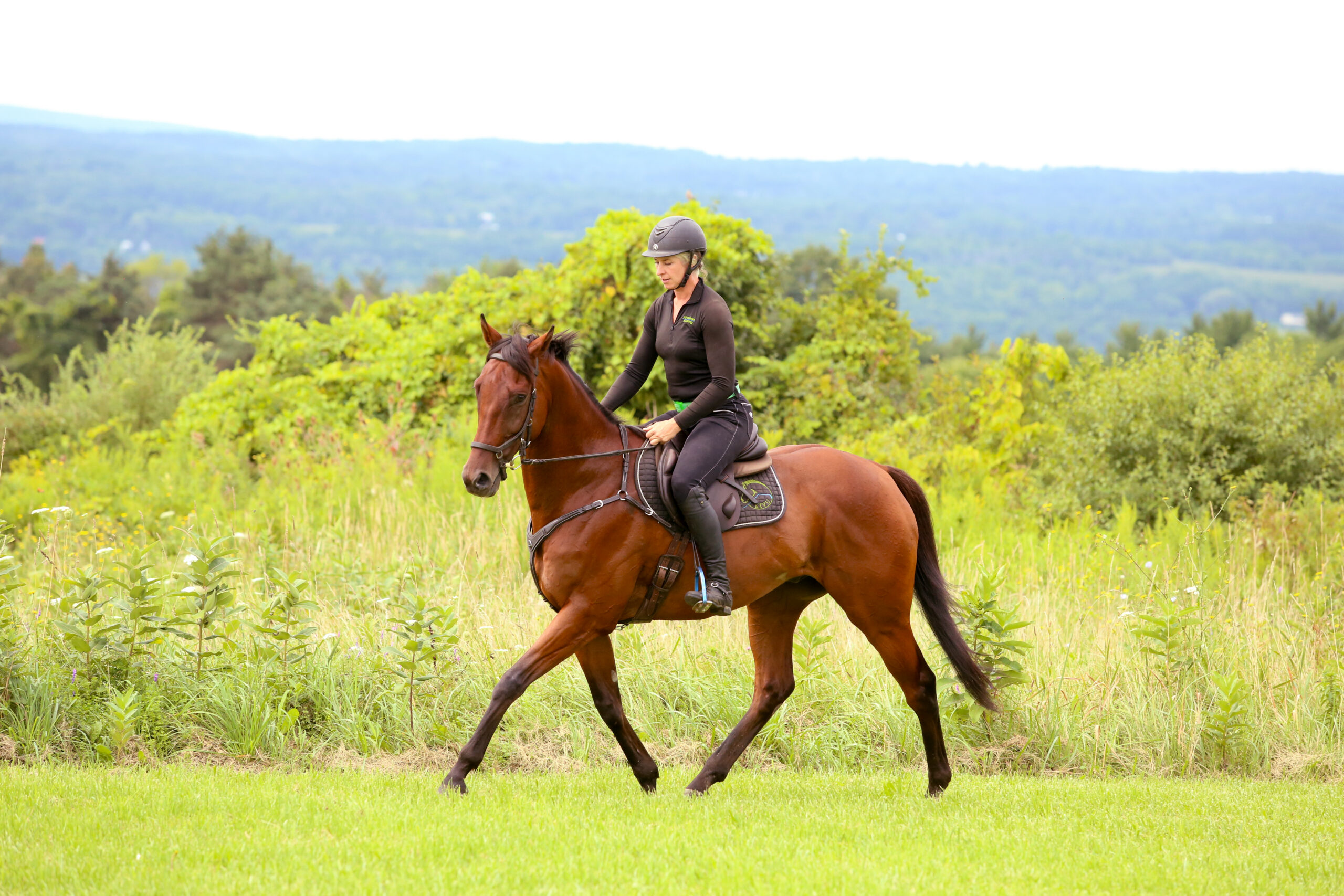
Shallow loops along the long side provide another useful progression: The rider asks the horse to bend one direction, come through straight as the bend changes, and then establish the new bend. This helps address a common problem in green horses: appearing bent while actually leaning or dropping a shoulder. Graham is particularly interested in finding straightness before adding more bend.
Imagine a horse that drops his right shoulder when passing the gate. He may appear to have a correct bend because his body is curved, but the shoulder is actually falling away from the rider. Turning the horse more doesn’t fix the problem; it can simply create another version of the same imbalance.
Instead, Graham suggests finding the moment when the horse becomes straight, and then “giving up on the next turn.” In other words, begin the shallow loop, establish the bend, ride through the point where the horse becomes straight, and then continue straight instead of immediately forcing the second bend. Once the horse is truly straight through its body, the rider can reshape the new bend from the inside leg to the outside rein. This progression teaches the horse that straightness is a place he can return to, not something the rider has to manufacture.
Try it: Ride a shallow serpentine down the long side. As you change direction, look for the moment when your horse’s shoulders come back underneath him and he becomes straight. Instead of immediately asking for the next bend, ride straight for several strides. Then establish the new bend with the inside leg and outside rein.
A balanced horse is a more confident horse
For Graham, all these exercises serve a purpose beyond eventually producing a better dressage score. The ultimate goal is an OTTB who can adjust his balance and stay mentally available to his rider.
“A balanced horse is a sane horse,” she says. “They aren’t worried about what is coming. They are prepared and able to do all the things—slow, fast, turn, jump, wait, manage warm-up-ring traffic, or gallop down to a big cross-country fence.”
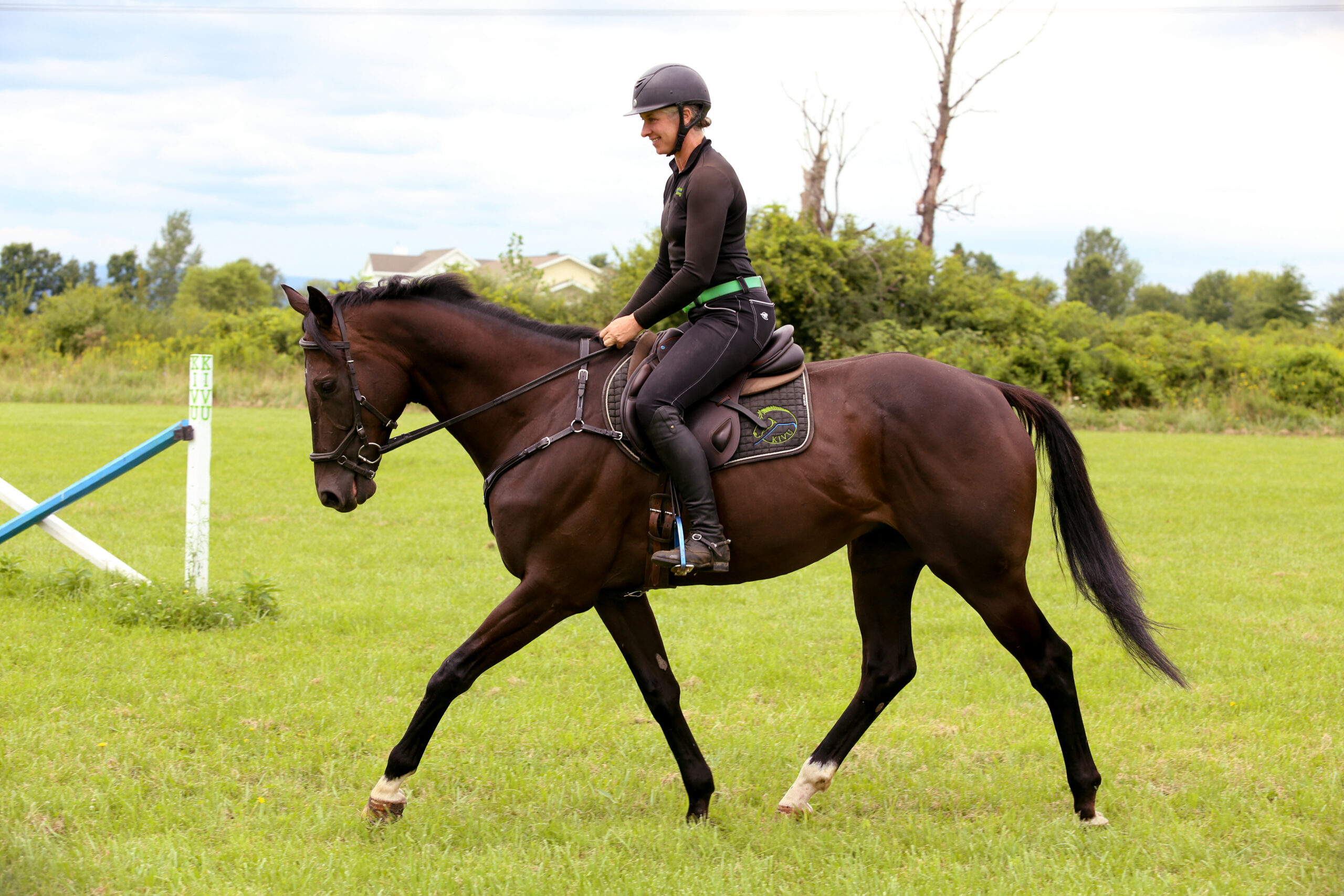
That versatility starts with surprisingly basic pieces: observation, boundaries, forwardness and straightness. A green Thoroughbred doesn’t necessarily need more pressure or more complicated exercises; he needs to understand what the rider is asking, have enough room to make mistakes, and learn how to use his body to find the answer. This will improve the horse’s confidence and make them safer to ride.
For Graham, that is the essence of retraining. “A straight, forward-going horse is a capable, safe horse,” she says. “One of the fun aspects of doing things this way is producing brave horses.”
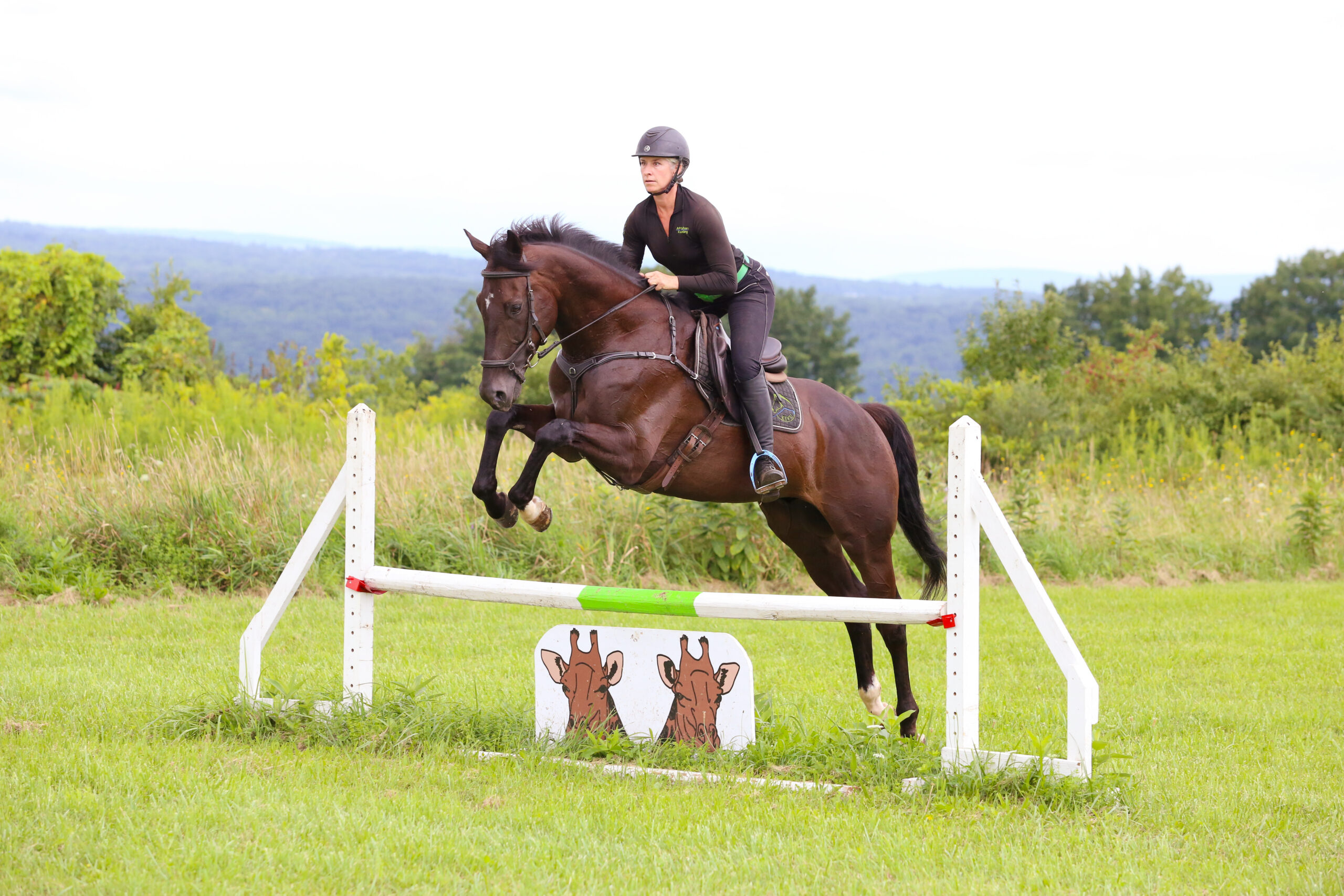
From there, the bend, adjustability, jumping skills and sophistication can be developed. The horse learns that he can change speed without losing balance, turn without falling over, and respond to the rider without giving up his own initiative. And that, ultimately, is what allows a former racehorse to become a willing partner in a new career.