



 Video
VideoIn riding and training horses, we often have to make split-second decisions to correct inappropriate responses or behaviors. Many riders make the mistake of assuming their horses will understand any form of correction in regard to an error or misunderstanding on the horse’s part. But your response to his behavior must be suitable to the situation, the individual horse and his stage of training. Determining what is appropriate comes from listening to your horse, practicing, and when appropriate, seeking advice from your trainer or veterinarian.
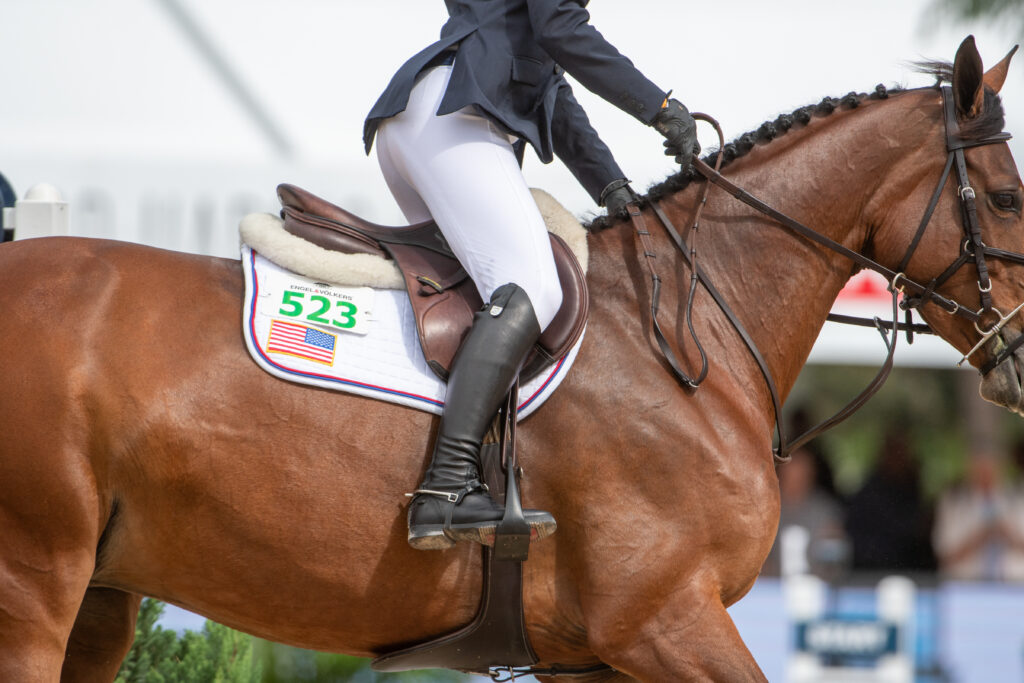
The Order of the Rider’s Aids
I strongly believe aids need to be applied in a thoughtful order. I have seen riders use a stick on horses out of frustration when they weren’t getting the result they wanted. But how could a horse possibly interpret this in any way other than exhibiting fear or confusion?
In my training of horses, which is an ongoing, everyday process, I do things in stages, degrees and in a particular order. For example, the sequence of a rider’s aids is leg, cluck, spur and stick.
When you apply pressure with your leg, your horse should move forward or away from that pressure. If there is a lack of response from the horse, more pressure is applied with the leg aid. If the horse still doesn’t respond, the rider should add a cluck in conjunction with the use of the leg. Next, a gentle nudge with the spur can be added along with the leg aid.
Finally, if you still need more of a reaction, a tap or two with the stick (crop) should be added behind the leg. This should be done at the same time the leg is applied so the horse understands to move forward or laterally away from the leg as a result of the appropriate pressure and placement of the leg.
To send the horse forward, the rider’s leg should be applied at the girth. When asking the horse to move laterally, the rider’s leg should be placed a few inches farther back on the side of the horse to indicate the direction that you are asking the horse to move away from.
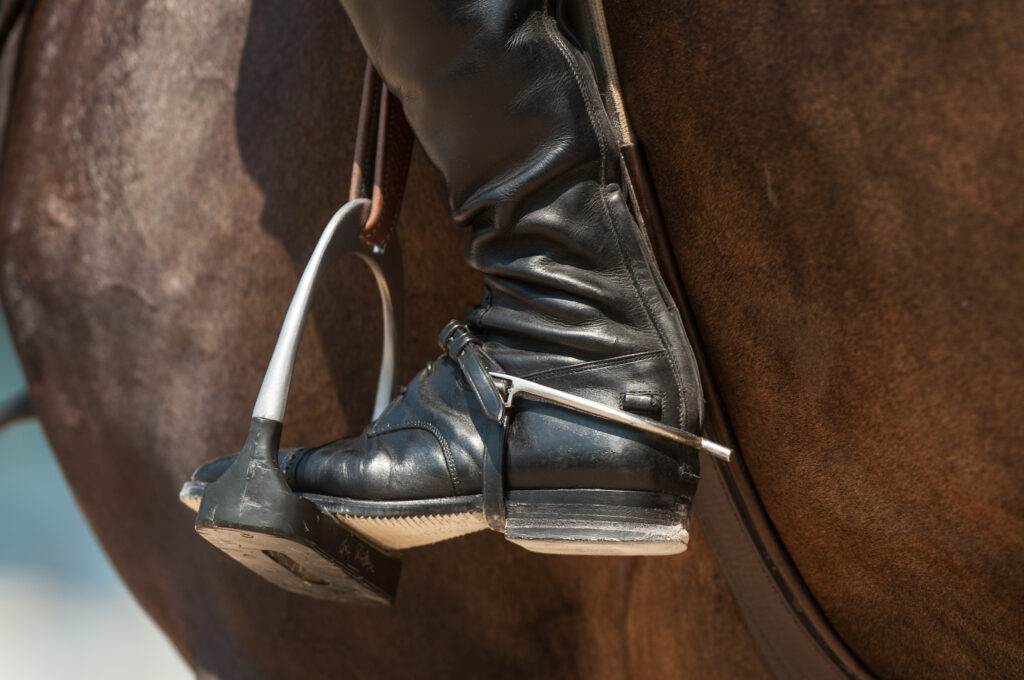
The use of the stick behind the leg reinforces the leg aid as opposed to using it on the horse’s shoulder. When using the stick on the shoulder, riders tend to move their hand, applying unnecessary and confusing pressure on the horse’s mouth. A correction on the shoulder also doesn’t make sense to a horse who has ignored the leg. I would only use the stick on the shoulder to reinforce a turn if the shoulder has become misplaced—either applying the stick on the outside shoulder if the horse is bulging out or the inside shoulder if the horse is cutting in on the turn.
Corrections Related to Jumping
Another example of improper aids would be if a rider punished her horse with the stick after a runout at a jump. The correction should have been in steering, not telling the horse to go faster as the stick would imply. Instead, you need to be more accurate and give him a direct approach to the jump.
One other common mistake is when riders immediately stop their horses instead of making them go forward when the horse slowed down in front of a jump, chipped or landed trotting after a fence. I believe riders do this out of frustration rather than asking themselves what the appropriate reaction should be based on the horse’s behavior.
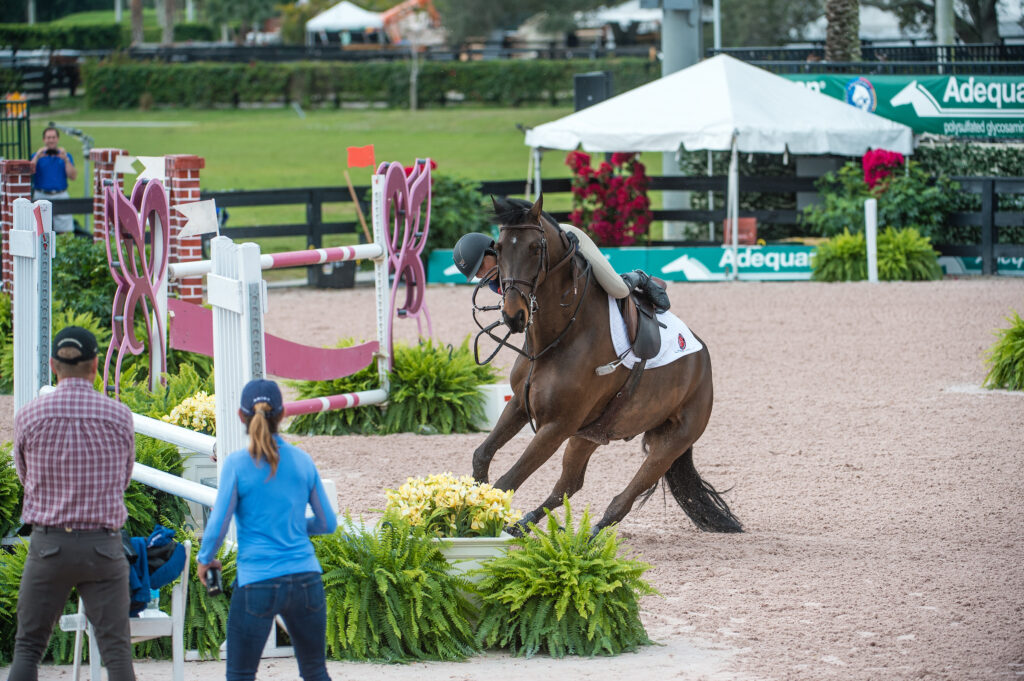
Stopping a horse in this situation is not the appropriate correction. The rider should immediately correct the horse by sending him forward to get him in front of her leg and moving with impulsion. Conversely, if a horse takes over and gets strong to a jump, the rider can correct him by halting or making a downward transition.
Horses aren’t unintelligent, but they aren’t mind readers either—and applying an inappropriate correction is confusing for them and detrimental to their training. While these corrections should be applied quickly, they should never be done with a temper. Instead, they should be done directly and methodically. It’s crucial to keep things simple and clear for your horse so he understands and wants to do what you ask.
Read more with Holly-Hugo Vidal here.
About Holly Hugo-Vidal
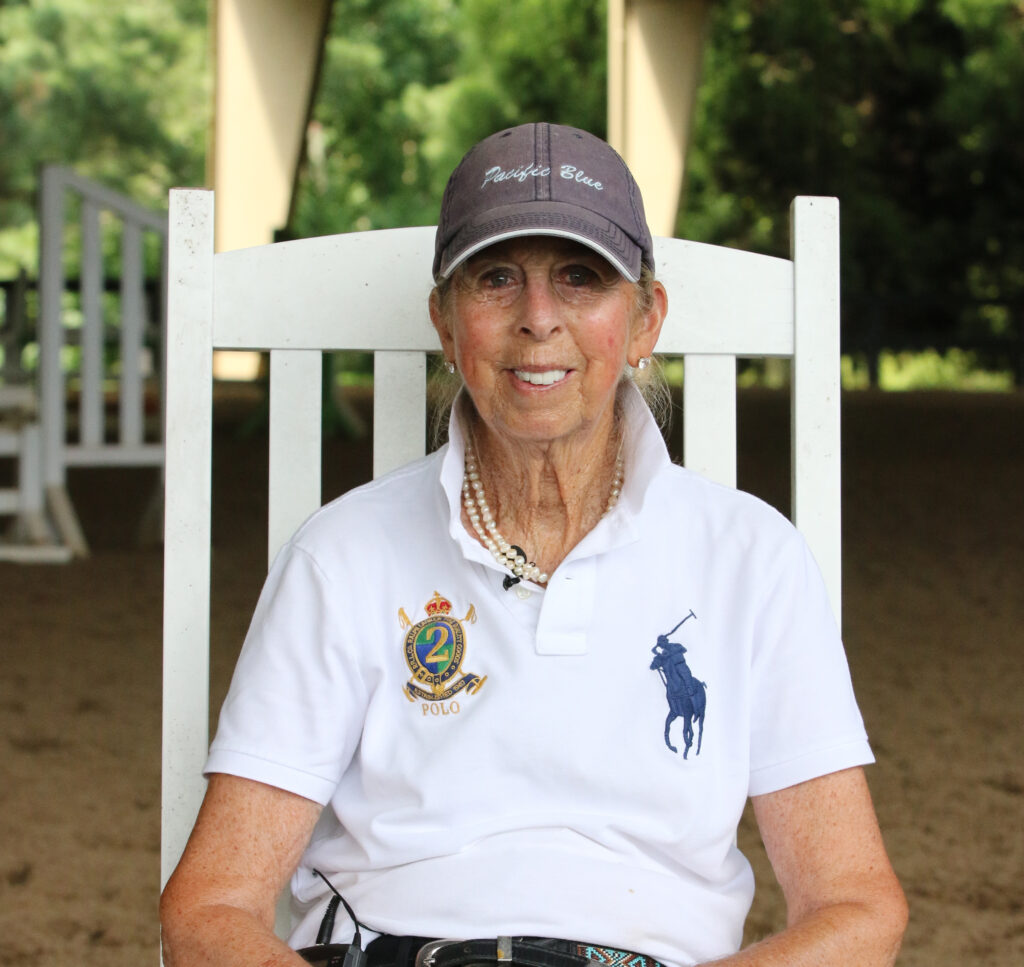
Trainer, judge, clinician and author Holly Hugo-Vidal is based in Milton, Georgia. She developed a belief in solid basics and a demand for excellence from an early age. With her former husband, Victor Hugo-Vidal, she ran the successful show barn Cedar Lodge Farm in Stamford, Connecticut, learning from Victor’s ability to help anyone with a desire to accomplish his or her goals. Her next mentor was legendary show jumper and horseman Rodney Jenkins, whose teachings she still uses today to help her better understand horses. She is the author of the book “Build Confidence Over Fences!”
This article first appeared in the 2025 winter print issue of Practical Horseman.