



 Video
VideoQ: Can you offer any advice on how to stick out and get the judges’ attention in hunter and equitation under-saddle classes when you’re in a crowded class with tough competition?
~ Molly K., Michigan
A: From the moment you step into the show ring for an under-saddle class, you want to show yourself and your horse in the absolute best light possible. To do that, you need to ensure the judge sees you as often as possible.
Especially for hunter under-saddle classes, your horse also needs to be working and moving at his best. According to the U.S. Equestrian Rule Book’s Hunter Division section, this means “horses should be obedient, alert, responsive and moving freely.”
But keep in mind that you don’t have to have the best mover to be competitive in hunter under-saddle classes. Most judges are looking for the whole package. Does your horse look like he’s a pleasure to ride? Are his ears up? Are his gaits balanced? Are your transitions smooth?
How well you present your horse to demonstrate these small but crucial details can have a tremendous impact on the judge’s ultimate decision. Here, Team Prac member Stacia Klein Madden, who’s widely regarded as one of the most successful trainers of young riders in the country, offers eight top tips to help you shine in your under-saddle classes even if your horse isn’t an ideal mover.
1. Know Your Class
While this might sound obvious, be aware of which flat class you’re competing in. “In hunter under-saddle classes, your horse is being judged, and you’ll ride with lighter contact and in a lighter seat,” Klein Madden explained. “In equitation flat classes, the rider is being judged, so you’ll focus more on proper contact and a proper seat. You should be working your horse more on the bit in an upright seat and in a full seat at the canter.”
2. Take Pride in Your Turnout
If you didn’t care enough to take the time to polish your boots, clean your tack or tuck your hair properly into your helmet, why should the judges take you seriously? Klein Madden says standard, good turnout and overall presentation are equally important for both horse and rider in under-saddle classes. “If you’re using an ugly, old saddle pad or your horse’s braids are rubbed, for example, I’ll make note of that on my judge’s card,” she said.
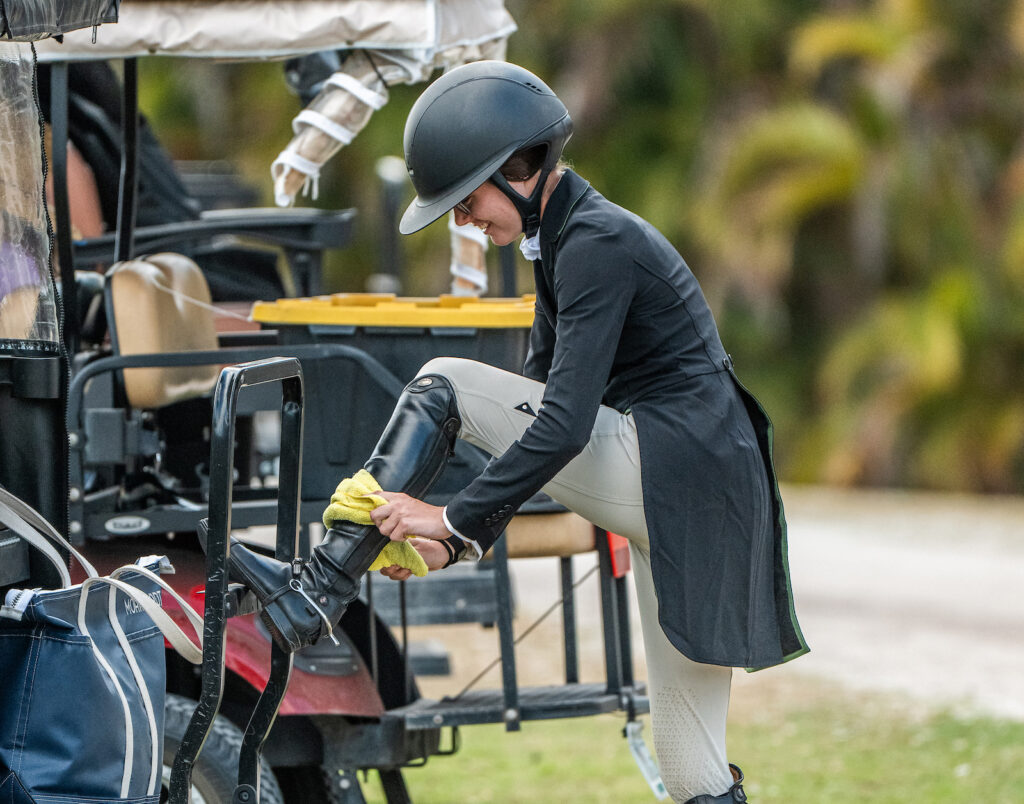
While the judges aren’t looking for riders with the most expensive tack or show clothes, they do want to see riders present themselves in a tidy, traditional manner for both hunter and equitation under-saddle classes. Show the judges that you care enough to put an effort into your presentation first. Then, your performance comes into play.
3. Adjust Your Number
As soon as the announcer calls your under-saddle class, shift your show number toward your outside hip to ensure the judge can see it, Klein Madden says. (If the judge is on the inside of the arena, pull your number to the inside hip.) When you reverse directions, slide the number to your other hip. Doing this will help you look more prepared and sophisticated. Additionally, it can make a huge difference in helping judges find you, especially in a crowded class.
4. Make Smart Use of Your Pre-Class Time
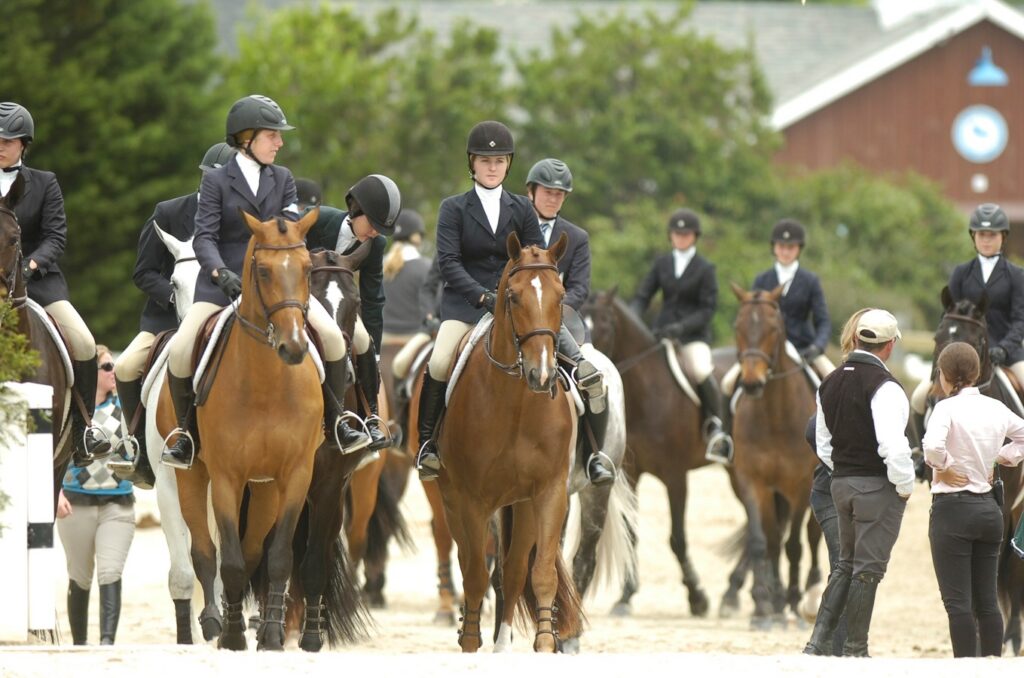
As a judge, Klein Madden appreciates when riders make effective use of their time before the flat class officially begins. “This allows you to identify where the judges are to ensure you can make good passes in front of them and aren’t accidentally being blocked by other riders,” she noted. “If someone is passing you and ends up blocking the judges’ view, they won’t be able to see your number, and they’ll just move on to the next rider.”
5. Pay Attention to Traffic
Remaining aware of where other combinations are in the arena is important for a number of reasons. Klein Madden says your chances of placing well largely depend on whether the judge has the opportunity to see you and your horse clearly.
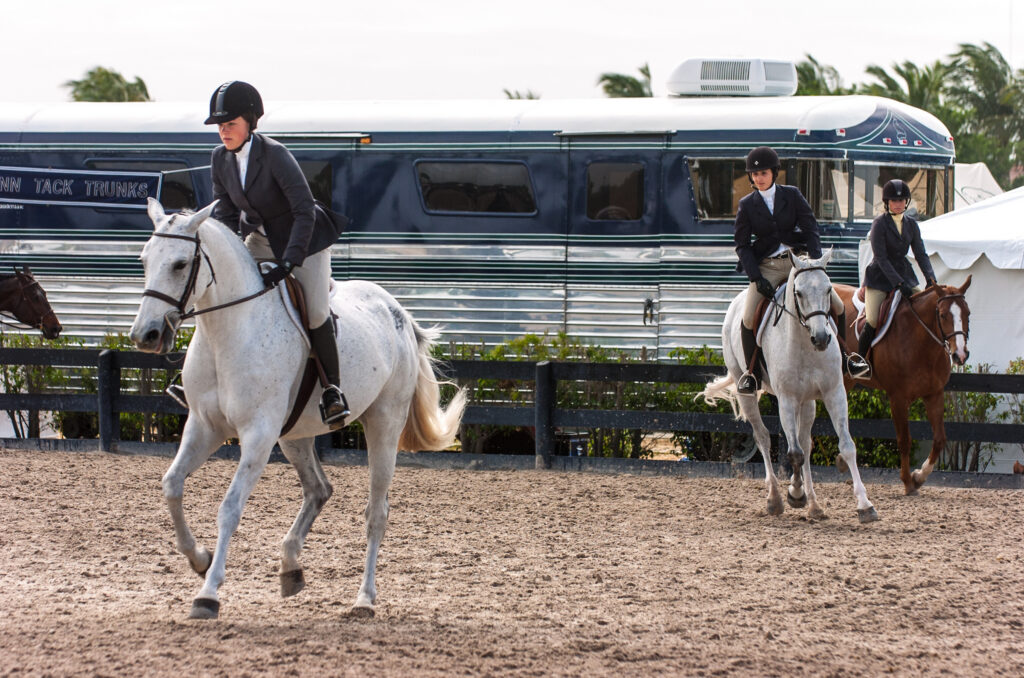
Depending on how crowded the arena is, try to find a place where you’re somewhat separated from the other horses. This might mean utilizing the quarterline. Or, if you’re trotting on the opposite side of the arena from the judge and see that there aren’t any horses passing in front of her, you might circle through the middle of the arena to get an extra pass by the judge.
If another horse is spooking or acting up, avoid getting too close, even if it means losing your ideal ring position, because it could create a bigger problem, Klein Madden advised. The same applies if your horse has issues in the ring. “Try not to cause problems for other riders if your horse misbehaves,” she said. “If you make a mistake to that extent, you’re probably going to get penalized because there’s just not a great fix. So be courteous to others and conscious about what’s going on around you.”
6. Strategize Your Position in Relation to Good Movers
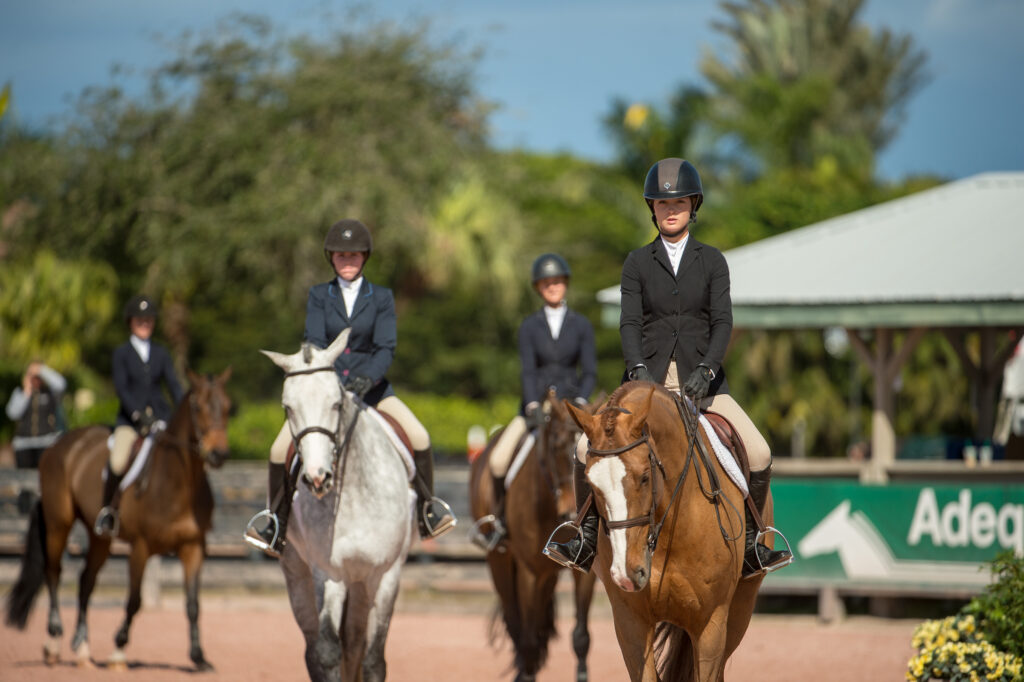
Klein Madden says you should always have a strategy for where you are in the ring in regards to your competition. “When there’s a competitor in the class who you tend to go head-to-head with—and you’re on a top horse and are confident that you can really shine in front of the judges—you might position your horse directly in front of or behind them so the judges can easily compare the two of you,” she suggested.
On the other hand, if your horse isn’t a top mover, it’s probably a better plan to separate yourself from other good movers so you can hopefully catch the judges’ attention on your own.
7. Be Ring Savvy
While Klein Madden doesn’t necessarily appreciate riders who “circle the drain”—repeatedly circling in the middle of the arena in an effort to get noticed by the judges—she does like to see riders who are ring-smart. “If you need to circle through the middle of the ring because there’s a nice, open space on the other side where you might be better seen, or there’s a crowd of horses ahead, that’s perfectly fine and something I would expect,” she said.
8. Don’t Be Afraid to Show Off
Both equitation and hunter divisions are presentation-based sports, so do your best to help your horse shine and really show the judges what he can do. “I think being a little hungry in a flat class and showing the judges that you expect to be noticed by trying to get multiple good passes demonstrates good showmanship,” Klein Madden said. “In some cases, this might push you ahead of another top combination.”
Takeaway
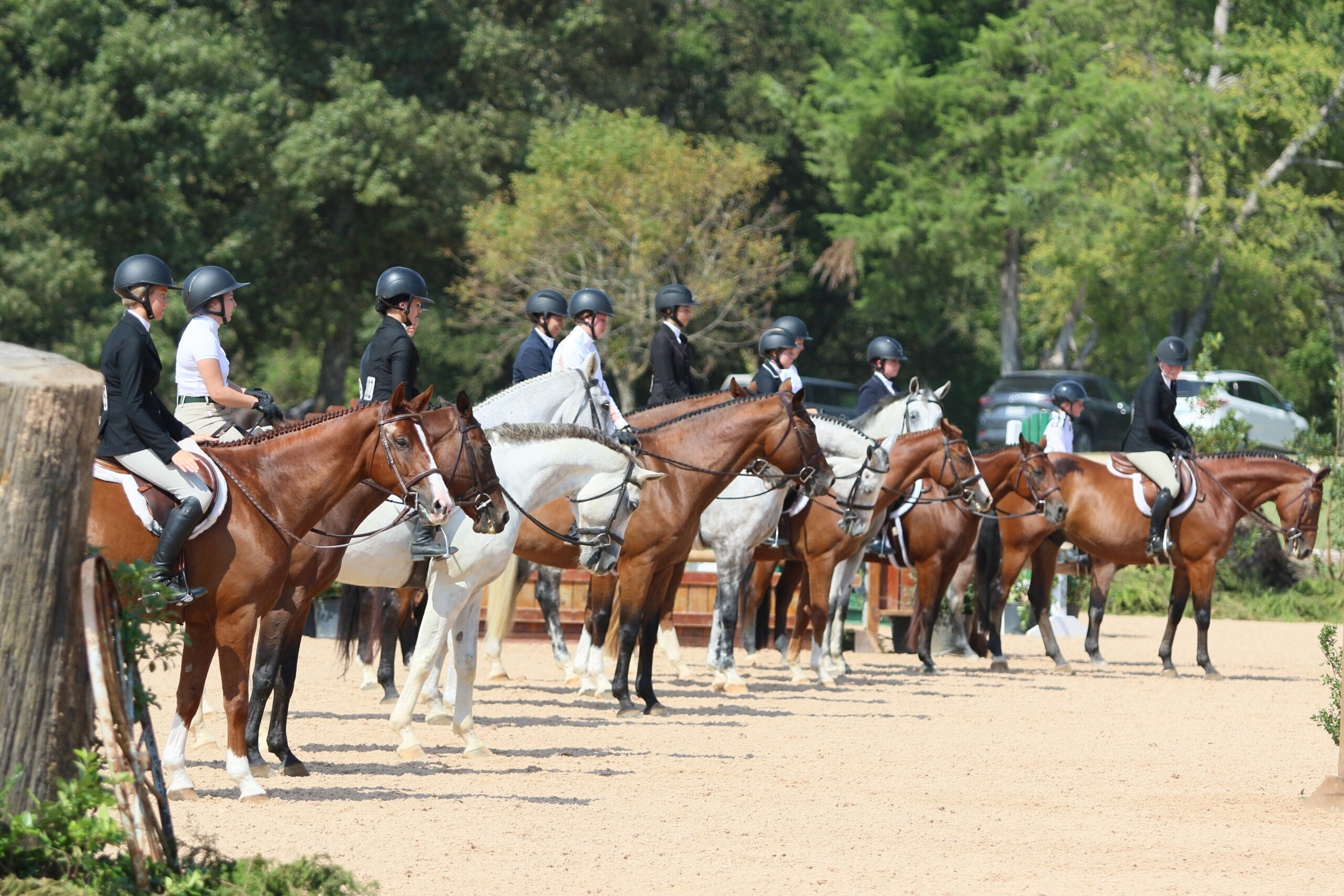
Doing your best in under-saddle classes has grown more important as several top horse shows have transitioned from four to three jumping classes in a division, making the flat class all the more influential. Sometimes just being able to get a fifth- or sixth-placed ribbon on the flat can give you the points needed to bring home the tricolor.
So, even if your horse isn’t the best mover or quite blue-ribbon worthy yet, learning to show off on the flat is a valuable competition skill.
About Stacia Klein Madden
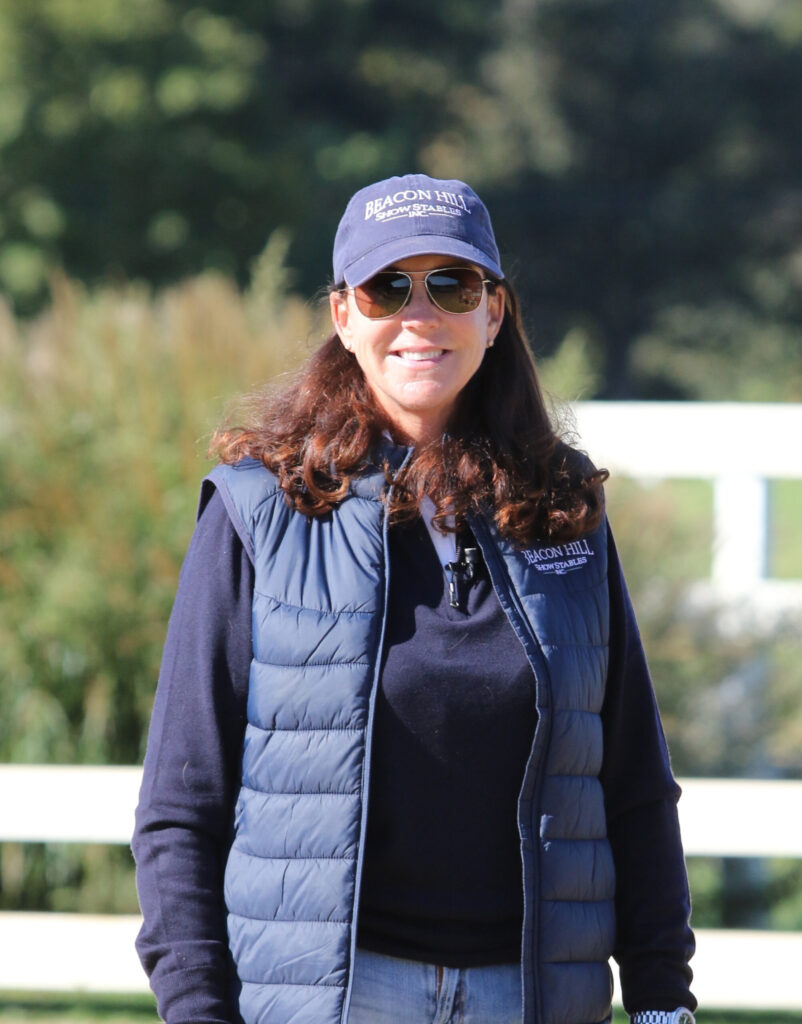
Known as one of the most successful trainers of young riders in the country, Stacia Klein Madden began her career as a successful Junior, winning the 1987 ASPCA Maclay National Championship and placing in the USEF National Hunter Seat Medal Final and USEF Show Jumping Talent Search Finals—East. She turned professional in 1988 and started working out of Beacon Hill Show Stables, now located in Colts Neck, New Jersey. Madden also worked for Johnny Barker in North Carolina, before returning to Beacon Hill where she began teaching and developed a passion for working with young riders and matching them with horses.
Click here to read Klein Madden’s full Team Prac bio that includes her career highlights, favorite horses and fun facts about the top hunter and equitation trainer and lifelong horsewoman.
For More:
- Do you have a training question? Team Prac—our group of top trainers representing hunters, jumpers, eventing and dressage—is here to provide useful and impactful advice to help you improve in your particular discipline and develop a harmonious partnership with your horse. Learn how to submit your questions to our Team Prac members here.
- Read more articles with Stacia Klein Madden on Practical Horseman here.
- Learn more about Klein Madden’s training program at Beacon Hill Show Stables here.