




 Video
When do you need to call your veterinarian? And when can you handle health issues that might arise with your horse on your own?
After Kevin Keane, DVM, and Boyd Martin’s longtime head groom Steph Simpson met for a brainstorming session to plan for their presentation at Boyd and Silva Martin’s Windurra Camp 2026, they agreed this topic could offer multi-faceted benefits to campers.
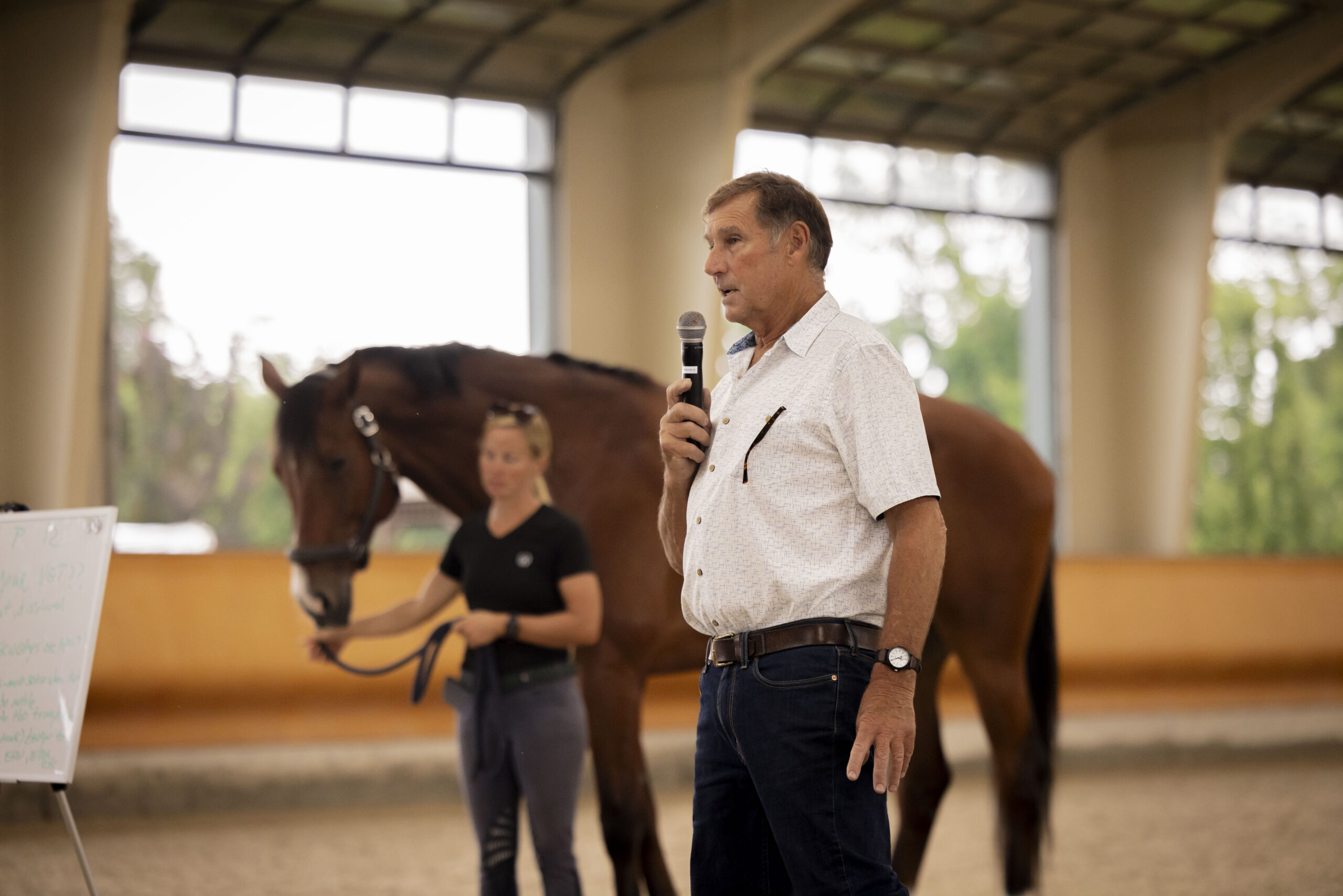
“We’re not trying to make anybody into 45-minute veterinarians. We’re trying to provide guidelines to help you understand when you need to get a hold of your vet because time is of the essence in many situations with horses,” Keane, founder of Sports Medicine Associates of Chester County [Pennsylvania] and former team veterinarian for multiple Olympic equestrian teams, told attendees during his lecture on the final day of camp. “My goal is to make you into a more knowledgeable horse owner, so you can recognize when you actually need to call your vet and what information you need to provide them with.”
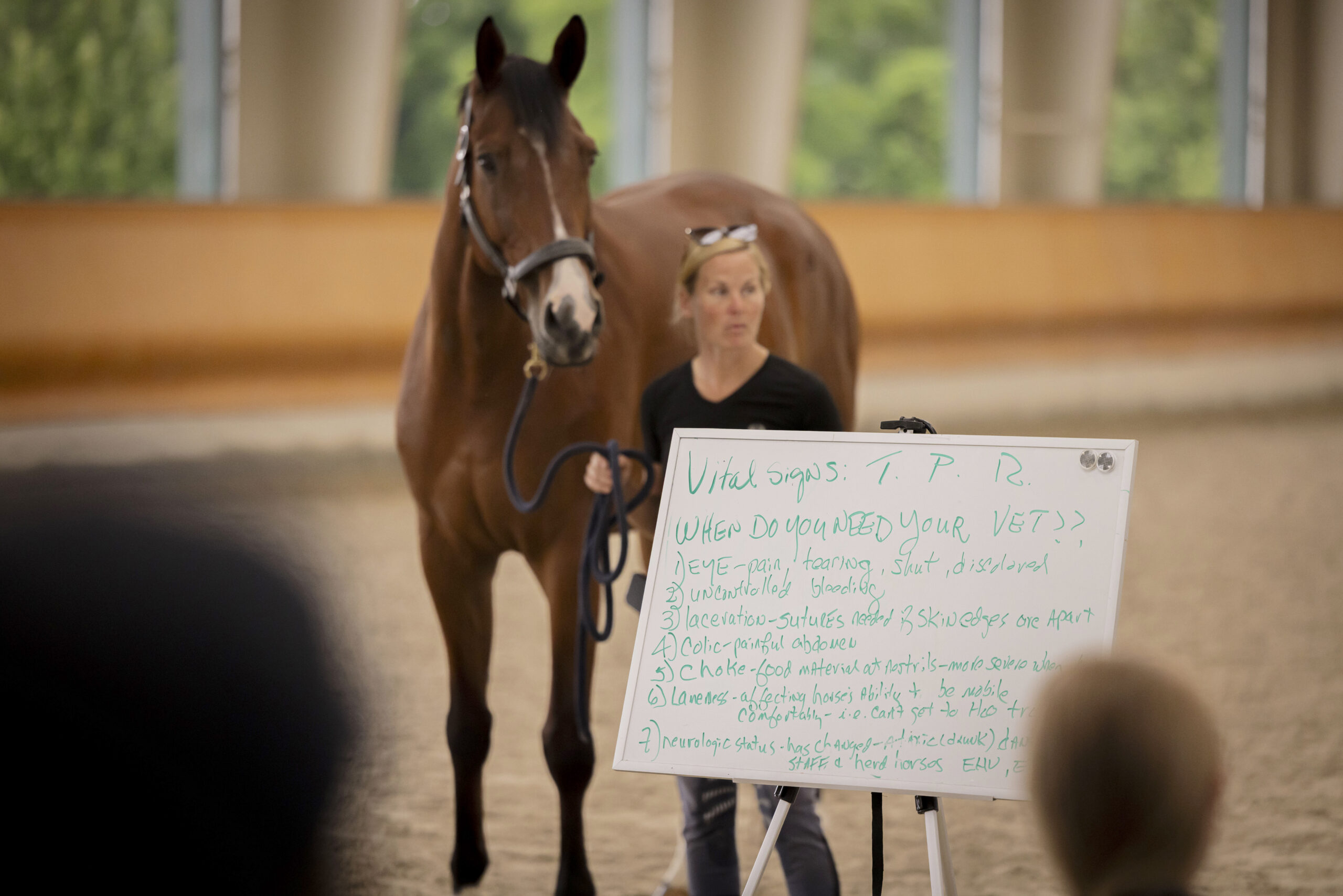
Here, we look at Keane’s top seven reasons to call your vet and provide measures you can take to ensure the best outcome for your horse while you wait.
1. Eye Issues
In his clinic, Keane treats any type of eye injury or problem as an emergency because eye conditions can deteriorate very rapidly. “It might not be serious,” he said. “But I won’t be able confirm that there’s not any damage to the eye until I actually examine the horse.”
If, for example, your horse gets stung by a hornet close to the edge of his eye, it might swell and look distended without affecting the eye itself.
Signs that your horse is experiencing eye pain include squinting, swelling, tearing, discharge, or keeping an eye completely shut. “If I see blue or gray discoloration when I look at a horse’s eye with the flashlight or blood in the anterior chamber of the eye, that indicates a serious condition,” Keane noted.
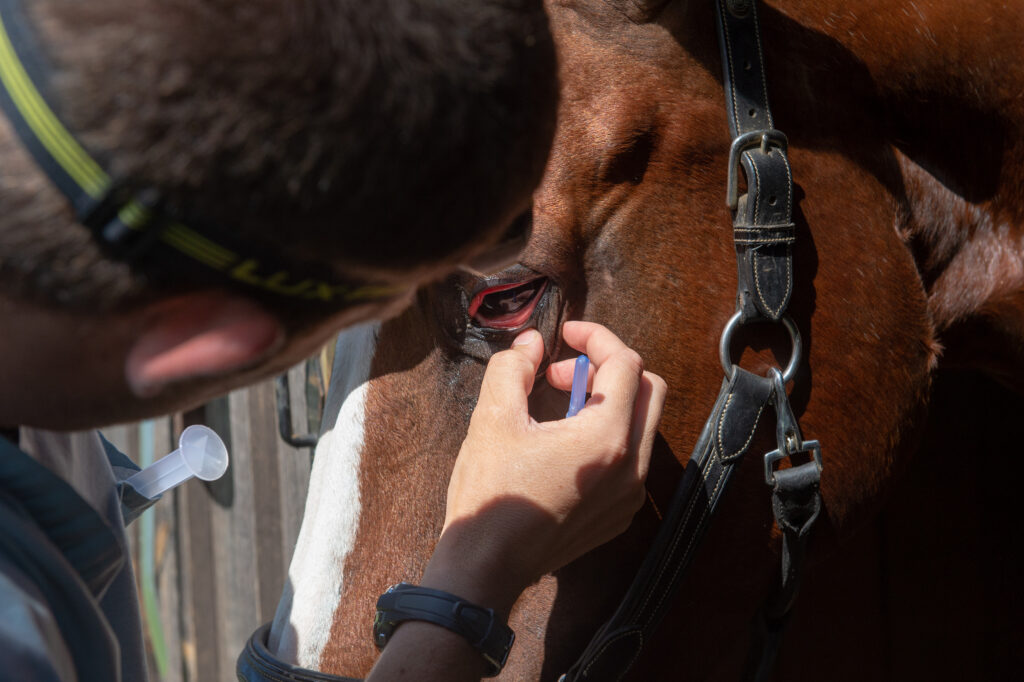
One of the most common eye injuries in horses is ulceration of the cornea. To diagnosis this condition, Keane says veterinarians put fluorescein dye into a horse’s eye where it binds to the corneal tissue and reveals any ulcerations under blue light.
Corneal scratches can usually be treated with antimicrobial drops or ointments, but Keane says they can also go in a very bad direction without treatment and under certain conditions. “In parts of South Florida where there are strong fungi, horses can quickly develop a fungal or bacterial infection in the eye, which can be much harder to treat and usually results in poorer outcomes,” he explained.
2. Uncontrolled Bleeding
This, Keane said, is probably one of the scariest situations for horse owners and always warrants an emergency call to your vet.
“I’ve seen horses bleed profusely after getting cut out in the hunting field. Horses have about 40 liters of blood, and when you see even 3 liters, it looks like it could fill up an arena,” he said. “To stop severe bleeding when you don’t have a vet out there in the field, you need to apply pressure or use a tourniquet, depending on where the injury is. The stock tie was actually developed for the hunt field, so it could serve as a tourniquet in an emergency.”
If your horse experiences an accident that involves one of the femoral arteries, which run from the groin down the medial thigh toward the stifle, Keane stresses that you can’t act fast enough. “There’s just no time to waste before they bleed out because the femoral artery is so big, especially as it gets closer to the groin,” he explained.
In these cases, Keane vigorously packs the wound with sterile gauze and then uses elastic vet wrap as a tourniquet, wrapping the leg as tightly as possible.
“Over the 45 years or so that I’ve been doing this, I’ve found this method works fantastically to stop uncontrolled bleeding,” he said. “You don’t want to leave the tourniquet on for an extended period of time because it will obstruct blood flow to the limb, but it will stabilize your horse enough so you can transport him to get veterinary care.”
3. Lacerations
When it comes to lacerations, Keane said there are serious and non-serious injuries. He considers a laceration severe enough to call your vet if it requires stitches, meaning the edges of the skin are apart.
“I’ve found people tend to over- or understate the degree of severity with these injuries. Someone once called me late at night to tell me their horse needed a suture, and I got there, and it was a massive laceration with half the skin off that was going to need about 400 sutures,” Keane said. “But the general rule of thumb is if the skin edges are separated, you need to call you vet to rejoin them.”
4. Colic
Most horse owners will deal with colic at some point. But Keane said it’s important to keep in mind that colic, which technically refers to general abdominal pain, sometimes doesn’t have anything to do with the horse’s gut. The liver, kidneys and uterus are all in the abdomen.
Horses experiencing colic might show signs like pawing, biting at their sides, curling the upper lip, appearing restless, or getting up and down often, and certain types of colic can cause more severe pain than others.
The reason horses get colic is multifactorial, Keane explained. “Horses have a very primitive gut that really hasn’t changed much over 3,000 years, but the way we feed them has changed significantly,” he said. “Our horses are designed to graze continuously, but we tend to feed them like we do our dogs and cats—a meal in the morning and a meal in the afternoon or evening.”
One of the best things you can do in your day-to-day management, Keane said, is to try and simulate that ideal, natural environment for your horse. “This might include keeping his grain concentrates on the lower side or feeding him hay in a slow-feed hay net with tiny holes to mimic grazing and increase saliva production,” he noted. “This can help prevent ulcers and other digestive issues.”
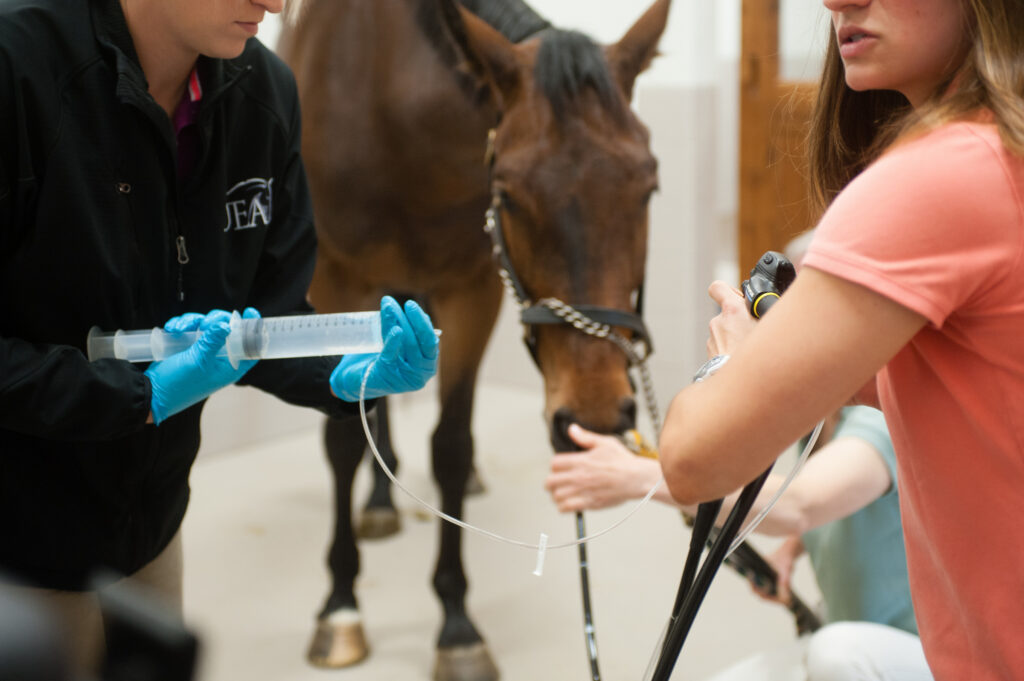
Keane considers colic an emergency because he has to diagnose the severity of the horse’s condition to determine the appropriate treatment. For a mild colic, he might be able to treat the horse with an anti-inflammatory like Banamine® or by using a nasogastric tube through the horse’s nose to relieve pressure or deliver fluids or medication to the stomach. But more severe colic cases can require surgical intervention.
5. Choke
Feeds that are extremely high in dry matter can sometimes result in what’s known as choke in horses. This happens, Keane explained, when a clump of grain is so dry that the horse’s esophagus can’t push it down into the stomach.
“This can be very uncomfortable for horses and usually causes them to cough,” he said. “We treat this as an emergency because horses generally cannot pass the food wad on their own.”One indication that your horse is choking is feed coming out of the nostrils; as nose-breathers, feed should never be in the nasal cavity.
“You can use a nasogastric tube to help flush it out, but the equine esophagus has a fairly small diameter, so it often only gets at the top of the feed wad,” he said. “This means it can take hundreds of lavages to moisten it enough to dislodge and move it into the stomach.”
Wetting your horse’s feed with about half a quart of water can greatly help reduce the incidence of choke.
6. Lameness
When dealing with lameness, it can sometimes be more challenging to determine when you need call your vet. “I’ve had situations where someone calls extremely worried because their horse is non-weight bearing. But when I get out there and put the horse on a longe line, he’s fine and likely just took a bad step that hit a nerve,” Keane said. “It’s kind of like stubbing your toe. It hurts really bad at first, and you usually say something you’re not supposed to, but then it’s fine.”
Lameness comes in many magnitudes. In the U.S., veterinarians use the American Association of Equine Practitioners Lameness Scale that rates lameness on a scale from 1 to 5. Grade 5, the most severe, is when a horse is non-weight bearing, Keane explains.
He compares Grade 4 to a hoof abscess, when it’s clearly very painful for a horse to bear weight on one foot. Grade 3 is lameness that is clearly observable at the trot, while 2 is consistent but mild at the trot, and Grade 1 is inconsistent and subtle at the trot.
“It’s important for riders and veterinarians to look at lameness with critical eyes. The legacy we’re working on in our sports medicine practice is improving performance issues, so we have to look at the overall picture,” Keane said. “Let’s say, a horse is maybe half a degree lame, but he favors landing on one lead versus the other after fences. That gives us some additional information, so it’s important that your horse’s entire care team is tuned into details like this.”
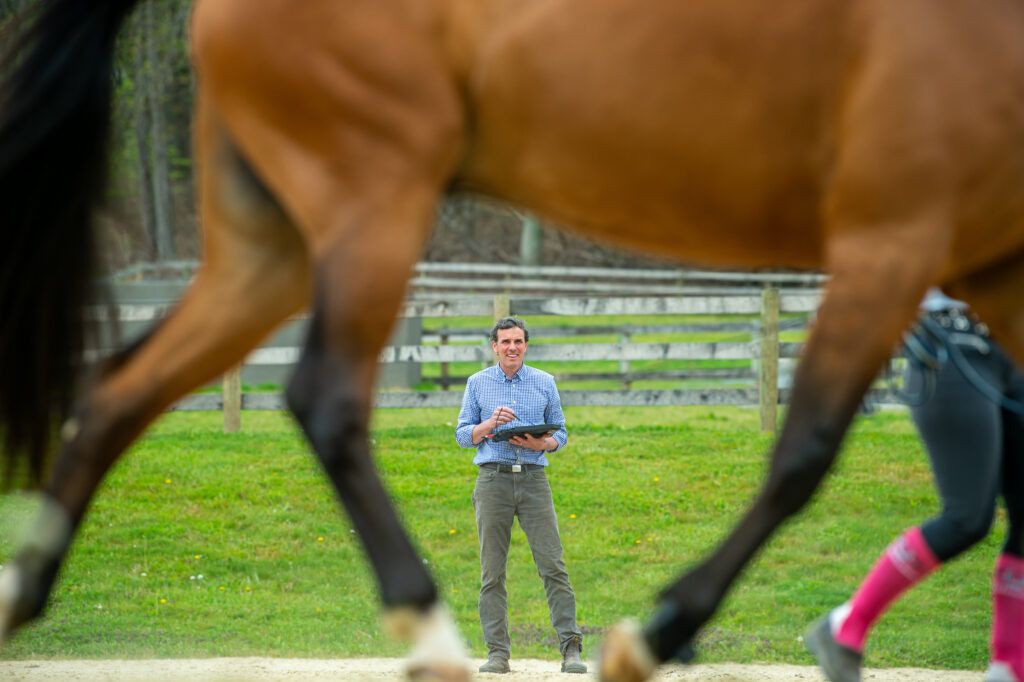
Keane defines lameness as an emergency when it’s severe enough that it affects a horse’s ability to move comfortably at the walk.
“We recently treated a broodmare who had severe hoof abscesses in both front feet, and we couldn’t get her to take a single step. It was also a hot, humid day, and she was far away from the water trough, so we were worried about her staying hydrated,” he said. “We ended up doing diagnostic nerve blocks to anesthetize her knees, so we could get her mobile enough to get on a trailer and to the clinic for treatment.”
While it was clear that the mare’s owner needed to call the vet in this case, other abscesses can be milder and treated with Epsom salts or a poultice. If you suspect your horse has an abscess, and he has a strong digital pulse (more on this below), Keane recommends calling your vet.
“When a horse has a digital pulse, it generally indicates infection or severe inflammation, and hoof abscesses almost always have a digital pulse. If your horse doesn’t want to walk and has a digital pulse, I advise making the call to your vet,” he said. “Part of our oath as veterinarians is to relieve pain and suffering in animals, so this is a theory I operate off of. If a horse is suffering, we want to help them.”
7. Neurological Problems
Keane considers any change in a horse’s neurologic status an emergency. This is because neurologic symptoms can indicate a number of conditions. Equine herpes virus (EHV), for example, can present with neurological symptoms.
“EHV is incredibly contagious and can require quarantines and shut down competitions. EPM is also of concern,” he noted. “We’ve had horses who were normal at 5 p.m. while being fed, and the next morning we find them leaning against the stall wall or having difficulty standing.”
Horses with a severe neurologic problem put barn staff who might be handling them and other horses at increased risk of injury. “They’re also at greater risk of injury if other horses chase them, or they can’t get to their feed or water,” Keane said.
Vital Signs: Knowing What’s Normal for Your Horse
When trying to determine whether you need to call your vet, it’s helpful to know how to take your horse’s vital signs and to have an idea of what’s normal for him.
Vital signs measure the basic body functions of a horse, including temperature, pulse and respiration as well as other indicators such as mucous membranes, capillary refill time and gut sounds. They all can provide clues into your horse’s overall well-being.
The following are normal vital signs for a resting adult horse:
Temperature: 99 – 101.5°F (37.2 – 38.3°C). Keane explains that a horse’s temperature changes based on exercise, but the ambient temperature doesn’t affect their temperature much. “This is because, like humans, horses’ systems are designed to sweat in order to cool their bodies down,” he said.
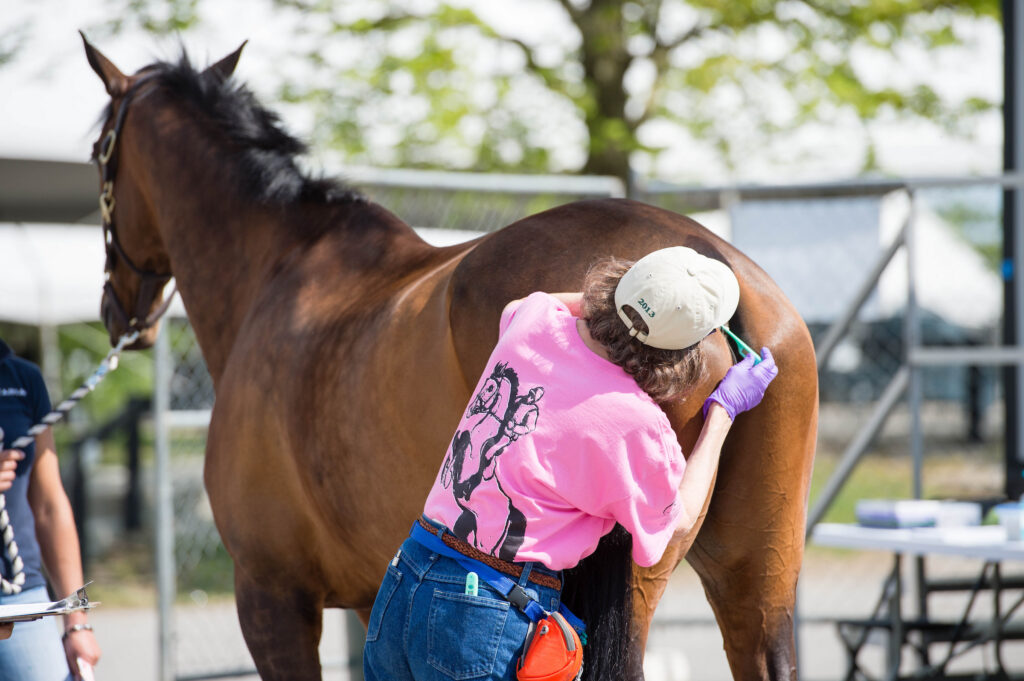
Keane recommends keeping a glass mercury thermometer in your equine first-aid kit, after having the batteries die in a number of his digital thermometers while on the job. “Be sure to shake the mercury thermometer quite vigorously before using it and wait three minutes to get an accurate reading,” he said.
In most situations, you can monitor a horse with an elevated temperature between 101 – 102°F without needing a vet visit, but if the fever persists or your horse has a temperature of 103°F or higher, you need to call your vet.
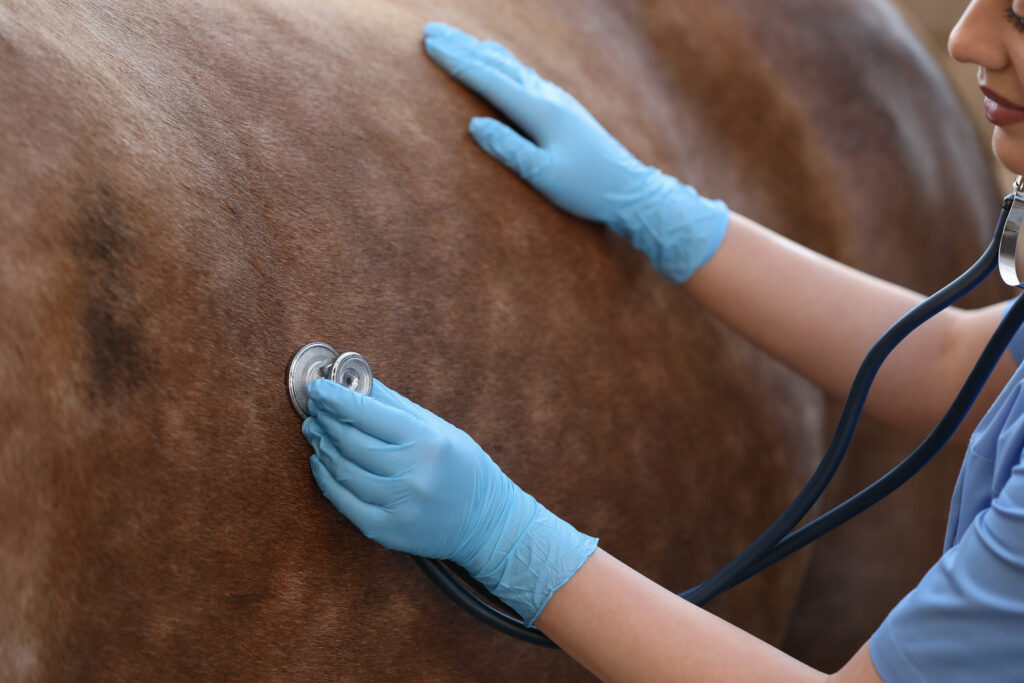
Pulse: 28 – 40 beats per minute. You can take your horse’s pulse by using a stethoscope to listen to his heart on the left side of his body directly behind his elbow in the girth area. Count the heart beats for 20 seconds and multiply that times three to determine your horse’s pulse in beats per minute.
Keane reminded campers that a horse’s pulse goes up with increased pain, which can be important in colic situations.
“If a horse’s heart rate is hanging around 44, it doesn’t indicate a high degree of abdominal or systemic pain. On the other hand, horses with small intestinal lesions can have heart rates around 70 to 90 and with a twisted small intestine, they might be at 110,” he said. “So, these are helpful things to have at the back of your mind when trying to determine if you need to call your vet.”
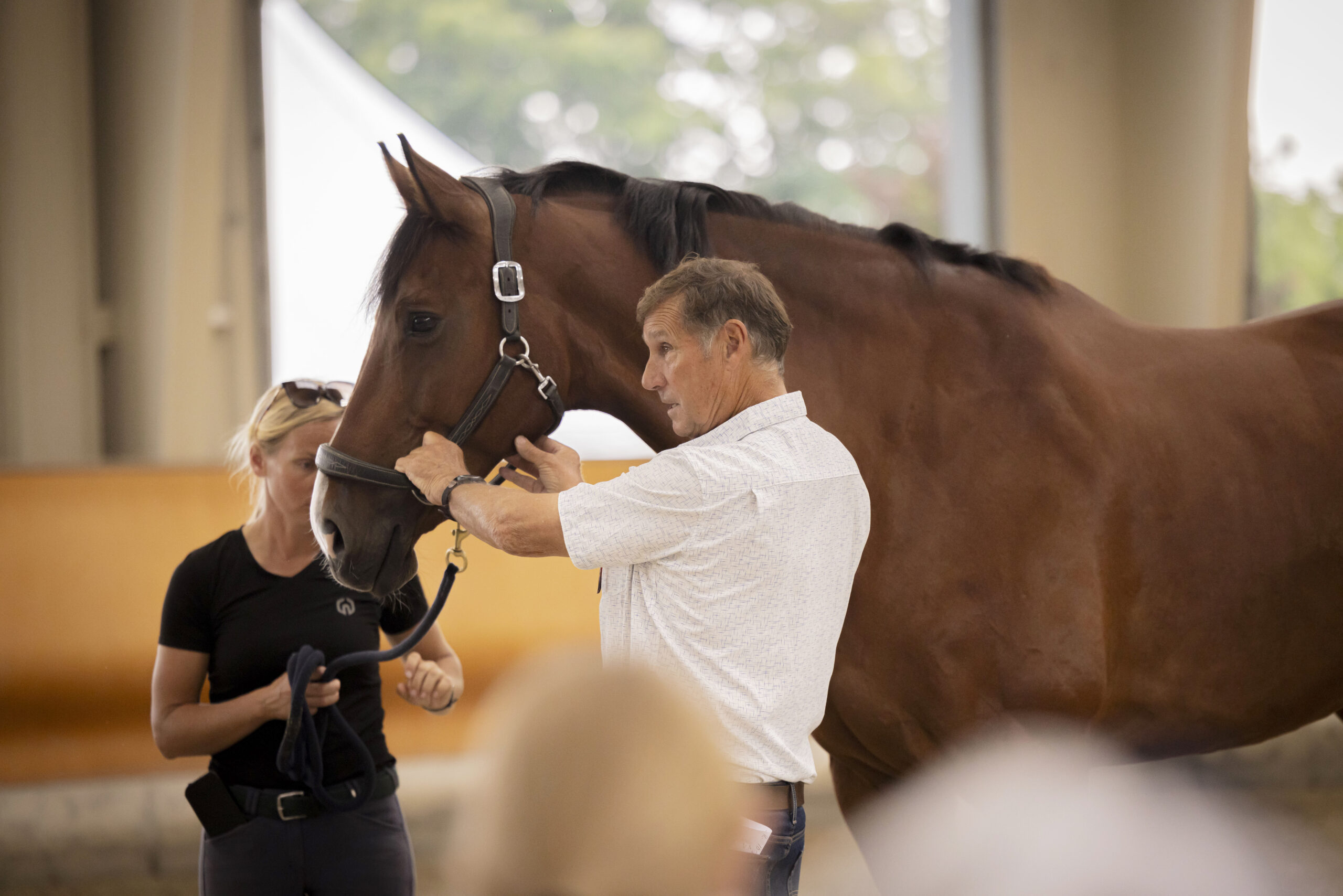
If you don’t have a stethoscope, you can take the pulse from the lingual artery, which is a cordlike structure that crosses where the cheek and jawbone meet on the underside of the jaw. “Using your index or middle finger, apply pressure to the artery, and then count for 20 seconds and multiply by three,” Keane said. “Be careful, though. This artery is quite mobile and starts to slide all over the place as soon as a horse moves, which can make it harder to get an accurate reading.”
Digital pulse: A horse’s digital pulse—the pulse rate that can be felt from the back of the pastern—is not reflective of your horse’s heart rate, nor does it indicate systemic problems necessarily. Horses shouldn’t have a digital pulse unless there’s inflammation or infection.
To see if your horse has a digital pulse, place your hand near the middle of the pastern to find the artery. If you don’t feel a pulse after holding your fingers there for 8 to 9 seconds, that’s a good thing, Keane says.
Respiration: 10 to 24 breaths per minute. You can measure your horse’s respiratory rate by watching his flank move in and out, watching his nostrils flare with each breath, or using a stethoscope on his flank to listen to his breaths. Count the number of breaths for 20 seconds and multiply that number by three to determine the rate in breaths per minute.
An elevated respiratory rate can be a sign of respiratory issues, such as equine asthma.
Mucous membranes: Healthy pink color. Pale white or grayish gums can indicate illness, while bright red gums can be a sign of dehydration, infection or toxin ingestion.
Capillary refill time: 2 second or less. To check your horse’s capillary refill time, pull up his upper lip and gently press your thumb against his gums directly above a tooth. Release your thumb and count how many seconds it takes for the gums to return to their original color. If the color doesn’t return quickly to the gums, the horse’s circulation may be affected by a health issue.
Gut sounds: Gurgling, gas-like growls. You can check your horse’s gut sounds by placing your ear or a stethoscope against both sides of his abdomen—high and low. You can check your horse’s gut sounds by placing your ear or a stethoscope against both sides of his abdomen—high and low. A healthy horse’s gut will make routine digestive sounds, but prolonged silence could indicate an abnormality or colic.