




 Video
VideoThis is the first installment of our new series Beyond the Breed, in which we talk to people riding untraditional horses in different disciplines about the training and conditioning techniques they’ve used to help that horse succeed.
Thoroughbreds and warmbloods are common breeds seen galloping cross country at eventing horse trials, but sometimes a different-looking horse might catch your attention. That is often the case when people see Raven, a Friesian-Percheron cross gelding owned by Donald G. Ruths Jr. Despite being a draft cross, Raven has excelled at eventing with both Donald and his son in the irons. Donald has figured out a training and conditioning plan that suits Raven, and he gets to seeing his friendly gelding show off his intelligent, honest and athletic nature as they earn top results.
Finding Raven
Donald has experience working with draft-crosses after riding his previous event horse K2, who is a Clydesdale-Thoroughbred mare. Around the same time that Donald was recovering from back surgery, his son, Donald “Boo” J. Ruths, took over the ride on K2. Boo was helping his dad keep K2 in shape, but he had also outgrown his pony. The writing was on the wall for Donald.
“I knew I wasn’t getting that horse back,” he joked.
After searching for his next horse, Donald bought Raven, a 17.1-hand Friesian-Percheron gelding, as a green-broke 4-year-old in 2021. The black gelding had only been under saddle a few months, but his training gradually progressed, and he began eventing that same year. As Donald competed at horse trials with Raven, his mount regularly got attention from fellow competitors—and not just because of his beautiful, thick tail.
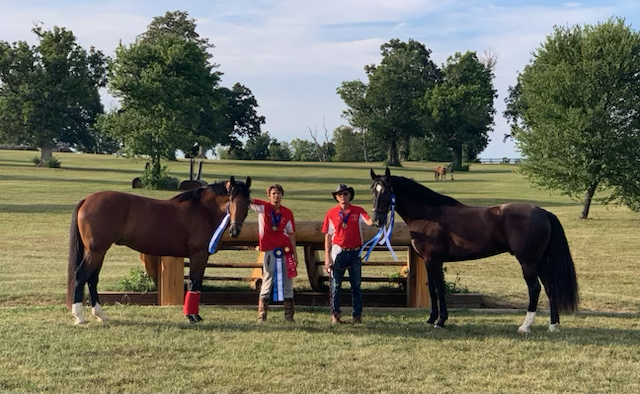
“People always ask me, ‘What’s his breed?’ And I’m like, ‘He’s a Friesian-Percheron,’” Donald said. “And they’re like, ‘Wow, that’s a little different for eventing.’ But he’s getting it done, so I’m really happy with him.”
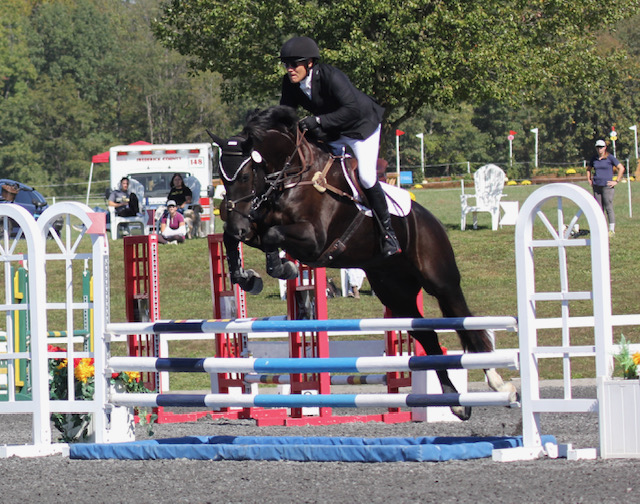
Raven has done a lot more than simply completing horse trials though. He is now competing at Training level with success. Donald and Raven were the 2025 U.S. Eventing Association Area II Master Amateur Training Champions, and they placed fourth on the USEA National Leaderboard for the same division.
Mr. Personality
Something that Donald wasn’t expecting when he bought Raven was the horse’s unique personality. He has worked with a variety of horses, from mixed breeds at his mother’s lesson barn as a child to Swedish Warmbloods with his dressage trainer as a young adult. But Raven’s in-your-pocket personality was new to Donald.
“I’ve heard people say they have horses with a personality like a puppy dog, but he truly does,” Donald said of Raven. “He’s a very curious horse and very personable.”
Donald notes that if you are sitting near Raven’s stall, the 9-year-old gelding might try to take your hat off your head or put his head in your lap. Despite Raven’s playful side, he seems wise beyond his years and is a reliable event horse.
“He’s almost like an old soul,” Donald said. “He’s very clever and smart, and he’s very honest on cross country—extremely honest. Probably one of the most honest horses I’ve had.”
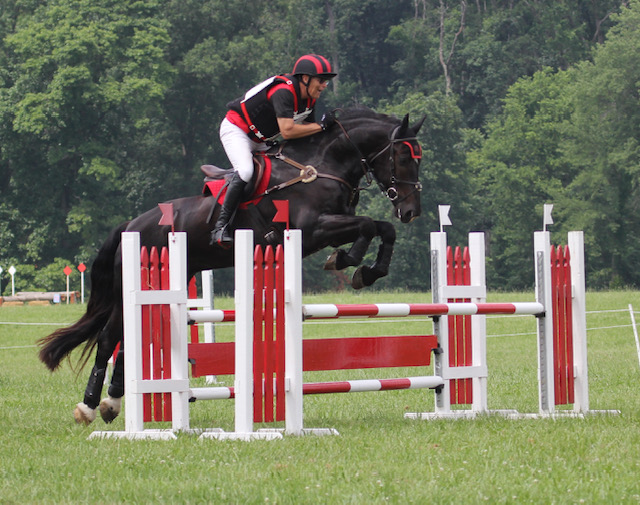
But being an event horse requires a solid conditioning plan, and Raven had his work cut out for him as a draft cross.
Training and Conditioning a Draft Cross for Eventing
Donald always thought Raven was an athletic horse, but moving up to Training level at age 7 proved to be a challenge for the sturdy gelding. The fitness that Raven needed for the new level took some time to figure out, but Donald found the right training program for his mount. Before moving up to Training level, Donald was doing two conditioning days a week with Raven. However, he found that the more demanding level of competition required three conditioning days a week with dressage and jumping mixed in.
“Usually, I do my flat work a couple days out of the week, three days out of the week we mix in our endurance stuff (roads and tracks and other stuff), and then the other days we fill in with some grid work and some jumping,” Donald explained.
Donald noted that each week varies slightly to best meet Raven’s needs, such as only two conditioning days during the week of a show instead of the usual three days.
For the conditioning days, Donald gradually built up to doing 5 to 6 miles of trotting with Raven followed by 1 mile of walking and finishing with a few miles of galloping. As the competition demands increased, Donald upped the trotting distance to 7 to 8 miles. Donald and his wife, Annette, have a 12.5-acre Seven Wishes Farm on the eastern shore of Maryland, and he often conditions Raven on nearby farmland thanks to his neighbors.
Another unique way that Donald helps condition Raven is by taking him swimming on the coast.
“We’ve got several nice beaches we can go to that have really good, clean bottoms down here,” Donald said.
With a successful conditioning routine in place, Donald hopes to move Raven up to Modified next year and possibly Preliminary later. In the lead-up, they are fine-tuning their dressage skills by training with Kelly McGinn, who has experience working with Friesians.
“We’re working mainly now on lateral work, and he picks that up really quick,” Donald said.
Furthering their dressage knowledge has also carried over to smoother rounds in the show jumping phase.
“The good thing about Training level is now that we’re working on lengthenings of the canter more, it has especially helped him out with stadium,” Donald said. “You’ve got areas where you can collect and compressing, and then you can open him up and that helps out for him a lot. But he’s a really good jumper too.”
Strengths and Weaknesses of Raven’s Breeding
While training and caring for his Friesian-Percheron cross, Donald has made observations about Raven’s strengths and weaknesses. Donald did an out-of-town pre-purchase exam before buying Raven, and then his at-home veterinarian wanted to check Raven’s heart due to his Friesian bloodlines.
“[The vet] said Friesians have a history of heart issues,” Donald said. “I also found out Friesians have a history of all kinds of things, but it didn’t apply to Raven. He’s been really healthy and sound, so I’ve been happy with that.”
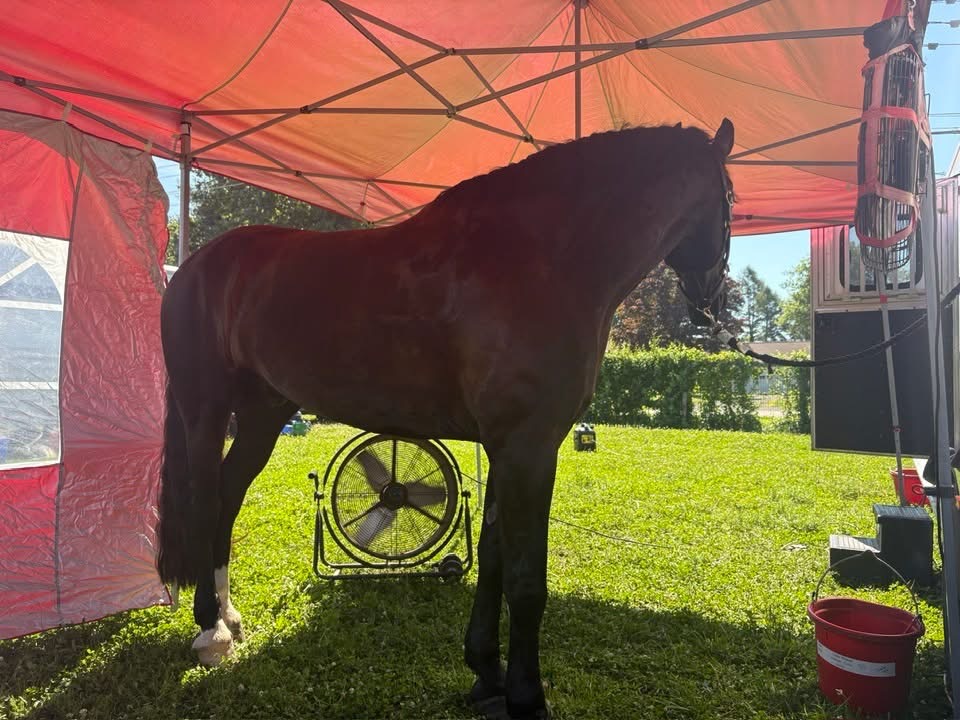
The biggest challenge, which Donald was familiar with due to his mount K2, was cooling down Raven on hot summer days, especially after the cross-country phase. With draft horses being bred for colder climates, the heat and humidity of summer can be an obstacle when it comes to helping them recover after strenuous work.
“Their veins tend to be a little deeper than like a Thoroughbred, so they don’t cool down as fast,” Donald said. “Plus, they’re carrying a little bit more weight.”
Donald uses rubbing alcohol baths to bring down Raven’s body temperature quickly by cooling with evaporation. He also uses shade and wind to help Raven cool down after work.
“We just carry a lot of tents, generators and fans with us to just try to keep him cool because he does a lot better,” Doanld said. “If he starts to get a little overheated, you can see his personality change.”
To further complicate the cool-down process, Raven isn’t the best at drinking water to rehydrate himself. It was fortuitous that some free samples of Gallagher’s Water™, an alfalfa-flavored powder mix that can be added to water, as part of a horse-show prize encouraged Raven to drink.
“I tried just one sample for the heck of it, and man, he tore that up,” Donald said. “I’ve been using it ever since.”
Despite Raven’s challenges, Donald recognizes how special the gelding is. Raven’s easygoing temperament is a notable strength. With Donald and his son both being over 6’ tall, he also finds that draft-cross horses take up their legs nicely and are better suited for their riding style.
“I’ve always liked the horse that you could work up, and with Thoroughbreds, you typically have to work them down,” Donald said of horses who are “kick” versus “whoa” rides. “When [my son and I are] warming up for dressage, it’s a lot easier for us to work a horse up because we’re tall and have a lot of leg. … For us, they’re just a better fit.”
Father-Son Bonding Time Courtesy of Raven
An added benefit of getting to work with Raven is that Donald gets to share the experience with his son. When Boo came home between his sophomore and junior years of college this summer, his horse K2 was healing from an injury and needed the summer off. Donald decided to let Boo compete Raven this summer, and it was a successful endeavor, resulting in a trip to the USEA American Eventing Championships (AEC) in late August.
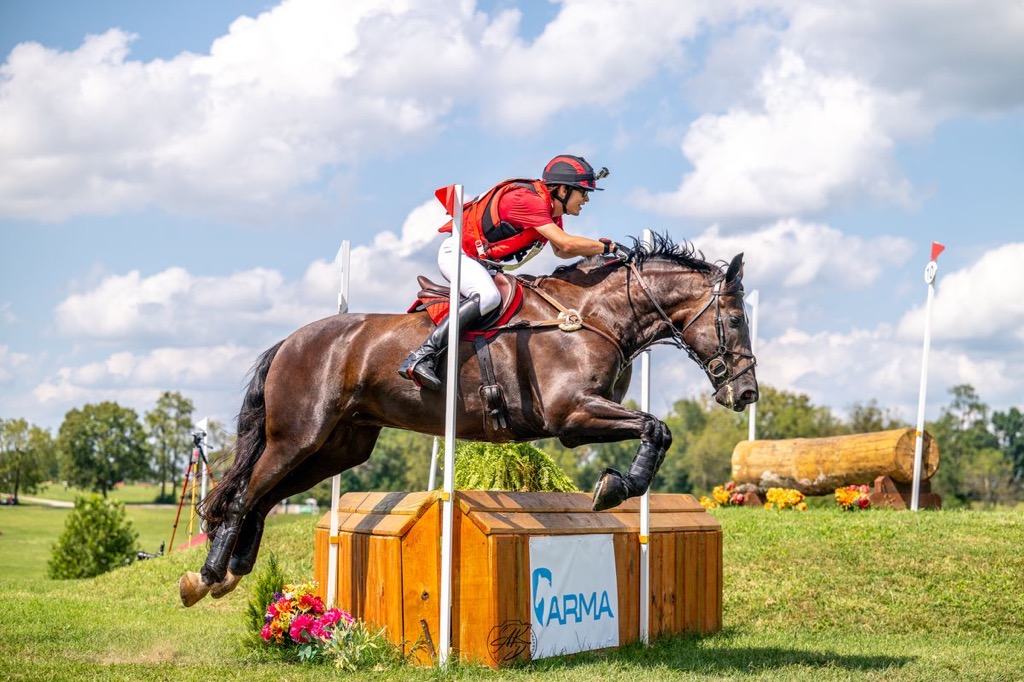
“I had just dropped [Boo] off at college that weekend before, and then I picked him up on the way to the AEC, and he did really well,” Donald said.
Donald explained that the dressage score of 38.5 wasn’t what he and Boo had hoped for with Raven, but double-clear cross-country and show-jumping rounds earned the pair a 13th-place finish at the Arma USEA Training Amateur Championship.
“He did really well,” Donald said of Boo. “We were happy with that.”
Though sharing a horse with Boo wasn’t new for Donald, it was a special reminder of their shared love of horses and riding. At 63, Donald admits he may want to let Boo take over more of the riding in the future. But for now, he is enjoying working with Raven and his other horses, showing some fatherly love as he sets up Boo for riding success.
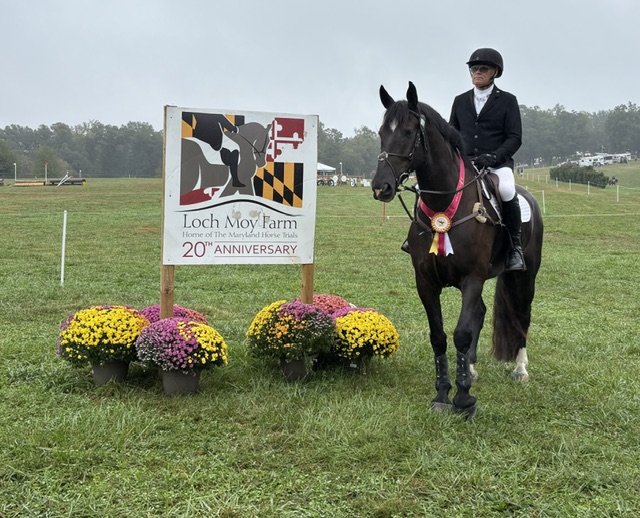
“That’s my goal, just to bring horses along that [Boo] can possibly improve with,” Donald said. “Because when I was growing up, it seemed like you would advance, and then either a horse injury or something would set you back, and then you had to start over again with another horse. It gets to be discouraging after a while, so it’s nice to be able to do that for him.”
Are you interested in being featured in the Beyond the Breed series? Email KLandwehr@EquineNetwork.com.