



 Video
VideoIt’s a windy, chilly morning, and your horse has been cozy in his stall all night with the barn doors shut tight. You tack up for a hack and once you start trotting, your horse unexpectedly pulls the reins from your hands to stretch his head down and cough for a good 10 steps or so and then seems fine.
How can you tell if your horse’s cough is normal or might be something more serious? And what are other common signs of respiratory distress in horses? You’ve likely heard about heaves, roaring, RAO, COPD and equine asthma in conversations about equine respiratory health, but these terms can be confusing and often overlap when describing the same condition.
In addition to the common respiratory illnesses horses face, increased exposure to wildfire smoke, environmental toxins, as well as dust and mold spores in hay is exacerbating existing breathing conditions and triggering new airway inflammation. Unfortunately, any issue that compromises effective breathing in sporthorses can hinder performance and affect their quality of life.
To help break down the wide spectrum of equine respiratory diseases and conditions, we look at the common culprits behind coughing and respiratory distress and help you determine what symptoms warrant a call to your veterinarian. Plus, we look at medications and savvy management strategies to help your horse breathe easier.
COUGHING IN HORSES
Every horse will cough now and then, and brief coughing is typically a normal sign of your horse clearing his airways from dust and microscopic particles he breathes in from the air and hay. If you ride your horse after he’s been stalled overnight, especially if there’s a lack of ventilation in your barn, he might cough a little when you first go to warm up to fully clear out his airways.

Coughing, however, can also be an early sign of illness or inflammatory condition requiring veterinarian attention. Additionally, just a few coughs after a long trailer haul could be early symptoms of a life-threatening infection requiring immediate care.
In any of these scenarios, it’s always essential to be mindful of your horse’s normal respiratory rate to stay on top of his overall health and performance. Distinguishing harmless coughing from the problematic can be challenging, so remain diligent to determine when it’s time to call for help.
Coughing Culprits
There are several illnesses and conditions that can trigger coughing in horses. Here, we examine some of the most common causes:
- Aspiration Pneumonia: This type of pneumonia develops when foreign material like feed or water is drawn into the lungs.
- Inflammatory Airway Disease (IAD): Also called “small airway disease” (SAD), this condition is still not well understood but is commonly found in younger racehorses and performance horses who periodically perform poorly with or without coughing. If your horse is suffering from IAD, an endoscopic examination usually finds excess mucus and inflammatory cells.
- Influenza: This very contagious, acute viral infection involves the respiratory tract and is marked by inflammation of the nasal mucosa, pharynx, conjunctiva, lungs and sometimes the heart. Equine influenza is often associated with high fever, lack of appetite and the development of leg edema (stocking up).
- Pleuropneumonia: This is a bacterial infection of the lungs and the pleural lining between the lungs and the chest wall.
- Pneumonia: This refers to general inflammation of the lungs, especially in the lung tissues versus the air passages, which is more indicative of bronchitis.
- Recurrent Airway Obstruction (RAO): Also referred to as equine asthma and “heaves,” this respiratory disease usually occurs in mature horses and is induced by exposure to dust typically found in barns and hay. The disease is recurrent, depending on environmental exposure. (We take a deeper dive into equine asthma below.)
- Rhinopneumonitis: This highly contagious disease caused by herpesviruses (EHV-1, EHV-4) is characterized by fever, mild respiratory infection and, in mares, abortion. In rare cases, some strains of these herpesviruses also cause potentially fatal neurological complications.
- Strangles (distemper): Caused by Streptococcus equi bacteria, this is a very contagious infection of the lymph nodes, usually those near the jaw. It causes abscesses that can become so large they start to obstruct the airway (hence the “strangles” reference) and break resulting in thick, yellow pus through the nose or a surgical opening in the skin.
WHEN TO WORRY ABOUT YOUR HORSE’S COUGH?
Coughing During Exercise
What’s normal: If your horse coughs a couple times as you begin your trot work, especially if he’s been stalled overnight or exposed to excessive dust, he’s likely just clearing out his airways as his lungs start to take in more oxygen.
What’s cause for concern: If, however, he continues to cough on and off throughout your ride, your horse might be dealing with a respiratory infection or other illness. Amy Johnson, DVM, DACVIM, of the University of Pennsylvania School of Veterinary Medicine, says this type of cough warrants attention, especially when it limits performance. “If your horse is having trouble breathing, seems short of air or is acting less energetic than usual, stop your ride and determine why he’s coughing before resuming exercise.”
Potential causes: Coughing during exercise is often a sign of inflammation in the airways stemming from any number of potential sources. Even if your horse only occasionally coughs during exercise, it’s still worth investigating the cause with your veterinarian. Virginia Buechner-Maxwell, DVM, DACVIM, of Virginia–Maryland Regional College of Veterinary Medicine in Blacksburg, Virginia, explains that even though it might not be a result of serious disease, chronic coughing is never normal.
“To eliminate this cough, you must first examine your horse’s environment to determine if there is a source of dust or other allergens that could be inducing this response,” she said. “If the cough persists, even if minor, have your veterinarian evaluate your horse. This will reduce the risk of something minor becoming serious before it’s detected and treated.”
Johnson says she occasionally sees horses with distressed breathing and upper airway problems during exercise due to dorsal displacement of the soft palate (DDSP). The soft palate is a long, flexible structure that plays a crucial role in separating the nasal and oral passages to prevent food from entering the nose during swallowing and is crucial for allowing horses to breathe exclusively through their noses.
When the palate moves up and obstructs the airway during intense exercise, it causes poor performance and noisy breathing. “Horses will often cough a few times to try and get it back into place,” Johnson explained. “If this is the case, the coughing is usually dry and occurs during exercise.”
Coughing With Mucus
What’s normal: When your horse’s sinuses are triggered by dust or other air particles, it’s not uncommon to spot small amounts of clear fluid dripping from his nostrils.
What’s cause for concern: A wet or productive cough that expels mucus usually originates in the trachea and bronchial tree and indicates airway inflammation. “But it’s important to keep in mind that airway inflammation occurs with a number of different conditions, including viral and bacterial infections as well as heaves (asthma),” Buechner-Maxwell noted. Therefore, it’s best to have your vet check to determine the severity of your horse’s situation.

Potential causes: The color and thickness of your horse’s mucus will offer clues into what could be causing the problem. Allergies tend to produce thin, clear or light-colored mucus, but discharge that’s thicker and white or yellow indicates bacterial infection. Mucus from viral infections falls somewhere in between.
To determine if your horse’s cough could be due to an infection, you can also take his temperature. “Heaves would typically not cause a fever,” Johnson said. “In viral infections, we often see fevers that are initially higher and discharge from the horse’s cough tends to be more watery, compared to thicker discharge from bacterial infections.”
If you suspect infection, call your veterinarian and take action to protect other horses yours might have exposed. When a horse is coughing with a respiratory illness, he can easily spread it to other herdmates. “If there’s nasal discharge, even if it’s clear, swollen lymph nodes or a mild fever, you should separate that horse from others,” Buechner-Maxwell advised.
Coughing After Transport
What’s normal: If you’ve just unloaded your horse after a long haul and he coughs a little, he’s likely just clearing dust from his lungs.
Why this cough is concerning: A cough that develops a few hours after transport, however, is noteworthy and should be investigated promptly. Whatever the cause, call your veterinarian as soon as possible. If it is a contagious disease, you will need to take quick measures to prevent it from spreading.

Possible causes: If your horse has been at a show or another event with a lot of other horses, he could have been exposed to a viral respiratory disease, such as equine influenza or rhinopneumonitis. Another possibility is shipping fever—a serious and potentially deadly form of bacterial pneumonia. Risk for this infection increases after long trailer rides if a horse is tied so he can’t drop his head to clear his airways.
“Shipping fever can be a combination of aspiration—breathing in dust particles from hay, for instance, while in a trailer—and not being able to get the head down to cough and clear out all of the foreign bodies and bacteria that have been inhaled, along with the stress of shipping,” Johnson explained. “If it’s shipping fever, your horse’s odds of survival are best if treatment is started within 48 hours.”
Coughing Without Obvious Cause
What’s cause for concern: If your horse starts to cough while standing around in a non-dusty environment, it’s wise to pay attention and investigate further, especially if it appears suddenly. “If a horse in your herd has never coughed before and now has a cough, he should be examined by your veterinarian,” Buechner-Maxwell said. “There are some problems that might be unique to that one animal that could be causing the unexpected cough.”
Potential causes: Horses can develop guttural pouch mycosis—a fungal infection of the guttural pouches (two air-filled sacs located on either side of a horse’s pharynx)—that can lead to serious complications if left untreated. Other unusual causes of coughing include tumors pressing against the airways or injuries like a kick to the ribs.
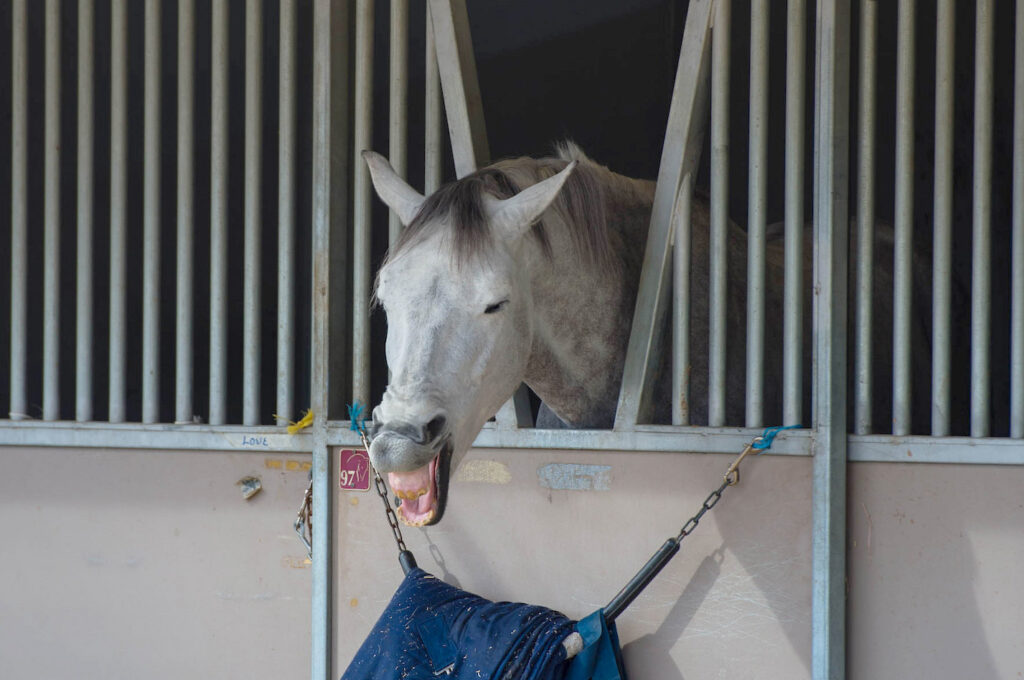
“If your horse has developed a high, dry, infrequent cough, and this is the first time you’ve heard it, you might watch it closely for a day or two—and if it persists have your vet come take a look,” Buechner-Maxwell said. “It could be a foreign body in the airway, such as a piece of hay or straw.”
Other times a cough can indicate a problem with an organ other than the lungs. “For example, coughing is one of the clinical signs demonstrated by animals and people with heart disease, although severe heart disease is not common in horses,” she noted. “If a horse’s cough is associated with exercise intolerance, limb edema and an obvious ‘pulse’ wave that’s visible in the jugular vein, get your veterinarian involved before the disease progresses further.”
Coughing When Eating or Drinking
Potential causes: An episode of choke—when a mass of chewed food gets stuck in a horse’s esophagus—can produce a bout of coughing and retching, along with heavy drooling and discharge from the nostrils that includes bits of food.
Fortunately, most cases of choke resolve spontaneously, although your veterinarian may still want to examine your horse to look for potential causes and perhaps suggest management changes to prevent a recurrence. Your vet can also determine if he inhaled any food during the choke episode, which would put him at risk for developing aspiration pneumonia, which can be life threatening.

If your horse does aspirate food material during an episode of choke, initiating immediate broad-spectrum antimicrobial therapy is essential and the only way to reduce the risk of pneumonia.
TREATING AND RECOVERING FROM RESPIRATORY ILLNESS
Medication: If your horse is suffering from a bacterial infection, he will need to be treated with antibiotics. “He may also need steroids to damp down inflammation if he’s coughing a lot and his breathing is compromised,” Johnson said. “Additionally, anti-inflammatory drugs can help horses feel better and promote a healthy appetite. Banamine (flunixin meglumine) or bute (phenylbutazone) are often used for this purpose.”
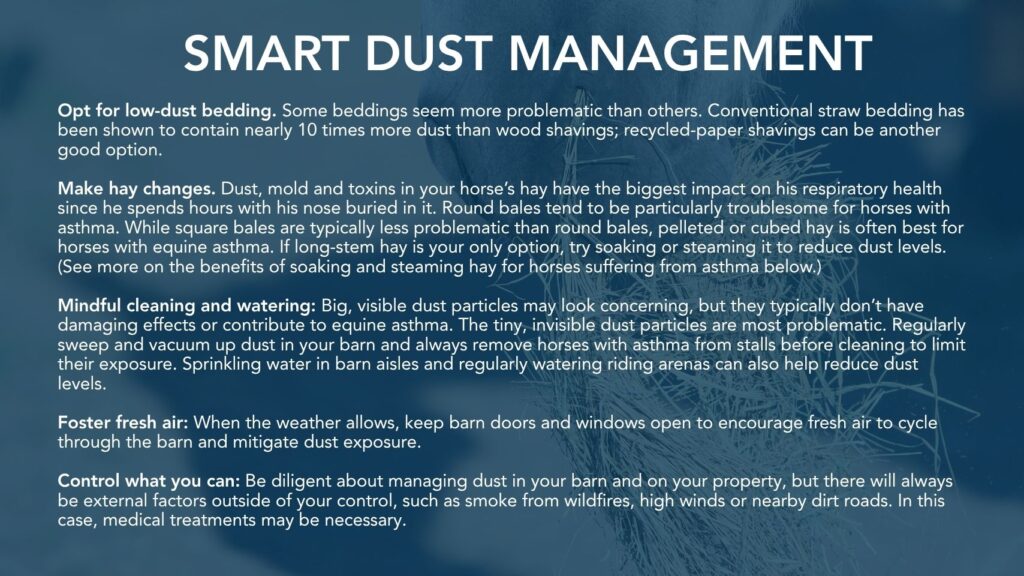
Smart management: You need to keep your horse’s environment as clean and dust-free as possible. If his airways are inflamed, he may be more sensitive to dust in his feed, hay or stall that normally wouldn’t bother him. “Evaluate your horse’s environment and try to minimize ongoing exposure to things that could further irritate the airways,” Buechner-Maxwell said.
Either place his hay on the ground or hang the hay net below the level of his nose to prevent dust from falling into his nostrils while he eats. You also might consider switching to a slow-feeding hay net; with smaller holes, these nets prevent horses from burrowing their noses into the forage. (See below for more tips on keeping dust at bay.)
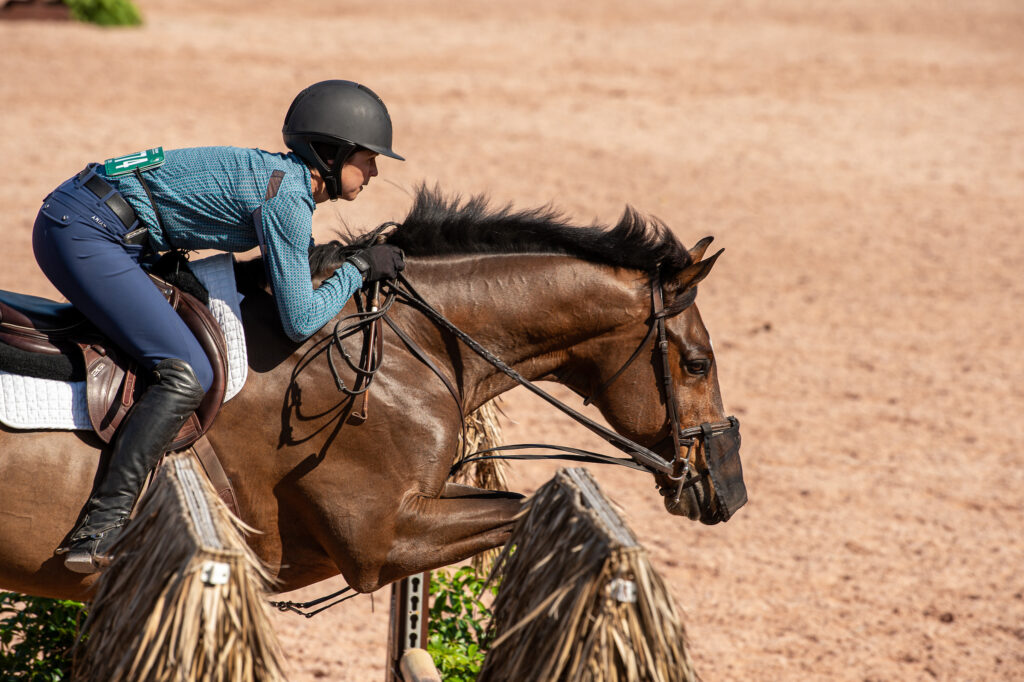
You can also use an equine dust mask when riding in dry and dusty conditions or to prevent your horse from inhaling excessive dust while munching on hay. Made from fine mesh, these masks easily attach to bridles and halters and are designed to prevent horses from inhaling finer airborne particles in dust, pollens and other allergens.
Rest and supportive care: When recovering from any type of respiratory condition, give your horse plenty of time to recover. Equine influenza, for example, damages the protective lining of the respiratory tract, so even after the acute illness passes, it will take a minimum of two to three weeks for the lining to regenerate. If you ask your horse to exert himself before his internal defenses have time to recover, it could cause additional irritation and possibly new infection.
Be especially careful when returning a horse recovering from respiratory illness to work during cold weather. Buechner-Maxwell noted that Mike Davis, DVM, PhD, a veterinary researcher at Oklahoma State University, showed that breathing cold [5 degrees Celsius] air while exercising at 20 miles per hour caused damage to the airway lining. “This indicates it may be especially important to minimize exercise in horses who are recovering in the winter months,” she said.
UNDERSTANDING EQUINE ASTHMA: CAUSES & IMPACTS
Equine asthma includes a broad spectrum of respiratory diseases and is essentially caused by a chain reaction in the airways due to an inflammatory response. Cricket Russillo, DVM, of High Performance Equine based in northern Virginia and Wellington, Florida, explains that when allergens trigger inflammatory cells to infiltrate the lungs they release different proteins and signaling molecules that damage tissues and exacerbate the inflammatory response.
“The lungs are kind of spongy like a dish sponge, and there’s a lot of surface area that’s meant to allow optimum oxygen exchange across the airway for absorption,” she explained. “When you get thickening because of inflammation or excess mucus, that oxygen exchange becomes much, much harder.”
Equine asthma is generally categorized as mild, moderate and severe. Studies have found that mild to moderate forms of equine asthma may affect 68-80% of horses, while an additional 14-17% of horses may be affected by the severe form of the disease.
Horses with mild and moderate asthma might never cough and have little or no signs of respiratory distress at rest, making them more challenging to diagnosis. However, horses with severe asthma will have clinical signs at rest, including respiratory difficulty or hypertrophy (enlargement) of abdominal muscles. Other signs include nostril flaring or exercise intolerance.
“Severe asthma is what we used to call heaves or RAO,” explained Melissa Mazan, DVM, Dipl. ACVIM, professor and associate chair of the Department of Clinical Services at the Tufts University Cummings School of Veterinary Medicine’s Hospital for Large Animals in North Grafton, Massachusetts. “It’s detectable to a veterinarian externally when a horse is in crisis or has recurrent episodes where he’s visibly struggling to breathe.”
What’s behind equine asthma? Genetics, respiratory or bacterial infection, seasonal allergies and poor stall ventilation can all contribute to or exacerbate asthma, but Laurent Couëtil, DVM, PhD, Dipl. ACVIM of Purdue University, says the main driving force for equine asthma is exposure to dust and mold. “Dust, mold and other irritants lurk in many places horses frequent and in the feed and hay they consume,” he explained. “The bottom line is dust is driving inflammation, and inflammation is bad for performing, even with a small number of inflammatory cells.”

Couëtil says severe equine asthma is essentially an allergic disease caused by mold content in hay. But it’s not just poor-quality hay that is triggering for these horses. He points to a new study about high-quality hay causing issues in severely asthmatic horses. “The team identified up to 33 fungal species in both the moldy and good-looking hay, indicating that even excellent-looking hay can harbor molds that cause irritation in horses with asthma,” he said. “This study tells me that even quality hay can be problematic for horses with severe asthma.”
Effects of asthma: Airway inflammation, especially when chronic, can result in remodeling that negatively impacts equine lung function and gas exchange. “Pulmonary gas exchanges are the limiting factor to performance in fit horses exercising strenuously,” Couëtil said. So even mild or moderate asthma can significantly impair gas exchanges and result in decreased performance.
Diagnosing equine asthma: To identify the degree of airway inflammation and thus the asthma’s severity, veterinarians use what’s called bronchoalveolar lavage, in which they insert a tube through a horse’s nostril to retrieve cell samples from deep inside the lungs to pinpoint inflammatory cells.
“Different types of inflammatory cells might be involved or contribute to lung inflammation, which is a very active area of research,” Julia B. Montgomery, Med Vet, PhD, Dipl. ACVIM, associate professor in Large Animal Clinical Sciences at the University of Saskatchewan’s Western College of Veterinary Medicine, said. “The assumption is if there are different types of inflammatory cells, there are probably different signals that ignite the inflammation.”
Treatment: Equine asthma cannot be cured, but it can be managed. Corticosteroids relieve airway inflammation and can be administered orally, by injection or as an inhalant. However, systemic corticosteroids can carry risks for horses with equine metabolic syndrome or PPID. Bronchodilators restore a horse’s ability to breathe—but only for a short time; for example, clenbuterol, an oral bronchodilator, relaxes and opens airways to provide relief within 30 minutes.
Omega-3 fatty acids are used to help manage a variety of inflammatory conditions in humans, and Couëtil recently published a study suggesting that horses with asthma may also benefit from omega-3 fatty acid supplementation. In his double-blind trial, the clinical signs of horses with asthma who received supplemental omega-3 fatty acids showed significant improvement compared to horses who did not receive the supplement.
“People started using these for coronary heart disease, and now for arthritis and asthma,” he noted. “In horses, this is the first study done with an algae source of omega-3 fatty acid, and it was the first one to show an effect. So now I recommend this to my clients as a drug-free alternative or supplement.”
In a recent peer-reviewed study published in the Journal of Equine Veterinary Science, horses with asthma benefited from a polyphenol and citrus bioflavonoid formation. Horses showed improved clinical signs in respiration rate and breathing as well as a reduction in bronchoalveolar lavage (BAL) inflammation.
Other nutrients that may support equine respiratory health include spirulina, vitamin C, MSM and other bioflavonoids, but because research on these ingredients in horses is limited, more studies are needed. It’s crucial, however, to keep in mind that none of these treatments will be helpful if you don’t manage primary contributing factors—and environmental triggers remain at the core of equine asthma.
Soaking & Steaming Hay to Reduce Dust and Toxins
Steaming and soaking hay are effective strategies to reduce the amount of dust your horse is exposed to, but dust isn’t the only culprit lurking in his forage. Hay often contains other microbial allergens including bacteria and mold spores that are highly problematic for horses with asthma and aren’t eliminated through traditional soaking.
The most effective way to reduce microbial allergens in hay is through steaming due to the process’s high heat application. In a study comparing the effect of soaking versus steaming hay, only steaming effectively reduced the concentrations of both bacteria and mold contamination.
“Soaking hay can actually increase the bacterial counts in hay, and the longer the soaked hay sits around before being consumed, the greater the increase,” Clair Thunes, PhD, equine nutritionist and owner of Clarity Equine Nutrition, said. “Despite significant decrease in mold counts, the clinical benefits of feeding steamed hay versus soaked hay to horses with asthma have been inconsistent. Therefore, employing additional management strategies to reduce allergen exposure and using appropriate medical treatments recommended by a veterinarian are also critical when managing horses with respiratory allergies.”
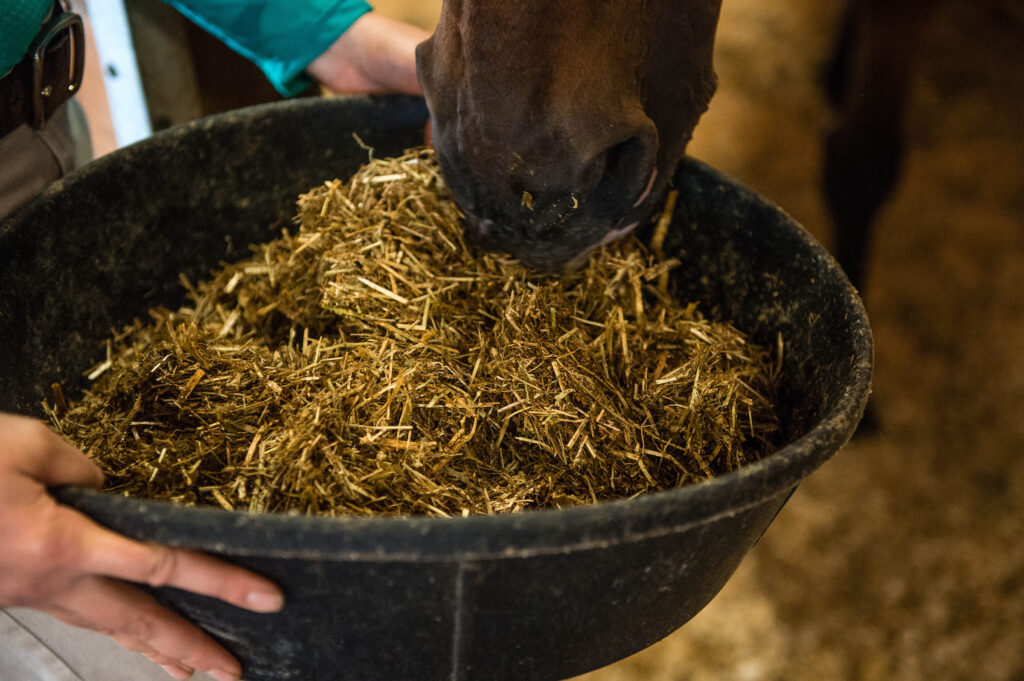
Hay steamers are commercially available, safe and easy to use with the manufacturers’ instructions. Available in different sizes, steamer capacity ranges from a few flakes to an entire hay bale, and the process takes from 60 to 90 minutes.
Steamers, however, can be expensive, especially if you don’t have the option of sharing the cost with others at your barn. If you don’t have access to one, soaking hay is the second-best option, as it will still effectively reduce dust contents. It’s always wise to consult your veterinarian for the most effective soaking strategy depending on your horse’s situation, but as a general rule of thumb: Fill a large muck tub with water and submerge a full hay net for 30 to 60 minutes; discard the leftover water; and immediately feed to your horse to prevent excessive bacterial proliferation.
TAKEAWAY
Preventing equine asthma and other respiratory conditions can be challenging for a variety of reasons including environmental factors and modern-day horsekeeping methods. However, by staying informed and paying careful attention to any changes in your horse’s breathing or new bouts of coughing, you can take proactive measures to keep him breathing easy and performing at the top of his game.