




 Video
VideoIf you’re hunter, jumper or eventer, you undoubtedly enjoy the rush of jumping. You also probably know that jumping puts additional stress on the tendons and ligaments that support your horse’s legs during both push-off and landing—and the bigger the jump, the bigger the stress. Jumping at speed and making tight turns further increases the risk of a misstep that could lead to injury, and the impact of landing can also damage structures in the front feet.
“Repetitive stress takes a toll. Many horses in these sports show year-round—and when they’re not showing, they’re schooling,” Elizabeth Davidson, DVM, who focuses on equine sports medicine at the University of Pennsylvania’s New Bolton Center, explained. “With repetitive stress, minor damage can build up in ligaments or other structures. Then something tips it over the edge.”
The good news, however, is that there are a number of management strategies and training practices you can implement to prevent common injuries associated with jumping, as well as tried-and-true and new, cutting-edge treatment options for existing injuries.
We’ll first explain how your horse uses his body when he jumps so you’ll have a better understanding of the enormous amount of effort and energy it requires of him and the toll it takes on his various body structures. Then we’ll look at some common training and behavioral signs that your horse might have a jumping-related injury festering and how you can manage, prevent and treat these injuries to keep him feeling and performing his best.
How Your Horse Jumps
Former jumper Dan Marks, VMD, who served as a U.S. Equestrian Team veterinarian for more than two decades, has had a lifelong interest in elite equine athletes. He believes that it’s crucial for riders to understand the basic biomechanics of jumping—the physics of what a horse does mechanically with his body to generate the force to propel himself up and over a fence. This knowledge will enable you to help him as a rider.
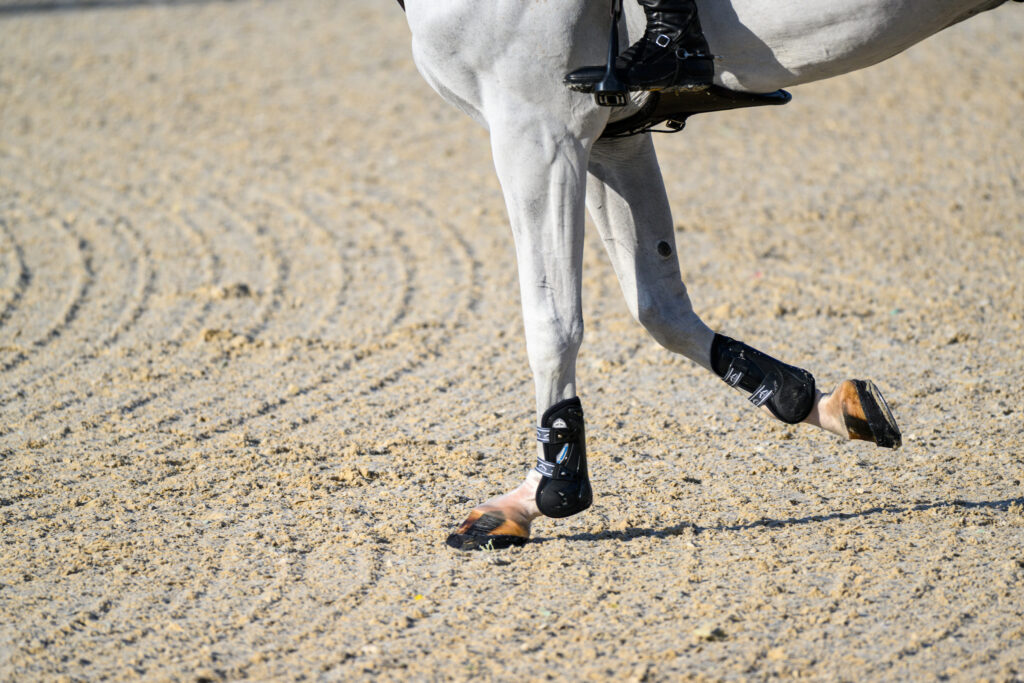
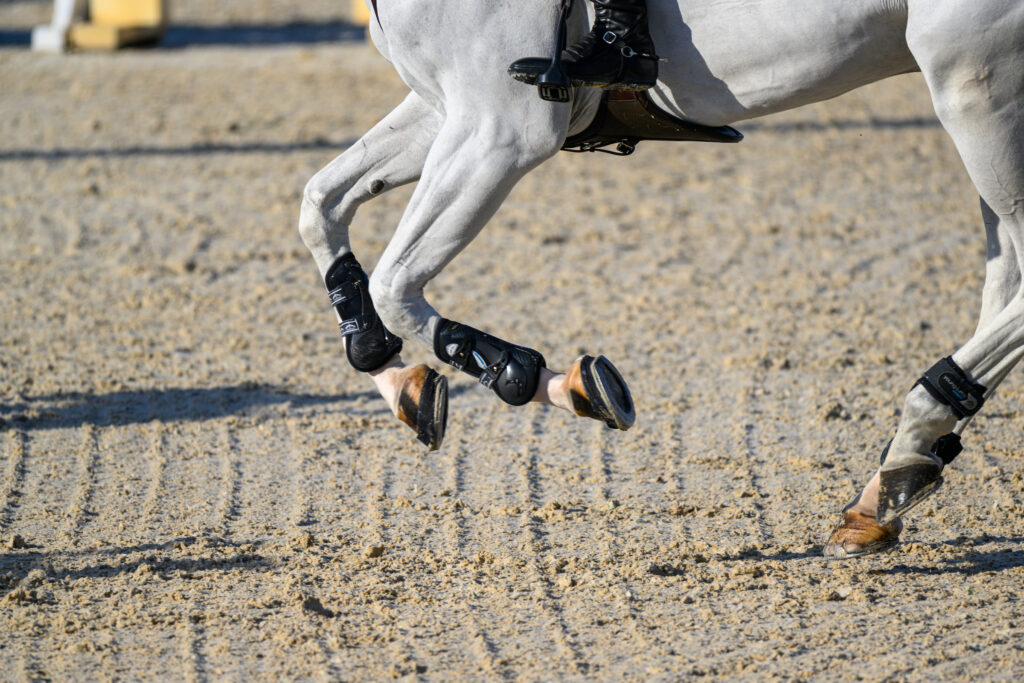
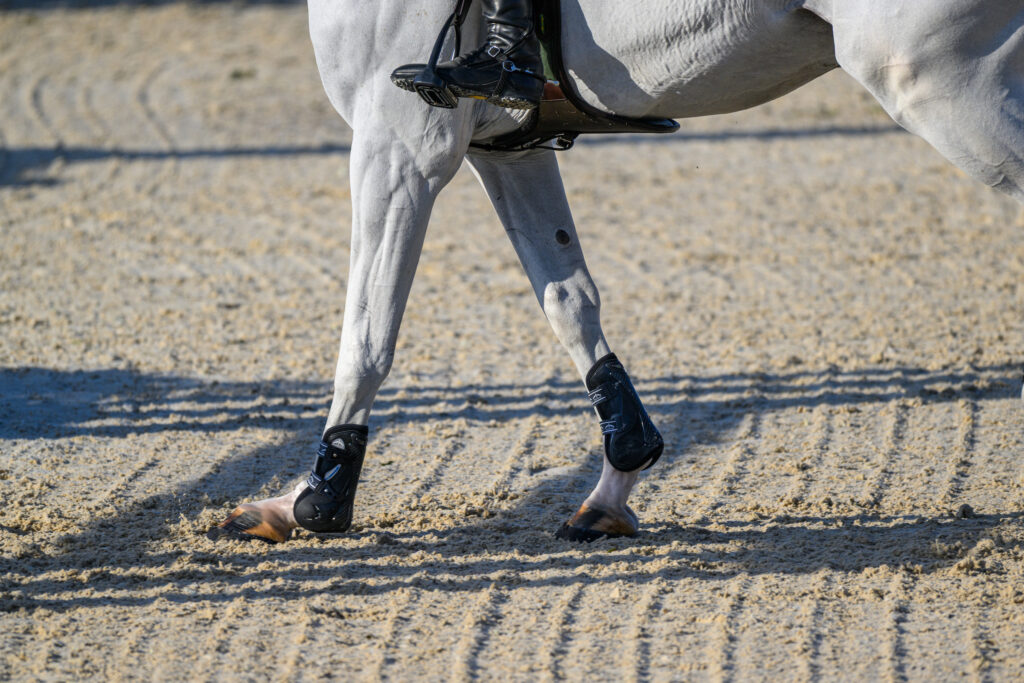
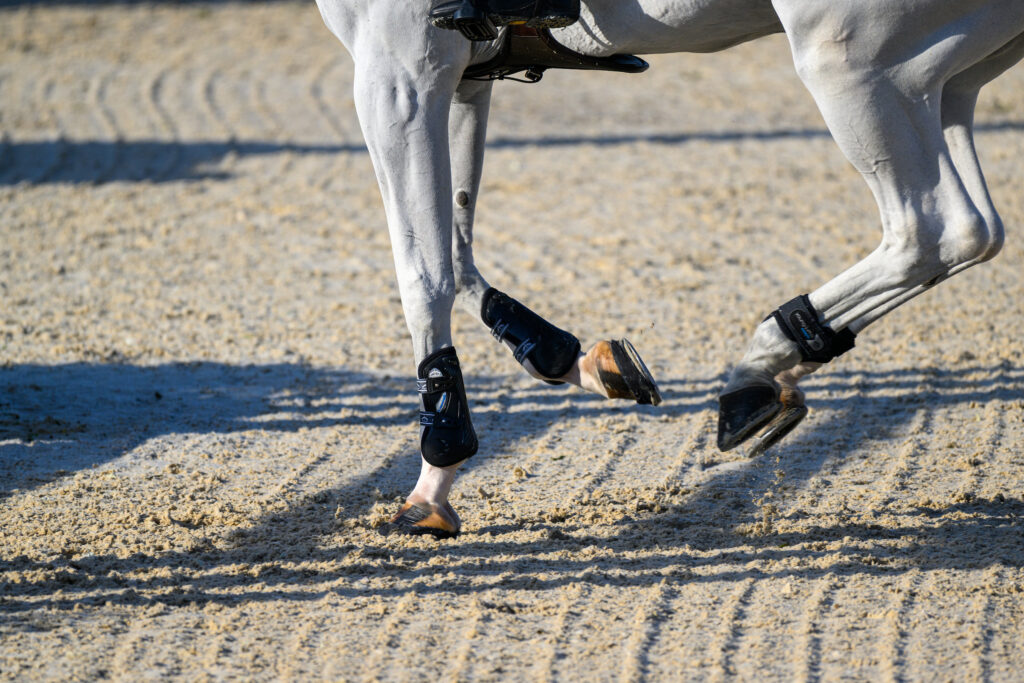
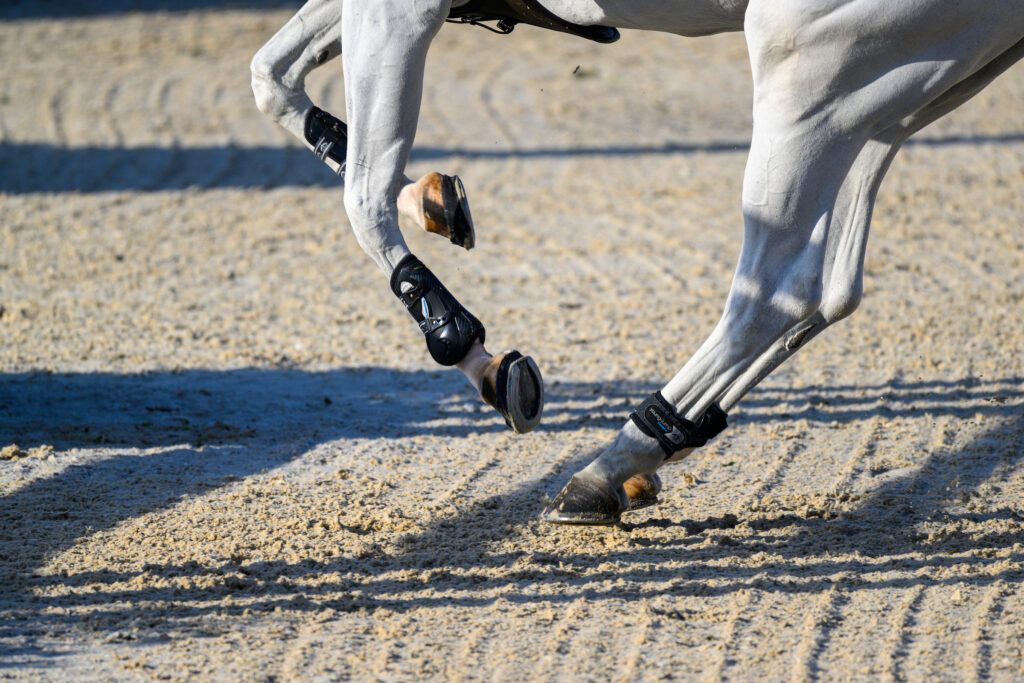
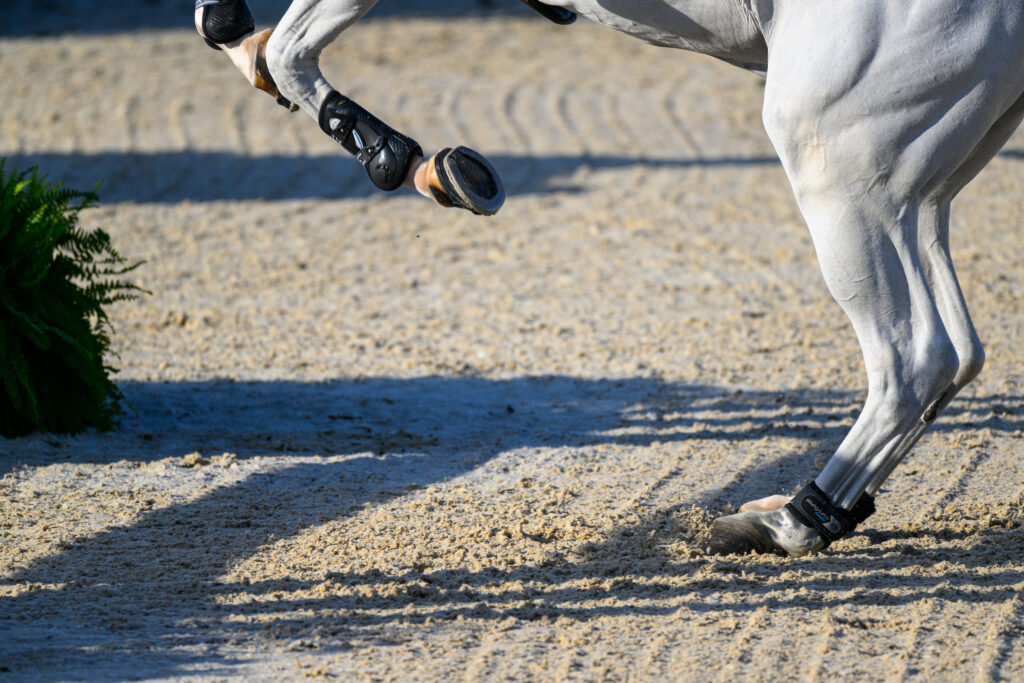
This sequence of photos illustrates how your horse approaches and takes off over a fence. ©Amy K. Dragoo
“Once you’re aware of how your weight and position affect your horse at different phases of the jump, you’ll learn how your own flexibility and coordination can make you a better partner,” Marks, a founding partner of the Delaware Equine Clinic in Cochranville, Pennsylvania, said. “Understanding jumping biomechanics also helps you determine what you can and can’t improve in a horse’s technique and can be a useful tool for diagnosing and preventing soundness problems.”
Here, Marks explains how your horse uses his body during the approach, takeoff, midair and landing phases of jumping an obstacle and offers position and riding tips for each phase so you can better help him over fences.
The Approach
As a horse approaches a big fence, he gathers energy in preparation for the upcoming effort by rounding his back to bring his hind legs farther underneath his body with each stride. This creates more impulsion and suspension in his gait. During the last few strides, he shifts his balance backward and concentrates the power in his hindquarters. Imagine coiling a spring before releasing it—the more he coils his body, the more forcefully he can take off.
Contrary to common belief, a horse doesn’t take equally measured strides all the way to a jump. He compresses the final stride before takeoff by several feet to decelerate his body and transfer his forward momentum into energy for the vertical push-off. This energy is stored in his muscles, tendons and ligaments, which stretch so much that the front fetlocks almost sink to the ground.
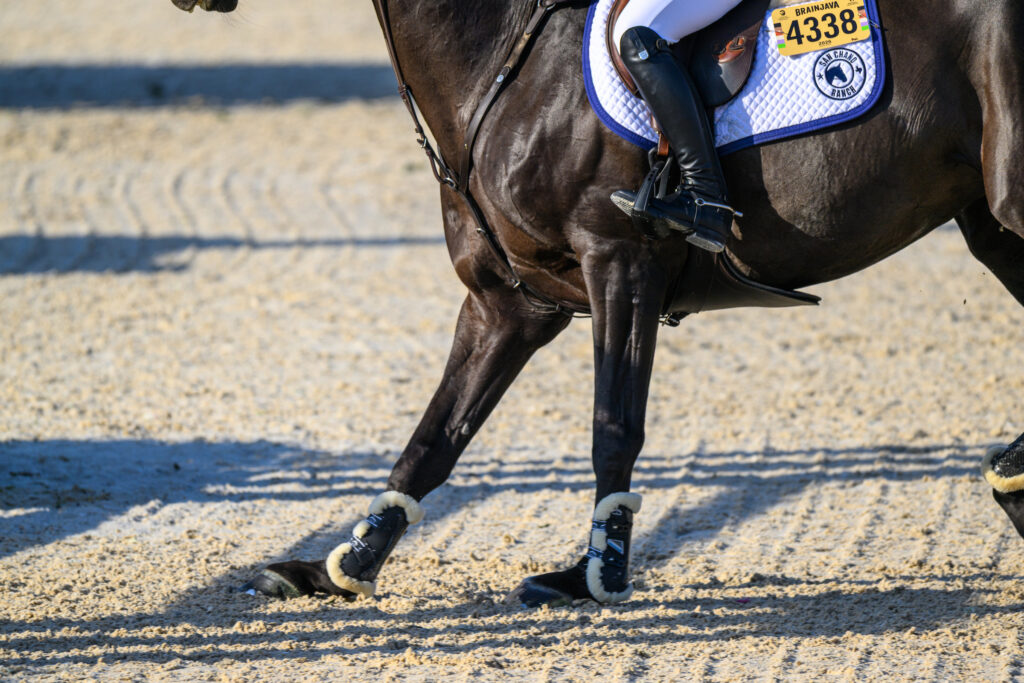
Although the hind legs furnish the main power on takeoff, the forelegs are more significant at this moment than many people realize. In the last approach stride, your horse lowers his withers and rotates his scapula to extend his forelegs in front of his body as he prepares to plant them on the ground—the same way a pole-vaulter uses a pole.
Rider tip: Most often doing less is more when it comes to your approach. Focus on the quality of your canter, maintaining a consistent rhythm and keeping your horse straight so he can produce the best jumping effort possible.
The Takeoff
When your horse’s front legs leave the ground, the loaded muscles, tendons and ligaments release stored energy, much the way a stretched rubber band snaps back into place when released. The faster and more powerfully a horse loads his front legs, the greater the vertical blast off the ground on takeoff. As the horse’s front legs are pushing off, his back is flexing like a bow to allow his hind legs to sweep forward under his body. Unlike the front legs, the hind legs unite during this phase, so they can hop forward onto the ground simultaneously.
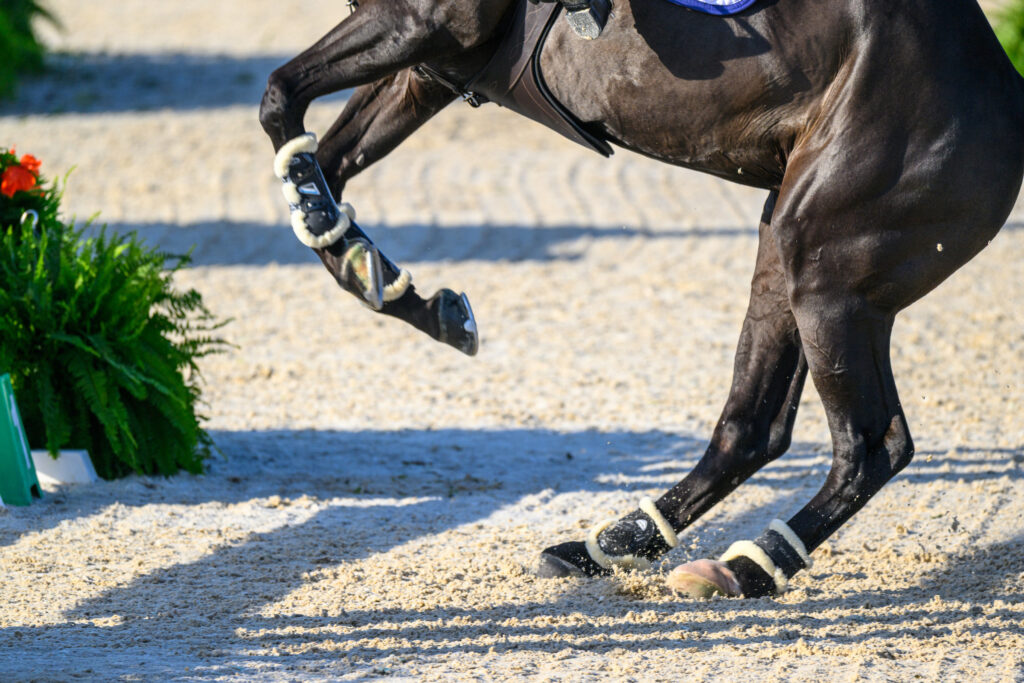
The hindquarters also go through a compression process, crouching low to the ground to coil maximum energy. Over a very big jump, a horse’s hocks lower so much that the cannon bones in his hind legs are almost parallel to the ground. Then, just as the front legs did, the hind legs extend vertically releasing their stored elastic rebound by uncoiling the support structures that stretched while the feet were grounded and the joints flexed.
Rider tip: On takeoff, it’s crucial to prevent your balance from tipping forward before your horse’s front legs push off. If you make the mistake of getting ahead of your horse, you’ll add weight to his forehand just as he’s trying to push off the ground. To help your horse maximize his vertical lift, it’s important to keep your weight back at this moment.
In Midair
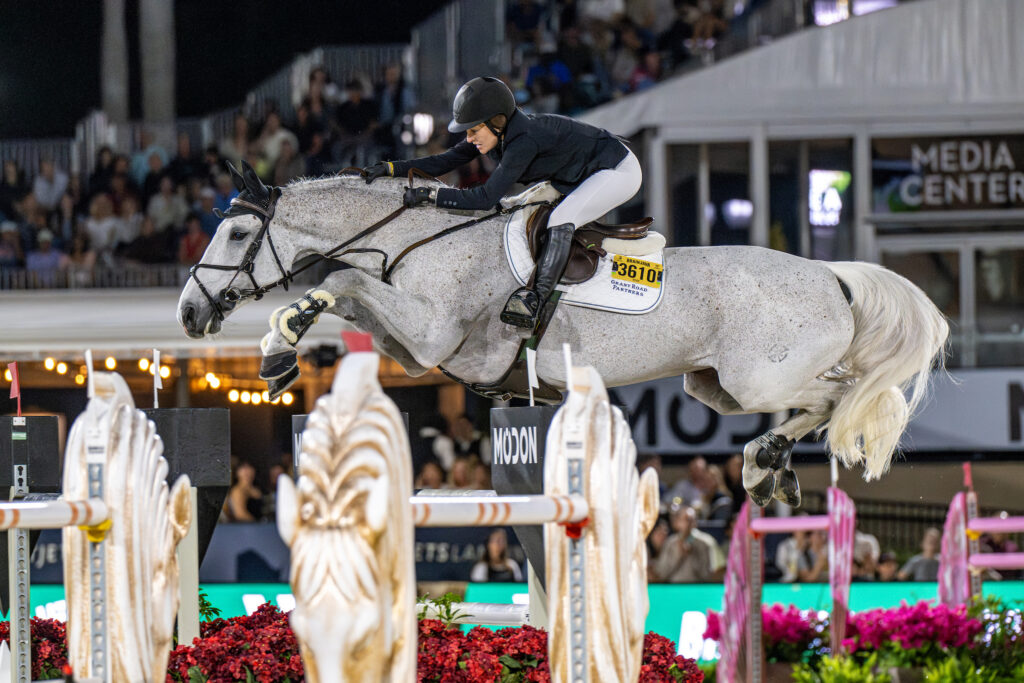
Once your horse is in the air, he bends his elbows and uses his brachiocephalicus muscle to pull his forearms up and forward to tightly fold his lower legs. Midway over the jump, a horse has to invert his back and lumbosacral joint to flip his hind end so his stifles and hind legs can clear the fence.
Rider tip: In the air, you have little effect on the jump and simply need to avoid interfering with your horse. Make sure you don’t pull on the reins, sit down heavily or radically shift your balance to one side or the other.
The Landing
Landing from a big effort, such as a puissance jump, feels like zero-gravity freefall. For a moment, there’s no weight in your stirrups—until your horse completes the parabola of the jump by touching down with his front feet.
Rider tip: Having your lower leg in a solid position (directly underneath your body and not slipping behind you) will help you absorb the landing force and avoid being slung forward onto your horse’s neck. This stable position also keeps you in a better balance to signal your intentions on landing.
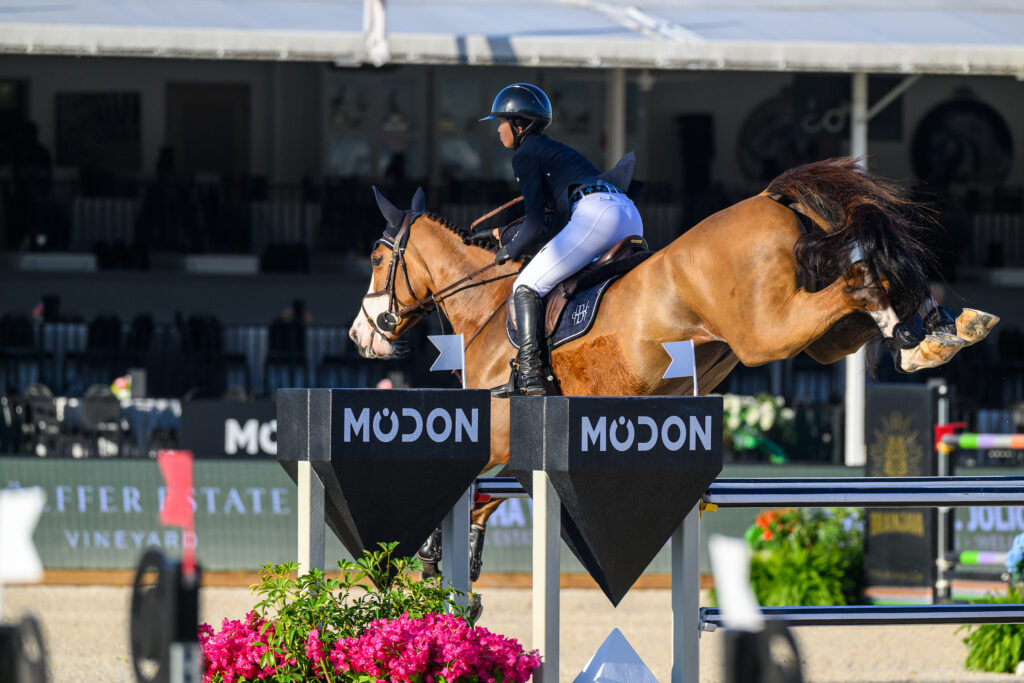
During the landing phase, the forelegs play a critical role in stopping the rotation of your horse’s body—without their stopping force, he would somersault forward into what’s known as a rotational fall. Once the horse has landed, he needs time to regain his forward momentum to canter away from the jump.
Rider tip: How effectively you can influence your horse in the recovery strides following a jump depends somewhat on your release. Especially when it’s critical that you shorten or lengthen your horse’s stride on the landing phase, a following hand (automatic release) is better than a crest release because it provides seamless contact with the horse’s mouth from takeoff to landing.
(For a more in-depth look at the biomechanics of how your horse jumps, click here.)
Common Behavioral and Training Signs of Trouble
Now that you have a better understanding of how your horse jumps, Marks highlights some commons training and behavior signs of joint issues and how you can help keep him sound and performing his best.
Horse jumps considerably better off one turn: When a horse prefers to approach jumps more off one lead or he jumps considerably better off one turn, it may indicate a weakness or soundness problem in a front leg. He may even swap leads in front of a jump to ensure that his stronger leg is the non-leading leg, which bears more force on takeoff. Like people, horses develop habits and preferences that may not have anything to do with pain. Be sure to consult with your veterinarian and trainer to help you differentiate between painful and non-painful sources of the problem.
He starts refusing fences: If your horse uncharacteristically begins refusing fences, he could be experiencing muscle pain. While most of us are adept at checking the legs for signs of tendon and ligament soreness, it’s easier to overlook the muscles. Horses who refuse a day or so after jumping large fences, for example, may be suffering from sore hamstring muscles. Deep soreness in the medial gluteal muscles (croup muscles) can also make it uncomfortable for horses to jump even low cross-rails. Ask your veterinarian to show you how to check your horse’s muscles for soreness, including those in the back and neck. This only takes a few minutes and should be a part of your daily routine.
Horse drifts in the air: Since both of a horse’s hind legs push off together, if one is weak or painful, the other will exert a stronger push on takeoff, causing the horse to drift in the air toward the side of the lame/weak leg.
His scope deteriorates: Jumpers are more prone to back problems than horses in other disciplines because they flex and extend their backs so dramatically over big fences. If the oxers your horse once easily jumped feel a foot wider and his overall scope seems weaker, have your vet check for sacroiliac (the joint between the backbone and the pelvis) soreness. (Learn more about your horse’s sacroiliac joint, including why it’s key to his movement, and how to recognize early signs of problems in the joint here.)
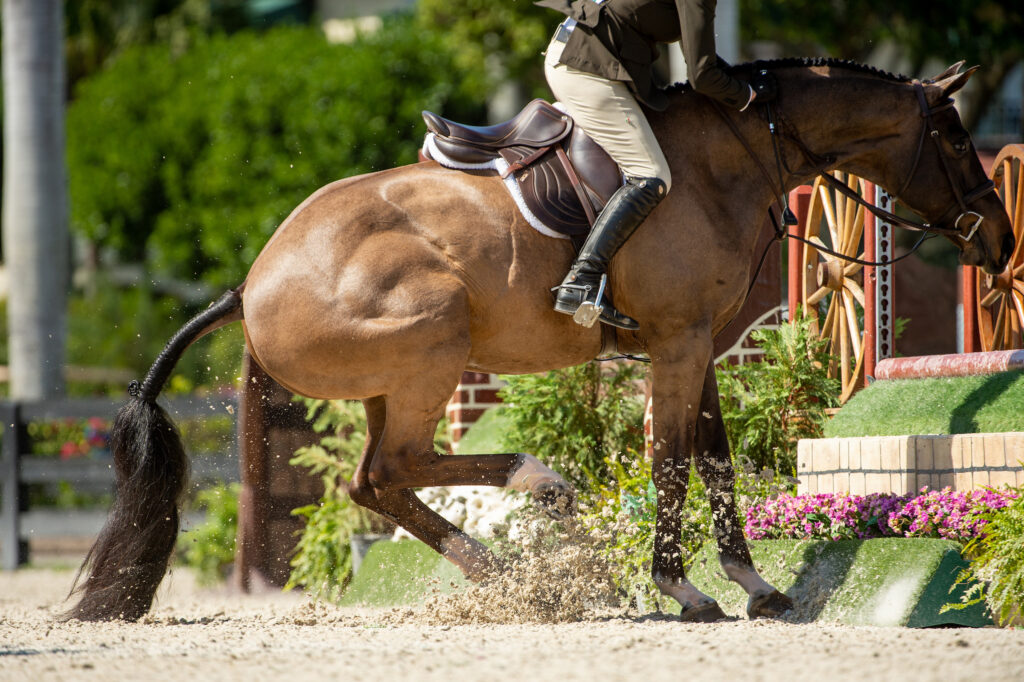
Knocked rails: As the fences gets bigger, more strain is put on the superficial digital flexor tendons on landing. This explains the increase in bowed tendons in horses jumping very big fences. The strain on the suspensory ligament and the deep digital flexor tendon and its check ligament doesn’t increase as dramatically as the fences get bigger.
Drop jumps, however, are particularly taxing on the suspensory ligaments because the horse’s hind legs take longer to reach the ground. This delay means that the front legs can’t unweight as quickly as in a normal landing. Hard ground aggravates this problem. Jumping off a bank onto hard ground may also sting the horse’s feet enough so that he is reluctant to make a big effort over the next jump or two. This is why you often see horses knock rails down the fence after a bank when the footing is hard.
Management and Treatment of Jumping-Related Injuries
Your treatment and management plan will depend on the type of jumping-related injury your horse has sustained and should be evaluated and closely monitored by your veterinarian to determine what methods are best for his particular situation. Here’s a sample of some tried-and-true and new options available to help keep your horse jumping at the top of his game.
Non-Steroidal Anti-Inflammatory Drugs (NSAIDs): These ubiquitous drugs, such as phenylbutazone (Bute), help keep horses with inflamed joints comfortable and are widely used as part of the approved multimodal treatment approach. In performance horses, however, experts agree that NSAIDs should not be the base of your treatment program. “NSAIDs can safely be used at ow doses and while monitoring the overall health of the horse, either during conditioning or rehabilitation from an injury,” noted José M. García-López, VMD, Dipl. ACVS, ACVSMR.
Intra-Articular Therapies: In lieu of relying on NSAIDs to help maintain joint health, veterinarians often use intermittent intra-articular therapies to control joint discomfort in performance horses. Corticosteroids—primarily triamcinolone and methylprednisolone—are still one of the first-line, intra-articular therapies. Practitioners frequently co-administer hyaluronic acid with those intra-articular corticosteroids.
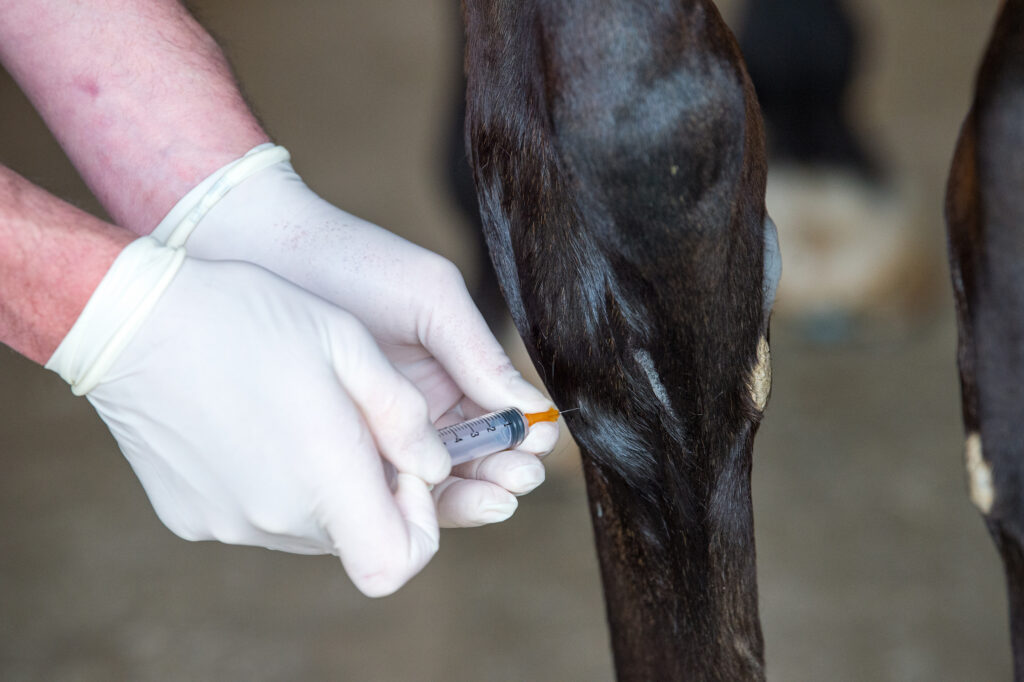
Despite the benefits of these tried-and-true articular therapies, Kyla Ortved, DVM, PhD, Dipl. ACVS, ACVSMR, believes the tides are changing. She says using orthbiologics (naturally derived regenerative therapies made from a horse’s own biological materials like blood, fat and bone marrow) early to treat an injury is more effective at preventing further damage and promoting healing. “If I have a horse with lameness or pain attributable to a particular joint, I use orthobiologics in the early stages,” she said. “I feel more comfortable using these before jumping to steroids as they’re more protective of the cartilage.”
Intramuscular Therapies: Injury management is almost always multimodal, and intramuscular (IM) polysulfated glycosaminoglycan injections like Adequan® can also play a role in treating traumatic joint injuries and degenerative joint disease. These work by reducing inflammation, restoring synovial lubrication and repairing cartilage. “I put horses with early signs of joint inflammation on a specific course of Adequan®. This has shown good objective evidence for helping restore the ‘steady state’ between production and destruction of cartilage components,” García-López said. “Basically, it’s quite helpful to keep what’s good, good.”
Physical and Alternative Therapies: As with people, physical therapy can play a significant role in a horse’s recovery program. Postural exercises and movements designed to improve coordination and proprioception, can help any target muscle atrophy and increase a horse’s joint stability through conditioning. Additional therapies you might consider include extracorporeal shock wave therapy (ESWT), laser and acupuncture/electroacupuncture.
Oral Joint Health Supplements: Many owners give their horses joint supplements either to help prevent injury or disease or while recovering from an injury. Of the studies performed in horses, evidence supports the use of some ingredients, such as glucosamine, chondroitin sulfate, hyaluronic acid (HA) and avocado-soybean unsaponifiables (ASU). Glucosamine is believed to play a role in the formation and repair of cartilage, chondroitin sulfate helps give cartilage its elasticity and HA helps lubricate joints and form the matrix of articular cartilage. Some studies also suggest that ASU may reduce inflammation and protect cartilage.
It’s important to note that nutraceuticals are not required to meet the same standard for Food and Drug Administration approval as drugs are, and therefore their efficacy has not been studied as extensively. However, equine and human research suggests that some of these substances have protective effects. Your veterinarian can help you decide what’s best for your horse.
Appropriate Conditioning: Adjusted work levels can also help protect your horse’s joint, tendon and ligament health. Moderate exercise is good for joint health, but too much can trigger inflammation. Increase your horse’s turnout, give him longer warm-ups and let him be your guide in determining how much work you do. As long as he stays comfortable, you’re probably on the right track. But when it doubt, always consult your vet.
“Conditioning cannot be overlooked. Equine athletes have their entire weight, which biomechanically increases exponentially during exercise, transferred through one or two limbs at a time,” García-López noted. “They need to be properly conditioned in order for all musculoskeletal components, including muscle, tendon, ligament, bone and cartilage, to share the load adequately.”
New Zealand five-star eventer Tim Price, who claimed fourth place with 16-year-old Holsteiner gelding Vitali in this year’s Defender Kentucky Three-Day Event CCI5*-L, says the secret to his horses’ longevity starts with proper conditioning to help them better do their jobs, especially for the demanding cross-country and show-jumping phases of eventing.
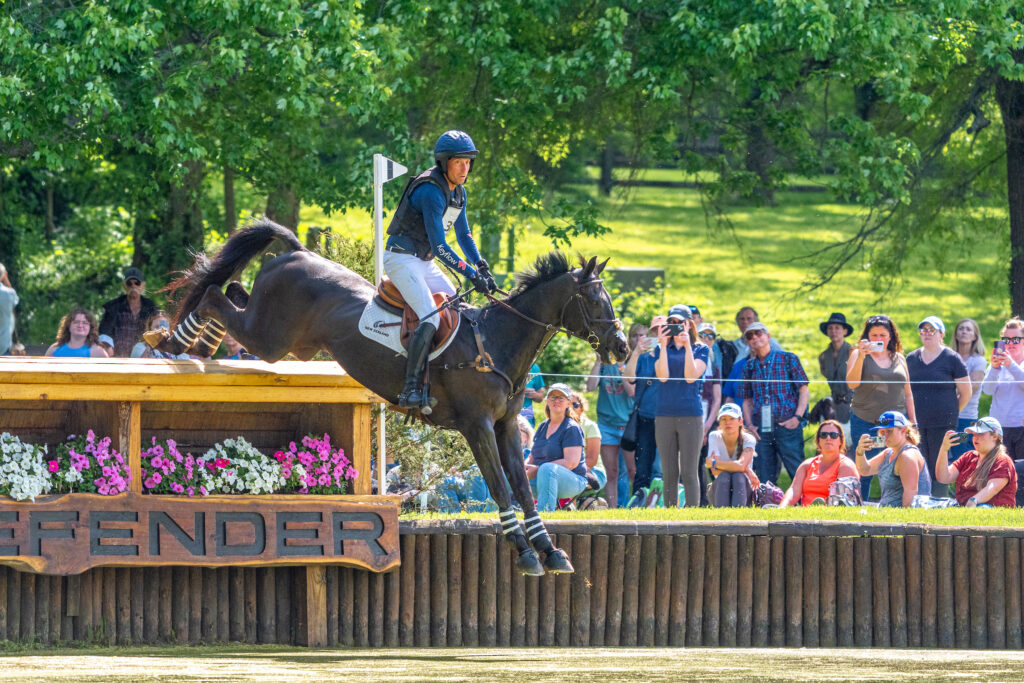
“I don’t drill my horses in any way, shape or form. I want them to be with me, in front of me and supple but I don’t over-face or over-drill them. This helps them get healthier and healthier in their bodies over time,” Price said. “It’s our job to ask fair questions, but it’s also our job to give them the ability to answer the questions. And the more my horses feel strong and ready, the better they can answer the questions correctly.”
At home, he keeps his horses’ jumping to a minimum to reduce stress on their joints, ligaments and tendons, and instead trains over ground poles and cavalletti to keep them sharp for the show ring. “I’m a big believer in poles. It sounds quite boring, but if you ever come to any of my clinics, I always have poles and raised cavalletti,” he laughed. “The horses have to be deliberate over the poles. Otherwise, they get a little tap on the toe. They also have to use their bodies, and we as riders have to use our leg, so it really emphasizes that we have to be forward into the collection.”
Price suggests preparing your horse on a circle before the poles and using a little leg into the collection to create an uphill canter. “Doing this and working over poles leaves a good imprint on both the horse and the rider,” he noted. “I also might ask them to do a quality jump over a little a pole on blocks. I’m always playing around with stuff like this. It’s really about doing the basics extremely well, and sometimes the poles are harder.”
Watch New Zealand’s Tim Price explain his horses’ fitness routine leading up to a big event like the Defender Kentucky Three-Day Event and how he uses ground poles and cavalletti to avoid putting excessive stress on their joints from our interview with him during this year’s CCI5*-L competition.
Takeaway
No matter which strategies you and your veterinarian ultimately integrate into your horse’s joint-health plan, you must regularly and critically reevaluate that plan as a team. It’s crucial to ensure you’re tailoring his conditioning and treatment program to his individual needs.
For More
- To check out more of our coverage from the 2026 Defender Kentucky Three-Day Event, click here.
- For a more in-depth look at the biomechanics of how your horse jumps, click here.
- Learn more your about horse’s sacroiliac joint, including why it’s key to his movement, and how to recognize early signs of problems in the joint here.
- Find out more about common sporthorse injuries here.
Thanks to Dechra for our coverage of the 2026 Defender Kentucky Three-Day Event. It includes lead-up events, rider interviews, competition reports, horse spotlights, photos, videos and more.