




 Video
VideoEquestrian sport is often a shared interest among families, and that is true for father-daughter duo Michael and Sterling Pollard. This year, they have competed together at international eventing and show jumping competitions and continue to work toward their goals with their horses.
The Pollards chatted with Practical Horseman about their shared passion for horses, why they are focusing on competing in two disciplines at such a high level, and what it is like training together.
A Family Affair
It isn’t just her father with whom Sterling shares her love of horses. Her mother, five-star eventer Nathalie Bouckaert, and her grandfather, Belgian Olympian Carl Bouckaert, are supporters as well. Riding ponies bareback at her mom’s house was how Sterling began her riding journey.
“I spent probably two years learning how to ride my ponies bareback. And then, eventually my mom let me buy a saddle,” Sterling said.
After riding ponies for a few years and getting bit by the eventing bug, Sterling graduated to her first upper-level horse, Ultra T, who she competed to the Preliminary and two-star level. With a taste for the top levels of the sport, Sterling wanted to see how far she could go.
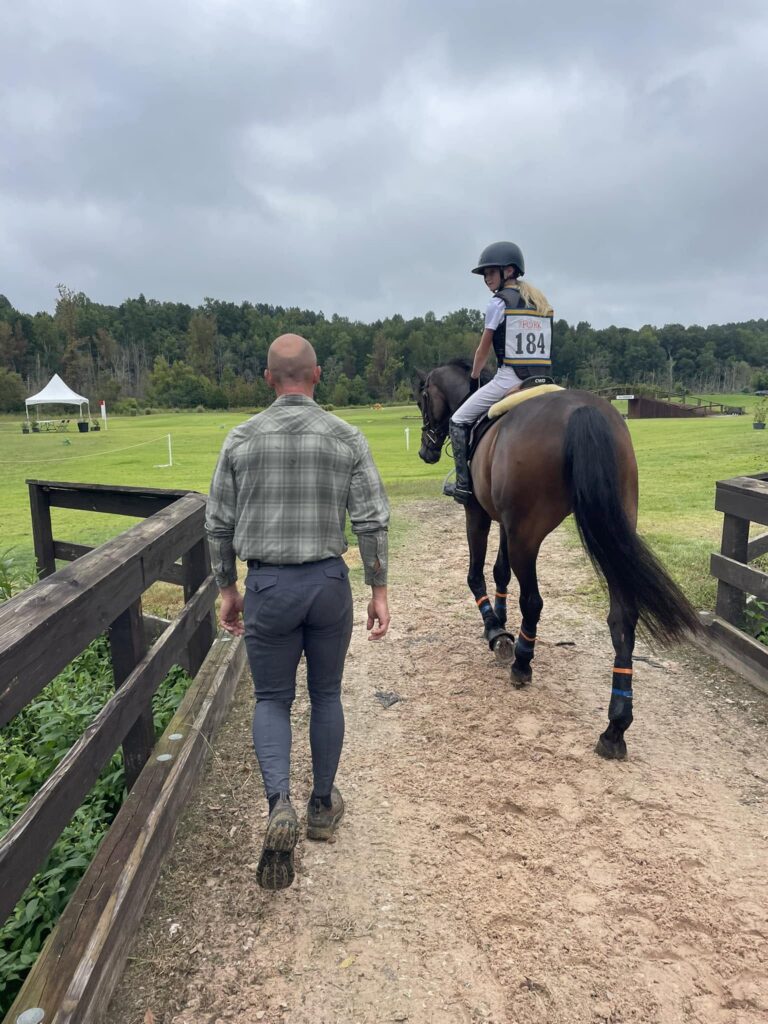
Courtesy Michael Pollard
Michael reached the top of the sport himself, having competed at the five-star level and winning team gold at the 2011 Pan American Games. Unfortunately, a tragic trailer accident in 2012 that resulted in the death of three horses was extremely difficult for Michael.
“After the trailer accident, I was so adamant about trying to get back to the level that I wanted to be at that I kind of lost sight of what I was doing,” Michael said.
He took a 10-year hiatus from the international level to focus on his family, career and other aspects of his life, though he admitted it wasn’t meant to last forever. Michael got drawn back into the sport, and Sterling’s riding ambitions played a role as well.
“As Sterling got more involved, and I had students who were involved, I wanted to ride some to be able to help her and to help some of the other students,” Michael said.
Talented Horses
Michael and Carl bought a few show jumping horses together for Michael to ride, compete, and potentially sell. When event schedules made competing at jumper shows a challenge, he ventured back into the eventing world as a competitor. Now, with Saint Estephe, an 8-year-old Belgian Warmblood gelding (Verdi TN x Grande J by Clinton), Michael is aiming for a four-star event and has competed in two-star show jumping competitions. While he has goals, being named to a U.S. team again isn’t one of them.
“It’s really, really nice to have some nice horses that I get to ride as well and go to compete without worrying about whether I’m going to make a team,” Michael said. “I really just have zero desire to even go down that track. I’m really just enjoying riding the horses.”
It seems that Michael may be passing the torch to Sterling, who has her own exciting string of horses with Tinto and Eton leading the way. Tinto is a 7-year-old Belgian Warmblood gelding (Bremen Plan x Pieke van de Achterhoek, by Iron Man van de Padenborre) who Sterling brought along from Novice to the three-star level. In June, the pair won CCIU253*-S individual gold and team silver at the 2026 USEF Eventing Young Rider Championships.
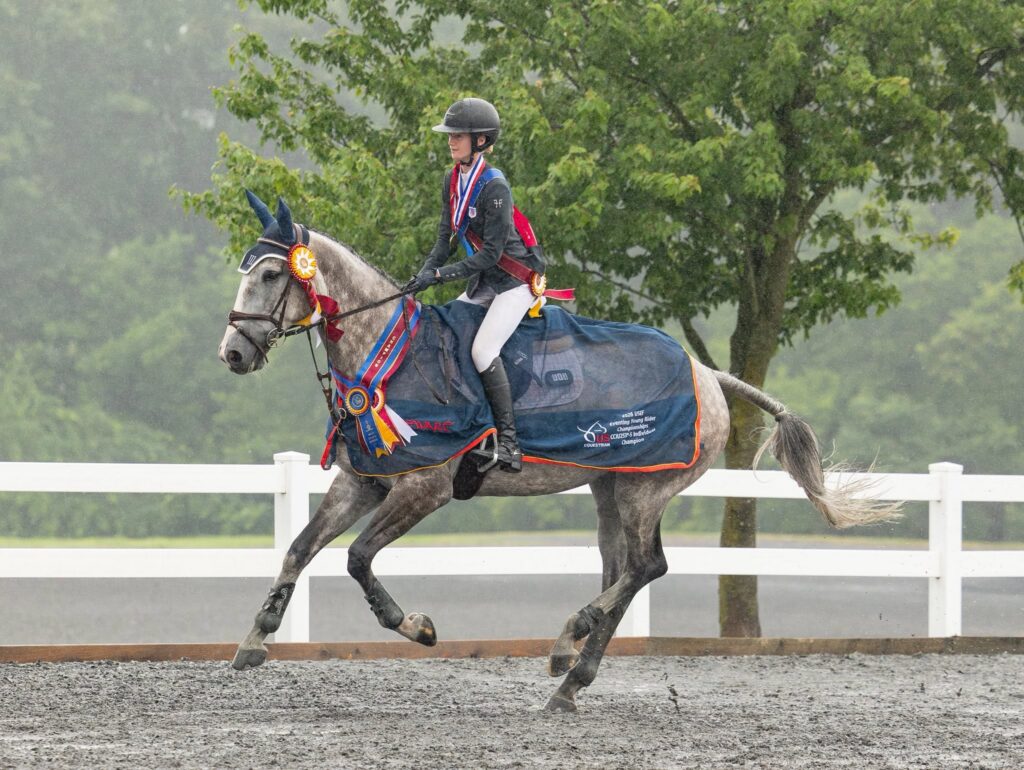
The following month, Sterling rode Eton, a 17-year-old KWPN gelding (Clinton x Nircolanda, by Opstalan’s Ircolando), to a show jumping team bronze medal and individual fifth-place finish in the Pre-Junior division at the 2026 FEI North American Youth Championships. Eton was originally supposed to be a jumper mount for Carl, but his busy schedule kept him from riding as much as he would have liked. Sterling helped her grandfather out by riding Eton, but she ultimately took over the ride on the experienced gelding, which started her on a concurrent upper-level path in the jumper ring.
Pursuing the Eventing and Show Jumping Disciplines
As Sterling got more comfortable jumping bigger fences with Eton, the Pollards began looking into competing at the international level in both eventing and show jumping.
“I’ve always been kind of a student of the sport,” Michael said. “I really love like trying to figure out what’s the best way to train.”
Michael pointed out two observations he made while assessing the eventing and show jumping disciplines. First, Australian Olympian Christopher Burton focused on eventing competitions early in his international career, but he began competing in more and more show jumping events until it was his sole focus for almost three years. Burton returned to eventing in early 2024, and his time spent in the jumper ring seemed to pay off with an eventing individual silver medal at the Paris Olympic Games. Second, some countries’ jumper riders can be selected for an Olympic eventing team, but it is much rarer for an eventing rider to make an Olympic show jumping team. With the Olympic eventing format having two show jumping rounds to determine team and individual medals, Michael noted there is an added emphasis on the final jumping phase.
“I think just the number of jumps and the accuracy that’s needed in the show jumping is a very important thing for the top-level eventing these days, much more so than when I was when I was younger,” Michael said. “I think you could get by with a much more rough-and-ready approach, but now with the level of accuracy needed on cross country, the show jumping is really helpful.”
As a father and trainer, Michael also saw the safety benefit of Sterling being capable of jumping large fences.
“If she’s able to jump 1.40 or 1.45 meters, then I feel pretty comfortable that she can go Advanced because I’ve seen her jump bigger and not have jumps fall down,” he said.
More experience in the jumper ring also means more experience when the pressure is on at eventing competitions.
“I feel like there’s a lot of pressure on in eventing when you go in the ring on the last day, and your whole weekend depends on that one round,” Michael noted. “It’s one thing if it’s hard, and you’re nervous because there’s a lot of pressure, and there’s a lot riding on it. It’s another thing if it’s that plus the fact that the jumps look big.”
He believes that when jumps don’t look intimidating, it makes competing and moving up easier.
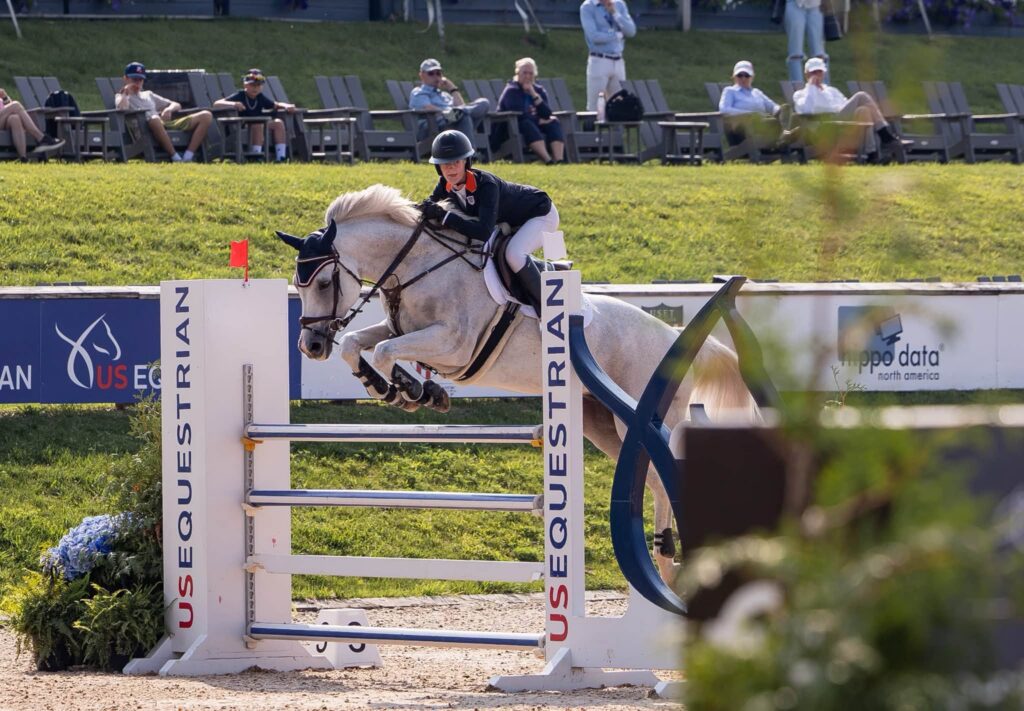
While there is overlap between the two disciplines, Michael thinks eventers and jumpers can learn some lessons from one another. He said it comes down to riders of each discipline fine-tuning their specific skills.
“Almost all eventers, especially Preliminary and up, have a really good or a much better sitting trot and foundation for lateral work,” Michael said. “And almost every jumper that’s done any equitation at all can basically find their way through a line and get exactly the striding and the distance and the take-off. That doesn’t mean that like their eye is going to be perfect, but once they’re in a line, they’re going to ride the line really well every single time.”
Another of his observations is that jumpers, more than eventers, are very good with their course riding and have beautiful, smooth rounds. While eventers have the dressage foundation, their show jumping rounds don’t seem to be as smooth in Michael’s opinion, especially when issues arise in the show ring.
“When things go wrong for eventers, they want to sit back and start kicking and shoving,” he said. “And the kids who have done a lot of equitation stay smooth and the horses jump better underneath them for the jumping.”
That being said, Michael thinks eventers stand out when it comes to working with horses who are struggling in the show jumping discipline.
“There are a lot of event riders who could get a lot more out of horses who are supposedly not useful in jumping, where they really could just use some better basic flat work and being funneled a little bit better,” he said.
Mastering the Two Disciplines
These observations pushed Michael and Sterling toward pursuing the two disciplines to get the best of both worlds. Last year, they happened to be competing at the World Equestrian Center – Ohio at the same time as prolific show jumpers Beezie and John Madden. Michael liked what he saw as the Maddens worked with their students and their horses in the warm-up and thought he would see if training with them was a possibility.
“My dad just pretty much just went up and met John, and then later sent him an e-mail asking if we could possibly work with them,” Sterling said.
In addition to thinking of the short-term goal of Sterling competing at this year’s FEI North American Youth Championships, Michael also had her future as a rider on his mind when it came to getting to work with the Maddens.
“The people who you put your kids with are super important, especially when they are younger. They’re going to model themselves after whoever it is their whole lives.” Michael said. “Some of my early trainers are still some of the most important influences I’ve ever had.”
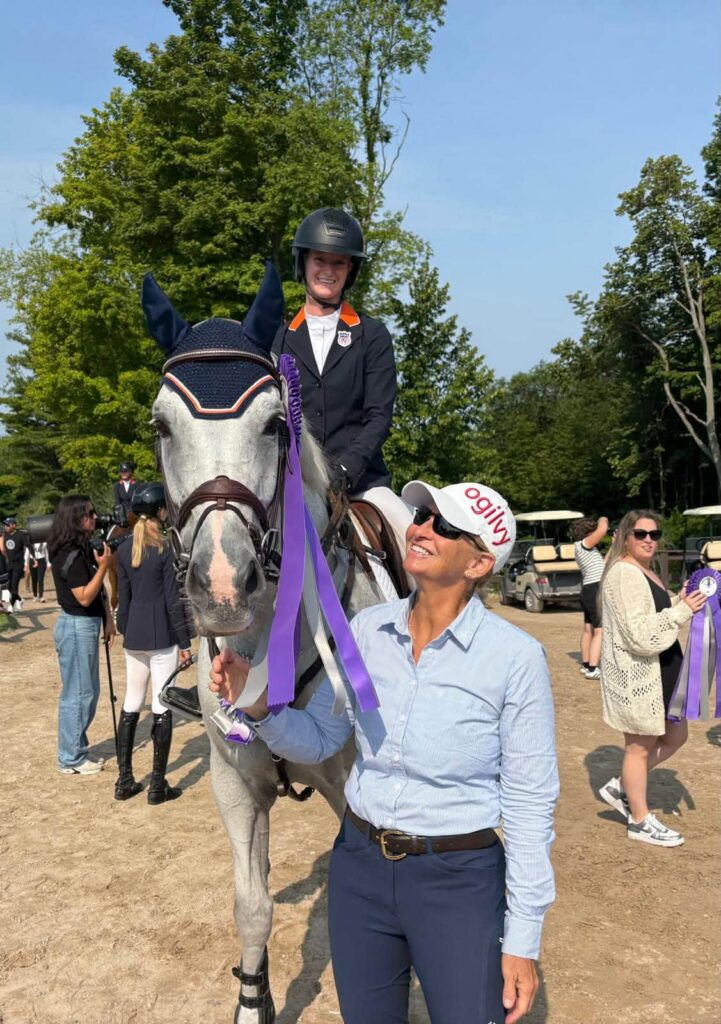
The Pollards have both been able to train with the Maddens, meeting up with them once every two months. Michael said they do their homework in between lessons, so the Maddens don’t have to repeat past lessons and the Pollards can keep improving their jumping skills. While there have been many takeaways, Sterling and Michael each have certain ones that come to mind.
“They’ve really improved my position overall over the jumps,” Sterling said. “They’ve taught me how to stay still and out of the horse’s way as much as possible but stay with them all the time too.”
“If there’s one takeaway, it’s the attention to the small details,” Michael added. “It’s not magic, but they are probably the best I’ve ever seen at making the very complicated very simple, and then not letting you, even over tiny things, just come and try to do it. There’s a plan, and you can do it wrong, but they have a plan. Did we achieve the plan? And what were we trying to do? I find it really useful because it’s very clear and definitive what we’re trying to achieve.”
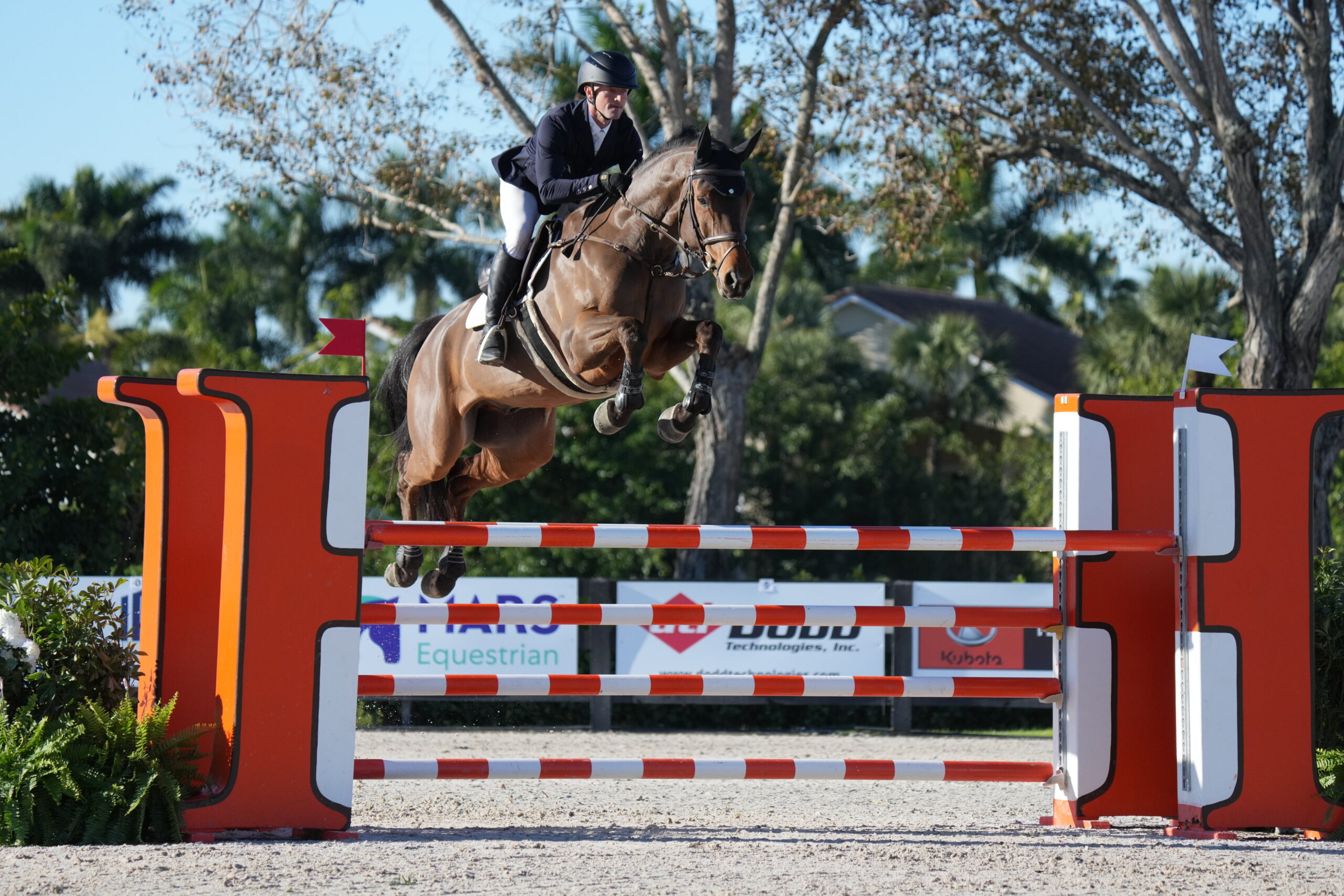
Michael has noticed that the improvements have carried over from the jumper ring to eventing’s cross country for him and Sterling.
“When I first started, and I wasn’t working with them, it was hard to feel like I could go fast enough on my horse with all the technicality and having a young horse,” Michael said. “Those simple exercises and really focusing on staying centered in our position has made me and Sterling both a good 15 to 20 seconds faster and smoother over the cross country.”
Training Alongside One Another
On the journey to becoming better riders, the Pollards have a shared passion as a father-daughter, coach-student duo. They have their at-home training routine figured out as they ride their various horses.
“We usually do sets together, like him on one of his horses, and then me on one of mine,” Sterling explained. “If it’s a flat day, we usually just flat together, and then he’ll watch me out of the corner of his eye and give me some pointers here and there, and then watch me and see if it’s going better. And usually his pointers work. Then for jump days, we do it the same way with sets. He’ll go, and then I’ll go, and then we ask how the horses are going.”
The family-coaching dynamic can be challenging with the hard work involved with caring for and training horses, especially with big goals at the international level. But Michael and Sterling have found what works for them.
“It’s difficult to be the coach and the dad and all those things every single day. But when we come inside the house, it’s never a problem,” Michael said. “I feel like if we ever have a difficult moment, we leave it in the ring or the barn. I’m a dad, and she’s my daughter at home.”
Working with different trainers also helps separate the different dynamics at home and the barn. In addition to training with the Maddens for jumping lessons, the Pollards work with dressage trainer Karen Lipp.
“If we do enough of that, then it makes it much easier for us to work together because I’m more there to help and guide the improvement that we need before we go back, versus me having to be a true trainer the way that I would with other students,” Michael said.
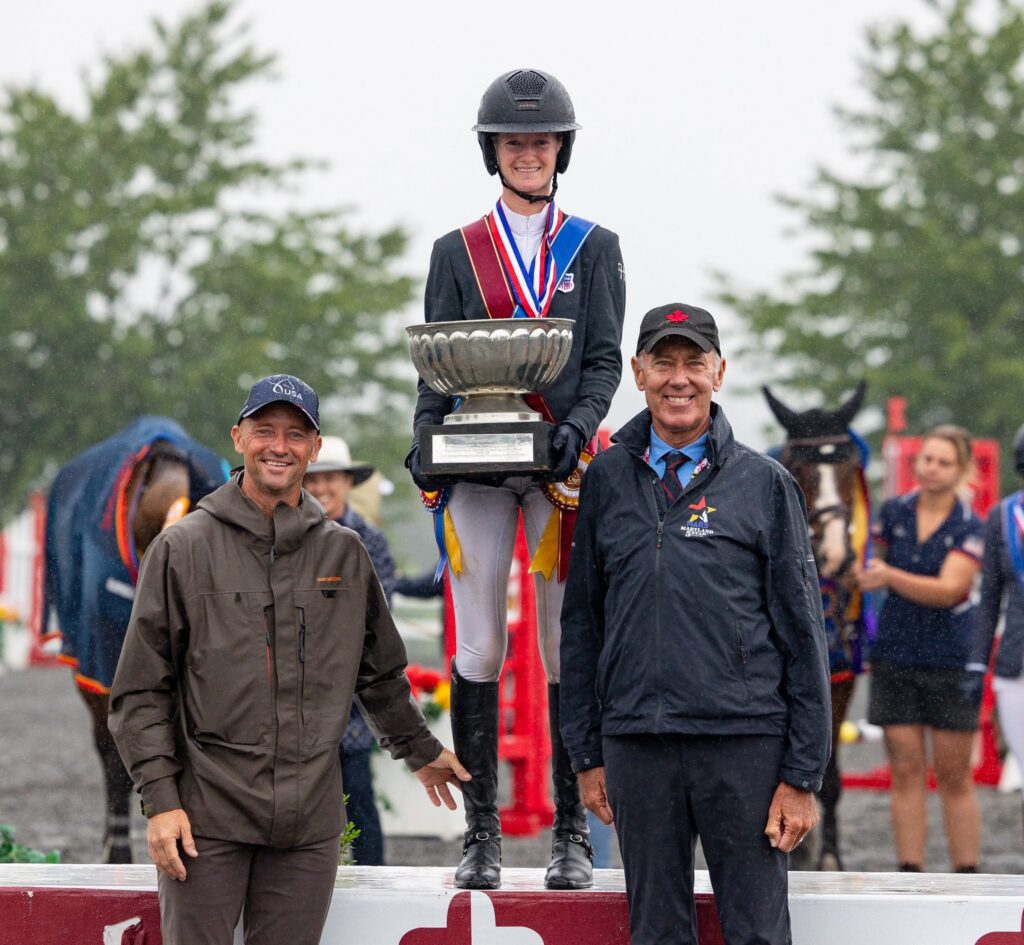
At the end of the day, the Pollards wouldn’t have it any other way. Michael explained that he likely wouldn’t be competing again today if it weren’t for Sterling—and not just because he hates braiding, and she is a whiz at it. Their shared understanding of what it takes to train and compete horses allows them to pursue equestrian sport together.
“Overall, I just really appreciate the fact that I can have someone who’s right there all the time that really is invested in my progress,” Sterling said. “I think it’s really cool that he always pushes me to be the best that I can be, and then he’s always trying to make me feel better when something goes wrong or trying to help me figure out how to fix it.”
Michael’s proud dad side comes out when talking about Sterling and all she has accomplished so far. While he joked he wasn’t going to talk her up too much while she was next to him, he didn’t hold back the praise.
“I’ve had a lot of students over the years, and she works as hard or harder than any of them and is also just a really good person with the horses,” Michael said. “She’s got all of the qualities that I have that I’m proud of in my horsemanship and also the many fine qualities that her mother had as horse lady; she seemed to get all of those in one person. And then on top of that, she doesn’t take any of it for granted. I’m really proud of her. She’s both talented and earns it every day.”
With Sterling only being 16, Michael realizes that her goals or interests could change over time. But he said he wouldn’t trade this journey for the world.
“She might decide she wants to do something else. And if she does, then I’m more than happy to support her in that decision as well,” Michael said. “But I’ve sure enjoyed watching her to this point.”