




 Video
Riding out a spook can be a frightening experience and cost you points if it happens in the show ring. But when your horse spooks, it presents an ideal opportunity to strengthen the bond you share.
Eventer and natural horsemanship advocate Tik Maynard said it’s important to understand and accept that horses are prone to spooking by nature. “As flight animals, that’s how they survive in the wild,” Maynard explained. “For the most part, they react first and think second—and in the wild, this can help them evade predators like mountain lions.”
In his experience people sometimes falsely believe that horses are misbehaving or being naughty when they spook. While the term “naughty” seems ingrained in riders’ vocabulary when talking about equine behavior, it’s not a word Maynard uses.
“Horses’ behaviors simply give us insight into their thought processes. They spook in the wild at unfamiliar things; that’s not good or bad. It’s just a horse being a horse,” he said. “I find it more helpful to look at it in terms of wanted and unwanted behaviors. You want to do what you can to encourage wanted behaviors in your horse, while ignoring or occasionally discouraging unwanted behaviors.”
Managing a spooky mount can be challenging and requires you to be a sensitive and intuitive rider, but there are concrete measures you can take to help build confidence in your nervous horse when he’s faced with potential triggers.
Here, Maynard shares insights about horses’ reactiveness, the warning signs of a potential spook, and exercises you can practice at home to get your horse used to new sights and sounds he might encounter at shows. Plus, he offers tips on what to do—and not do—when your horse spooks and the important role of emotional fitness for both horse and rider when it comes to nervous behavior.
What’s Behind Spooking?
While all horses have the potential to spook under the right circumstances, Maynard said they also have the ability to be more thoughtful. “To help our horses thrive in our human world, we want to bring out the part of them that is more thoughtful and less reactive,” he said.
Genetics can play a role in horses’ reactiveness. Through specialized breeding, Maynard explained that you can create horses who tend to be less or more reactive. While he said people don’t often breed specifically to make a horse spooky, they might breed to create a little more blood for eventing, for example, or to make a better jumper or mover for dressage.
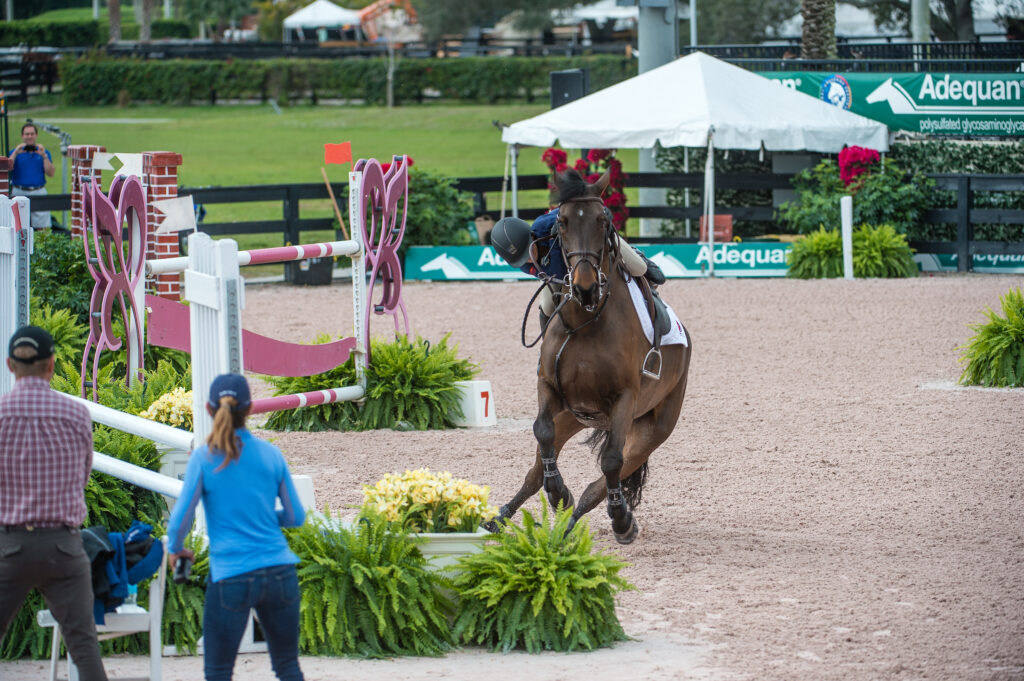
“Some horses are generally quiet, solid citizens but can be spooky about certain sounds or seeing new things,” Maynard noted. “For these horses, you want to address the spookiness more directly in the situation.”
Other horses can be chronically anxious and might seem nervous about everything most of the time. They might pace the fence line, crib or weave in their stalls. For these types of horses, Maynard recommends managing their overall anxiety in a more holistic way.
“You need to ensure they get the proper amount of turnout and pay attention to how much grain they’re getting, if they’re stabled next to their buddy horses, and whether they might have any other health issues going on like ulcers that might be contributing to their overall anxiety,” he advised.
Recognize the Signs of an Impending Spook
Sometimes things can happen so fast that a horse might not show any signs of spooking beforehand. For example, if a dog comes flying out of the bushes, you’re not going to have a lot of warning, Maynard said.
But a lot of times, horses will display clear signs of a looming spook beforehand. “You might feel your horse’s heart rate go up, or their rhythm will suddenly change—they either speed up or slow down,” he said. “Before a spook, horses will often lift their heads and brace their necks, or they might swivel their heads to get a better look at what they’re worried about.”
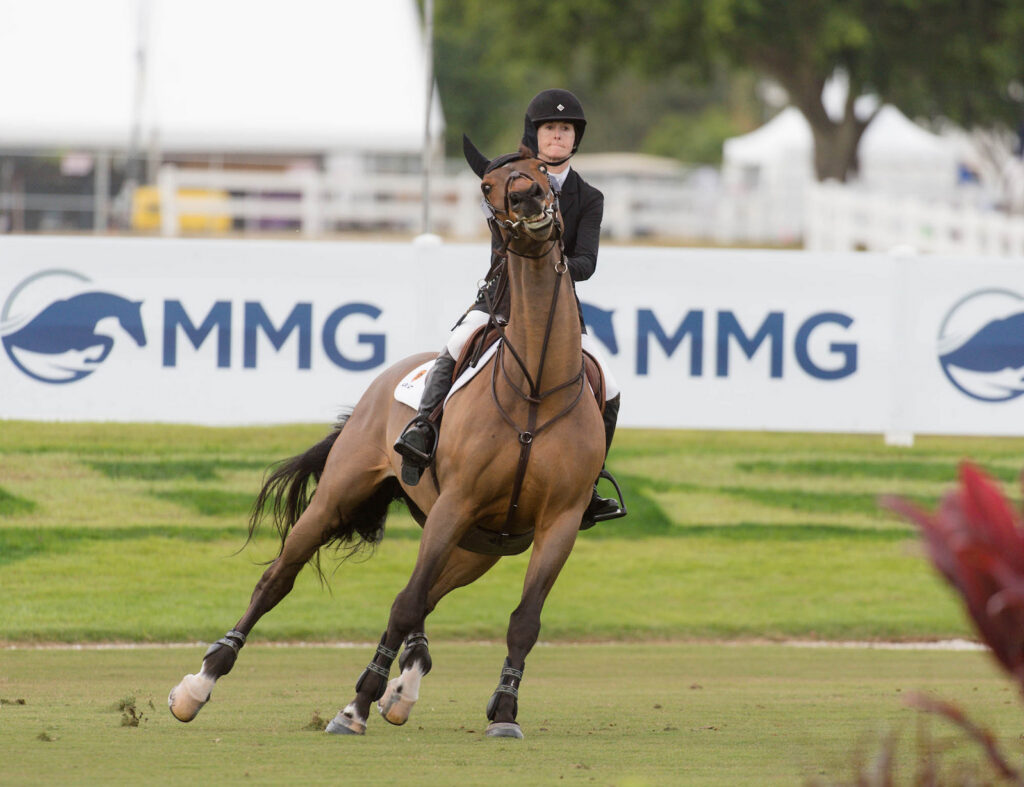
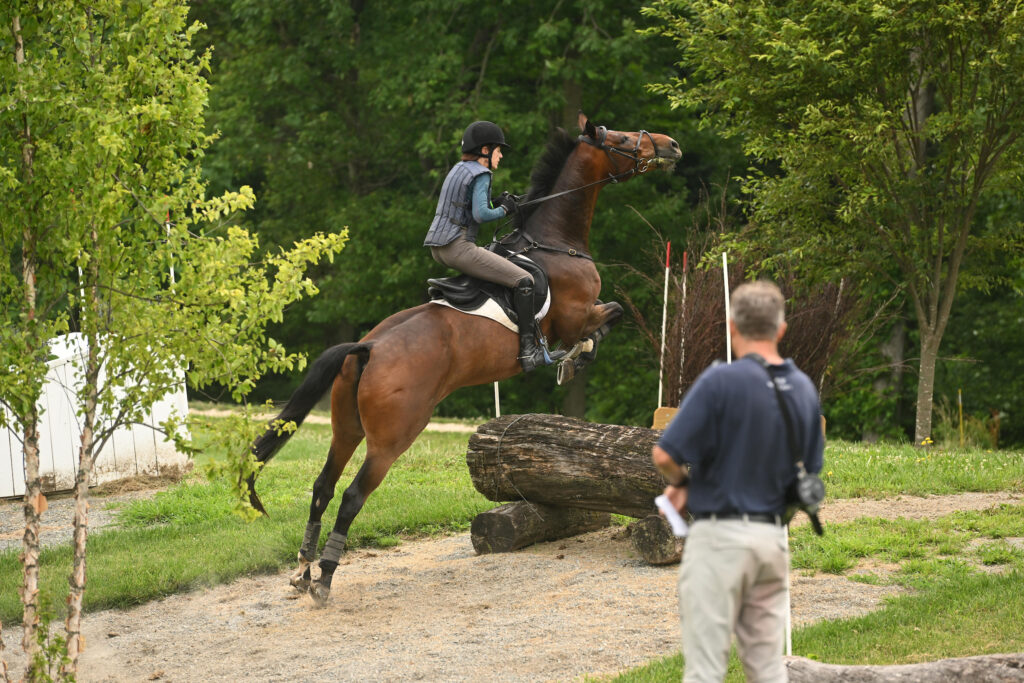
If you don’t recognize these warning signs, or worse, you try to push your horse past his comfort zone in what he considers a scary and potentially dangerous situation, Maynard said you’re going to increase the chances of him doing something drastic like abruptly spinning, bucking, rearing or bolting. Or, if he’s about to spook at a fence, he might suddenly stop.
Work Through Fear as Partners
When your horse is nervous or scared, Maynard said it gives you the chance to work through the situation together, and anytime you work through a problem with your horse as partners, your relationship comes out stronger on the other side.
“If your horse is spooky about something, it’s not a bad thing. It’s simply something you’ve learned about his character, and your job is to give him as much time as he needs to emotionally accept whatever he’s nervous about,” he explained. “Especially in the beginning of your relationship with a new horse, you can use all those little moments to strengthen your bond.”
If your horse tends to be reactive to new sights and sounds, you can work on desensitizing him to things at home. “One easy way to do this is to practice following an object while it’s moving away from you,” Maynard said. “Most of our modern-day horses don’t face predators like bobcats and mountain lions, but they do encounter things that mimic the characteristics of predators.”
Anything moving erratically toward or behind them, something exceptionally large or unusual looking, anything that appears to mirror their movements, or loud noises all have predatory potential in the eyes of a horse, Maynard explained. This is why horses might not recognize a sleeping dog or coyote as a predator, but if a plastic bag comes flying through the wind toward them, it very much has the characteristics of a predator they need to flee from.
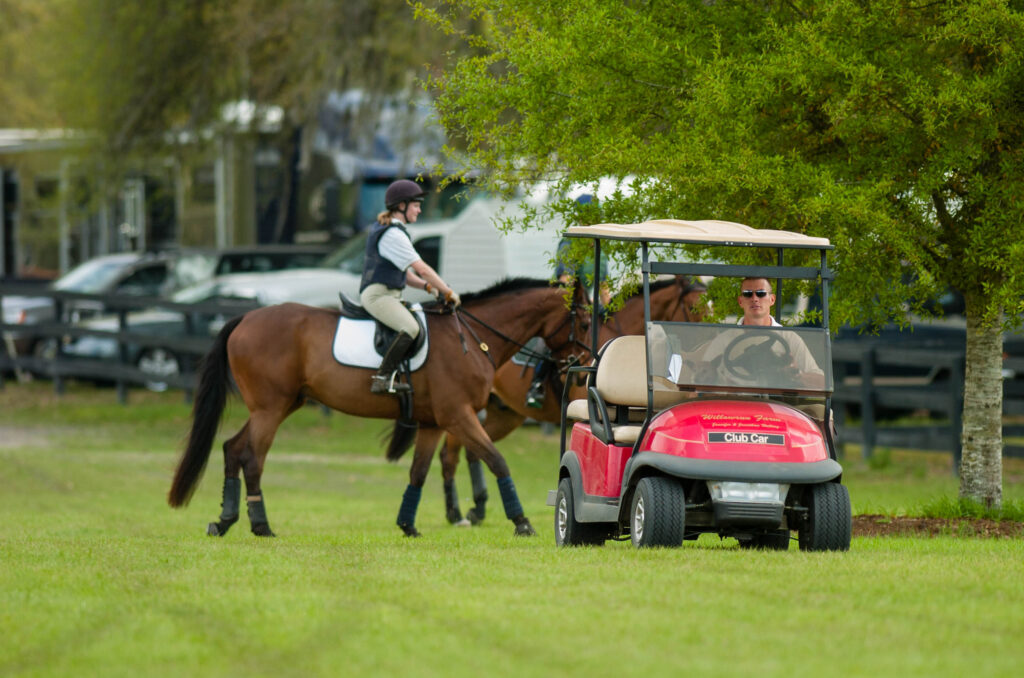
Maynard recommended you start by introducing your horse to new objects that don’t share those predatory-like characteristics—things that move slowly and rhythmically away from you. For example, follow someone walking a dog or holding an umbrella or even driving a golf cart as they retreat away from you and your horse. (You might need to solicit the help of a friend.)
“It might sound simple, but this can be one of the best confidence-building exercises for young or spooky horses,” Maynard said. “Over several sessions, practice gradually getting closer to the object you’re following until your horse is confident enough to even touch or smell it.”
After working with your horse on objects moving away from him, you can introduce him to potentially scary things that don’t move, like certain jumps. Since you can’t follow a jump that retreats—at least not without an elaborate setup—Maynard suggests using an approach-and-retreat tactic.
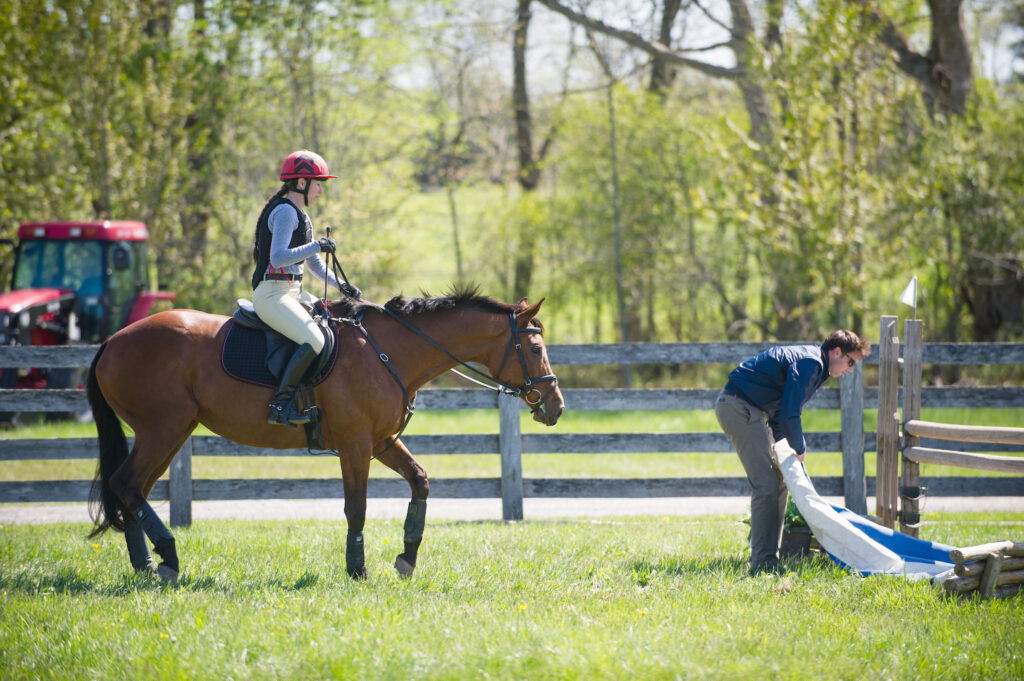
Approach the jump, and before your horse’s heart rate rises and he starts to get nervous, calmly turn away from it and do something else for a bit, he advised. “Then, you can start to play an approach-and-retreat game until your horse gets confident enough to touch or smell the jump—or whatever stationary object he’s worried about,” Maynard said. “You could even try giving him a treat when he gets near or touches the object as another way to positively reinforce his reaction.”
Set Your Horse Up for Success
Horses are largely scared of novel things. When possible, Maynard suggested introducing your horse to one new experience or change at a time. For instance, if you’re taking a young or anxious horse to his first show and he’s never traveled away from your boarding facility, heading to Kentucky Horse Park’s Rolex Stadium probably isn’t the best idea.
Instead, a small, schooling show or an event with a less electric atmosphere would be more appropriate and confidence-boosting for his inaugural competition experience.
“That way, you can turn the volume up a little bit to help with his confidence without overwhelming him,” Maynard noted. “Every situation is different, but overall, you’re trying to set your horse up for success to the best of your ability. The more tuned in you are to your horse’s level of anxiety, the more strategic you can be about preventing it.”
If you find it helpful, he suggests making a list of all the different variables you might face at a competition and consider how you can make small changes, one at a time.
Maynard has often overheard riders say things like, “That spook came out of nowhere,” or, “It happened for no reason.” But spooking rarely happens without reason, he said.
“That reason might be complicated to figure out, or the spook might have happened for a variety of reasons, but there’s always something behind a horse’s reaction,” he explained.
When training and working with anxious horses Maynard regularly reflects on a favorite quote: “Just because you fail to predict something doesn’t mean it was unpredictable.”
“If I fail to recognize something that startles my horse, I will make a note of that, give myself a good kick in the pants, and focus on being more present to make sure I’m really reading my horses and what they’re experiencing at any given moment,” he said. “As you develop a closer relationship with your horse, you’ll start to notice patterns and eventually will be able to predict the behavior.”
If your horse spooks during your jumping round or dressage test, Maynard said your reaction to the situation depends on a number of variables—how long you’ve had a relationship with that horse, how scary the situation is for him, how long you think it will take him to come down, how much experience you have, and the other measures you’ve taken to set your horse up for success.
“It’s kind of like trying to help a 5-year-old kid who’s nervous about a bully at school. There are many factors that might play a role in how you handle it,” Maynard said. “What is the kid’s level of confidence? What kind of relationship does she have with the teacher? How many students are in the class? Is the kid getting enough to eat or has she suffered past trauma? All of these variables will determine how you can best help. It’s the same with horses in many ways.”
What Not to Do When Your Horse Spooks
Maynard’s found that a lot of riders unfortunately do the wrong thing at the wrong time when their horses spook. But doing the right thing at the right time can help.
“When a horse spooks, he’s essentially telling you he’s fearful of something,” he said. “So, the No. 1 thing you want to avoid is taking any actions that might cause him to become more fearful.”
While most riders don’t intend to contribute to their horse’s anxiety, Maynard explained that our emotions often get in the way. When you’re under a lot of pressure at a show, it’s easy to let yourself get nervous, frustrated, scared or even angry if your horse spooks. But when this happens, riders often inadvertently or subconsciously transfer their fear, frustration and the weight of their expectations onto their horses, he said.
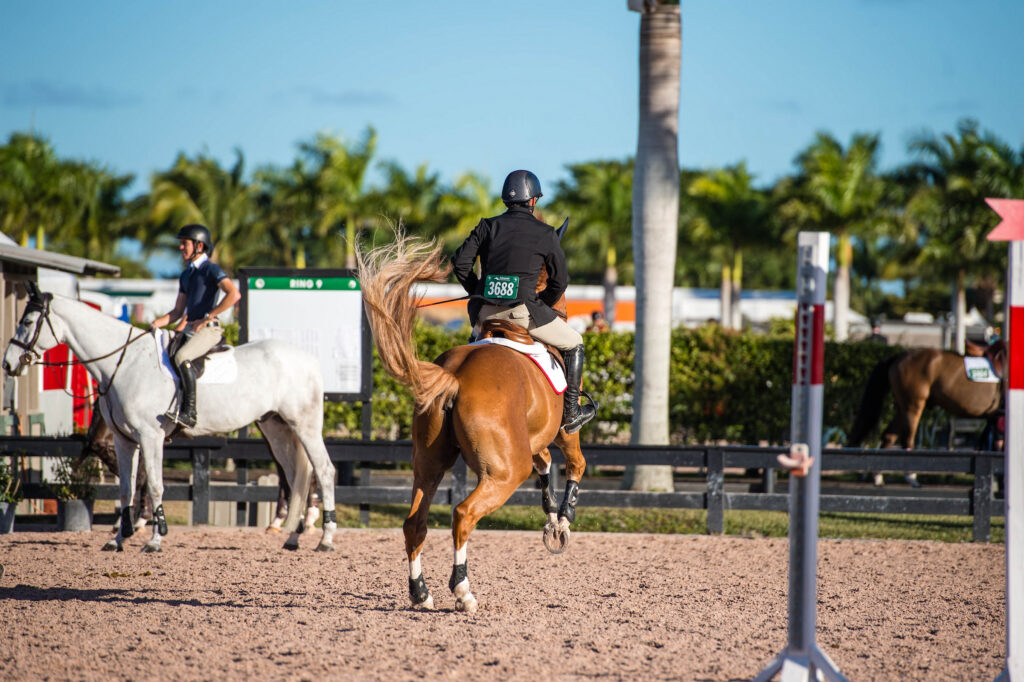
“If your horse’s spook causes you to lose your balance on his back, even for a moment, he will feel you tense your body and grip with your legs as you fight to regain your balance,” Maynard said. “Losing your balance isn’t an emotional reaction on your part, but it can frighten your horse even more in that moment.”
So, Maynard finds that it’s important that you set yourself up for success in these situations in terms of your balance, coordination, mental stamina, emotional fitness, so you’re never contributing to your horse’s fear.
“Being the father of two young kids right now, I compare it to helping your 2- or 3-year-old toddlers through something they’re scared of. You want to remain emotionally balanced and show your child that you’re trying to understand what they’re going through,” he noted. “That’s why it’s so important to always put your relationship with the horse and his confidence ahead of competition results so he learns to trust your judgment.”
Maynard stresses that there will be times when you, your horse or both of you lose your emotional fitness. He refers to this as being emotionally hijacked. Whether it happens during a training session or in the middle of a dressage test or jumping round, Maynard immediately asks himself what his horse needs in that moment.
“If you can help your horse, he’ll do his best to help you. Keeping the focus solely on yourself and the blue ribbon is ultimately not going to help either of you,” he emphasized. “It’s also important to continue asking yourself what he needs every few seconds because it can change in an instant.”
If you’ve been emotionally hijacked and can’t regain your focus, Maynard said it’s often wisest to stop what you’re doing and follow up with your trainer or coach for feedback.
“Especially when you and your horse have lost your emotional balance, muddling through the rest of your test to finish on a score of 60% or below probably isn’t going to help you get a better result next time,” he noted. “If anything, it could make your results worse the next time.”
Putting the Horse First
You’ve probably heard the expression a lot of equestrians use—put the horse first. Of course, Maynard said, people don’t mean this literally in all situations. If your only options are to run over a baby in a stroller or spook your horse, you’re obviously going to put the child over the horse.
“From a true horsemanship perspective, putting the horse first means prioritizing the relationship you have with your horse ahead of his utility—whether that’s doing a dressage test, jumping a course, driving a cart, or serving as a police horse,” Maynard said.
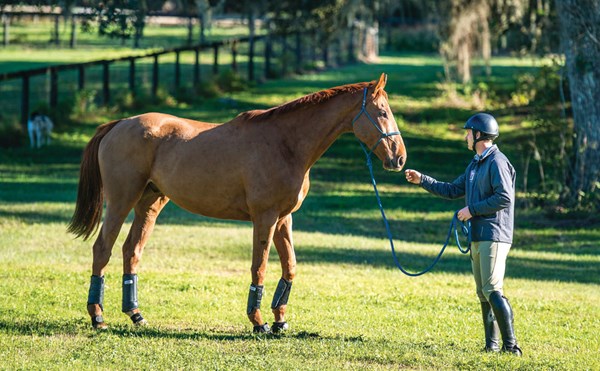
“Patience, persistence, putting my horses first also improves their performance. When we talk about ethical horse training today, equestrian sports are best demonstrated when riders and trainers have true partnerships with their horses,” he added. “There are many aspects to the partnership you have with your horse. Trust is one of the most important and will improve your chances of success. You can see this when a horse spooks at something and instead of continuing with the training, the rider takes the time to reassure her horse and get him comfortable with that scary corner in the indoor arena or whatever it is.”
For More:
For Tik Maynard’s tips on how use groundwork techniques to develop a stronger bond with your horse, click here.
About Tik Maynard
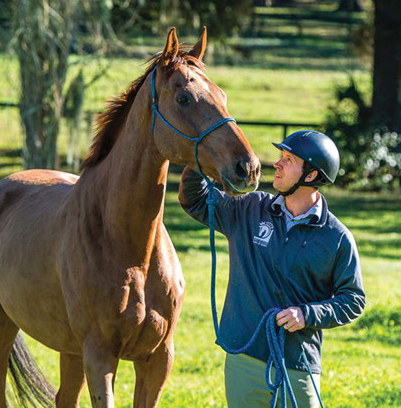
Eventer and natural horsemanship advocate Tik Maynard spent six years on the Canadian National Team competing in the modern pentathlon, which includes riding, pistol shooting, fencing, swimming and running. He competed in the sport at the 2007 Pan American Games, three World Championships and 11 World Cups before focusing his competitive sights on eventing. Tik was long-listed for the Canadian eventing team for the 2012 London Olympics.
He served as a working student for eventers David and Karen O’Connor, eventer and dressage rider Ingrid Klimke, German dressage trainer Johann Hinnemann, and natural horseman and cutting trainer Bruce Logan. He also worked as an assistant trainer for show jumper Anne Kursinski.
Married to eventer Sinead Halpin, Tik conducts eventing and natural horsemanship clinics throughout the United States, Canada and the United Kingdom. Last December, he spoke at the U.S. Eventing Association’s Annual Meeting about “How Horses Learn.” Click here for more information.