




 Video
When Jennifer “Jen” Garutti turned 50 in 2025, she decided it was time to catch up on her routine health screenings. Between work, raising children, and managing family life, she had fallen behind on some appointments. She scheduled a mammogram and ultrasound, expecting nothing more than a routine checkup.
Instead, a biopsy revealed breast cancer.
“I had no family history, and I wasn’t expecting it at all,” Garutti says. “Even my breast surgeon, who’s one of the top surgeons in New Jersey, couldn’t feel it. It was that little.”
The diagnosis was triple-negative breast cancer, an aggressive form of the disease. Although it had been detected early, her medical team recommended chemotherapy following a double mastectomy.
The months ahead would bring surgery, treatment, recovery, and difficult conversations with her family. But horses remained a constant. With help from friends at her barn and a particularly intuitive equine partner, Garutti continued riding through much of her treatment, returning to competition when she felt well enough.
“I think horsewomen in general are just tough, but underneath that there’s such a sisterhood in the breast cancer community, especially amongst those who ride,” she says. “It was the catalyst that I didn’t have to give up horses. I was able to maintain that huge part of my life.”
Garutti’s story isn’t about pushing through at all costs. She had to adapt, accept help, and she discovered how important her relationships with family, friends and her horses can be when other parts of life feel uncertain.
A Life Built Around Horses
Horses have been part of Garutti’s life since childhood, when Pony Club introduced her to eventing. She continued riding through college at Drew University in New Jersey, finding ways to support her horses while pursuing her education.
After she married her husband, Ron, and started a family, she took a break from riding. Childcare and the expense of keeping horses made it difficult to continue as she had before. Eventually, when her daughter, Devon, was about 5, Garutti began looking for a horse who would be safe, enjoyable and suitable for the next stage of her riding life.
That search led her to Labras Leannon, or “Anne,” a Connemara mare who would become an important partner. Together, they achieved multiple USEF championships and year-end awards, qualified for dressage regionals and the American Eventing Championships, and earned the Connemara Award of Excellence year after year.
Anne also helped Garutti establish the network of trainers and friends who would become an important part of her life, including her current trainer, Lauren Chumley, an FEI dressage rider who has evented through Intermediate.
Over time, the horses became a family undertaking. When the family moved into the dream home that they built on property near Flemington, New Jersey, in December 2016, the horses initially lived in a run-in shed while a permanent barn was being built. The garage became a tack and feed room, and Garutti hauled supplies back and forth by wheelbarrow. The barn was finally completed in April 2018.
Today, that barn is more than a place to keep horses; it is the center of a community of women who have supported one another through family losses, personal tragedies, injuries, and triumphs in the show ring.
That support would become especially important in 2025.
An Unexpected Partner
Before her cancer diagnosis, Garutti had already experienced a couple of major interruptions to her riding. After surgery for what was initially thought to be a keratoma in Anne’s hoof, a second growth was discovered and identified as a melanoma. The first growth was later understood to have been a melanoma as well.
Although Anne returned to competition and achieved championship results after her first surgery, the problem eventually recurred. Garutti had promised herself she wouldn’t put Anne through another major procedure if the condition returned a third time.
When Anne became uncomfortable, Garutti made the painful decision to let her go. “I’m a believer in ‘no bad days,’ and she was heading down a path of a lot of bad days,” she says. “It was the right thing to do for her.”
In October 2023, Garutti slipped on wet grass on a downhill slope outside her house when going out for night check and suffered a serious ankle injury, sustaining a trimalleolar fracture and extensive ligament damage. Two surgeries were needed to repair the injury and later replace some hardware with smaller, more flexible pins.
Recovery was demanding, and she had to rebuild her strength and mobility. By the following spring, she was eager to return to riding. Given her positive experience with the Connemara mare, Garutti had purchased a young Connemara gelding named Doc in 2022and was also training with Meg Kepferle, an eventer who was formerly based in New Jersey before she relocated to Ocala, Florida. But Doc was green, opinionated and not the easiest partner for someone still rehabbing an ankle.
Chumley had another horse in mind: Avatar’s Jazzman, a Morgan gelding owned by her client Melissa Dowling of Maryland. Chumley had competed him in FEI dressage and evented him through Training level, and he needed a suitable rider for his later years. She offered to arrange a care lease.
“I had to ask—or tell—my husband, but it was a no-brainer,” Garutti says.
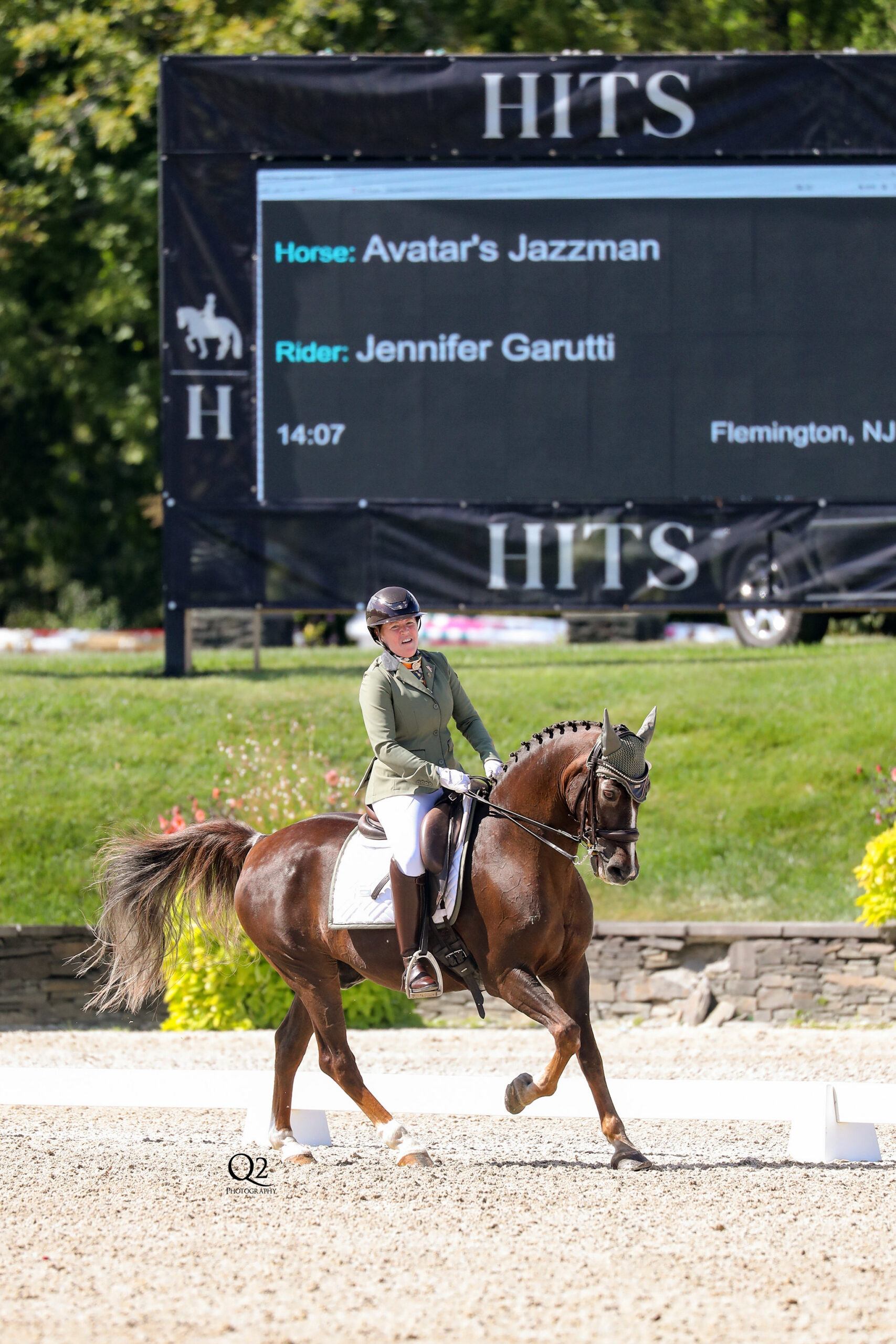
For her part, Chumley said that the lease was a rare opportunity because of her trust in Garutti’s top-notch horse care.
“I’m a little bit of a psycho when I come to horse care, and I don’t send my horses out, like ever—especially my old FEI horses. They’re lifers. But my time with ‘Jazz’ was winding down a few years ago, and Jazz is super safe,” says Chumley. “Jen is one of like two people on the planet that I’m comfortable sending a horse to – she also has my 28-year-old Fjord mare – and I know that they’re both impeccably cared for.”
Jazz arrived in May 2024, around the time Garutti was ready to get back in the saddle. Jazz helped Garutti make her return to regular riding possible.
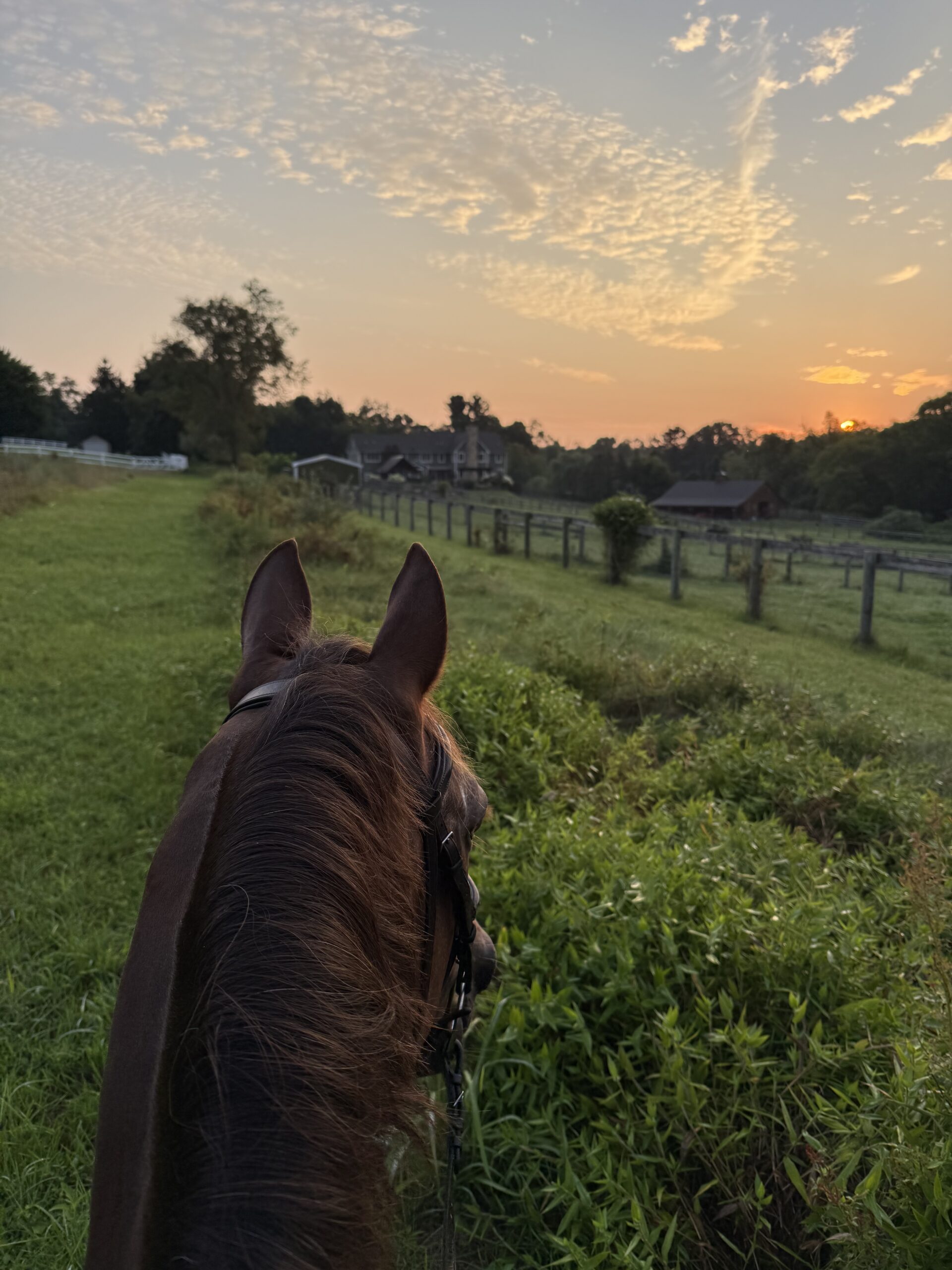
“He was so good for my morale,” she says. “Doc was tricky and complicated, but with Jazz I could hack quietly and just relax.”
The difference was significant. Rather than worrying about the unpredictability of a green or difficult horse, Garutti could concentrate on rebuilding her fitness, enjoying her rides, and progressing in dressage. Doc was sold as a hunter prospect and is thriving in his new home.
That summer, Garutti earned her U.S. Dressage Federation (USDF)bronze medal and qualified for regionals.
“It was an amazing way to get that whole side of myself back, without having to worry about baby-horse shenanigans,” she says. “I got back a level of fitness and just had fun.”
Jazz, she adds, makes her smile every day. “Clearly, he takes care of me.”
A Diagnosis Changes the Plan
When Garutti received her cancer diagnosis in April 2025, she had spent months recovering from her ankle injury and rediscovering the pleasure of riding. Then came another period of uncertainty.
She opted for a double mastectomy after discussing her options with her medical team. Although a lumpectomy was possible, she says the estimated statistical advantage of mastectomy in her case influenced her decision. Because the cancer was triple-negative, her oncologist also recommended chemotherapy to address any remaining cancer cells.
“Zero stars, don’t recommend,” she says of chemotherapy. “It saves your life, but it’s no fun.”
Garutti and her husband, Ron, had to decide how and when to tell their children. Devon was finishing her sophomore year of college, and the family initially kept the diagnosis close while they worked through the immediate decisions.
“Telling your children that you have cancer is really hard,” Garutti says. “We were lucky we caught it early. Everybody cried, and we realized summer would look different.”
Ron became an essential source of support, attending appointments, helping her weigh decisions, and serving as a sounding board. Her employer of 28 years, Prudential Financial, also provided support. Having rarely taken time away from work, she decided to use short-term disability benefits during treatment.
She was fortunate to have excellent health insurance and access to specialists and treatment close to home. Her breast surgeon practiced in the Princeton area, and she received chemotherapy at Hunterdon Medical Center, about 10 minutes away from her farm.
Still, the experience was physically and emotionally exhausting. She worried about her family and work, but she also had to figure out how to manage the horses.
Before surgery, she arranged help in the barn. Her friends rotated responsibilities, including night checks, so the horses would continue to receive their usual care while she recovered. The women who had shared years of riding, showing, and supporting one another were now helping her through a different kind of challenge.
Back in the Saddle
Recovery instructions after a mastectomy generally limit lifting and strenuous activity, and Garutti knew she would have to be careful. Still, she was eager to get back to Jazz. Around 12 days after the surgery in May 2025, she climbed aboard for a short walk, with help available for tacking up and managing the horse.
“I had surgical drains stuffed in my breeches,” she recalls. “I was my plastic surgeon’s worst nightmare.”
She began riding lightly at about three weeks, adjusting her activities according to how she felt. By around five weeks, she was mucking stalls but avoiding lifting heavy buckets.
She also discovered that cantering was more comfortable than trotting because of the position and movement of her body. That allowed her to work on canter changes while she gradually rebuilt her strength.
“The day I got cleared, I went out hunter pacing,” she says.
She admits she wasn’t a model patient, but she paid attention when something didn’t feel right. When trotting was uncomfortable, she backed off rather than forcing the issue.
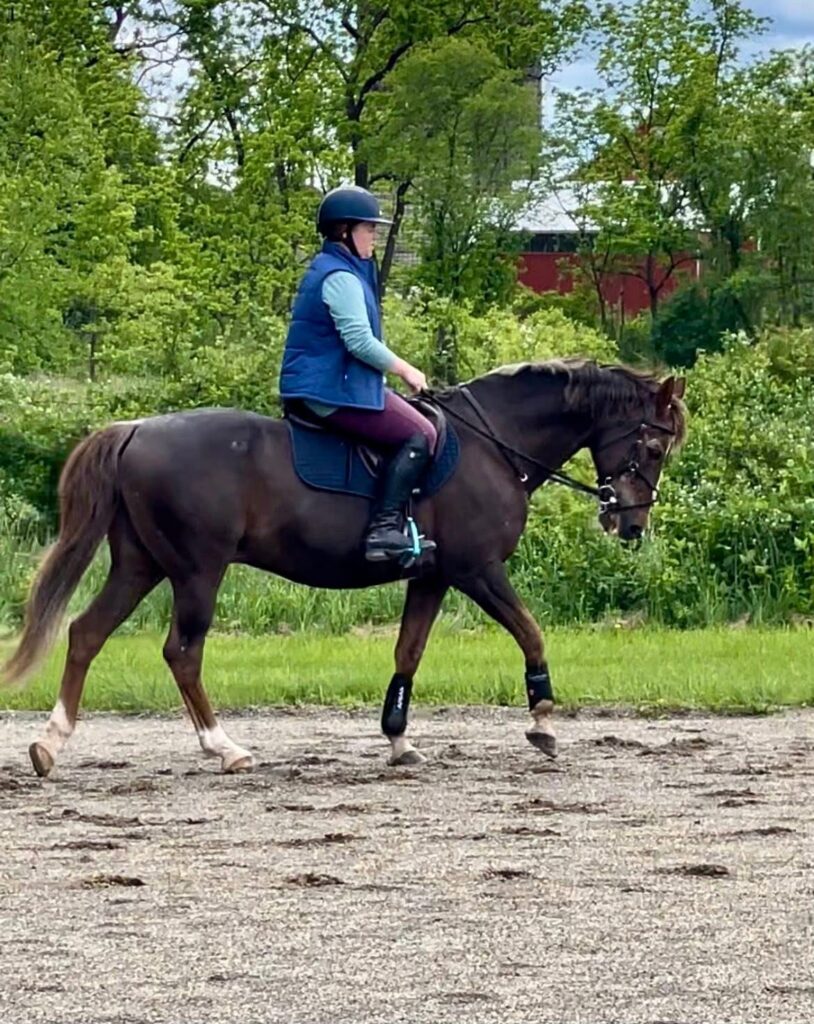
Her return to riding was also shaped by the rhythm of chemotherapy that started in June 2025. Treatments were scheduled every 21 days. The middle of the week following an infusion was often the hardest.
“I went on Mondays, and by Wednesday and Thursday I was one with the couch,” she says.
By the end of the week, however, she would begin to feel better. If her energy allowed, she might walk Jazz, prepare for a horse show, or compete before the next treatment cycle began.
She was able to show during the weeks when she felt well enough, although she had to remain flexible and accept that some days would be more productive than others. Jazz made that flexibility easier.
“He was fine with having a few days off,” she says. “Jazz could really sense when I wasn’t feeling well and would slow his pace. He 100 percent took care of me. I really trust him, and I was lucky I had him.”
Chumley recalls that she recognized the importance of having a horse in Garutti’s life during the recovery process. “It was important to her that I knew she didn’t want to give up the lease during her cancer treatment, and I reassured her that he’s not going anywhere, ever,” she says. “Jazz is good enough that if she had to take four days to recover, it would be fine. He’s trained, he’s solid and likes his job. And now that she’s recovered, it’s also cool that she likes to event, because he loves it!”
Garutti was also grateful for the support of other women who understood what she was experiencing. When Chumley learned about the diagnosis, she connected Garutti with her friend Emily Donaldson, who had also experienced triple-negative breast cancer. Donaldson called immediately.
That gesture reinforced what Garutti was discovering: the horse world could offer not only practical help but also a community of people who understood the emotional importance of staying connected to horses.
Celebrating the Small Victories
Even during treatment, Garutti continued to find reasons to look forward. In 2026, they focused largely on Fourth Level and attended the National Dressage Pony Cup at the World Equestrian Center in Ohio.
Chumley wasn’t available to coach that weekend but connected Garutti to dressage trainer Jennifer Roth’s team in Ohio. She and Jazz earned a Fourth Level championship. Jazz also won, fittingly, the Avatar’s Jazzman Award and an all-breed award.
For Garutti, the National Dressage Pony Cup was especially meaningful because it celebrates the bond between riders and their ponies and small horses, regardless of whether they have the extravagant movement often rewarded in the dressage ring.
“What [Founder and President] Jenny Carroll has done with that organization is wonderful,” she says. “It’s fun to go see people with their ponies and small horses who love them and do it for fun. It’s Jazz’s jam, too.”
Jazz may not move like a large, expressive warmblood, but Garutti believes his attitude makes him exceptional. “He has the heart of a champion. His heart is the size of Texas.”
She laughed while explaining that she nearly got the pair eliminated by blending elements of her Third and Fourth Level tests, or Jazz might have qualified for nationals. With her trainer’s approval, she recently made her Prix St. Georges debut and is working toward her USDF silver medal.
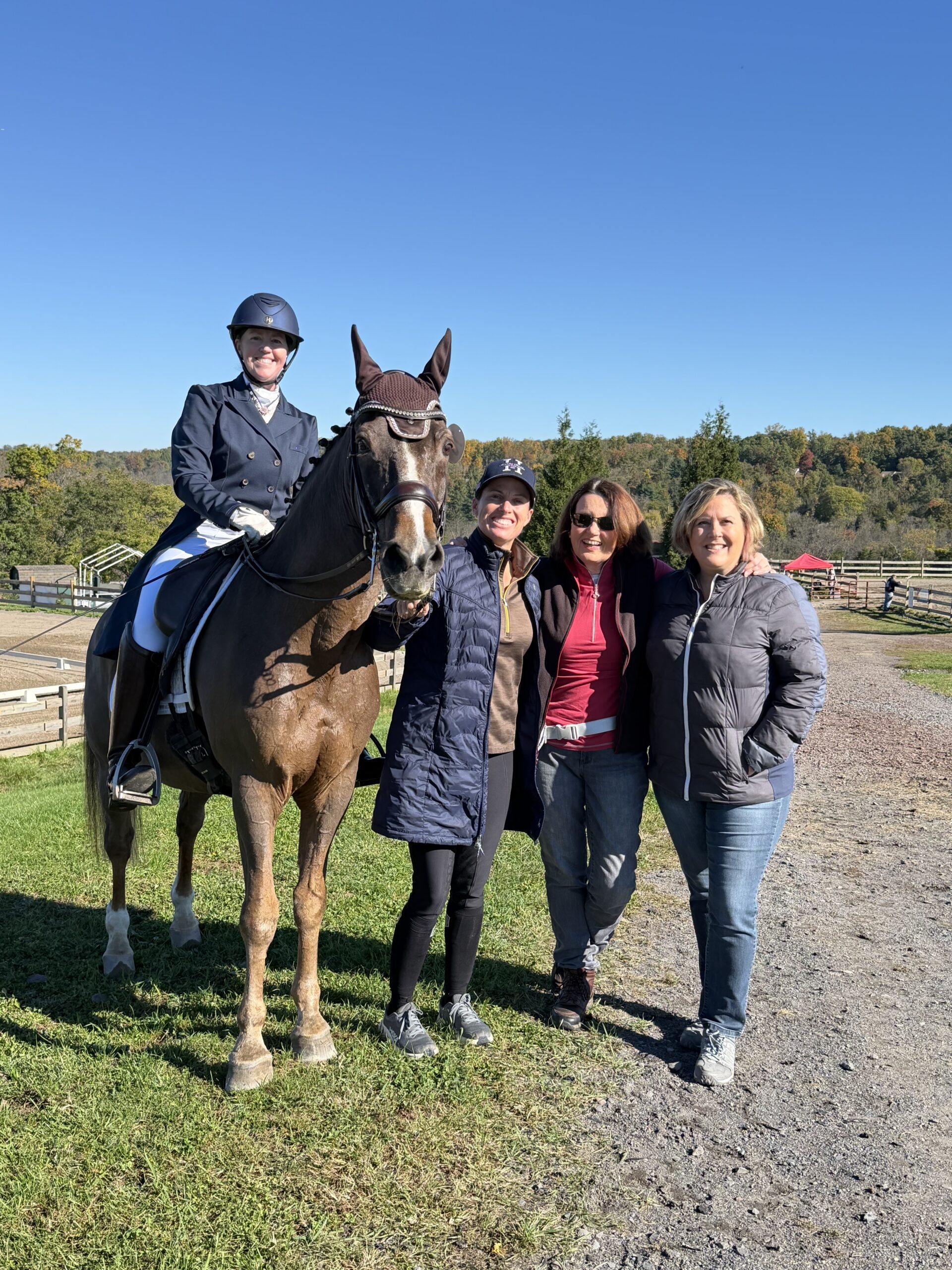
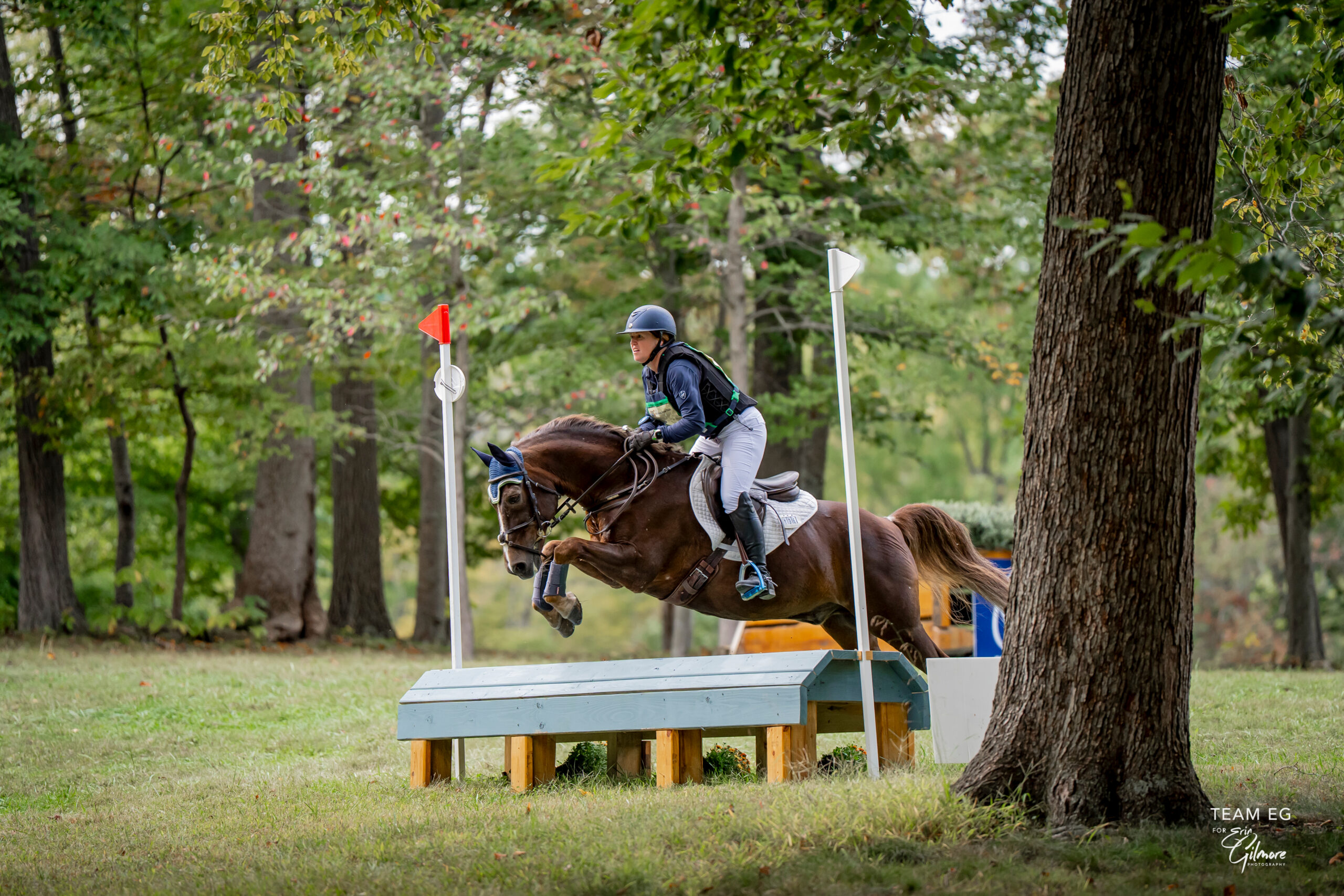
Meanwhile, she has also returned to eventing with Jazz for the first time since 2021. At 24, Jazz is no longer a horse to push toward ambitious goals, but he remains a willing partner. The pair finished second at Starter level.
“I competed through Preliminary as a kid, and Training as an adult, but I have to say going around Starter is just a blast,” Garutti says.
Caring for the Horses Who Care for Us
Jazz, too, has needed extra care. Recently a serious dental problem required surgical tooth removal, followed by a stay of about 10 days at the veterinary clinic while his sinuses were flushed.
“He’s taken care of me through all of these things,” Garutti says. “It was my turn to take care of him.”
Chumley says, “Jen’s a good friend and it’s actually super fun having horses like Jazz who can move on after their professional career with me, to go to someone who really appreciates them. Jen adores Jazz and appreciates him for what he is, and that’s what he deserves. He did so much for me, and we did so many cool things together. He deserves to be king of the castle.”
Now doing well, Jazz continues to compete, and Garutti monitors his soundness with veterinary checks every six months. Her veterinarian is often surprised by how well he is holding up, and she credits his breeding, sensible way of going, and years in Chumley’s training program for his longevity. The trainer has other horses competing successfully at FEI levels in their 20s, a testament, Garutti believes, to thoughtful training and long-term care.
In 2020, Breyer® released a collectible Avatar’s Jazzman model horse. Garutti’s model of Jazz is on a shelf in her home office, next to photos of them together and ribbons that they’ve won.
A New Perspective After Breast Cancer Treatment
Garutti is now considered to have no evidence of disease and continues regular follow-up appointments and bloodwork. She underwent reconstructive surgery in January 2026, using fat transferred from her abdomen and upper thigh. Garutti says recovery from that procedure was surprisingly painful, but she was back in the saddle after about a week.
She knows that everyone’s treatment and recovery will be different, and her experience shouldn’t be taken as a recommendation to resume riding on any particular timetable. Her medical team guided her care, and she relied on friends to handle the work she could not do herself.
What she takes from the experience isn’t that she had to be strong every day, but that she didn’t have to navigate it alone. Her family, coworkers, medical team, trainer, and barn friends helped her keep the parts of life that mattered most within reach, and Jazz gave her a familiar partner with whom to celebrate progress, however small.
For a rider who had already rebuilt her fitness after a serious ankle injury, the cancer diagnosis was another reminder that plans can change abruptly. But it also clarified what she wanted to focus on: She still has medals to pursue, tests to ride, and horses to care for.