




 Video
VideoWhether you’re heading out on a trail ride, preparing for a hunter class, practicing your dressage test, or schooling cross-country, the fundamentals of good riding are always the same. For veteran eventer, hunter/jumper and dressage trainer Marcia Kulak, those fundamentals can be summed up in three words: rhythm, track and balance.
“It’s like getting into your car,” she says. “The car won’t go anywhere unless you do something. When you swing your leg over your horse, you have to take responsibility—and those three basics are your responsibility every time you ride.”
Over the course of a career that has taken her to five-star events in Kentucky and England and prestigious dressage and hunter/jumper competitions, Kulak has refined this philosophy into a teaching system that works across disciplines and levels. It’s not complicated, she stresses, but it is consistent. And consistency is what gives horses—and riders—the confidence to succeed.
Starting with Rhythm
According to Kulak, the first responsibility a rider has is rhythm. It may sound simple, but without a consistent tempo, everything else begins to unravel.
“Rhythm is just the quality of the gait you’re in, for the job you want to do,” Kulak explains. “Is the walk marching as you step away from the mounting block? Is the trot steady down centerline? That’s on you, as the rider, to establish.”
She often begins her lessons and training sessions with transitions. Riding frequent walk–trot–walk changes, she explains, encourages the horse to mentally dial in and step forward from the rider’s aids. But, she stresses, always reward the right answer by clearly releasing the pressure and then quietly re-ask the same question until a quiet aid from the rider delivers a good answer from the horse.
Until the horse is in front of the leg and traveling in a steady rhythm, she adds, there’s no point in tackling harder work.
Finding the Line
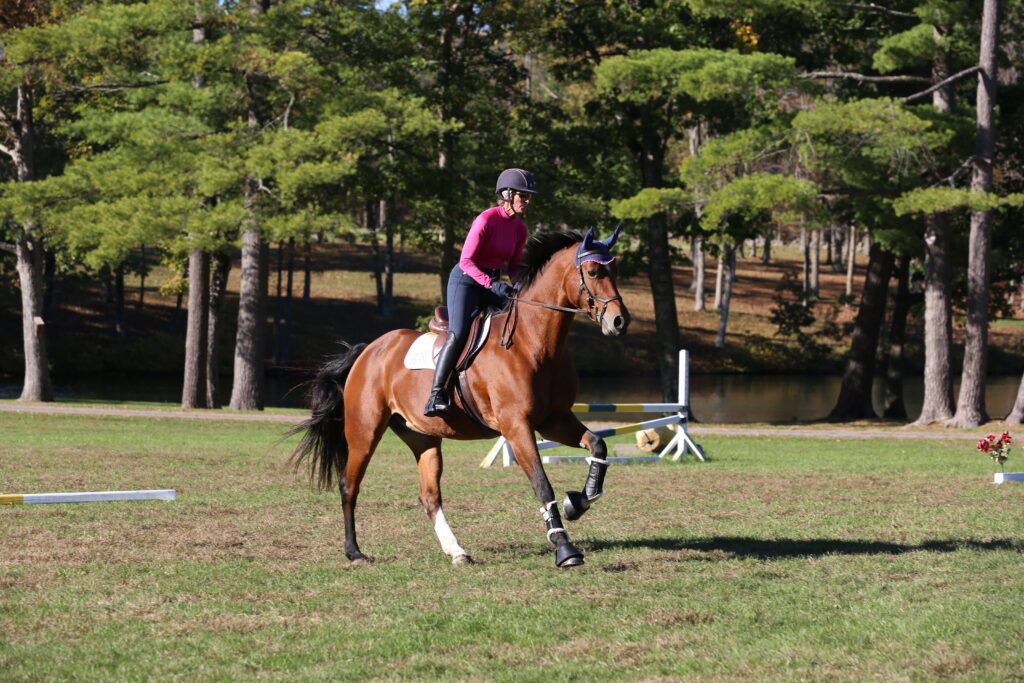
Once rhythm is established, the next job is to ride the track.
“Think of your horse like a train car—long and narrow,” Kulak says. “Your responsibility is to keep that car on the rails.”
Even the most basic ride requires accuracy: straight lines that don’t wander, circles that are actually round, corners that are purposeful. She encourages riders to test themselves by riding a few feet off the rail, aiming for markers across the arena, or riding precise serpentines.
“Wherever you’re going, whether it’s down the long side or out on a hack, your horse should stay on the track you’ve chosen,” she says. “That’s what keeps the partnership clear.”
Staying in Balance
The third piece is balance, achieved through the rider’s “position statement.” She explains, “There’s a correct position statement for virtually every question you ask your horse. It’s in the horse’s DNA to learn through body language, so using a correct position statement is a critical part of effective and harmonious riding.”
She compares riding to yoga or Pilates, saying, “If you’re crooked, the exercise doesn’t work. But if you’re aligned—ear, shoulder, hip, heel—you can be effective with very little effort.”
From there, balance becomes about awareness: knowing how your posting diagonal connects to the horse’s hind legs, or which leg pushes off into canter. Small details like these, she says, are what separate “going along” from truly influencing your horse.
When the rider is balanced, the horse can be balanced. When the rider tips forward in the saddle, braces or hunches over, the horse loses both clarity and confidence.
Why Clarity Matters
Clarity is the thread that runs through all of Kulak’s teaching. Horses, she points out, are prey animals, highly sensitive to pressure and release.
“If they can feel a fly land on their skin, they can feel the smallest shift of your leg or seat,” she says. “But if the aids are inconsistent, some horses tune them out while others get hot and overreactive. Either way, the partnership suffers.”
Her advice is simple: Ask politely, reward immediately, and repeat until the horse understands. “That’s how you build trust. That’s how you make progress.”
Taking the Basics to Fences
When it comes to jumping, Kulak finds that many riders let their anxiety get the best of them, and then they abandon the basics.
“I see people panic about finding a distance,” Kulak says. “They start kicking, pulling, leaning—all the things they wouldn’t do on the flat. But if you’ve got rhythm, track and balance, the distance takes care of itself.”
She likens it to baking a cake: with the right ingredients, in the right amounts, baked at the right temperature, the outcome is reliable. With poor preparation, no amount of scrambling at the last minute will fix it.
Approaching fences, she reminds riders to focus on the responsibilities they already know: keep the tempo, stay on the line, maintain their position. From there, the jump becomes an extension of the flatwork, not a separate mystery.
The ‘Cavalletti Queen‘
Kulak’s favorite way to put all this into practice? Cavalletti.
“Perhaps one of the most underrated tools in horsemanship is the creative use of cavalletti,” she says. “It can help every level of rider improve their skills and at the same time enhance the success and longevity of a horse’s career. These exercises do not replace jumping courses and preparing for competitions; instead, they serve to augment training and skill development without increasing physical wear and tear, and the emotional stress that may accompany it.”
“I’m a cavalletti queen,” she says with a laugh. “I use them every day, with every horse. They’re like Pilates: they strengthen the horse’s body, improve rhythm and balance, and sharpen footwork—all without the wear and tear of jumping big fences.”
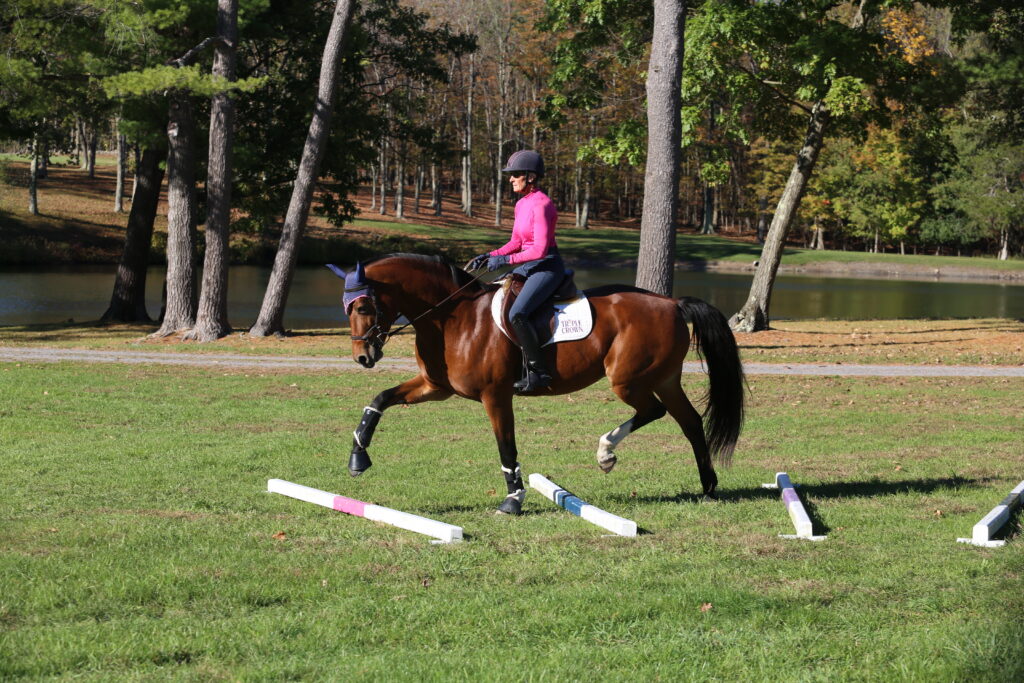
She stresses the importance of good equipment and explains that lightweight wooden or PVC poles are potentially dangerous. If a horse makes a mistake, the rails can roll and trip them. Instead, she recommends using heavy wooden poles made from 4x4s, with beveled edges, set on stabilizing blocks, which she makes out of 2x4s.
“Horses will use themselves better and become conscientious about their footwork if the rails are stout,” she says. “I want them to stay in place and not dislodge easily.”
She notes that trot poles on a straight line should be set between 4’6” and 4’9” apart. Cavalletti set 9’ apart can be walked, trotted or cantered. Rails can also be set on a curve or slightly raised. To mimic narrow fences on cross country, you can practice over cavalletti that are perhaps 4’ wide. The variations are endless! Be sure to measure distances regularly with a tape to ensure accuracy.
Kulak says you can practice stepping off the length of a 12’ pole to learn the length of your own stride, which is helpful when you are setting exercises and don’t have a measuring tape handy, or when you are walking courses and need to quickly assess the distance between fences.
“The beauty of cavalletti is that you can increase the challenge without increasing the height,” she explains. “That builds confidence, accuracy, and strength in both horse and rider. Work over poles and cavalletti is critical to improve both the horse and rider mentally and physically. Developing a trust in footwork begins with correct footage until confidence and rideability have been well established. Anxiety tends to diminish the quality of performance in both horses and riders, so minimize that risk with measurements that are safe and friendly until both are prepared to handle more difficult questions.”
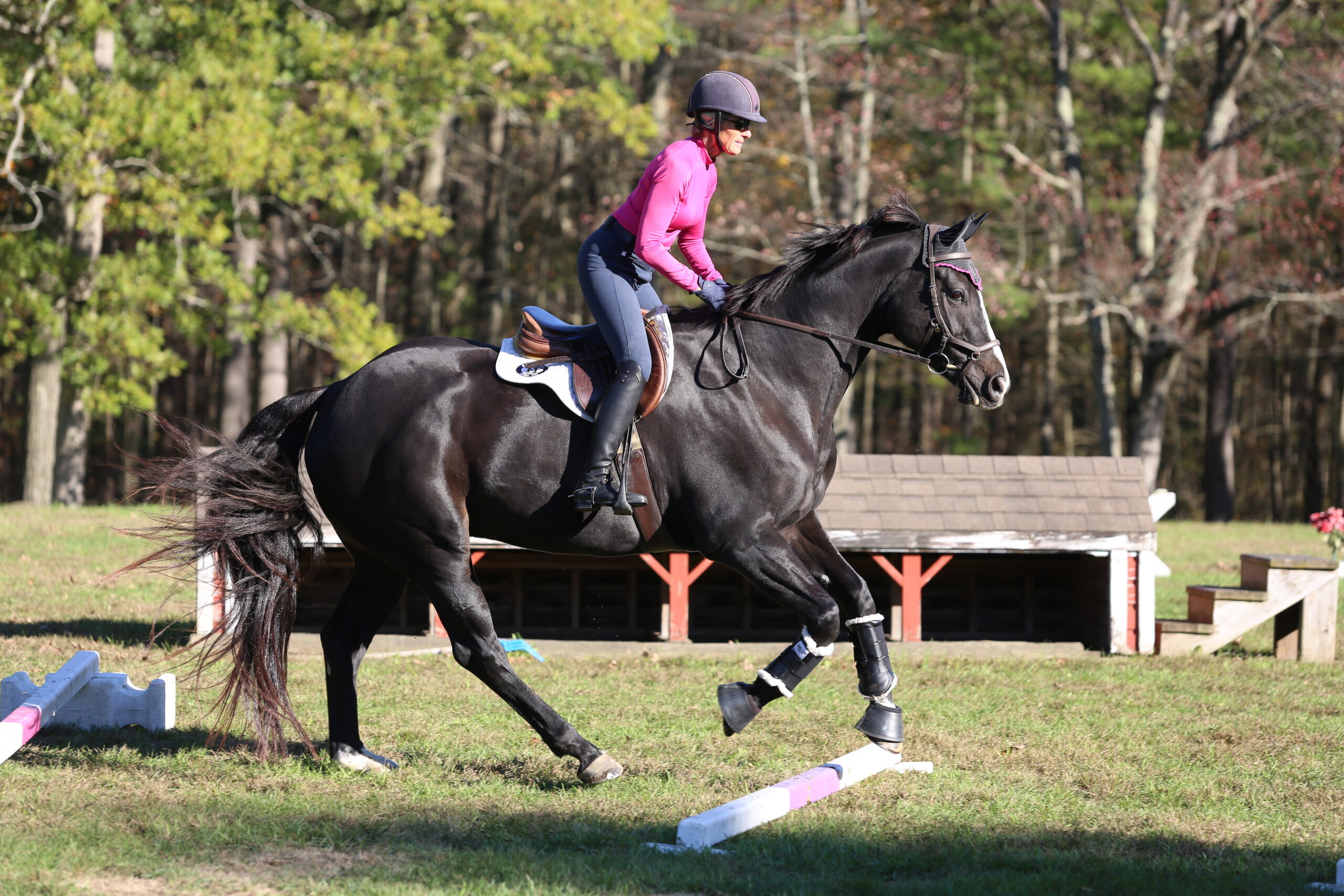
She adds that distances may need to be adjusted for your horse based on his size, training and experience, and that it is important to seek advice from a qualified instructor to make sure you’re getting it right.
She also likes to mix in a small jump with cavalletti on either side, swapping out fillers to keep horses adaptable. Moving poles around the arena, she says, prevents horses from getting too comfortable. “Even seasoned horses look twice when something’s in a new spot. That’s good for them.”
Building Daily Habits
For Kulak, the message is simple: Ride with purpose every day.
“These responsibilities—rhythm, track, balance—aren’t just for clinics or shows. They’re for every ride, even if you’re just schooling for 40 minutes at home. If you practice them daily, they become habits. And when they’re habits, you can rely on them under pressure.”
That’s what gives horses consistency, and that’s what keeps partnerships strong. In all of these exercises, she said, if you make a mistake, it’s not usually going to be dramatic.
“I can’t stress enough that you need to use your creativity changing the exercises, moving them around, so your horse’s confidence goes up and your confidence goes up,” Kulak continues. “As you move these things around to different places using different materials, the goal is to have your horse grow accustomed to that and gain confidence. When the horse understands what you expect, and you do your job as the rider, the whole picture comes together. That’s when the magic happens.”
Read Part 2 of this article (‘Cavalletti Queen’ Marcia Kulak’s 5 Exercises To Try) here, available for Practical Horseman+ members only. Sign up for Practical Horseman+ for only $3.99 a month.
(Learn more about all the benefits you’ll enjoy as a member of Practical Horseman+, our new, exclusive membership platform, here!)
About Marcia Kulak
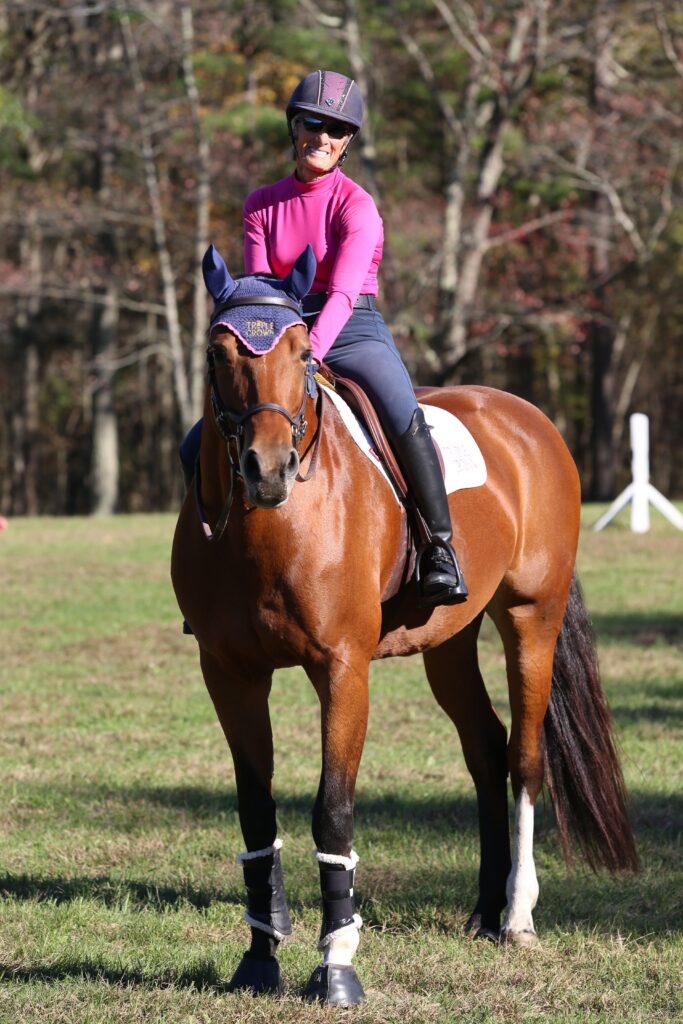
Marcia Kulak brings a unique perspective to her riding and training, having competed at the five-star level in eventing, been shortlisted for two Olympic Games, and trained with some of the sport’s most iconic names across multiples disciplines, including Jack Le Goff, Mark Phillips, Anne Kursinski, Sue Blinks, Ruth Hogan-Poulsen, Ali Brock and Beezie Madden, as well as natural horsemanship experts John Lyons and Louis Wood. She’s also contributed to the sport through governance and volunteer efforts, including serving on the USEF Eventing Selection Committee. Today, she runs Kulak Equestrian near Saratoga, New York, and in Wellington, Florida, working with a wide range of students.