




 Video
VideoQ: Can you talk about why it’s so important to warm up and cool down for cross country and offer examples of what your horses’ warm-ups and cooldowns typically look like at a big competition?
~ Lexy M., North Carolina
A: Cross country is obviously the most physically demanding phase of eventing, so it’s crucial that you give your horse a proper warm-up to prepare him for high-intensity exertion. A good warm-up gradually increases your horse’s heart rate and respiration, promotes blood flow, helps lubricate his joints and makes his muscles more elastic for the job he’s about to do.
Additionally, you want to use your warm-up to test your horse’s gears and prepare him for approaching fences at speed, as well as to make sure he’s in tune with your aids for steering and speed control. This is especially important for his focus and adjustability on course. Starting from fence one, you need to make sure he’s ready to perform.
The cooldowns are equally important. Think about if you’d just finished running a marathon. You probably wouldn’t cross the finish line and immediately sit down on the couch to watch TV. It’s the same with horses.
When their respiratory and heart rates are up and their adrenaline is high, you want to gently wind them down to allow their muscles to recover and relax. Fully cooling your horse out is really important to give their muscles the best chance of recovery, especially because you don’t want them to be stiff for show jumping the next day.
Cross-Country Warm-Up: Smart Preparation
Normally, I’ll do about 10 to 15 minutes of relaxed trotting but some of my horses tend to get really worked up during the warm-up because they can see other horses flying around on course and warming up. In that case, I try to find a quiet area to do our flatwork. If they’re a bit buzzy and break into canter while we’re trotting, I’ll just quietly let them get settled at the canter if it makes them happier because you don’t want them getting too wound up before you head out on course. My goal on our flatwork is to help the horses relax and hopefully calm the nerves before we start going over the warm-up jumps.
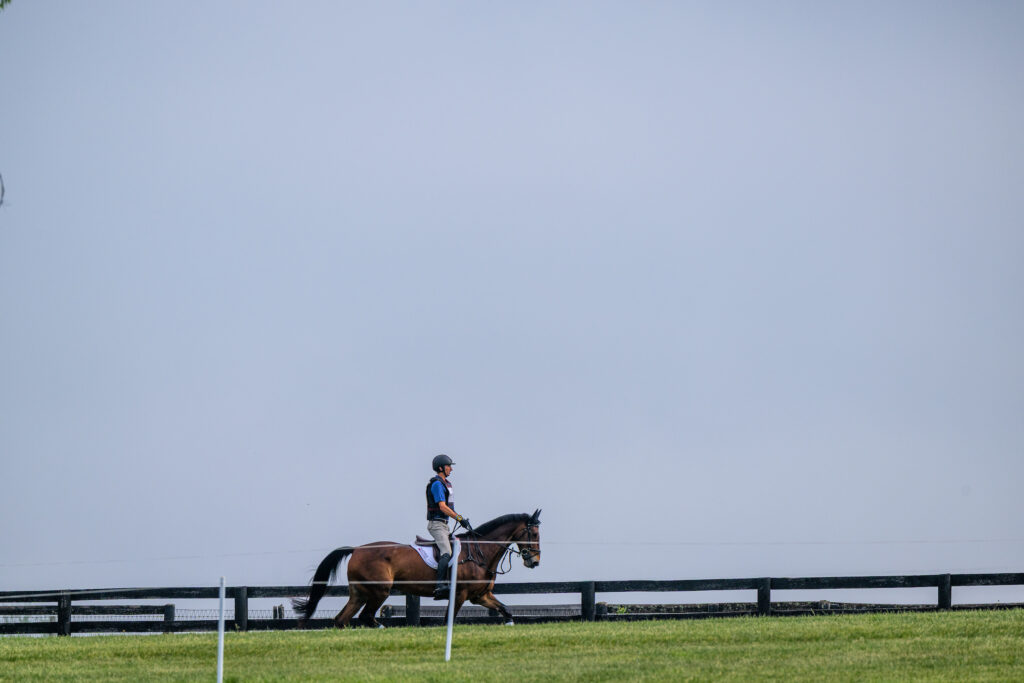
Then, I go through the gears a bit in the canter just to make sure I can go up to a big, extended canter and then easily come back because unlike the other phases, you have to really use the gas and transition in and out of it on cross country.
If you watch good cross-country rounds, it’s about going fast but not at frantic gallop like racehorses on the track. That kind of pace makes it really hard to slow down and turn quickly. It’s more about keeping the same tempo you have at the canter and opening it up to cover more ground while maintaining enough control to be able to easily adjust the horse’s stride.
I also use our warm-up on the flat to make sure my horse is in good self-carriage and isn’t leaning on me or getting on the forehand. In many ways, it all goes back to your dressage work—even in cross country and show jumping. It’s all related. When I’m galloping at speed going to a fence, I want them balancing on the approach and looking up where they’re going. I don’t want them going with their chin in their chest looking at the ground. So, I play around on the flat to make sure my horses are connected and really on my aids.
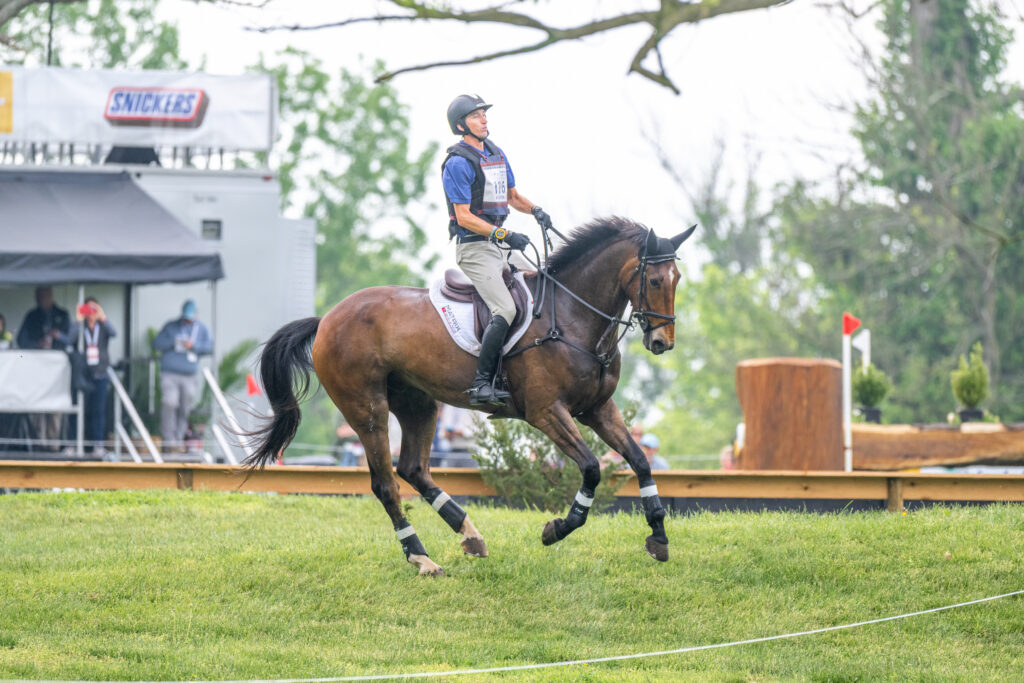
Then, I do a few trot jumps over a small fence. It’s good for my position because you don’t always know when your horse is going to leave the ground at the trot, and I also find it’s good preparation for the horses. It brings out their self-preservation and jumping intelligence because you never know on course when you might get an awkward distance and have a few trot steps in or out.
Then, I just build on the size of our warm-up fences. A lot of times at competitions they have nice cross-country jumps to practice on, as well as show jumps. I like to make sure my horses know what phase is coming, so I typically only jump the cross-country fences.
If they sort of touch a fence in the warm-up, it’ll sharpen up their jump. So, when you’re coming in at speed to the first big, square fence they’re hopefully jumping nice and safely. I also make sure to jump a few fences on an angle from both directions. Most courses have angle jumps both ways, so I find it’s wise to prepare for them because the horses really have to snap up their inside leg more for these fences. This is another good practice to make sure they’re jumping safely and paying attention.
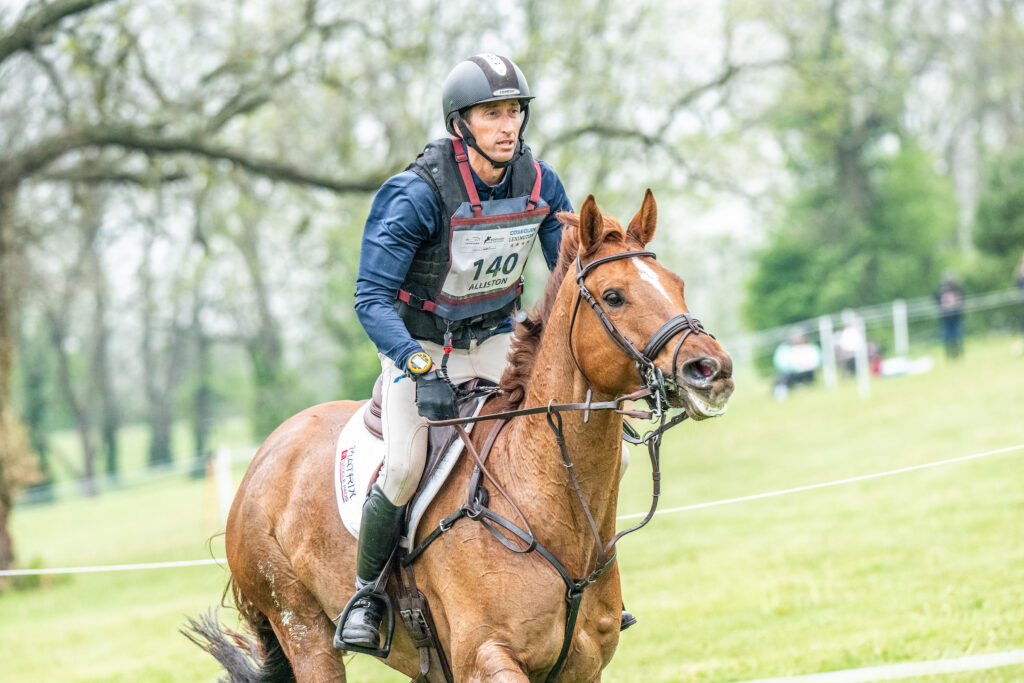
Close to the end of our warm-up, I’ll jump one or two fences at the gallop to find our stride and catch the distances at speed. This helps the horses get used to coming in at speed and then backing off by themselves when they need to. Typically, the horses relax a bit after the warm-up jumps, so you can play with your gears at the gallop a little more here.
Another key aspect of my warm-up routine, especially for a four- or five-star with a really long, grueling cross-country course, is that I always finish at least 10 minutes before I’m set to leave the start box. I get on about 40 minutes before our start time, so we can do our warm-up, and then I give my horse a decent break before we start. I’ve found this makes a big difference.
I find a cool spot to let my horse rest and allow his heart and respiratory rates to go back to resting. You never want to start a long course with your horse having an elevated respiration or heart rate because it will cause him to get really tired. If they start already amped up, it’s going to be extra challenging to go the distance.
Sample Cross-Country Cooldown
Formerly, when you finished on cross country, you would jump off right away and walk your horse to cool them out. But a few years back, I saw top German eventer Michael Jung finish on cross country, quietly canter his horse on a circle or two and then trot a few circles. Gently shifting down the gears has been found to be better for the horses’ muscles instead of going from a dead gallop to the walk.
I copied Michael’s routine of cantering and trotting a bit after running cross country unless my horse is really exhausted. In that case, we’ll typically just trot a little before walking out. Trotting before walking also gives you a chance to check in on your horse’s soundness. When going down to canter and trot, I focus on whether the transitions feel nice and comfortable or if my horse kind of jars up a bit with an irregular trot.
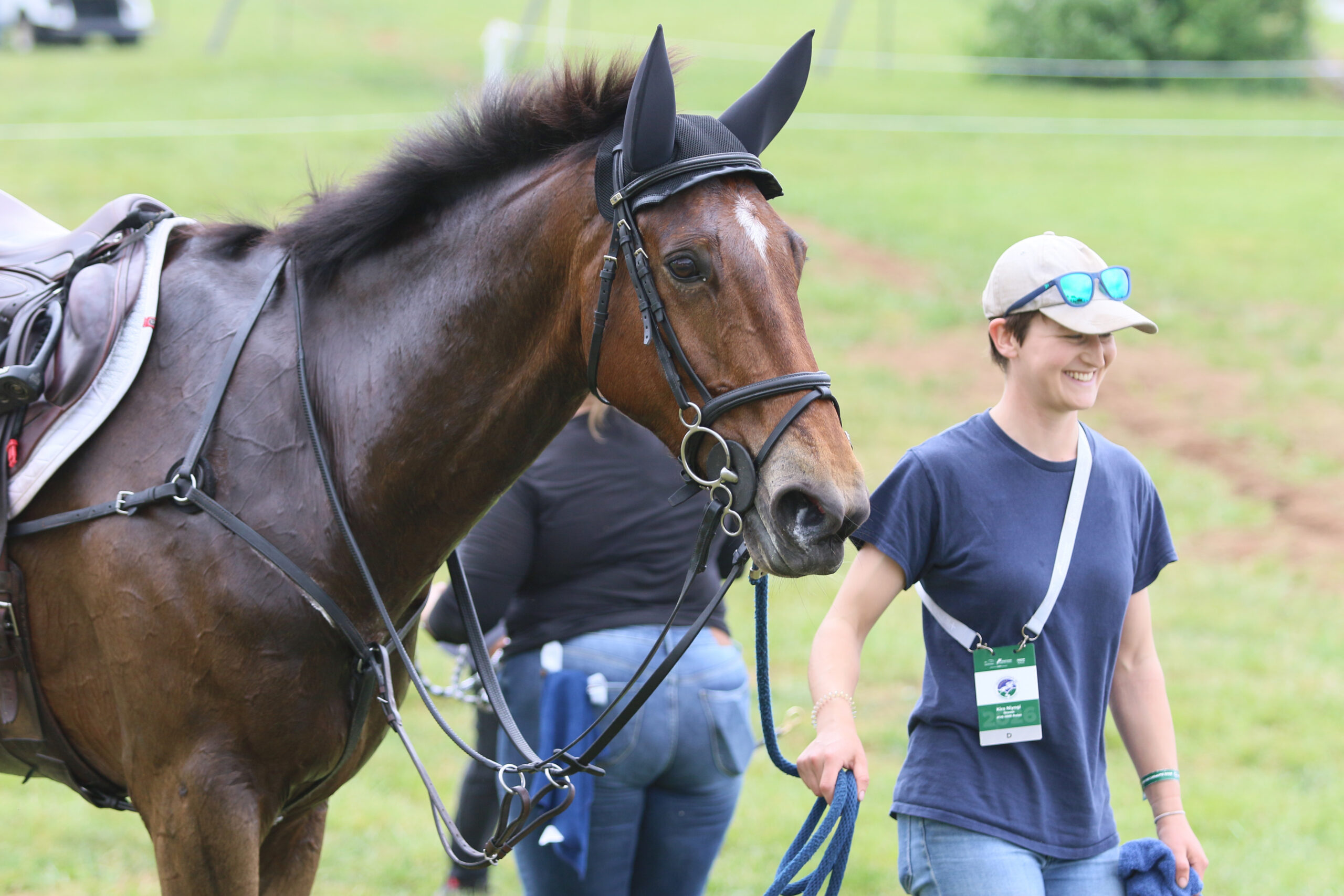
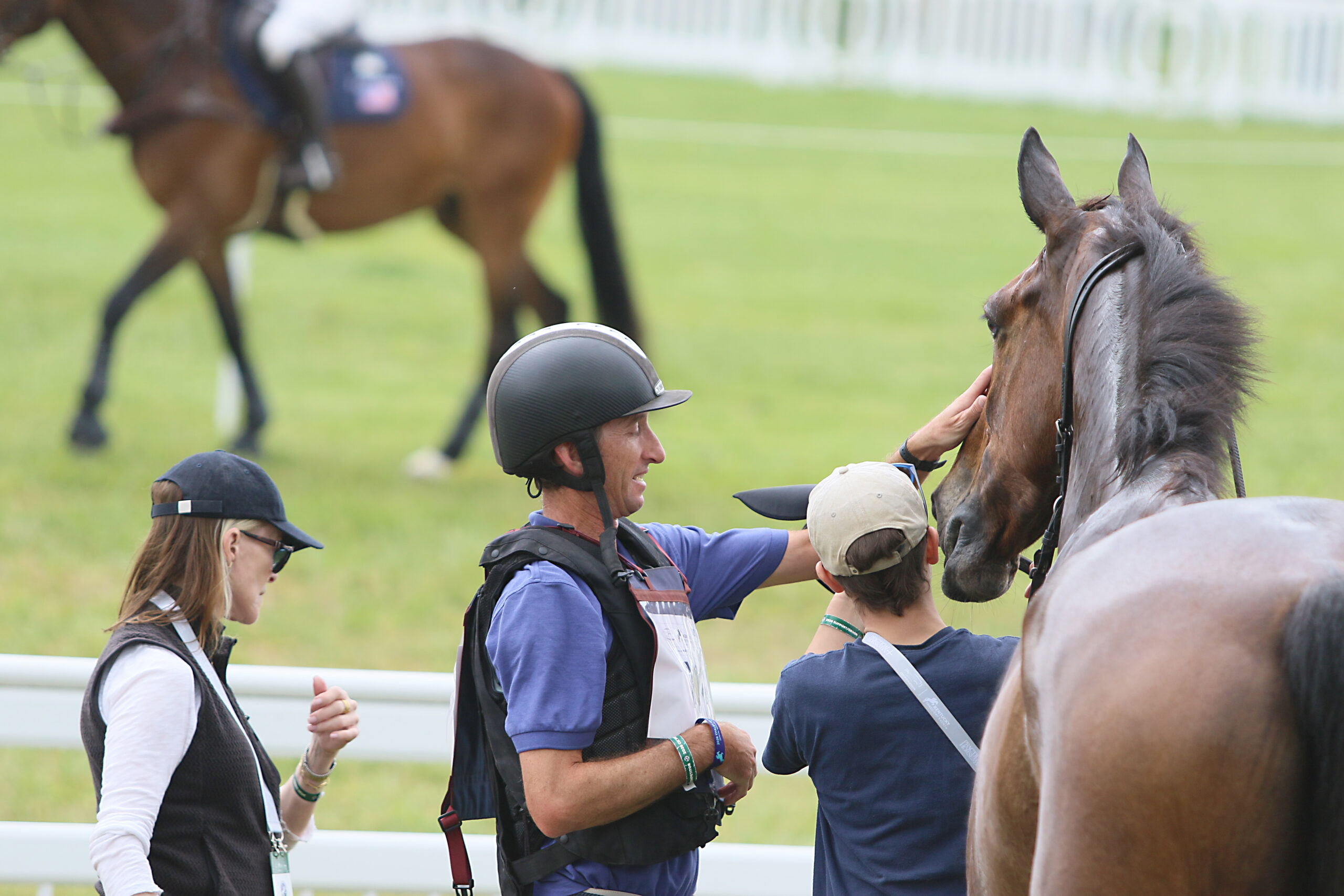
After that, I normally jump off, undo the girth, whip off the saddle and keep walking while my friends and grooms come with the cold water. Traditionally, we would pour the cold water on the horses and scrape it off, but science on the best cooling techniques is always evolving. Now, the idea is to get as much cold water on the large muscle groups as possible and just leave it on to bring their body temperatures down.
Then, we want to get the horse’s boots off to help cool the tendons down, but I don’t like walking them without boots if they have large studs. If they were to spook for any reason, they could accidentally slice a leg. Once they’re comfortable and have cooled down a bit to where I can safely get the studs out, the boots come off so we can get the tendons cooled down.
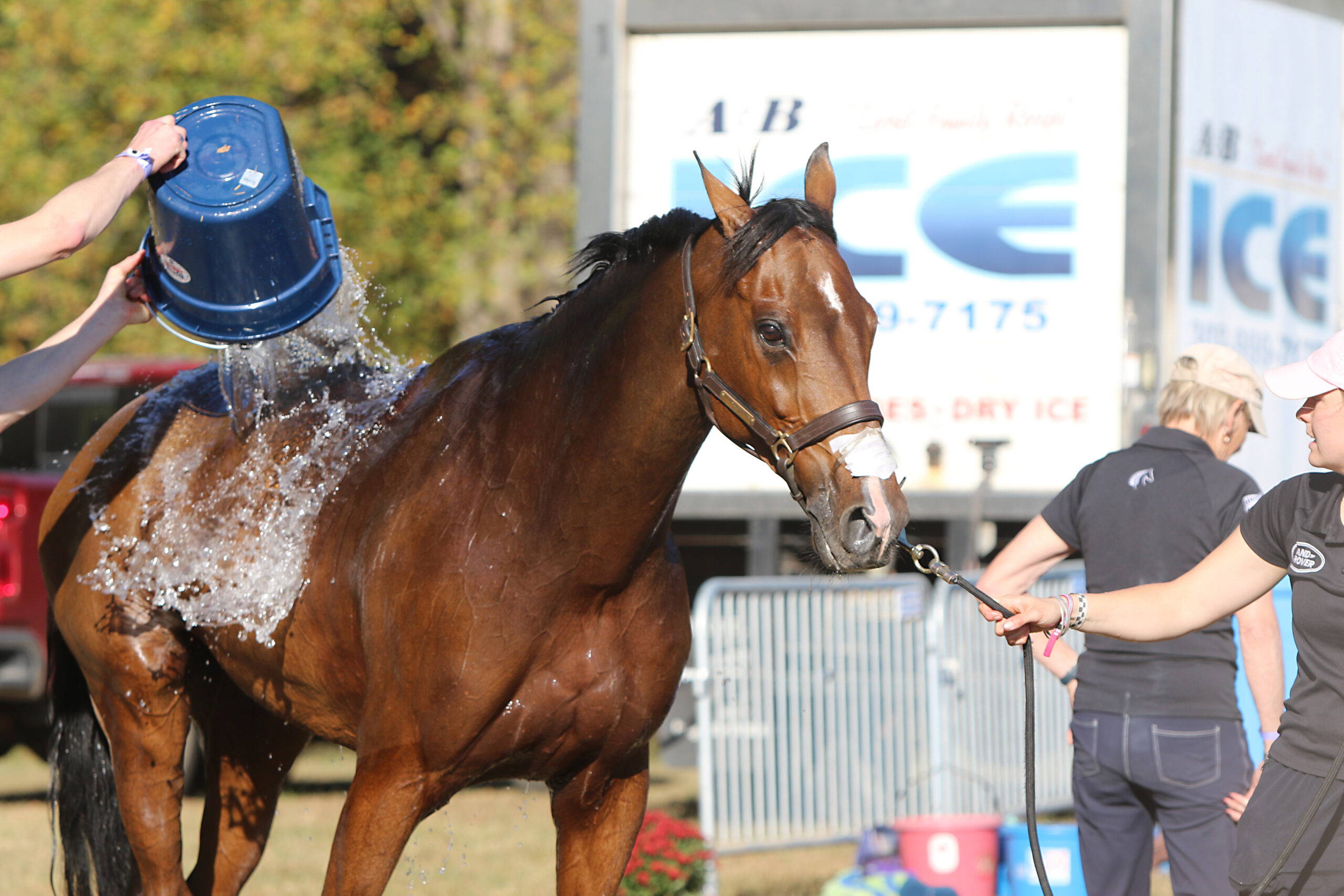
How long you cool down your horse depends on your level, the temperature and your horse’s fitness, but after a big five-star when it’s hot, we spend quite a while cooling out. At the FEI competitions, you’re cooling down at the vet box, so veterinarians are there to take the horses’ temperatures and check them over to make sure you’re not taking them back to the barn too early.
We like to see their temperature come down significantly, so the horse is comfortable before heading back to the barn. But a lot of times once we get their temperature down, it’s easier for horses to fully calm down and relax back at the barn because there’s so much action with people starting and finishing their cross-country rounds that they’re usually still buzzing around the cool-out box.
I hope these tips help you, Lexy, come up with a solid warm-up and cooldown plan for your horse at your next event!
Ask Team Prac: Submit Your Training Question
To submit your question, sign up for Practical Horseman+. (Learn more about all the benefits you’ll enjoy as a member of Practical Horseman+ for only $3.99 a month, our new, exclusive membership platform, here!) We’ll ask a little bit about you and your horse and what type of issue you’re seeking help with. From there, we’ll pass your question on to a Team Prac member who specializes in your discipline.
If your question is selected, it will be featured in a future Practical Horseman and/or Dressage Today digital article and on our social media channels to help you and other riders who might be struggling with a similar issue. We look forward to helping you and your horse on your personal journey together!
About James Alliston
After growing up in England, eventer James Alliston has made a name for himself with numerous top international placings, CCI5* completions and appearances on several U.S. Nations Cup teams. He made his senior Nations Cup team debut at the 2022 Boekelo CCIO4*-NC-L in the Netherlands with Nemesis. In 2024, James and Karma helped the U.S. Eventing Team earn a second-place finish at CHIO Aachen in Germany and were the highest-placed U.S. combination in ninth place.