




 Video
VideoRiders often focus on their seat, legs and hands—yet your breath quietly influences everything from muscle tone, balance, rhythm and even your horse’s relaxation. Restricted breath can show up in your posture causing you to sit heavier on one side while pulling up through the other, which can also compress the hip and lower back. Over time, this can lead to uneven contact, tension and discomfort.
When your breath is free, the seat bones ground evenly, the spine naturally lengthens and the body finds support from underneath. The result? A seat that is stable yet soft, balanced but alive.
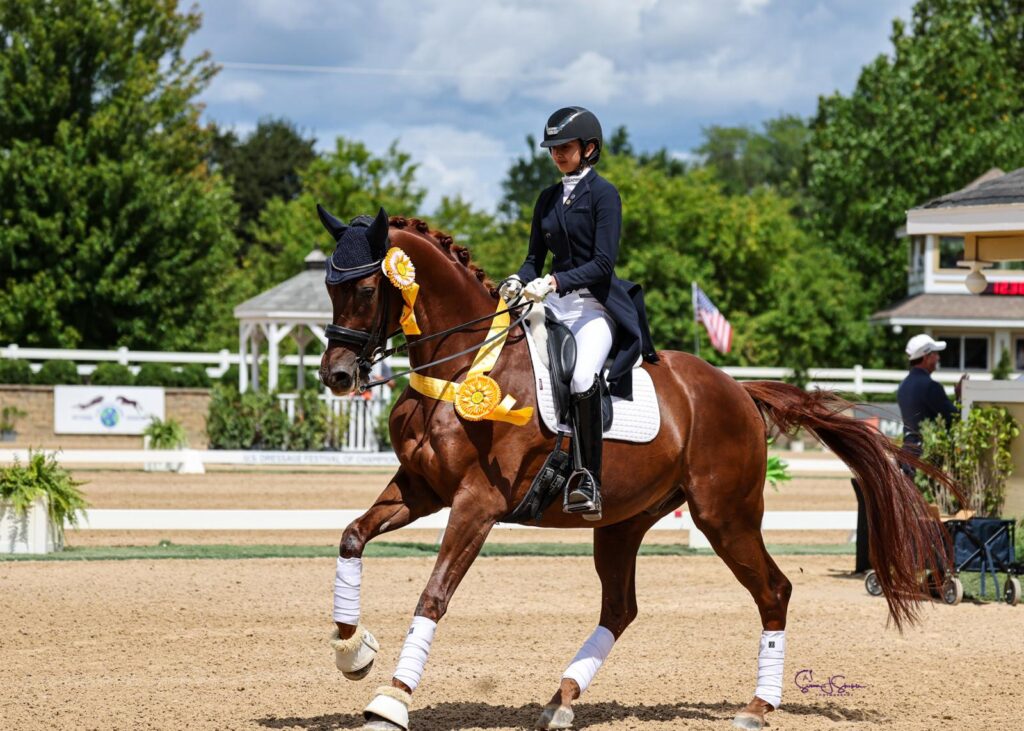
Your diaphragm moves down on inhale like a plunger. Now imagine four quadrants to your abdomen and lower back. If one quadrant is restricted, many things can go wrong, including an ideal micro-pivot at T12-L1. This can result in seat faults, back tension and subtle changes in your horse’s way of going.
This simple chair exercise will teach you why your breath is so important in the saddle and help you discover this hidden “micro-pivot” in your spine that allows you to absorb your horse’s movement with ease—the same quality that makes sitting trot feel effortless. Once your breath is free, posture becomes effortless, movement flows and your horse will feel the difference instantly.
Chair Exercise to Breathe Through Your Mid-Back
Whether you compete at the upper levels or are working to improve your dressage basics, the way you breathe changes how your body moves with your horse. This simple, quick seated exercise will help you find a softer, more responsive seat and a freer mid-back.
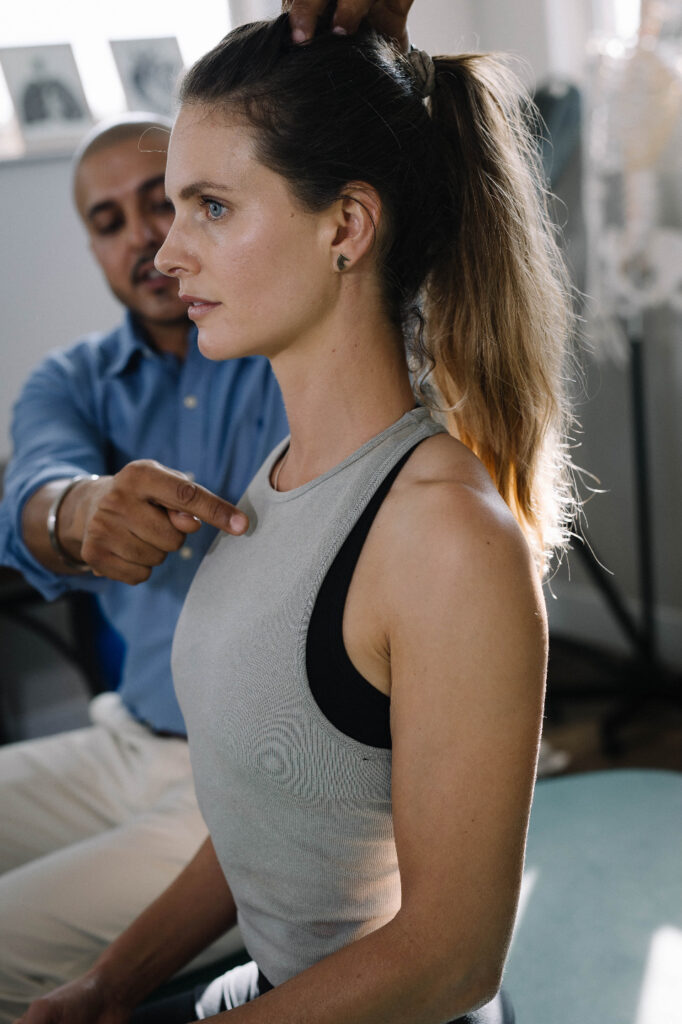
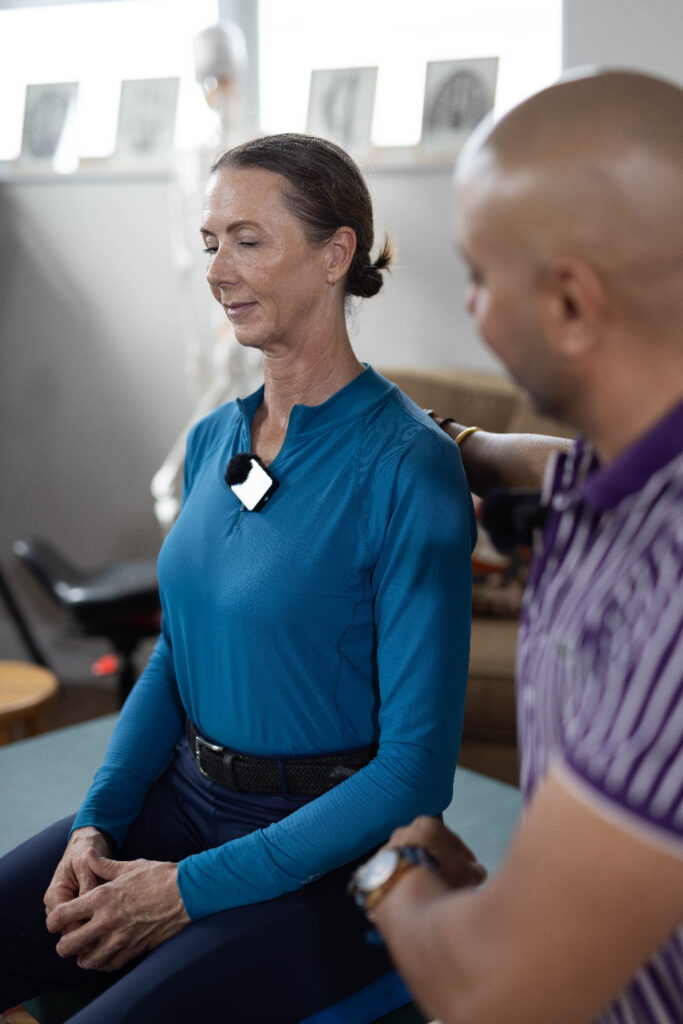
Setup:
- Sit on a firm, flat chair; keep your feet flat and hip-width apart.
- Sit toward the front of the chair so your thighs are free.
- Rest your hands loosely on your thighs.
- Close your eyes if you like.
1. Arriving and Noticing
- Feel your seat bones—is one heavier than the other?
- Notice your natural breathing rhythm.
- Where do you feel the breath—belly, ribs, chest or back?
2. Exploring the Micro-Pivot at T12-L1
- Imagine your pelvis as a small bowl.
- Tip it forward a few millimeters, return to neutral, then tip back.
- Notice where your lower ribs meet your waist—your mid-back (T12-L1). Let it gently yield.
3. Adding Breath
- Rock your pelvis forward with a natural inhale.
- Rock back with a soft exhale.
- Notice the difference when your back expands versus your belly.
4. Differentiating Ribs and the Pelvis
- Keep your pelvis still.
- Nod your breastbone forward/back from your mid-back.
- Notice the difference from moving the pelvis.
5. Combining Pelvis, Ribs and Breath
- Rock forward with an inhale, back with an exhale while your breastbone is slightly lagging—your “micro-pivot.”
- Keep your shoulders and neck soft.
6. Relating It to Riding
- Imagine sitting trot: the pelvis absorbs motion, the mid-back yields and the breath flows naturally.
- Tip: Try on an exercise ball for additional awareness.
- Remember: Exhale on the “up” phase, inhale on the “down” phase.
7. Rest and Notice
- Sit quietly and notice your breathing.
- Stand and walk. You should feel lighter, freer and more connected through your mid-back.
This whole process takes less than 10 minutes. Try it before your next ride to see if you notice the difference!
Why This Works
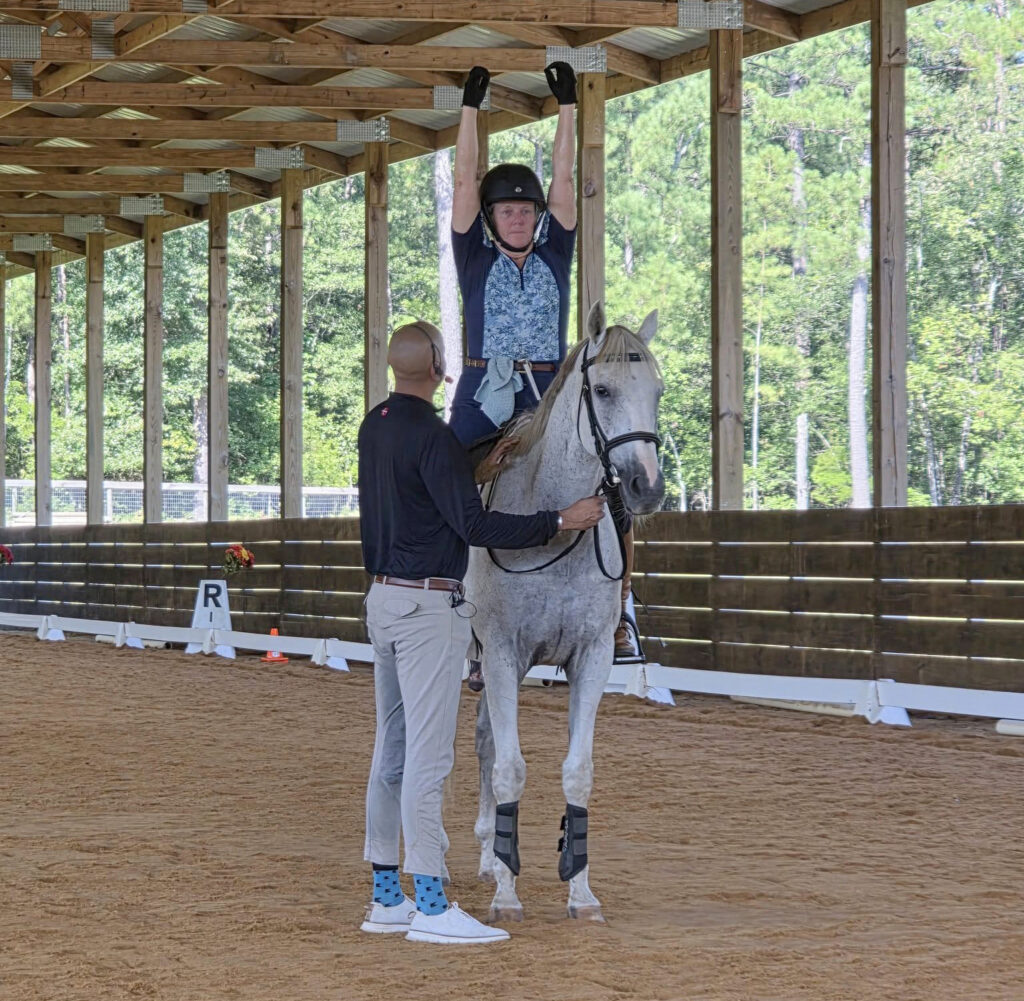
- Exhaling on the “up” prevents bracing in the chest and shoulders.
- The micro-pivot absorbs impact in stages: hips → lumbar → T12/L1 → ribs/shoulders.
- Inhaling on “down” keeps the body elastic for the next stride.
Breath Is Your Hidden Advantage
If this lesson gives you noticeable improvement, Dave Thind’s full 7-lesson program of A Late Summer Breeze can help you go even further:
- 45 minutes per session; you can complete in one go or break it into shorter segments.
- Lifetime access for repeated practice and ongoing discoveries.
- Thind’s calm, precise guidance helps unlock a new level of feel, softness and connection.
Top riders around the world work with Thind to explore how subtle breathing variations improve performance by helping riders move in harmony with their horses. For more information on how you can explore the full series and additional lessons, click here.
To read more with Dave Thind, click here.
About Dave Thind
Born in Canada and trained in Germany, Dave Thind makes his home in Walpole, Massachusetts, as owner of Aspire Farm since 2013. Thind has himself competed at the Grand Prix level in dressage and jumping. He is a noted equestrian biomechanics authority, with several published articles and appearances as an expert guest or lecturer to his credit. He received his German ‘Trainer A’ license in 2007 with a nearly perfect score awarded to him from the German National Federation. He holds an International Trainer Passport Level III and is an Authorized Teacher of Feldenkrais Awareness Through Movement.