




 Video
VideoIn Part 1 of this two-part series on trot jumps, I explained how to ride a canter–trot transition to poles and discussed why trot jumps are beneficial to riders of all levels.
To summarize, trot jumps are excellent for:
- Young horses
- Nervous or spooky horses
- Rider balance, position and patience
- When horse shopping
- In the warm-up ring
- Prepping for equitation and Handy Hunters
In Part 2, I’ll explain how to ride a canter-in and trot-out line with a small, solid jump or a low vertical and offer tips on how to avoid common mistakes in this exercise.
Line: Canter In and Trot Out
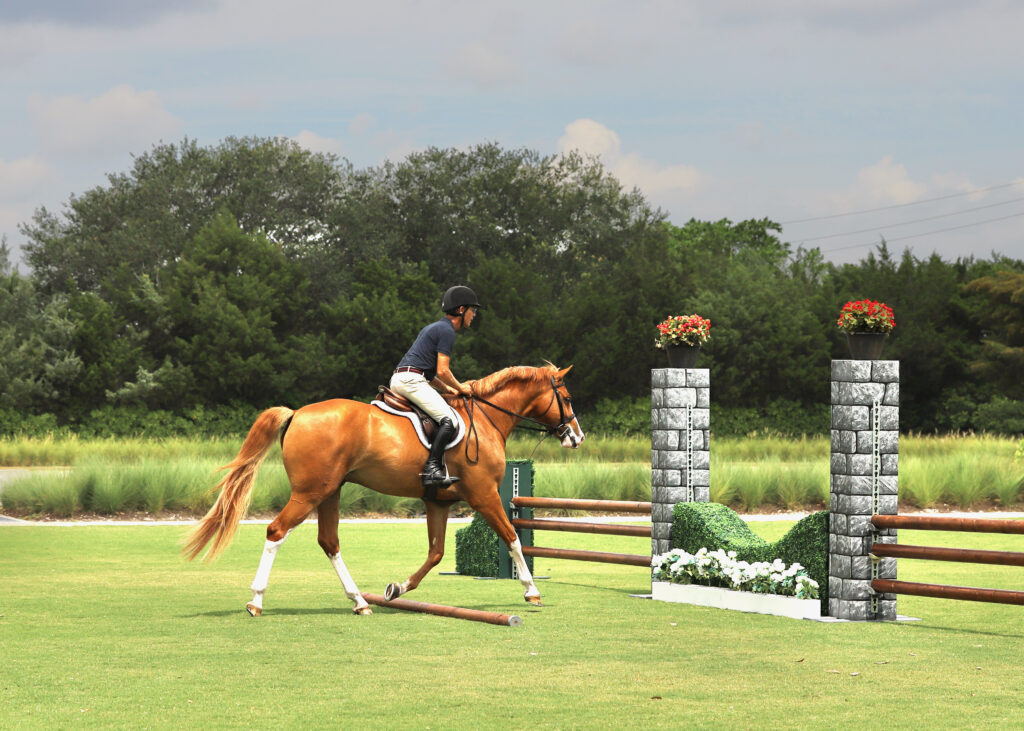
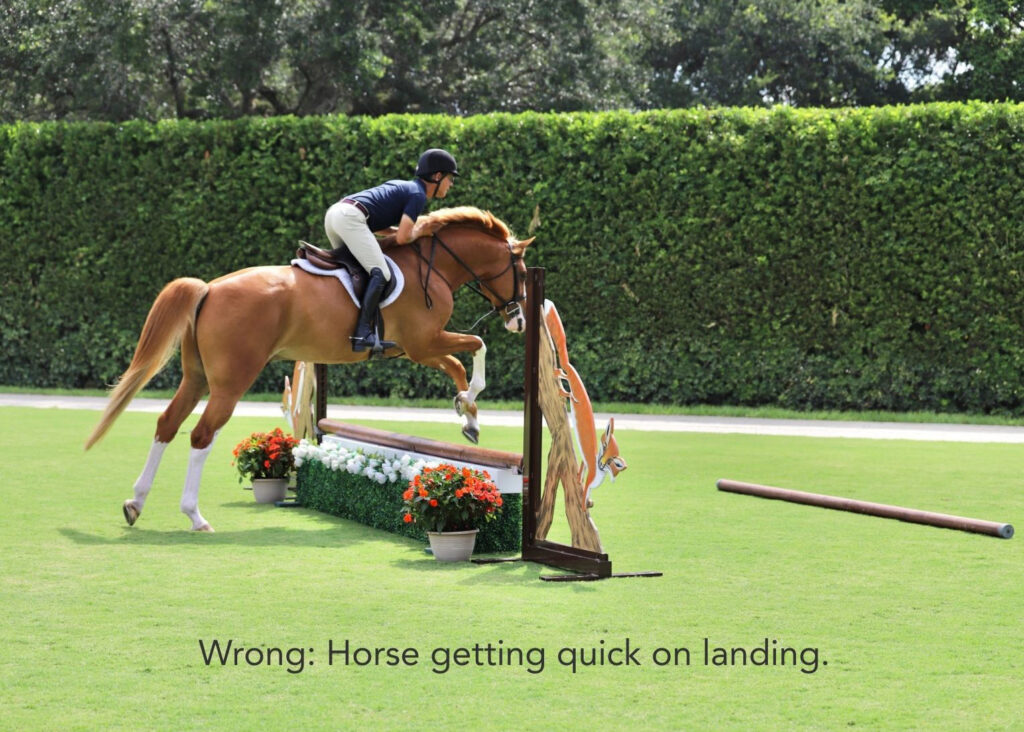
Build an 84-foot line with a small canter fence followed by a trot jump—a small, solid jump or low vertical. (Be sure the canter jump is quite small at first, so your horse doesn’t feel like he has to make a big effort over it. For the trot jump, avoid using gates or other jumps with holes in which he might accidently get a foot stuck.) Place a trot pole 8 to 9 feet in front of the trot jump. If your horse tends to get quick on the landing sides of his fences, build this line so the trot jump is just a few strides away from the end of the arena. That way, he’ll be thinking about the turn as he lands, rather than racing off into a big, open space.
Note: If your horse is green and hasn’t begun cantering fences yet, set up only the second element of this line, with the trot pole, and practice making a canter-trot transition before it just as you did with the trot-pole exercise.
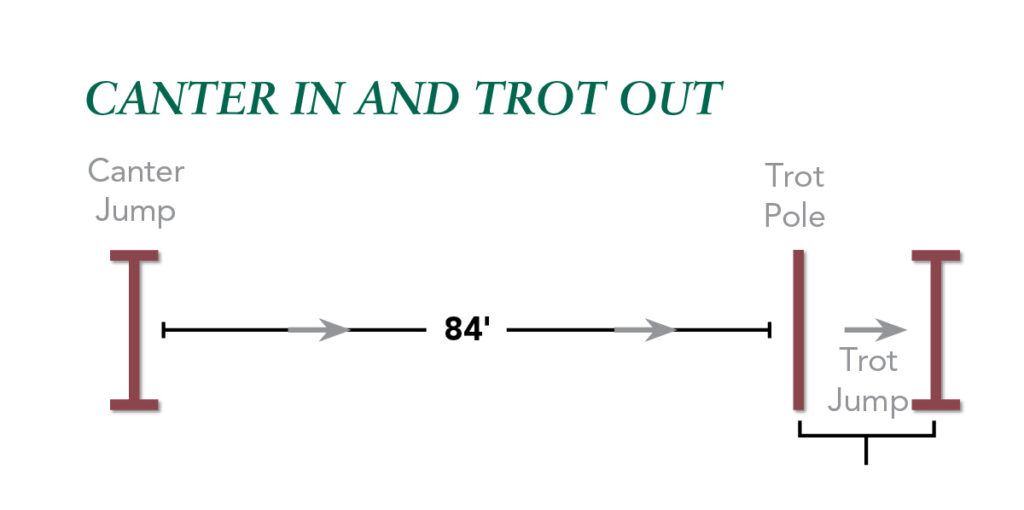
1. Establish a slightly collected canter and ride a smooth turn to the first jump. Keep your upper body quiet in the approach, avoiding pushing for a long spot, so your horse doesn’t overdo his effort over it. (Because the jump is so small, it’s OK if you get a little closer than usual to it on the takeoff.) In the air, focus your eye on the trot jump while being careful not to interfere with your horse’s jumping effort.
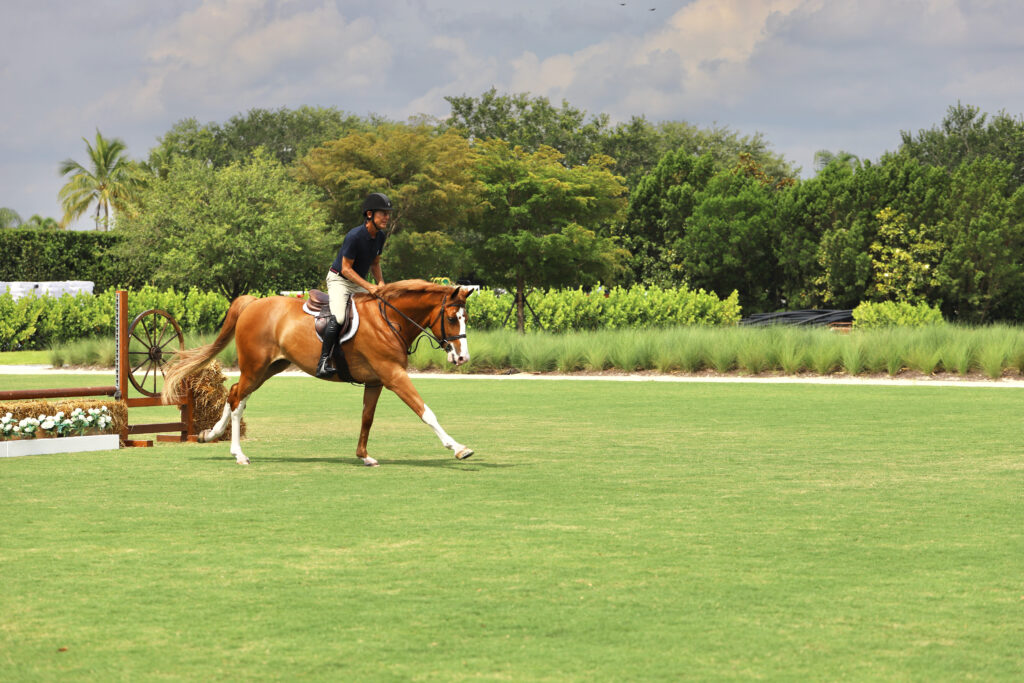
2. After he has fully completed the jump, apply the same smooth downward aids that you applied for the canter–trot transition (being careful to use your core and legs more than your hands), this time asking your horse to come all the way down to a halt.
Pause in the halt briefly—just long enough for him to relax his neck—then turn and walk calmly away. (If he drifted in either direction before the halt, turn him in the opposite direction. So, for example, if he drifted left, turn him right.) If you have trouble making the transition to halt in the space of this line, make the line a little longer, approach the first jump in an even more collected canter, and/or make a tighter turn in the approach.
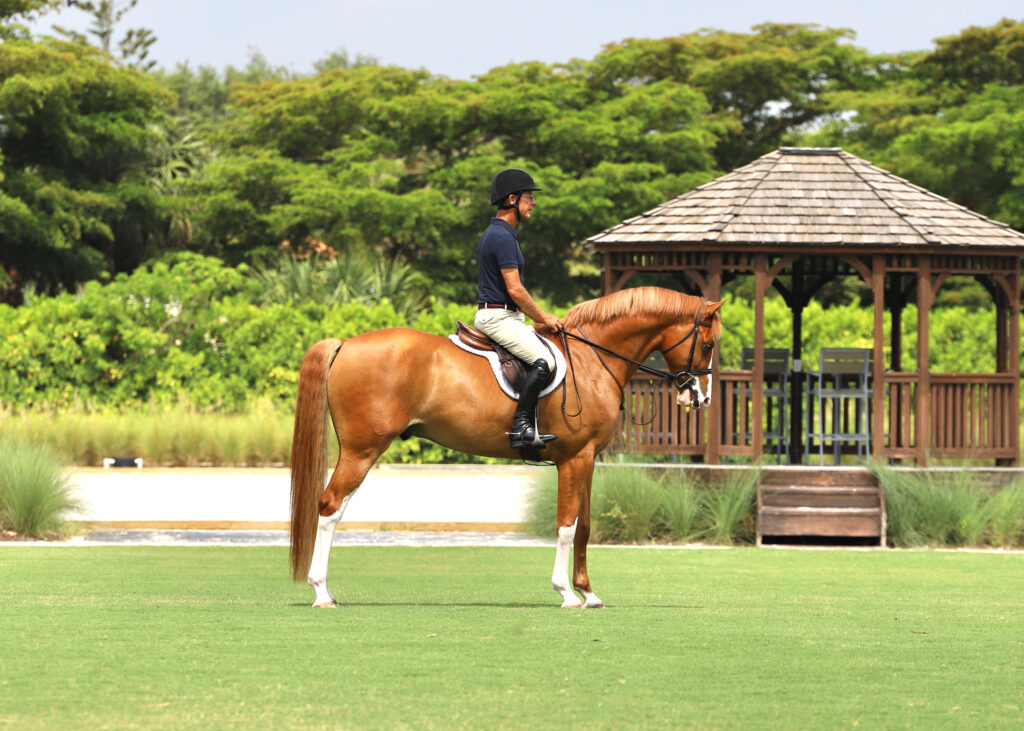
3. Repeat the exercise until you can make the halt transition easily halfway down the line without changing the level of your horse’s head carriage. Then approach the canter jump again just as you did before. This time, instead of coming down to a halt, ask for a transition to trot. Just as you did in the trot-poles exercise, immediately check that your balance is right in the middle of your horse’s stride and that he feels in front of your leg—carrying the forward momentum you want without you having to nag him—and “at your hand”—taking a light feel of the bit without pulling you out of the saddle.
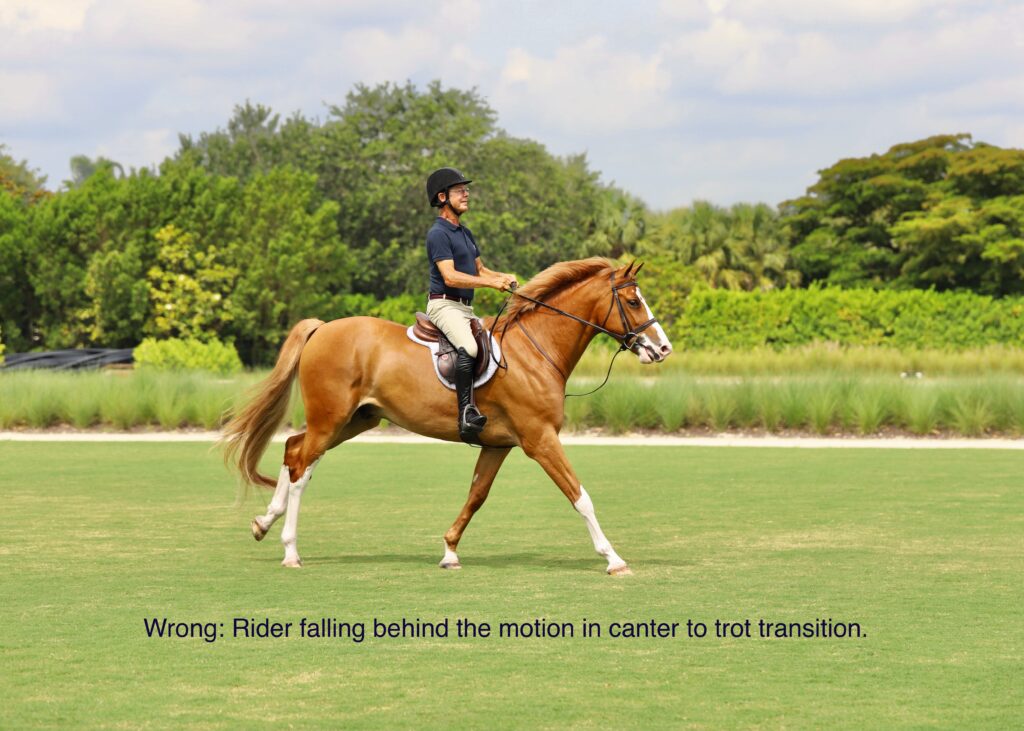
This timing can be tricky to master. As he’s making the downward transition, he may feel like he’s going to come all the way down to the walk. Be ready to apply leg and seat just before that moment, so that he trots forward in a steady—neither sluggish nor rushed—rhythm. Again, if your horse curls his neck or raises his head higher than the ideal level just above his withers, check that you’re staying tall in your upper body and not using too much rein pressure in the transition.
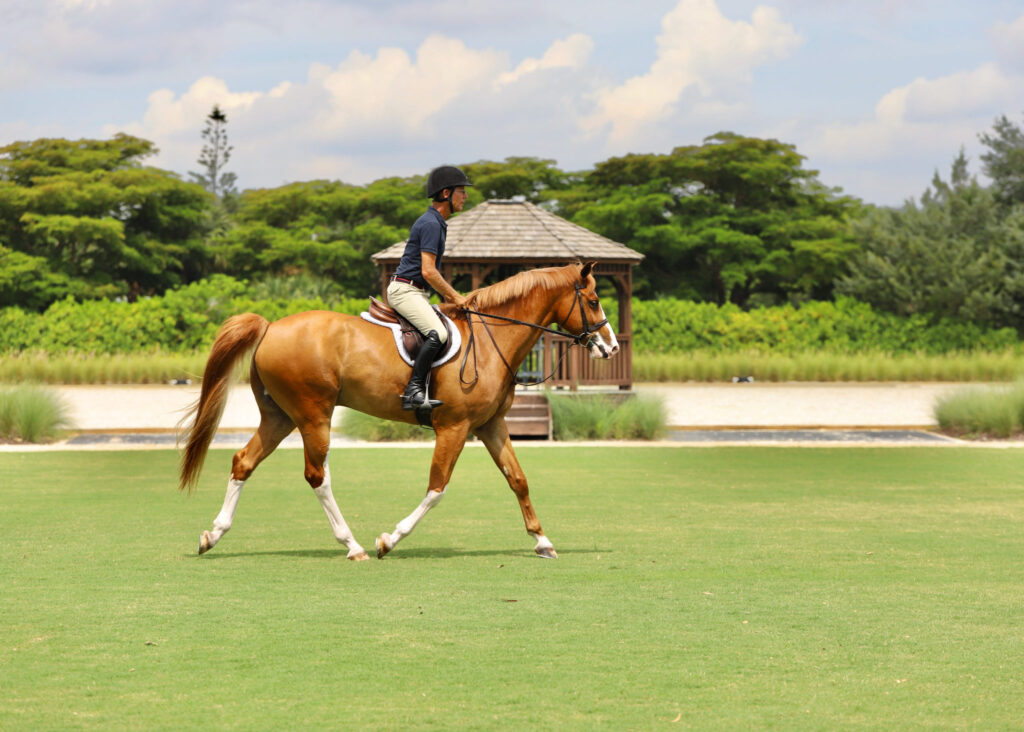
Tip: Allow your horse to use his neck naturally in the last strides before the jump.
Keep your eyes up as you get close to the jump, focusing on the track you plan to ride beyond it. This, in turn, will help to keep your horse’s eyes up. Unless he is a superb trot jumper who never loses his balance on takeoff, avoid the temptation to throw away the reins in front of the jump. Keeping a light feel of the contact will help you maintain his balance all the way to the takeoff and ensure that you go with him when he leaves the ground. Meanwhile, keep your hip angle slightly closed, with your hands in front of your shoulders.
Whether you sit or post in the last few strides before the trot jump depends on your horse’s trot. If he has a flatter, less energetic trot, continue posting to encourage an active rhythm in his step and to clarify that you’re not intending to come all the way to the walk. For the very last stride or two (just after he steps over the trot pole), it’s OK to sit lightly in the front of the saddle, still maintaining the same hip angle, to help yourself stay with his motion on takeoff. If he has a lot of energy and suspension in his trot, sit several strides before the trot pole to relax his stride and discourage him from breaking into the canter.
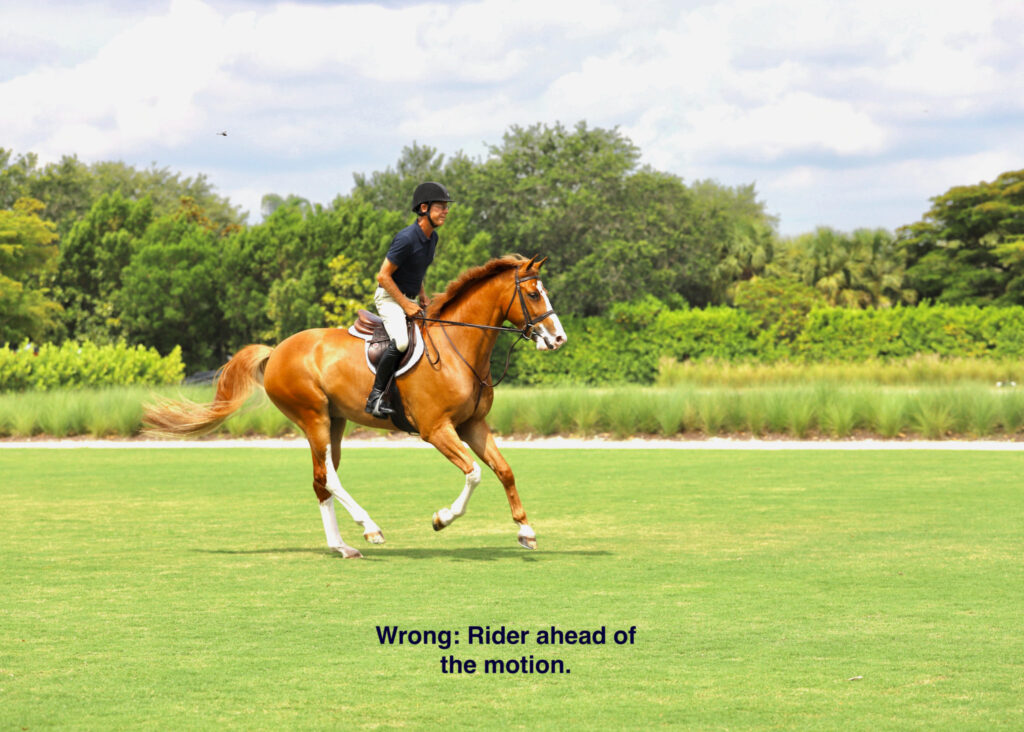
Try not to anticipate the takeoff. Instead, wait for your horse’s body to come up to you. As he leaves the ground, stretch up tall with your upper body, still keeping the angle in your hips, and tighten your core muscles to stay with the motion. If you’re a hunter rider who tends to be a little more casual and soft with your upper body over canter jumps, this is the one time when you want to “equitate” more. Be patient and strong in your upper body, so you don’t accidentally jump ahead of the motion or get left behind.
As your horse lands and canters away, stay connected to his mouth and in control of the rhythm, straightness and balance. The more quickly you organize after the jump, the better your turn or line will be to the next fence. If he gets too quick or too low with his head and neck, use the same smooth downward-transition aids that you used earlier to gradually bring him to a walk, without pulling his nose in toward his chest. Then repeat the exercise and the walk transition until he relaxes and learns to steady himself after the jump without ever changing his head and neck position.
Tip: Try not to anticipate the distance.
Canter straight after the trot jump several times before practicing right and left turns following the landing, always focusing on keeping the even rhythm and balance and the same position of your horse’s head and neck. Also, gradually experiment with longer approaches to the canter jump, testing that your horse can maintain his balance and rhythm across a greater open space.
Because trotting small jumps is so easy on horses’ legs, you can do this as often as three or four times per week. If your horse is on the nervous side, occasionally incorporate trot jumps into his flatwork. This will teach him that jumping is not such a big deal.
Common Mistakes
Mistake 1. I’ve allowed my reins to get too long here, bringing my hands behind my shoulders. This will make it harder to create a balanced transition to trot.
Mistake 2. Here, I am leaning too far back during the transition and pulling on the reins, with my hands too high. This will cause me to fall behind the motion at the takeoff for the jump.
Mistake 3. For horses who tend to get quick in the landing, I set the trot jump closer to the end of the ring, with a landing pole 8 to 9 feet away from the jump. This helps to slow them down.
In the Show Ring
Once you’ve practiced plenty of trot jumps at home, you’ll have an idea of what will work best for your horse in the show ring. For example, if he tends to anticipate and canter in the last strides before the jump, plan to make a tighter turn in the approach to it. That way he won’t have as much time to think about it. If he’s on the more timid, spooky side, consider giving him a longer approach, so he has time to focus on the jump and gather his confidence.
If your horse tends to get quick on the landing side, plan to make an earlier turn after the trot jump. This will give him less time to build up steam.
If you’ve done your homework, your horse will wow the judge with his very best effort.
For More:
- In Part 1 of this two-part series on trot jumps with John French, the hunter/jumper trainer explains why trotting jumps is beneficial to riders of all levels and how to ride a canter–trot transition to poles. You can read Part 1 here.
- Read more with French on Practical Horseman here.
About John French
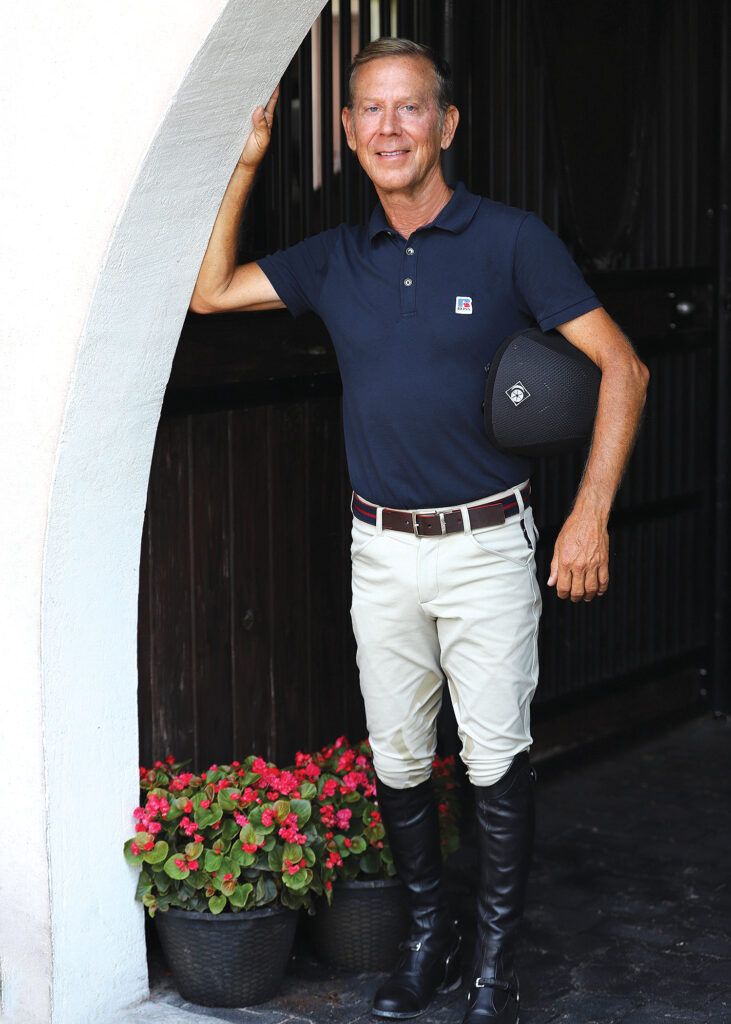
Champion hunter/jumper rider John French broke onto the A-circuit as a Junior by catch-riding other people’s horses and ponies. He won the Maryland Equitation Finals self-trained and on a borrowed horse. Since then, he has represented the United States in Nations Cups and FEI World Cup™ Finals, won the title of World Champion Hunter Rider four times, the California Professional Horsemen’s Association Pre-Green Incentive Rider of the Year three times and the West Region U.S. Hunter Jumper Association Hunter Derby Rider of the Year annually since 2016. He was the 2019 WCHR Professional National Champion and was inducted into the National Show Hunter Hall of Fame the following year. John is now based in Wellington, Florida, where he oversees the hunter division of show jumper Kent Farrington’s business, KPF.