



 Video
VideoThis article is brought to you by Mad Barn.
In sporthorse disciplines such as dressage, eventing and hunter/jumper, marginal gains can make a meaningful difference. Riders and trainers invest significant time refining training programs, conditioning schedules and farrier care. Yet one of the most overlooked contributing factors to performance and soundness remains nutrition—specifically, how your horse’s diet supports his hoof quality.
Hoof integrity is fundamental to your horse’s performance. Your horse’s hooves must withstand repeated loading, concussion and environmental stress while maintaining structural integrity. When hoof quality is compromised, even the most carefully managed sporthorses may struggle with comfort, consistency and longevity of their competitive careers.
The Performance Demands on the Hoof
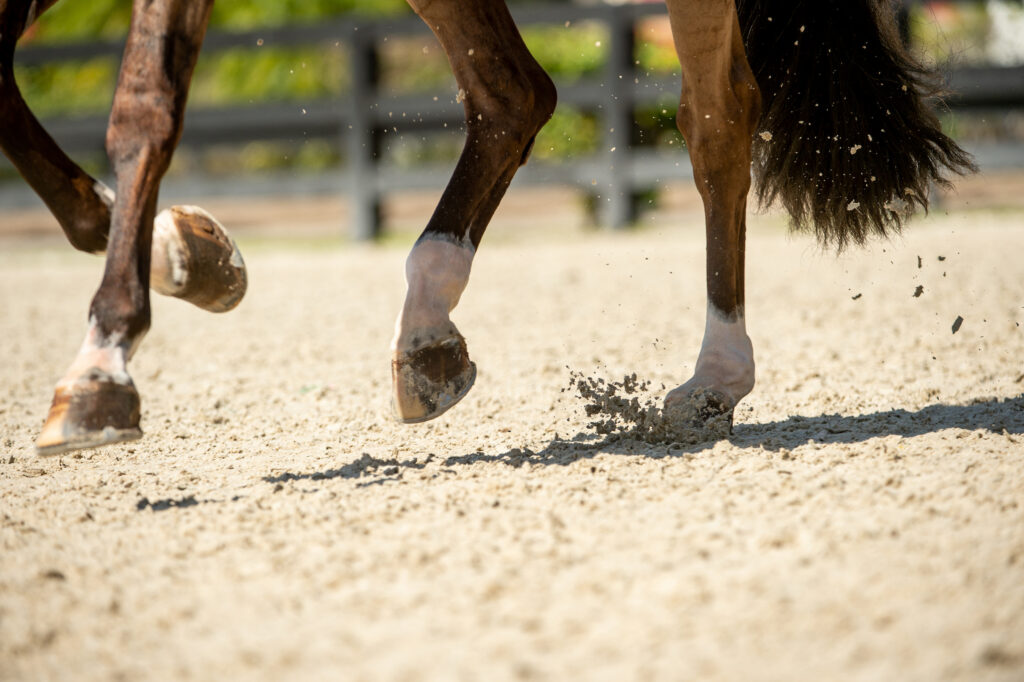
Every stride places force through the hoof capsule. In eventing, hunter and jumper horses, this includes impact forces on landing after a fence. In dressage horses, it involves sustained loading through collected movements.
To meet these demands, the hoof wall must be:
- Strong enough to resist cracking and deformation
- Elastic enough to absorb shock
- Consistent in growth to maintain balance and symmetry
These characteristics are directly influenced by the quality of hoof horn produced at the coronary band.
Nutritional Drivers of Hoof Strength
Hoof horn is composed primarily of keratin, a protein structure that depends on adequate nutrient availability. Three major nutritional categories play a role:
Amino Acids
Lysine, methionine and threonine are amino acids that are essential for protein synthesis. Methionine provides sulfur, which forms disulfide bonds that give keratin its structural strength. Without sufficient amino acids, hoof horn may be weaker and slower to grow, limiting the horse’s ability to maintain optimal hoof structure under training demands.
Trace Minerals
Copper and zinc are critical for enzymatic processes involved in keratin formation and connective tissue strength. Zinc supports keratinocyte proliferation, or the multiplication of keratinocytes, which are cells that help create a protective barrier. Also, copper contributes to the cross-linking of structural proteins. Imbalances or deficiencies in these minerals can result in reduced hoof strength and resilience.
Excess iron—common in many forage sources—can interfere with copper and zinc absorption, effectively limiting their availability even when dietary intake appears sufficient.
Vitamins
Biotin plays a role in keratin production and has been associated with improved hoof quality when provided consistently over time. Other vitamins, such as vitamin A and vitamin E, support cellular function and tissue integrity.
Common Nutritional Challenges in Sporthorses That Can Affect Hoof Quality
Despite carefully managed feeding programs, sporthorses often face subtle nutritional gaps:
- Forage variability leading to inconsistent mineral intake
- Underfeeding of fortified feeds due to calorie management
- High-iron forage interfering with trace mineral balance
- Increased nutrient demands due to workload
These factors can collectively impact hoof quality, even in otherwise well-managed horses.
Hoof Health: A Comprehensive Nutritional Approach
Rather than focusing on single nutrients, many sporthorse programs benefit from a comprehensive approach that addresses overall diet balance.
Omneity® is formulated as a complete vitamin and mineral supplement designed to:
- Correct common deficiencies in forage-based diets
- Provide organic trace minerals for improved absorption
- Supply essential amino acids to support keratin production
- Deliver biotin at effective levels for hoof development
By addressing multiple nutritional factors simultaneously, this approach supports consistent hoof growth and structural integrity.
When Advanced Support Is Required
In some cases, standard diet balancing may not be sufficient. Horses with persistent hoof issues, metabolic challenges or a history of laminitis may require more targeted support.
AminoTrace+ is an all-in-one balancer developed for horses with metabolic issues, poor hoof quality or higher demands related to training and recovery. It provides:
- Higher concentrations of copper and zinc
- Increased amino acid support
- Added nutrients to support metabolic health
- A low sugar and starch profile suitable for sensitive horses
This type of formulation is particularly relevant for horses where hoof quality hasn’t responded to conventional feeding strategies.
Timeframe for Hoof Health Improvement
One of the key considerations in managing hoof quality is time. Hoof growth averages approximately 5 to 10 millimeters per month.
As a result:
- Visible improvements may take several months
- Full hoof wall replacement can take close to a year
Consistency in nutrition is therefore essential to achieving meaningful results.
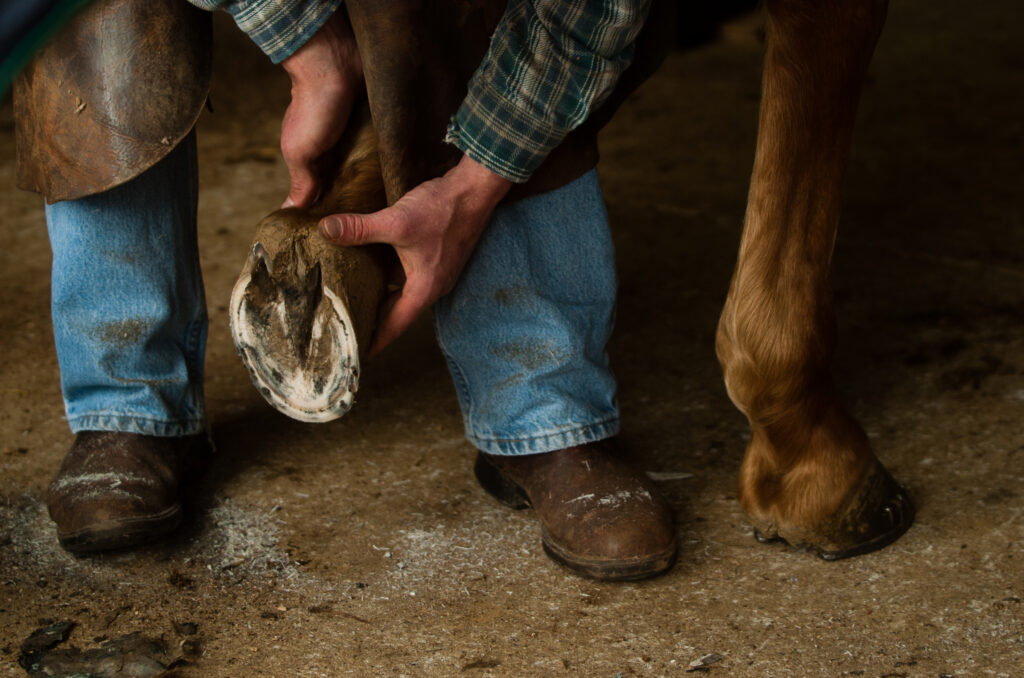
Integrating Nutrition Into Your Sporthorse’s Program
To optimize hoof quality, trainers and riders should consider:
- Evaluating the entire diet, including forage analysis where possible
- Ensuring adequate intake of trace minerals and amino acids
- Selecting a comprehensive supplement rather than layering multiple products
- Monitoring hoof growth and quality over time
- Coordinating with farriers to assess improvements
Conclusion
In equestrian sport, hoof quality is not an isolated factor—it is a direct reflection of the horse’s nutritional program. By prioritizing diet balance and providing consistent nutritional support, riders can improve hoof strength, enhance durability and support long-term performance outcomes. Ultimately, optimizing hoof health is not about quick fixes, but about building a foundation that allows your horse to perform at his best over time.
To learn more about Mad Barn, click here.
Learn more about sporthorse nutrition here.