




 Video
VideoYou’ve decided to bite the bullet and give the top of your horse’s tail the hourglass shape that you’ve seen big-time event horses sporting. Warning: This job is not for the faint of heart! One slip of the clippers and you’re in porcupine-tail territory. It takes months for a poorly shaped tail to grow out, so you’re going to want to get it right the first time. Just to be safe, I don’t recommend doing this immediately before a show.
A few additional cautions before you get started: If your horse has never had his tail clipped before, don’t do it alone. Instead of putting him on cross-ties, ask a friend to hold him. That way she can control any unexpected movements and give you a heads-up if he’s starting to look irritated. If you don’t know how your horse will react to clippers, take some time running them over his hindquarters, with the clippers turned on and the body part of them—not the blades—touching him, to get him accustomed to the noise and vibration. If he’s at all nervous—especially if there’s any chance of him kicking—ask a professional for help.
Regardless of your horse’s experience with this process, be sure to do it in a calm, quiet environment, where he won’t be bothered by distractions, like loud noises or flies.
Finally, after years of being warned to never stand directly behind a horse, you’re going to do exactly that. So be sure your horse is trustworthy—and stay on your toes.
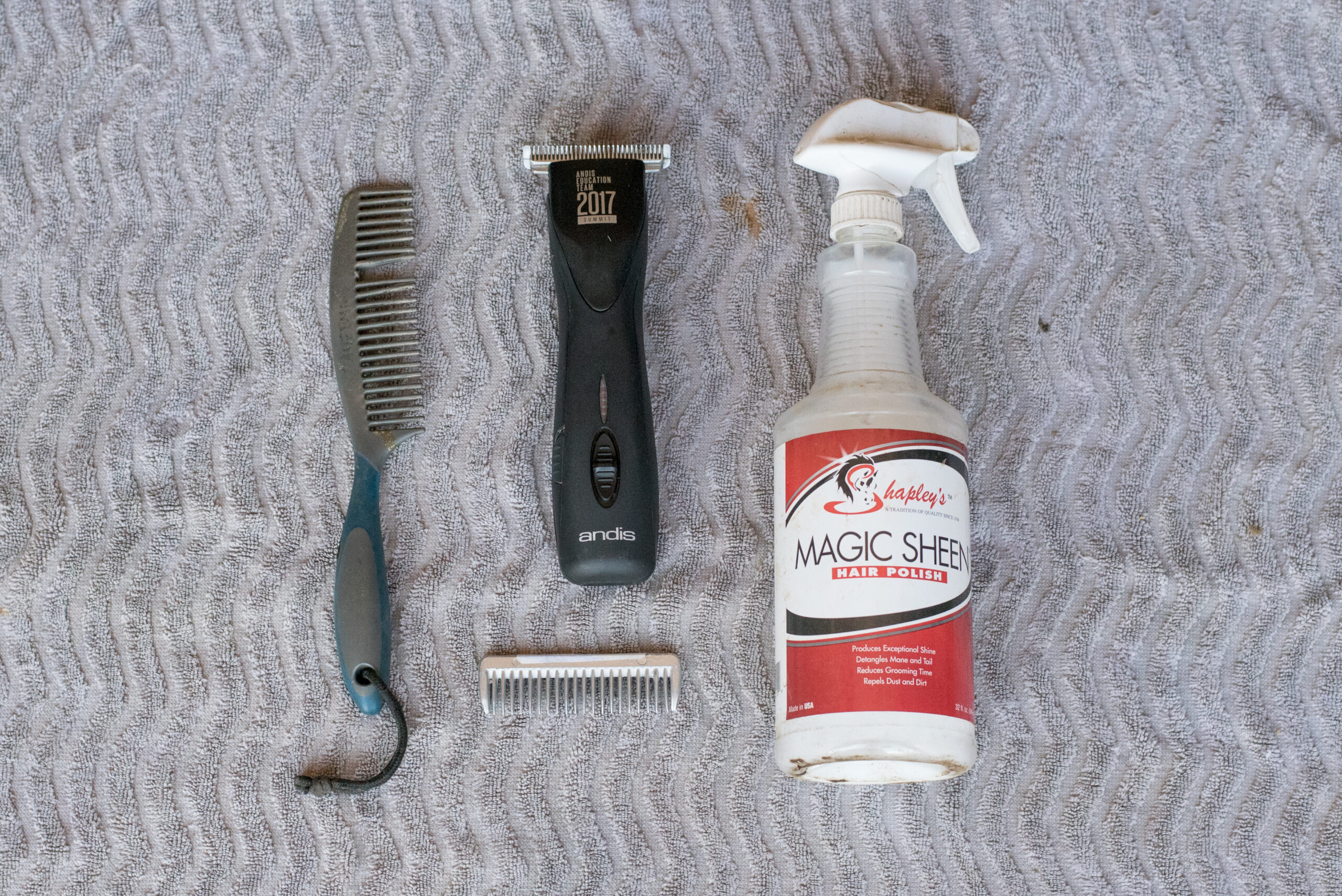
Pre-Planning:
Before you start clipping, be sure you have a really good image in your mind of how you want the final product to look. The goal of the hourglass shape is to accentuate the natural musculature of the hindquarters and the fullness of the bottom of the tail. The narrowest part of the hourglass should be where I’m pointing here, at the point of the buttocks—the rearmost point on the hamstring muscles. The bottom of the clipped hourglass shape should be about one hand width below that. From there, the rest of the tail should naturally open up into a nice, full shape, with no abrupt transition between the clipped top of the tail and the unclipped bottom part.
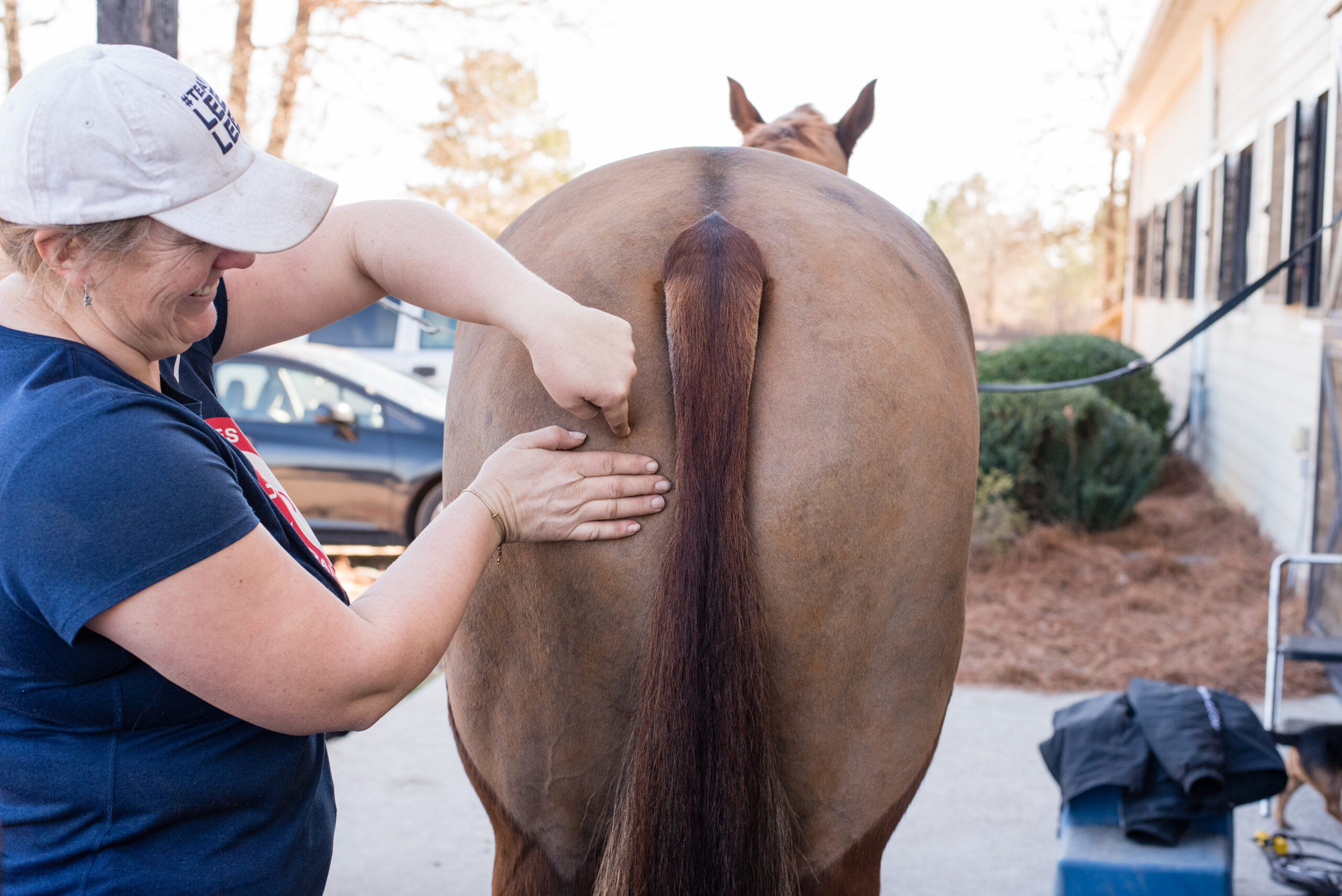
Most importantly, the only clipped hairs should be on the sides of the dock. Never clip the hairs on the front of the dock. When you stand directly behind your horse, you shouldn’t be able to see the clipped sides of his tail. Also be sure that none of the hairs you plan to clip are long hairs that contribute to the full, bottom part of the tail.
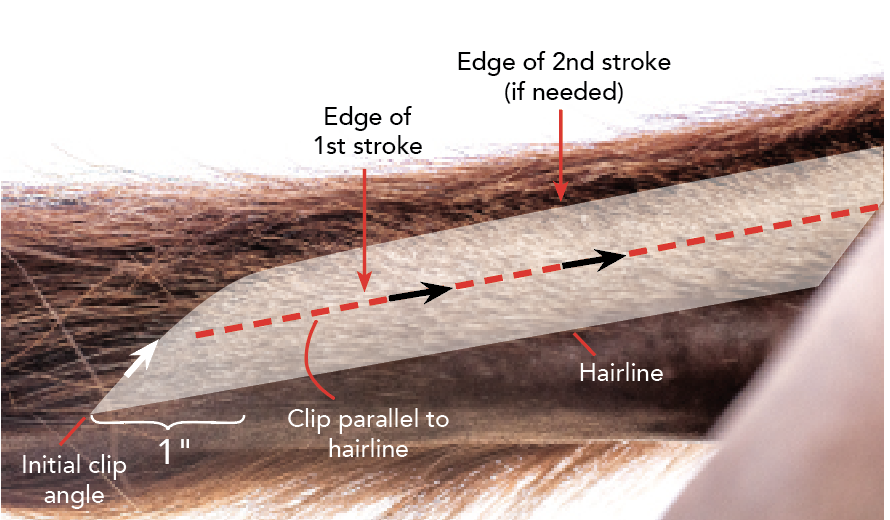
Your initial stroke of the clippers will start on the underside of the tail, at the bottom of the hourglass shape, as noted in the previous photo. You will follow an angled path of about 45 degrees, traveling up from the underside of the tail toward the side, for about one inch. Then turn the clippers parallel to the hairline and run them straight the rest of the way. If the hair is thick you may need to make a second stroke parallel to the first one.
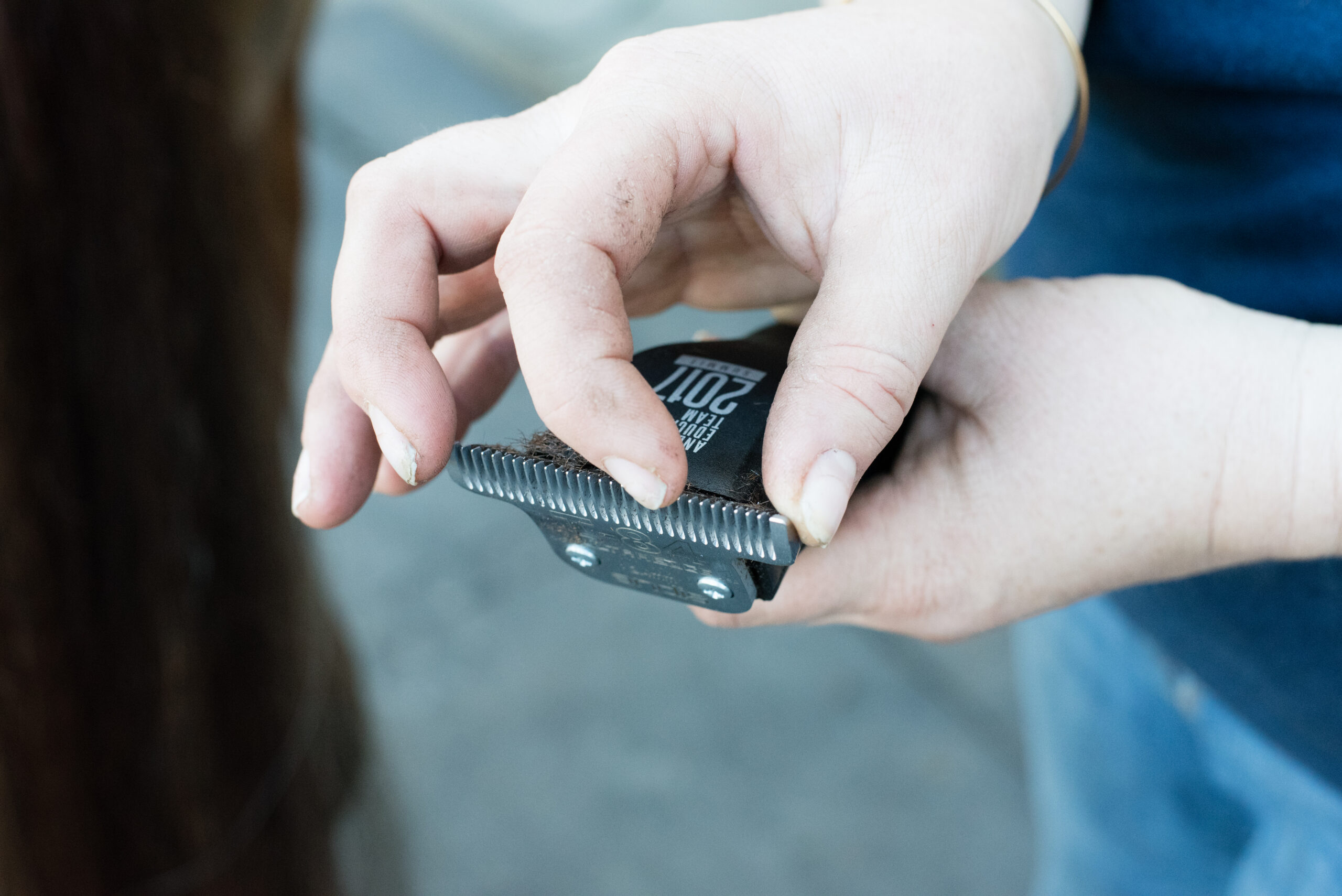
One last guideline before you get started: Use only about a third of the clipper blade (about half an inch) to cut the hairs with each stroke. When in doubt, always trim less—not more. It’s better to make additional strokes to touch up conservative cuts than to cut more than you intended.
Pro Tips:
If your horse has an especially full tail and doesn’t mind having his tail hairs pulled (beware: Some really do!), after you’ve finished clipping the hourglass shape, pull any longer hairs that aren’t lying smooth. Grasp just a few hairs at a time, wrap them around your comb and pull them out, just as you would pull mane hairs. Remember, less is more—so don’t overdo it.
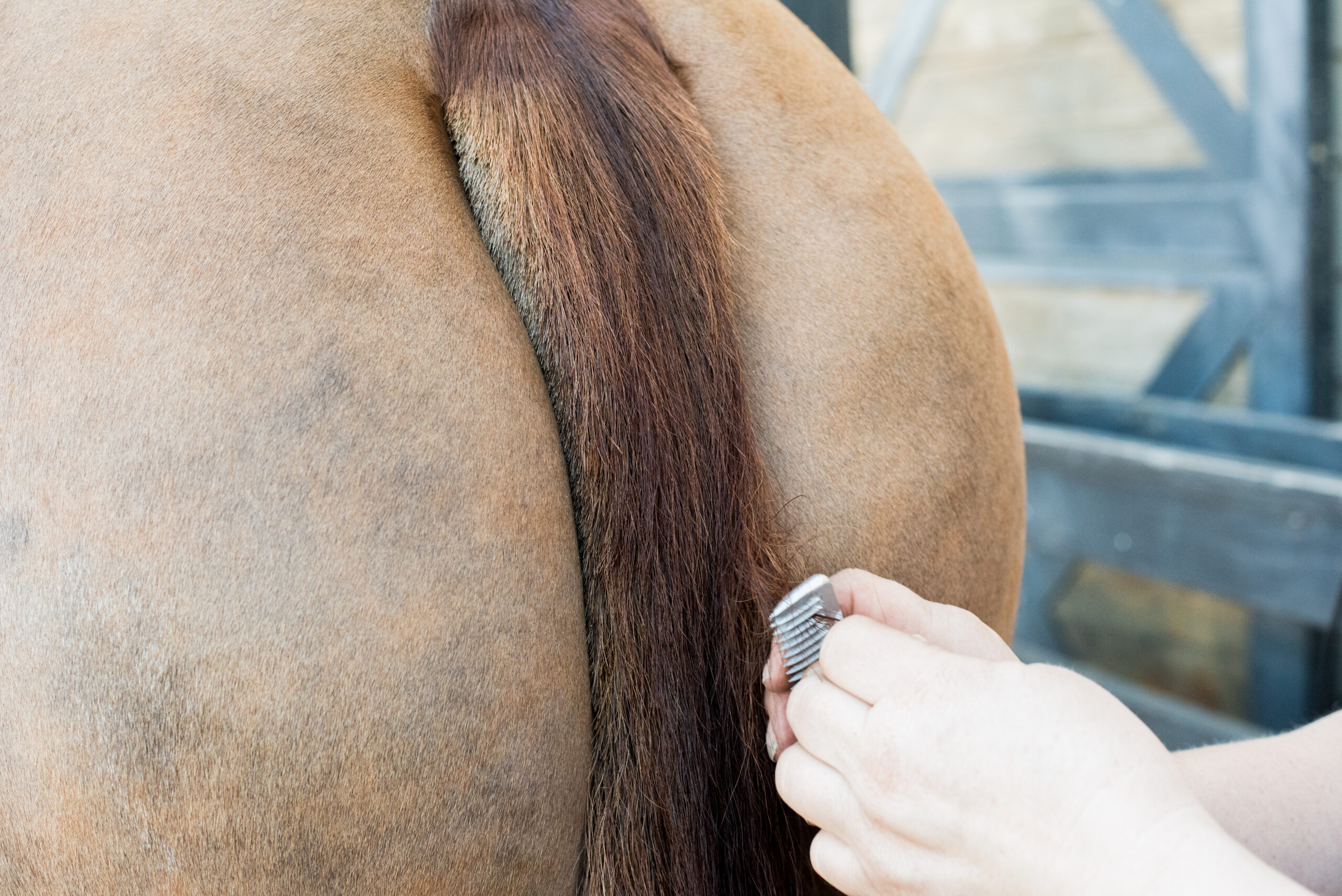
Alternatively, remove the clipper blade from the clippers and run it face-down over these errant hairs. The sharp edges between the teeth of the blade will cut the hairs shorter, creating a smoother look.
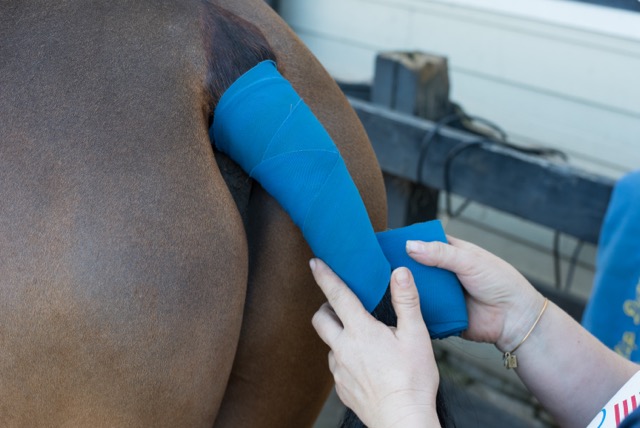
- Use a tail wrap to train the hairs to lie smooth. Before each grooming session, lightly dampen the hairs of the dock and then apply the tail wrap. Leave it on just for the duration of your grooming session, then remove it. With repetition, you’ll see the hairs begin to lie flatter. (Note: Never dampen the actual tail wrap or leave it on for extended periods of time. This could cause the tail hairs to fall out.)
- Add a little hair product (I like Shapley’s Mane Mousse) to the tail hairs before you wrap the tail.
About Emma Ford
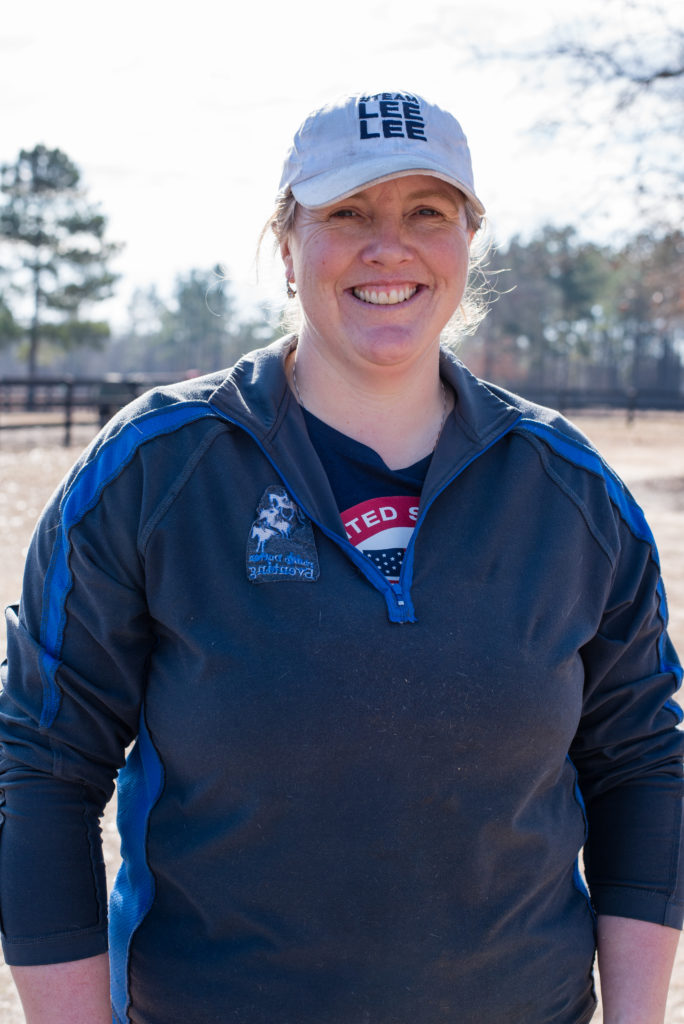
Emma Ford grew up in North Devon, England, riding in the Pony Club and in the hunt field with her father, who was a Master of Foxhounds. She jumped in Great Britain’s famous Horse of the Year Show in 1991 before graduating from the University of Wales and moving to the United States to groom professionally for four-star eventer Adrienne Iorio for seven years. In 2005, Ford accepted a new position managing Olympian Phillip Dutton’s True Prospect Farm in West Grove, Pennsylvania. Since then, she has groomed at multiple Olympics, World Equestrian Games and Pan American Games. She was named the U.S. Eventing Association’s Professional Groom of the Year in 2007 and was awarded the Professional Riders Organization Liz Cochran Memorial Groom’s Award in 2012. Ford and Cat Hill co-authored the book World-Class Grooming for Horses and teach in-depth grooming and horse-care clinics around the country. For more information, go to WorldClassGrooming.com.
Thanks to Dechra for our coverage of the 2026 Defender Kentucky Three-Day Event. It includes lead-up events, rider interviews, competition reports, horse spotlights, photos, videos and more!
For More:
Read more about our coverage of the 2026 Defender Kentucky Three-Day Event here.
This article was originally published in the Spring 2019 issue of Practical Horseman.