




 Video
VideoLast year was shaping up to be the best of Cathleen Driscoll’s career.
She was picking up strong results with three horses on the international show jumping circuit, and after a strong Florida winter season, she headed to Europe to compete on CSI3* Nations Cup teams for the United States in Denmark and Norway. Driscoll was on year seven of riding for Katie and Henri Prudent at Plain Bay Farm in Middleburg, Virginia, a job she’d gotten after winning the 2018 USHJA Emerging Athletes Program National Training Session.
But it all came crashing down when Driscoll and one of her top rides, Idalgo, fell at the first fence in the jump-off of a CSIO3* grand prix in Deauville, France, on June 22, 2025.
Driscoll, 33, has no memory of the moment she and Idalgo fell, or of anything else for two weeks after the accident, which left her in an induced coma in the intensive care unit at a hospital in Caen, France. She’d landed on her side, hit her head and began seizing. Idalgo was not injured in the fall.
When she woke from the coma after two weeks, Driscoll was paralyzed in her right leg and left arm. Doctors told her she had four bleeds in the frontal lobe of her brain—three on the left side and one on the right side. She’d fallen at full speed into the ground when Idalgo hit the jump standard.
Once she was stable enough, Driscoll was flown to the U.S., where she was admitted to Atlanta’s Shepherd Center, one of the top facilities for brain injuries. There she began months of rehab, learning to walk and talk again.
Driscoll’s barn manager and close friend Meghan Doyle was in France and saw the accident. She described a surreal few months where she was Driscoll’s caretaker in France and then at the Shepherd Center, wondering if her friend would wake up, and if so, how her life would be changed. But Doyle also knows Driscoll is a fighter.
“The horses and riding, whether it’s riding or teaching or training, I mean, this is her life,” Doyle says. “There is no other option, and all of the odds were against her. There is no reason medically that she should be able to do the things that she’s doing, but I think mindset was a huge part of it. You tell yourself you’re going to do something, and you do it.”
“There was just no thought in her mind that she was not going to be able to ride again, and I genuinely think that is what got her through it—that mindset,” she adds.
Driscoll said the odds of waking up after her type of brain injury are not well-documented, so it was a wait-and-see situation. The likelihood of her riding again, let alone competing again, was low.
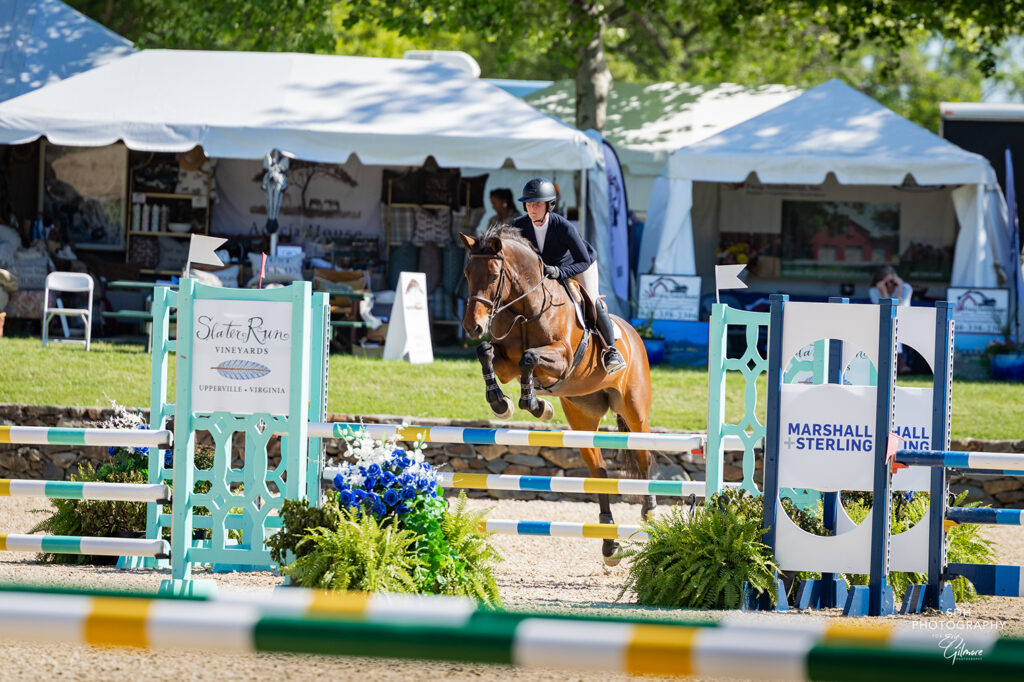
But in early June, Driscoll beat those odds, stepping into the arena at the Upperville Colt & Horse Show in Virginia aboard two horses—Sharon Gordon’s Orange Crush and Feeling d’Argenteuil—in the 1.0-meter jumpers.
A local trainer friend, Melinda Cohen, helped connect Driscoll with the horses. They both show in the amateur jumpers with Gordon, and Cohen knew they could provide a safe way for Driscoll to show again.
“It felt super, and I will say from the very beginning, one of the few things that I didn’t lose in all of this, and that hasn’t changed, is my feel over the jump is still the same,” Driscoll says. “That feels really natural and really good, so I’ve been kind of waiting on all the other pieces to come together. But to be in the ring and be jumping, it feels natural.”
Slow and Steady Recovery
Doyle, who had seen her friend through some other smaller injuries over the years, like a torn ACL, was with Driscoll in Atlanta. She described Driscoll as very determined through those other setbacks, but she felt she wasn’t fully grasping how serious her brain injury was during those first few weeks.
“As soon as she was lucid, every day she made small improvements,” Doyle says. “To be able to stand and build endurance—every day there was a step forward. I thought, ‘Oh my God, she’s going to come back, and it’s going to be no problem. We’re going to move on,’ and there was just no other thought in our minds that it wouldn’t be like that.”
Driscoll had to relearn how to do everything, from holding a pencil and a fork to writing and walking. She spent all of July inpatient and most of August outpatient before she went home. She had eight hours a day of speech therapy, physical therapy and vision therapy, as she was having issues with double vision, daily. None of it deterred her.
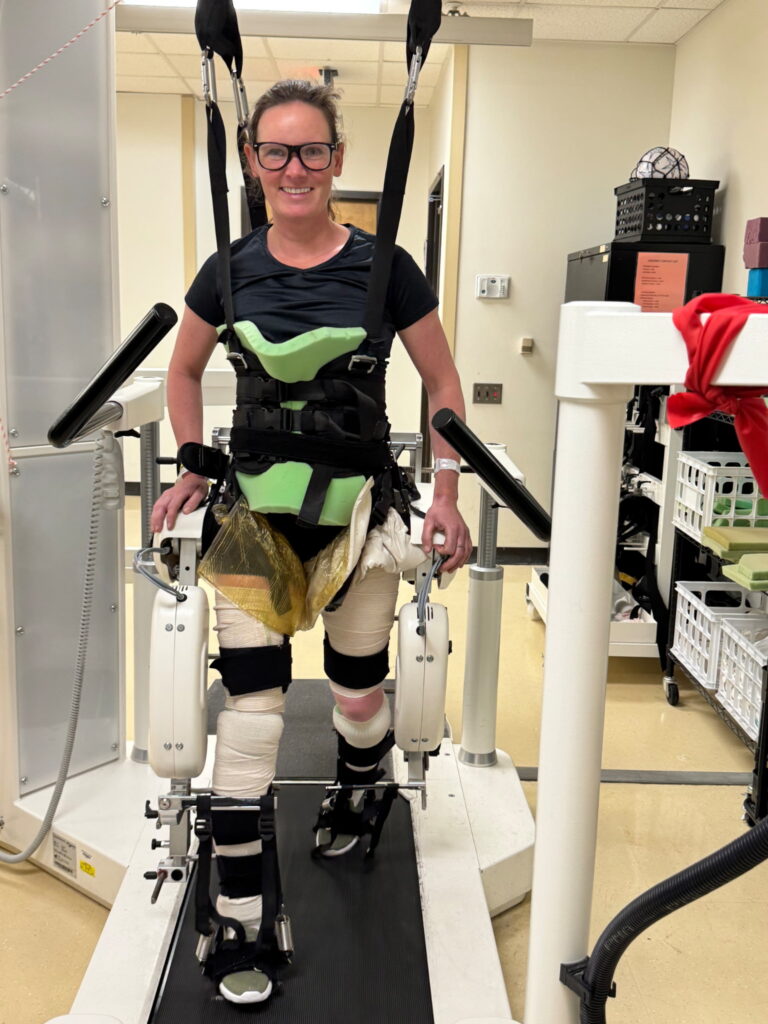
“I always felt in the very beginning that it would be fine, that I’d be able to walk again, that I would return to normal in time,” she says.
She connected with an equine therapeutic riding center near Shepherd in August. Her doctors were cautious about allowing her to start riding, and she took her time learning how to get on again. Once in the saddle, she was led around. By the end of the month, she went home and felt well enough to travel with the barn to a show in Traverse City, Michigan, where she was on the ground. She credits her barn family with the support and overseeing her progress as she eventually started flatting quiet horses at home.
“My trainers and my friends were super involved from the very beginning, and they were helping me every step of the way and trying to be as involved and as included as they could be,” she says.
Over the winter, Driscoll worked hard to start jumping again. The double vision was the biggest obstacle.
“At the end of last year, I was doing rails on the ground and little jumps, and I could not see a distance at all, like my eyes just did not work together,” she says. “As that came back and got better, there was kind of a moment where, all of a sudden, I was like, ‘I can do this again,’ like, ‘I can see a distance, and I can judge where I’m at in the lines,’ so that was kind of the moment I was waiting for to really start to jump more and get back in the ring and get showing.”
A New Chapter
Driscoll had always dreamed of having her own business, and while her brain injury was a bump in the road and changed the trajectory of her career, it also opened a door to allow her to go out on her own in the Middleburg area in April. Doyle came with her as barn manager, as did her groom at Plain Bay, Emma Price.
The prognosis from her doctors is cautiously optimistic, and she’ll need to try to avoid another serious head injury, so she’s skipping riding any young, rogue horses. “If I hit my head again, the injury could be worse, so that is always a little bit in the back of my mind, but I think going forward, the worst of it is done, hopefully,” she says.
Driscoll’s working to build a string of jumpers, including a 9-year-old who is ready for the 1.40s. She’s also enjoyed teaching more, which she hadn’t done as much of at Plain Bay.
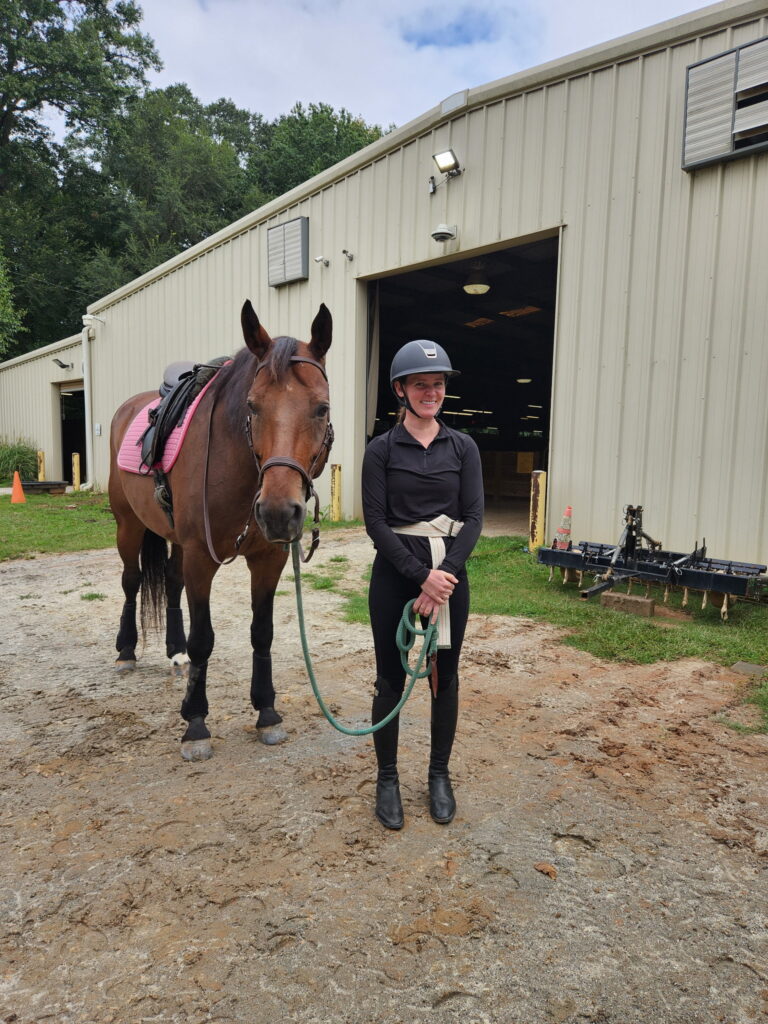
“I’m starting from the ground up, so I’m having to rebuild my string of horses, and that will take a moment, but I’m looking forward to hopefully soon being able to jump grand prix and get back into FEI competition, hopefully by next year,” she says. “I’m trying to see things from a bigger picture and look down the road.”
Doyle jokes that she’s not sure she’ll be able to watch Driscoll compete now because she gets so nervous, but she’s thrilled to see her friend back where she belongs. Thinking back on that afternoon at Upperville, she remembers sitting with Price, first excited but then frozen as Driscoll entered the ring.
“I got so nervous when they announced her name in the ring; it was like everyone paused, and everyone was watching, because we didn’t really advertise that she was going to be showing,” Doyle remembers. “I think people just heard her name in the ring, and all of a sudden, as soon as she finished her round, I looked around and everyone was there.
“The woman that helped arrange the flight [to the U.S.] happened to be there by the ring,” she continues. “There were a lot of trainers that Cathleen is friends with. Katie [Prudent] was there and saw the round, and it was just so much joy and excitement that she was back, and she looks like how she did. Katie gave her a big hug, and it was just like, I don’t know how to describe it, it’s like we’re over the hump now.”