




 Video
VideoWhen the U.S. Department of Agriculture confirmed New World Screwworm in a Texas calf on June 3, it marked the parasite’s return to U.S. soil for the first time in about a decade—with additional cases reported in that state and New Mexico shortly after. The USDA is maintaining a dashboard of case locations and dates.
The U.S. Equestrian Federation was monitoring the threat before it crossed the border, and the organization has since been sharing updated guidance for horse owners and show managers.
The afternoon of June 18, USEF hosted a webinar, led by Katie Flynn, BVMS, USEF senior staff veterinarian for equine health and biosecurity, and Neil Gray, DVM, a sporthorse practitioner with experience treating screwworm, to present additional information and answer questions. Before the webinar, the organization also released a guidance document addressing common concerns about the outbreak.
In both the webinar and the document, the message was similar: This deserves your attention.
“Control and eradication is challenging, and there’s a significant economic impact,” says Flynn.
“Screwworm infestations can be aggressive and, if left untreated, can kill an animal,” states the USEF’s guidance document. “Screwworm flies do not discriminate hosts based on species. This outbreak is particularly concerning because it can impact any animal or human.”
That said, don’t panic. What matters most as the outbreak unfolds is staying informed, being prepared and responding quickly if you spot any signs.
Some Screwworm Facts
Despite the name, screwworms aren’t worms at all. They are parasitic flies capable of infecting any warm-blooded mammal.
Female flies deposit eggs on wounds or superficial body cavities, such as on a horse’s sheath, eyes, lips or nose (though Gray noted flies are less likely to lay their eggs in areas with no blood present). Those eggs hatch within 24 hours. The larvae then feed on the host animal’s tissue for about five to seven days before they drop off as pupae and eventually become flies—starting the cycle over.
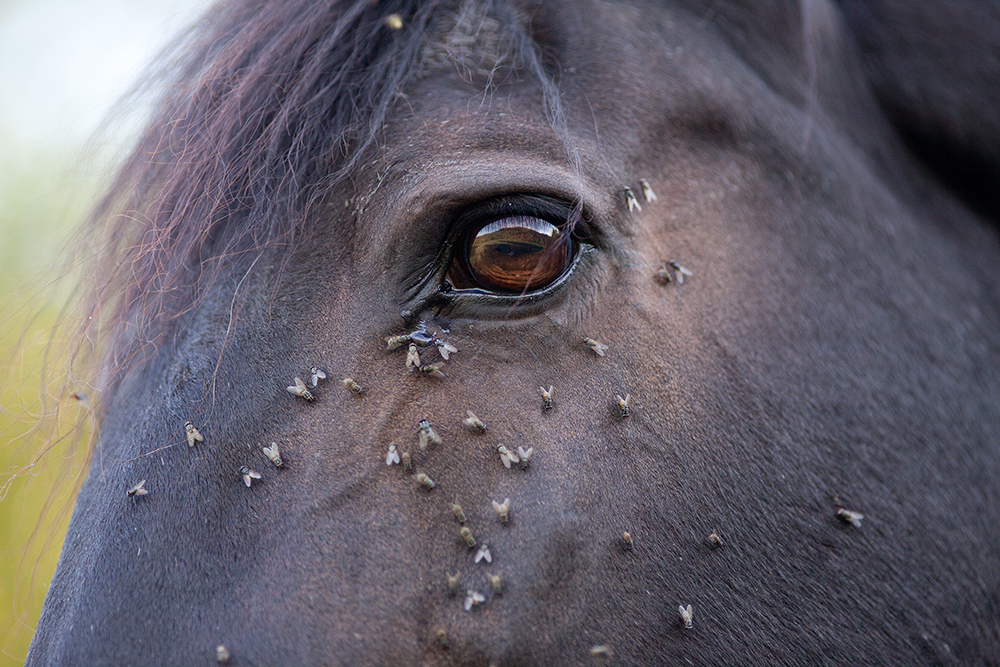
“The larvae are what actually become the parasitic part, and they eat living tissue,” says Flynn. “They burrow down into living tissue. That screw movement is why they get their name as a screwworm.”
Early detection of screwworm is critical; untreated wounds can quickly develop multiple infestations, complicating the horse’s recovery and risking further spread. See photos of screwworms here.
“Larvae of screwworm flies are visible to the naked eye, though eggs are difficult to see,” states the USEF document. “You may see small, white maggots in an open wound.”
Monitor your horses and any other pets for any wounds or scratches, and even if a wound is small, make sure it’s cleaned and protected as soon as possible.
“It’s important to remember, these wounds may not be obvious,” Gray says. “Even, as Katie said, a wound as small as a tick bite can attract the flies, so it’s important to inspect your horses thoroughly if you’re in an infested area, including under the tails and in the sheaths of your male horses.
“What you’re looking for is a horse that’s got a wound that’s more irritated than you’d expect to see on your horse normally, potentially a foul-smelling wound, and even though it says large wound [on this slide], again, it doesn’t have to start as a large wound,” adds Gray.
Taking Action
If you see larvae or are concerned about any wound on your horse or another animal, contact your veterinarian immediately. Your vet will help you develop the best treatment plan, which will likely include first cleaning the wound thoroughly, removing and destroying all flies and maggots—which may be done surgically if the wound is advanced enough—applying a larvicidal wound spray, and then, if a wound is infected, starting the horse on systemic antibiotics.
Screwworms can kill horses, though if caught early, successful treatment is likely.
“Depending on where the wound is located, because the larvae are not discriminate in what they eat, you can have walls of arteries ruptured, so you can get severe bleeding from that. It can potentially be fatal,” says Gray. “In the case of [a mare with a large hock wound discussed during the webinar], if that wound would have extended into the joint, that would be an infection that would be extremely difficult, if not potentially impossible, to eliminate.
“Then I’ve had cases where the animals were just so severely anemic from the amount of tissue and blood loss that the screwworm larvae were causing that that was also what the horse may have died from,” he adds. “They’re just not discriminate enough to avoid killing the animal, if things go that far.”
Early detection and treatment are crucial to either prevent screwworm infestation entirely or to end it before it harms the horse—or can spread.
“Eyes on your animals,” says Flynn. “Just check your animals every day. Inspect them for wounds. As Neil mentioned, any foul odor, or you start seeing those maggots, those need to be reported to your veterinarian immediately to determine what’s going on.”
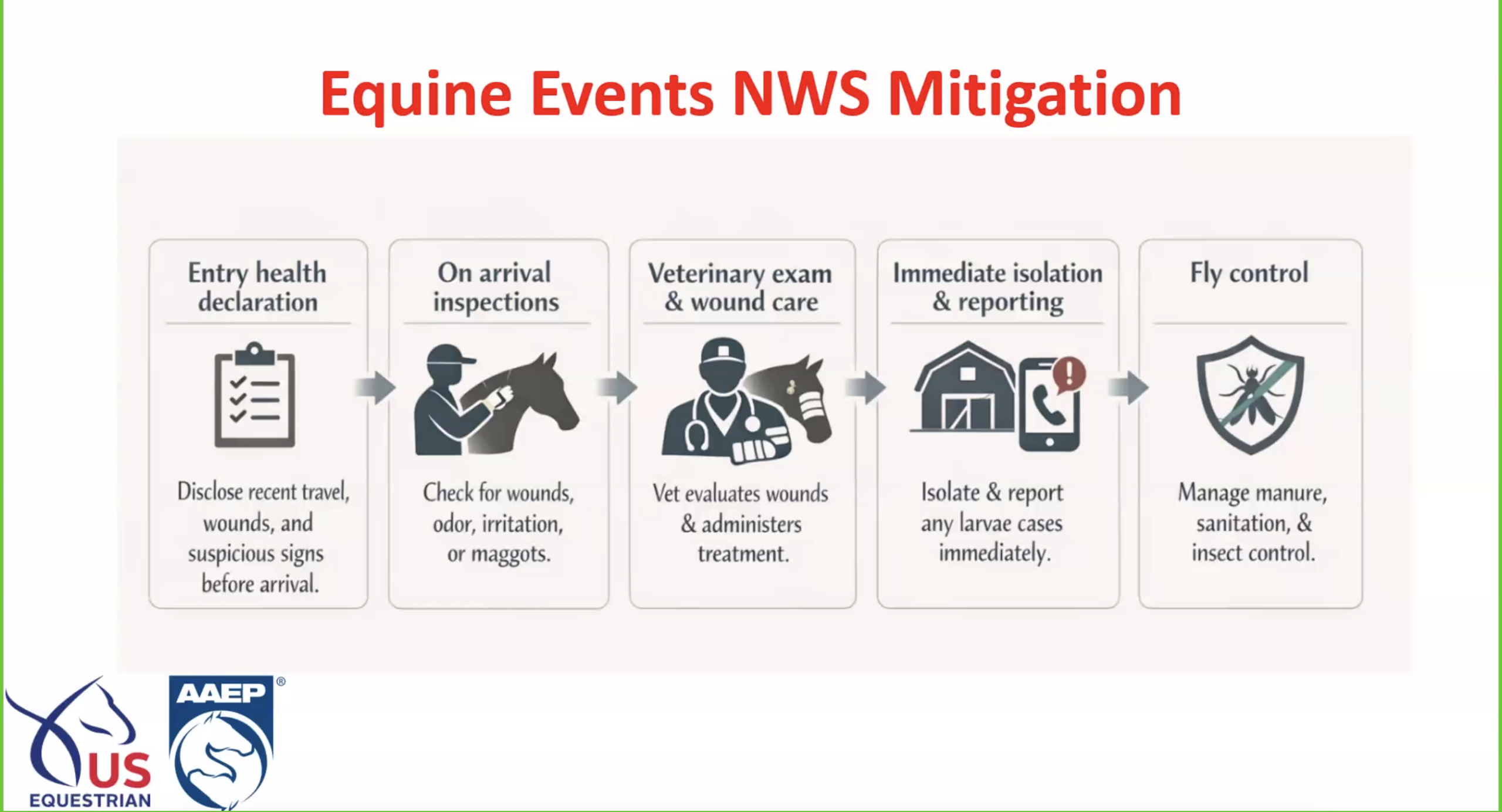
If screwworm is confirmed, your veterinarian will report the case to the necessary authorities.
“Remember, this is a foreign animal disease, a foreign pest, and it is under the control of state and federal authorities,” says Flynn. “Treatment has to be in accordance with your private veterinarian and the state and federal animal health officials with their recommendations.”
The Cases
Currently, there are six screwworm-infested counties in Texas and one in New Mexico.
“It’s an evolving situation,” says Flynn. “It may change [Friday], or it may change at 6 o’clock [Thursday evening], when they update the [USDA] web page and dashboard.”
Once a screwworm case is identified, the area where that animal lives becomes a quarantine premises, with a 20-kilometer zone (or approximately 12.4 miles) around it.
“It’s called the ‘infested area’ or the ‘infested zone’ around that premises, and that is where the restricted movements are coming from,” Flynn says. “All animals in that area are restricted. They can still move but under restriction.”
Once infested zones are identified, sterile male flies—which mate with the female flies, who then produce unfertilized eggs and disrupt the life cycle—are released in those areas as part of the USDA response. This strategy has been effective in ending past outbreaks of screwworm.
“Sterile flies have been released in huge quantities in Mexico and near the border,” states the USEF guide. “Reporting a case of screwworm infestation helps authorities know where they need to schedule a new release and helps protect horses in the area.”
According to Flynn, in Mexico, between September 2025 and June 15 of this year, there have been 4,016 cases (269 of which were in horses) within 400 miles of the U.S. border.
“When you look at total number of cases, horses are a small percentage of those cases,” says Flynn. “The majority of cases are going to be in cattle, then dogs [are the next highest number of cases].”
Travel Restrictions and Guidelines
Due to this screwworm outbreak, all animal exports from the U.S. are blocked from going into Mexico, except for dogs under certain protocols.
“All other species are unable to cross the Mexico border into Mexico,” says Flynn. “Additionally, the United States has closed the border for animals coming from Mexico. Horses can only fly from Mexico into the U.S. through the import centers of Miami, New York or Los Angeles.”
In addition, horses coming from Texas or New Mexico are not allowed to travel to Canada currently. They must first spend 21 days in another state.
Some U.S. states are still putting together their own protocols as the situation unfolds. But once a premises has a confirmed case of New World Screwworm, quarantine and movement controls are implemented, as well as additional surveillance on the property and in the zone.
“We’re not saying animals can’t move; there are just control requirements for their movements,” says Flynn.
So what does this mean for horse shows? As Flynn notes, the situation is likely to change quickly if new cases are identified—and veterinarians and experts are expecting to see additional cases.
“It’s important to understand that your event plans and travel plans need to be flexible, because they may be disrupted,” says Flynn. “There may be rules and regulations by the states that won’t allow events or sales or shows in certain areas that have high infestations. It’s important to check with the state of origin, state of destination, and to know what’s going on in that area.”
Prevention Possibilities
The best way to prevent the parasite altogether is through fly control; sprays, fly sheets, and other physical barriers can all help, as can managing manure and standing water.
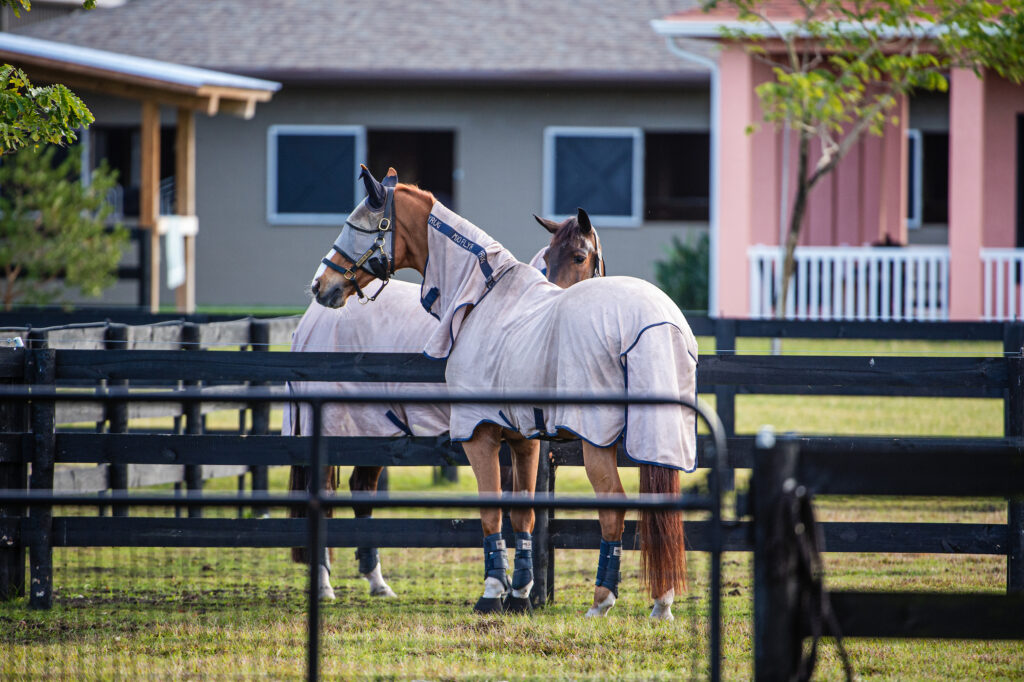
If you’re in or near an infested area, delay any non-urgent procedures and inspect stalls and fences for potential hazards with the goal of preventing as many wounds as possible.
“Really paying attention to what’s going on is critical. It’s here but don’t panic,” says Flynn. “You need to take action though. The quicker the action, the quicker the control, and the quicker we’re going to stop New World Screwworm.”
Visit usef.org/screwworm for continued updates.