



 Video
VideoChristine from work left you a voicemail, Steve sent a text about rescheduling your daughter’s piano lesson, your brother emailed you about dinner on Saturday and Alice commented on your new profile picture on Facebook. But you don’t know any of that because you’re with your horse, and your phone is the furthest thing from your mind (turned off, in the car, in your tack trunk, on airplane mode or at home). Bravo! You have successfully navigated a significant challenge to maintaining a clear focus on your horse and your ride in this day and age.
Does this actually sound like you? Or did some of those calls, texts or posts manage to get through as you were tacking up, leaving your mind jumbled and your attention split as you started your lesson?
When working with horses, it’s crucial that you remain present and focused to stay safe, make progress and develop a more meaningful partnership with your horse. Here, I’ll share an inspiring story about one rider who successfully ditched her phone while riding and competing and provide practical methods to help you control your phone time at the barn.
Taylor St. Jacques’ Sans-Phone Strategy Pays Off
In 2017, junior hunter and equitation star Taylor St. Jacques made a big splash at the Devon Horse Show by winning all four of her sections in the ASPCA Maclay, USEF Medal, WIHS and USET Talent Search medals as well as winning the prestigious Ronnie Mutch Championship. Obviously, there are many ingredients that contribute to that sort of championship performance, such as great talent, a wonderful horse and top training.
But for Devon, Taylor added a new element to her preparation routine. Her strategy was part of trainer Andre Dignelli and her mom’s desire to reduce distractions and help her stay more focused throughout the competition.

“My daily routine was to arrive at the show around 4:30 a.m. and be on at 5 or 5:30. As soon as I got there I would put my phone in the bottom of my tack trunk with stuff on top of it, so I was never tempted to go near it,” she said. “I wouldn’t touch it until I was walking back to my car to leave for the day.”
Taylor was pleasantly surprised by just how much it helped her focus. “I wasn’t worried about what was going on with my phone, who to talk to, social media, all of that. Usually I’m not that dedicated to focusing because I think, ‘Oh, maybe my trainer needs to get a hold of me’ and stuff like that, but Devon is such a small showgrounds that everyone knows how get a hold of each other,” she said. “I honestly have never felt so focused in my life. I had nothing to distract me. It was the first time I’ve ever done that and obviously it paid off.”
Taylor noted that she would definitely be using this strategy again in the future. True to her word, she used her sans-phone plan again to win the 2017 Hunterdon Cup and was named the 3-foot-6 Overall Grand Champion at the USEF Junior Hunter National Championships East.
Best Barn Phone-Management Practices
It’s possible that your phone has been distracting you and sapping your good-quality energy at the barn without you even realizing it. For example, you’re about bridle your horse and your phone alerts you to an incoming text. You look down and your attention is immediately absorbed in some other aspect of your life—you momentarily forget how important it is for you to be aware of your horse and surroundings.
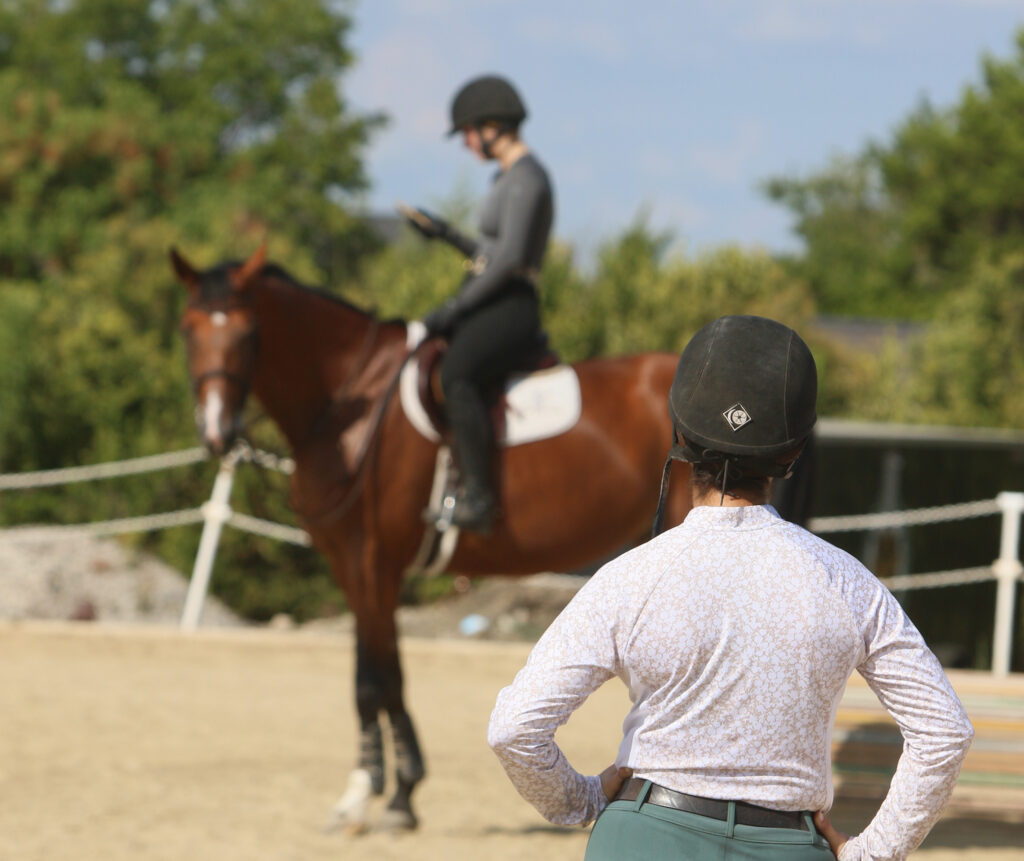
If you would like to create some positive change, here are some fresh ideas about how to keep your phone usage under control at the barn:
1. Create a phone routine: Stuffing your phone in the pocket of your breeches is a routine. It may not be a conscious (or an ideal) routine, but nevertheless it is one. Therefore, if you would like to rein in your phone usage at the barn, it’s useful to brainstorm a new, realistic phone routine. For example, can you make it a habit to leave your phone in the car? Or put it in your tack trunk before you greet your horse? Or, if you want to keep it on you for emergencies, turn off all notifications. Commit to a set amount of time, like a week or two, to experiment with a different behavior pattern.
2. Replacement solutions: Brainstorming alternative solutions to some of your phone’s functions (and your internal justifications) ahead of time will help you control your phone. For example, do you need to time your trot sets? Wear a watch. Worried about missing an important call? Record a content-specific voicemail message and/or create a default away response for texts. Want to take a picture or video? Try creating specific times and places to do so or even enlist friends who aren’t riding at that time for help.
3. Track communication threads: When you’re in the middle of exchanges on email or text, it can feel like you have unfinished business and you need a way to effectively disconnect. Experiment with jotting down the names of contacts you’re engaged with and/or details you need to communicate with a pen and paper or a whiteboard in your trunk to help you step away from the communication stream without losing your place. Once you trust that you won’t forget an important response or message, you’ll feel more calm and centered and able to walk away from your phone.
4. Manage social media habits: Here’s the thing, social media is a fun way to stay in touch with friends, but the potential downsides are significant when it comes to getting ready to ride. When striving for focus, the last thing you want is to be distracted from the present moment, comparing yourself to others or passively scrolling through tons of edited life stories. When you’re heading to the barn, there are some simple steps you can take to reduce the temptation to scroll feeds, including turning off notifications, deleting the applications for the morning (or day or weekend at the show) and/or placing your phone on airplane mode if you need to keep it with you.
Key Takeaway
Your phone creates incredible opportunities for streamlining your daily tasks and increasing your efficiency in today’s world. However, make no mistake, riding and communicating with your horse are not on that list. When it compromises your mindfulness, mental strength and peace of mind, it becomes a threat that requires careful handling. In the weeks ahead, be extra conscious of how you blend your phone into your riding routine—your horse will appreciate your undivided attention!
About Tonya Johnston, MA
An equestrian mental-skills coach and A-Circuit competitor, Tonya Johnston has a master’s degree in sports psychology and is the author of Inside Your Ride: Mental Skills for Being Happy and Successful With Your Horse. To learn more about her, click here.
This article was originally published in the November 2017 issue of Practical Horseman.