




 Video
VideoJust a few days after Practical Horseman returned from covering Boyd and Silva Martin’s Windurra Camp, Boyd and Cooley Nutcracker were named to the U.S. Eventing Team for the FEI Eventing World Championships in Aachen, Germany, this August.
During the three days of action-packed education, one-on-one instruction and riding demonstrations, we not only got to meet and dole out carrots to Cooley Nutcracker, but we also had the opportunity to sit in on show-jumping and cross-country lessons with the 12-year-old Irish Sport Horse gelding, Liz Halliday’s former mount and partner for the 2024 Paris Olympics.
Both four-time Olympian Boyd and Olympic gold medalist and top show jumping coach Peter Wylde rode “Bali,” as he’s known in the barn, for a group of about 70 riders and auditors from around the country who had gathered at Boyd and Silva’s 75-acre farm in Cochranville, Pennsylvania, for the couple’s third annual Windurra Camp.
Throughout the demonstrations, they shared the key skills they’ve been working on since Boyd and Bali’s CCI5*-L debut together at Pau in 2025 where they finished in third and their experience at the 2026 Defender Kentucky Three-Day Event, where the pair finished 11th.
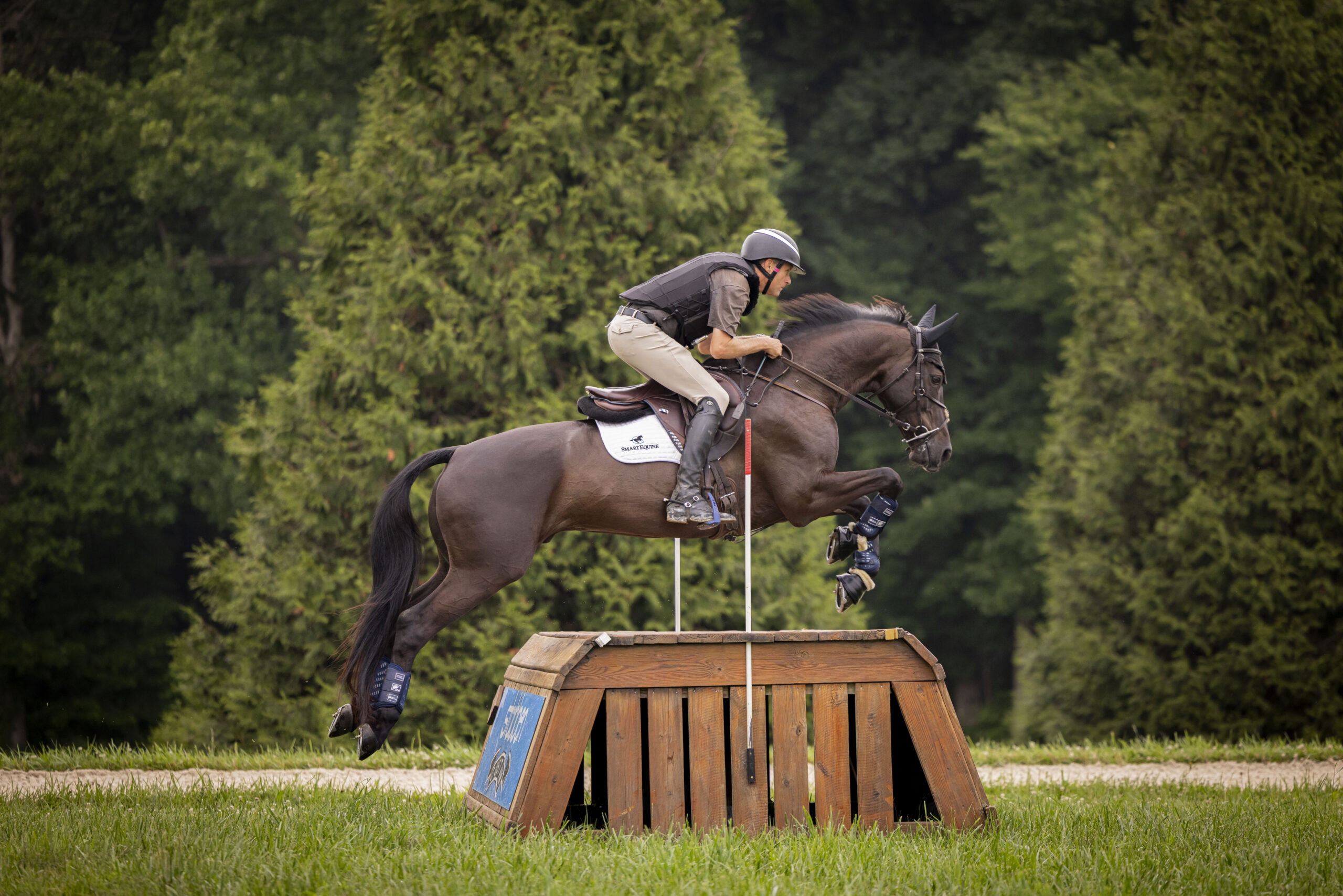
Wylde first met Bali when Halliday purchased him as a 7-year-old and said the gelding is one of his all-time favorite eventing horses to train and ride. “He’s very spicy, he’s very horse shy, he’s quirky and weird, but he’s unbelievably talented,” Wylde said. “He truly is one of the most talented horses Boyd and I have ever worked with as a team.”
Here, we give you a behind-the-scenes’ peek at the Windurra Camp lessons with Bali and share the main insights Boyd and Wylde discussed about their strategy going into Aachen. We hope you can use some of these two Olympians’ tops tips to improve in show jumping and cross country with your own partner.
Bali’s Show-Jumping Flatwork
In addition to serving as Windurra Camp’s show-jumping instructor, Wylde is also Boyd’s jumping coach and has been working with Bali to sharpen up his skills. As Wylde warmed up Bali on the flat, Boyd explained to campers that Halliday had fully apprised him of the gelding’s many quirks before he took on the ride.
“From what we understand, he was just kind of born that way. A French rider named Astier Nicolas rode him before Liz and said that even as very young horse he was just a nervous sort of guy,” Boyd said. “Sometimes it can be a reflection of if they had a bit of a fright as a young horse or maybe he was just rushed as a youngster.”
Boyd stressed the importance of figuring out how your horse best warms up for show jumping and noted that this is especially true for competition. After they’ve run cross country, you have to change their jumping mindset. For Bali’s warm-up, Boyd and Wylde have found it essential to get him very round and soft.
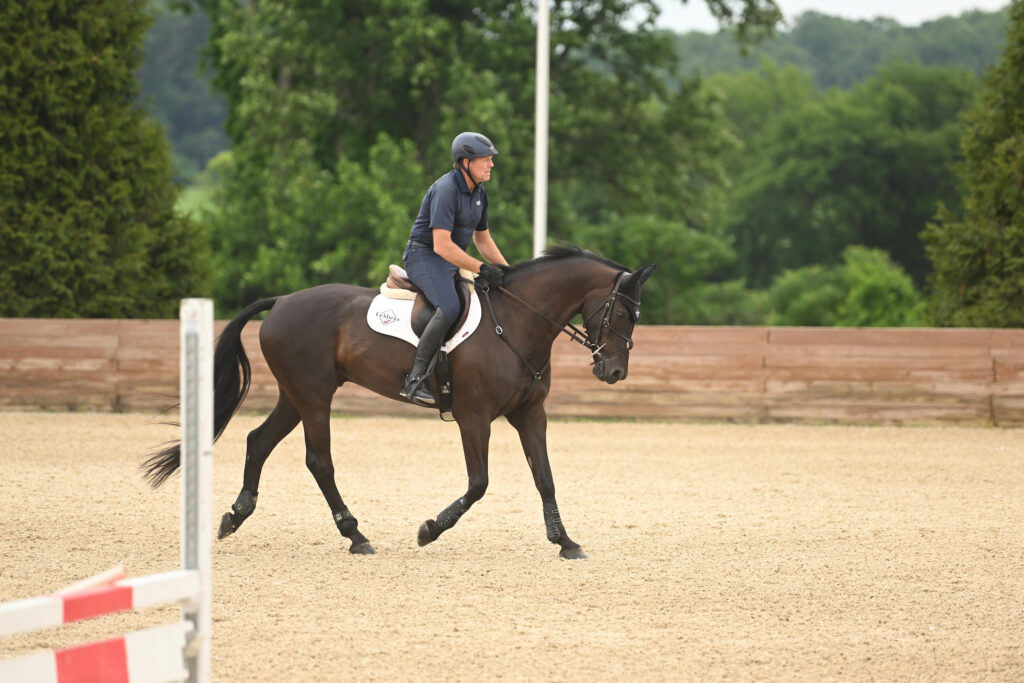
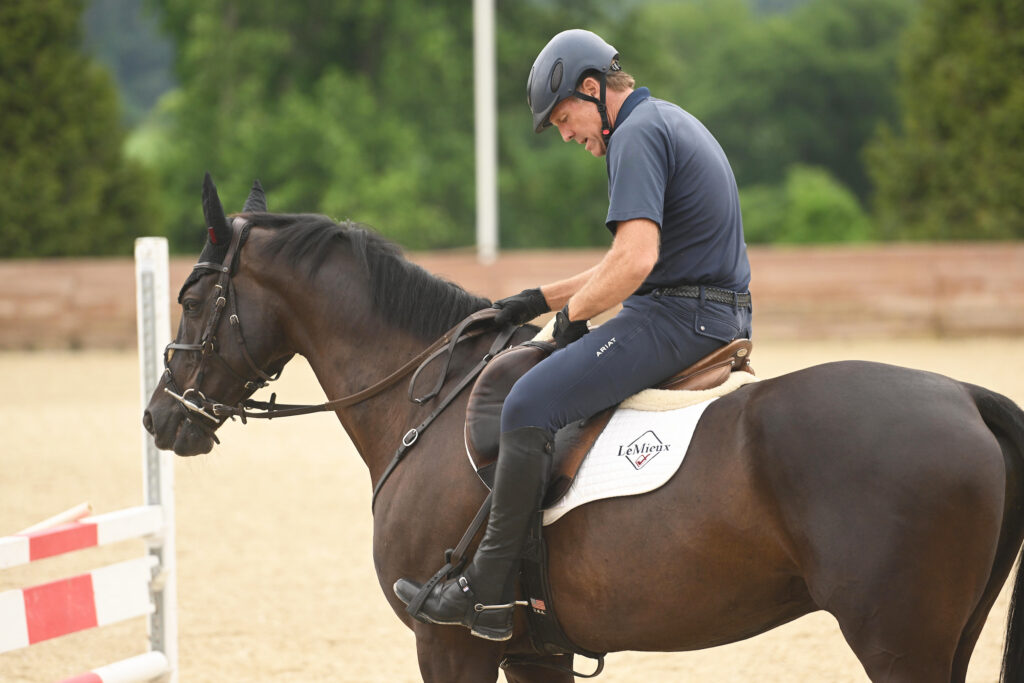
“It’s really important that we take the time to do a bit of extra suppling work with this horse. If you watch Peter’s flatwork, you’ll notice that he does a lot of lengthening and shortening of stride and gets him really supple,” Boyd said. “Peter gets the base of his neck nice and rubbery and is also putting quite a lot of bend and curve through his body.”
Another significant piece of advice Wylde offered Boyd when they first started working together was to school on the flat with slightly longer stirrups than you would have for jumping.
“This is especially helpful for taller riders like me because it allows you to wrap your legs around your horse’s ribcage more. Peter and I typically do flatwork with our stirrups one or two holes longer than we have for jumping,” Boyd said. “But, when the jumps get big, you need shorter stirrups so you can stay with your horse in the air.”
Utilizing the Warm-Up Fences
For their warm-up fences, Boyd and Wylde typically have Bali do a vertical off both leads and then progress to jumping a small oxer off both reins. They agree that Bali is a talented jumper, but he tends to stiffen and hollow his back after fences.
While schooling over warm-up jumps, Wylde focused on slowing down and coming back to walk or straightening and suppling after the fences because that’s where they tend to lose control and rideability.
“When I first started riding Bali, he would put his nose in the air and tear off like a racehorse after the jumps, so this kind of head tossing and stiffening has been a big focus of our jumping training,” Boyd noted. “Notice how on the landing side when Bali tended to scoot off, Peter addressed it but in a calm manner.”
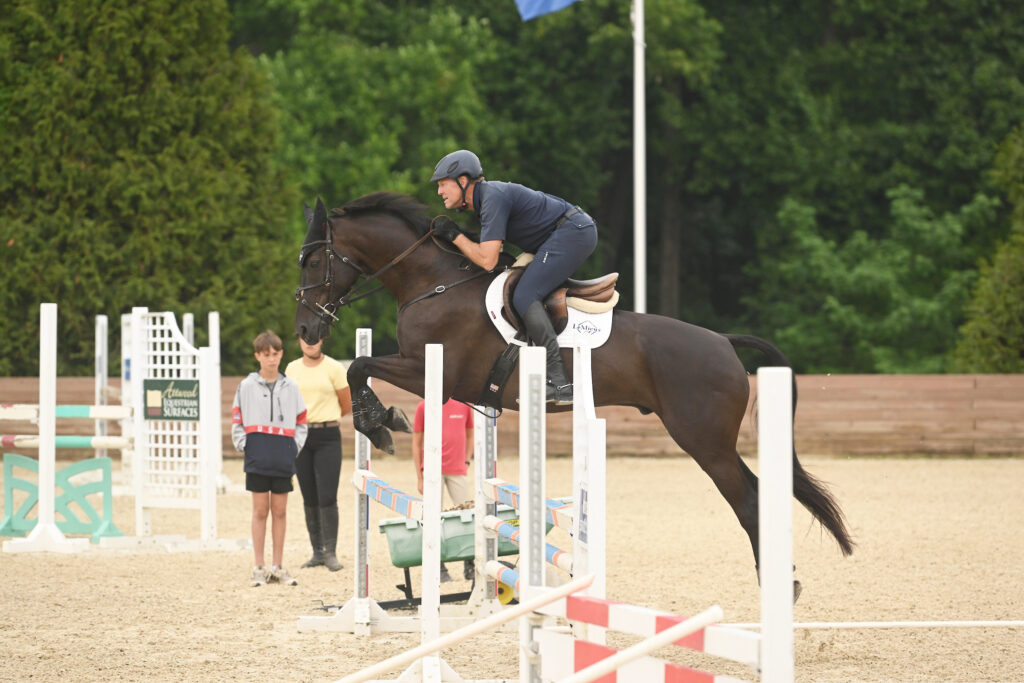
Boyd pointed out to campers that Wylde also approached the warm-up fences with a slower, steadier canter to encourage Bali to take off closer to the jump. “The early jumps are more of a containing, slowing ride to try and encourage him to jump up,” he explained. “If you can get them to take off closer to the jump even at a slightly uncomfortable distance, they have to get their bodies higher in the air to get over.”
Another challenge with Bali in show jumping is getting him to land on his left lead. His body tends to get stuck over the fences to where he prefers to land right. Initially, Boyd focused on fixing the issue, but over time he found a different strategy.
“The more you just kind of ignore it in the beginning, the more he’ll start to give us the left lead,” he said. “As you watch Peter go left over the vertical, he didn’t change his ride at all. He just consistently gave him the same ride off the left lead a couple times and by the second or third time, Bali figured it out.”
Boyd noted that the exciting atmosphere of Windurra Farm’s jumping ring has been helpful in getting Bali somewhat less reactive to new sights and sounds at competitions with more impressive environments, which also provided a unique opportunity for campers and their horses to get into a showing mindset.
Course Work: Putting It All Together
With more seasoned horses like Bali, Boyd said they do a fair amount of warming up and hacking out after their jumping lessons, but they keep the jumping portion of their training sessions relatively short at about 20 minutes.
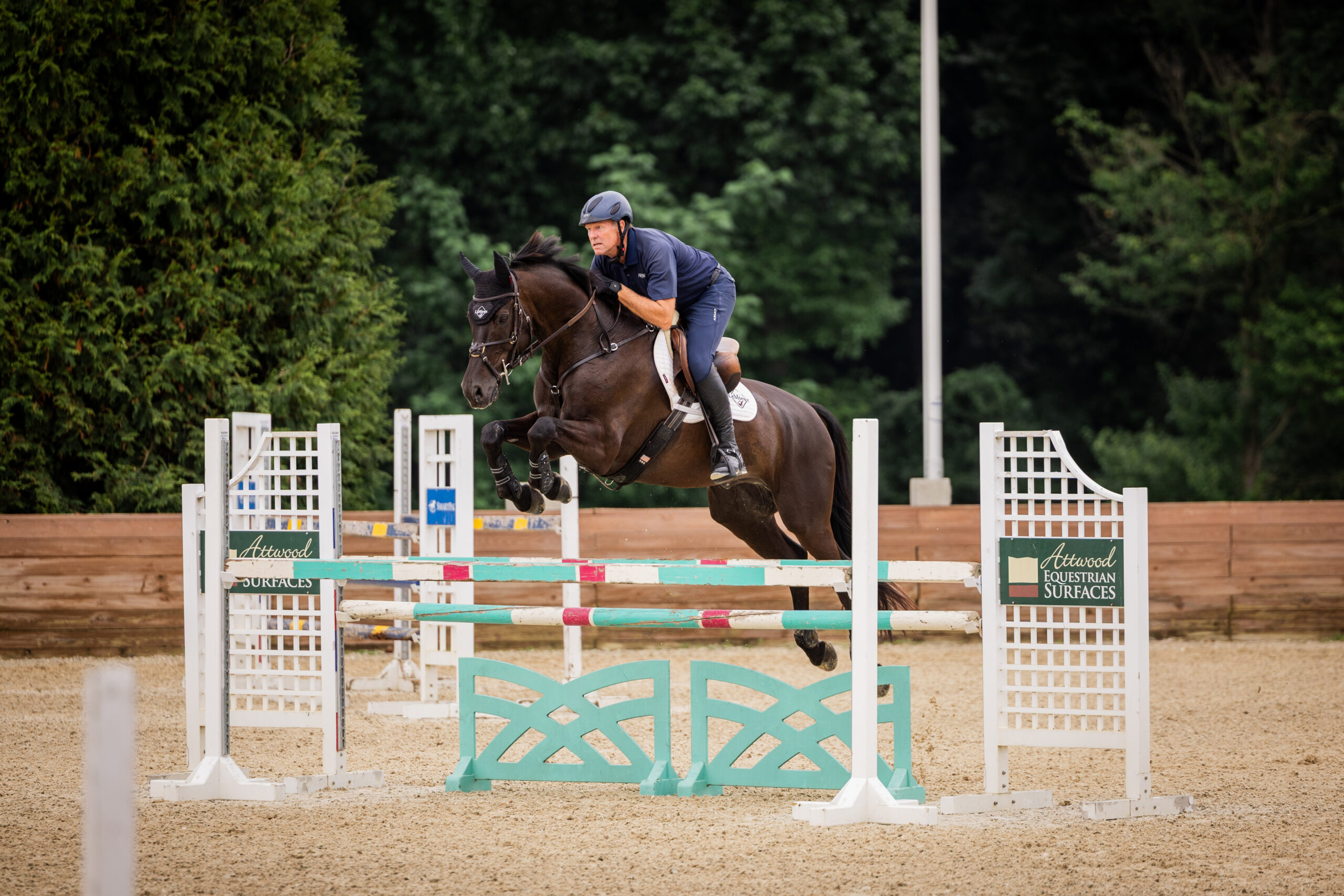
To give you an idea of Wylde’s course design for this year’s Windurra Camp—and the course he demonstrated aboard Bali: It started with an oxer on a bending line to a vertical, followed by a left turn to a fence-and-cavalletti combination bounce line, to a second bending line with another oxer to a vertical, and finished with a four- and two-stride triple combination.
“Peter very intentionally designed the course with the bounce gymnastic in the middle. So, you do fence 1 and 2 on a bending line and then you have to really collect and balance your horse for the gymnastic before going on to the next line,” Boyd explained. “As horses continue on a jumping course, they tend to go faster and their pace gets more frantic, so Peter incorporates a balancing element like the bounce.”
Boyd noted that the bounce combination is a great exercise for Bali and all eventing horses because it teaches them to be quick off the ground. “Peter purposely set the line a little short to encourage the horses to use their hind ends to ping off the ground,” he said. “The shorter distances can be a little uncomfortable for horses at first but will help them learn to be quick with their feet.”
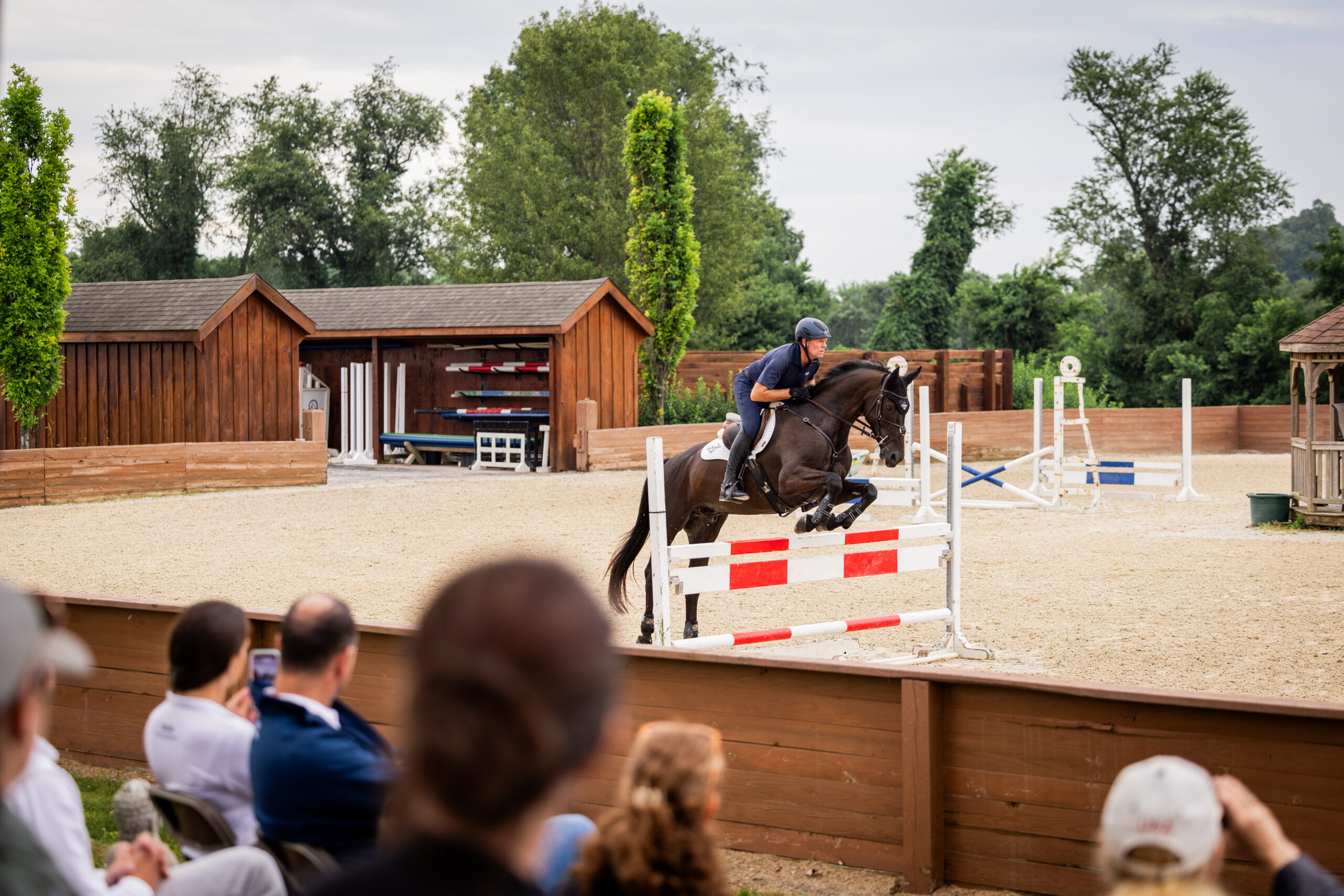
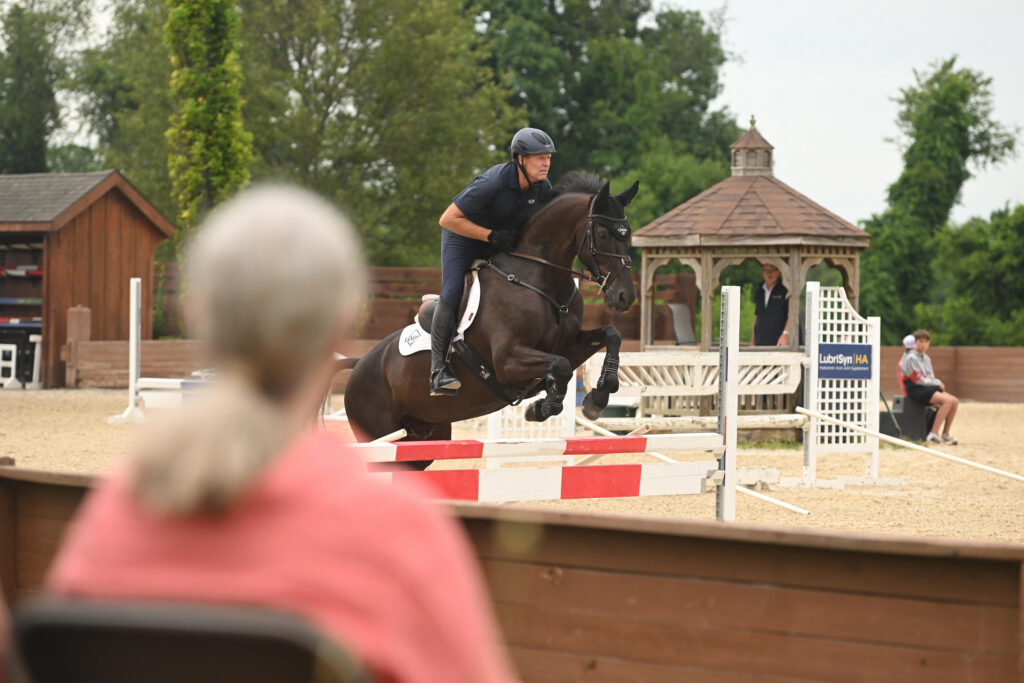
When Bali does make a mistake, Boyd notes that it’s important to calmly walk and repeat the exercise.
“The worst thing you can do with a sensitive horse like Bali is throw a tantrum. That’s why Peter stays so calm and relaxed and schools him on the flat after he was a bit spicy on the last course and sort of freaked out about the Philippine flag after the blue Stübben vertical,” he said. “I would also like to see him get through the red-and-white bounce line without the touches.”
After schooling the course a few more times, Boyd pointed to subtle improvements in Bali’s jumping technique once Wylde helped him relax and carry himself with better balance and straightness to the fences. After the jumping portion of the lesson, Wylde continued to work with the gelding on the flat.
“A lot of times after riders jump their last fence, they go to walk about 10 strides later and call it a day,” Boyd said. “But here we see Peter just schooling away on the flat, which helps with Bali’s self-carriage and allows him to stretch out a bit in trot before fully cooling down.”
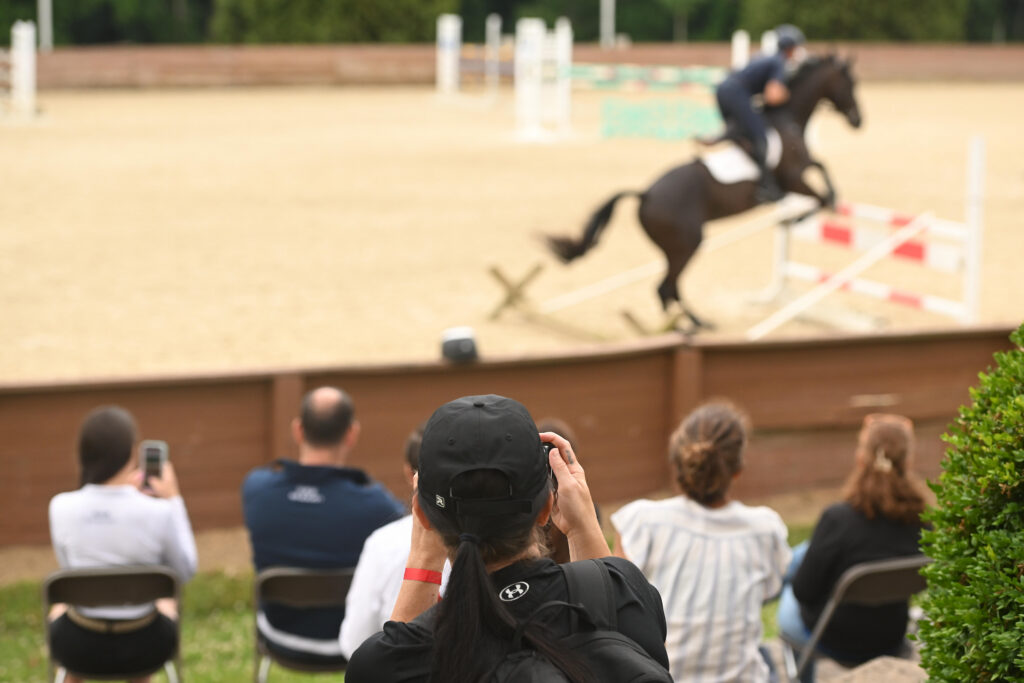
Following the lesson, Wylde said it was helpful to have the larger Windurra Camp audience there to confront any training issues that might come up at a competition.
“This horse is so electric, but that’s also what makes him so incredible. You can also see how patience with a horse like him is so important. You don’t want to tiptoe around problems, but you never want to be combative about fixing them,” he said. “Bali has had an easy spring post Kentucky, so we just need to get him a little more on his game. He tends to get better the more we do with him. And as he gets calmer and looser in his body, he starts to produce some really expressive jumps.”
Cross-Country Lesson with Boyd and Bali
On Windurra Camp’s final morning, campers trooped out to the farm’s massive training field for Boyd and Bali’s cross-country demonstration where they hovered around a table fence on a mound while Wylde took to his megaphone to provide commentary.
“Just like our show-jumping lesson, as long as we’re just a presence here and aren’t throwing our arms in the air, it’s actually good for Bali to have to deal with us again,” he said. “When you go to Kentucky or other five-stars with big atmospheres, he has to face a lot. So, it’s good for him to confront his demons at home, too.”
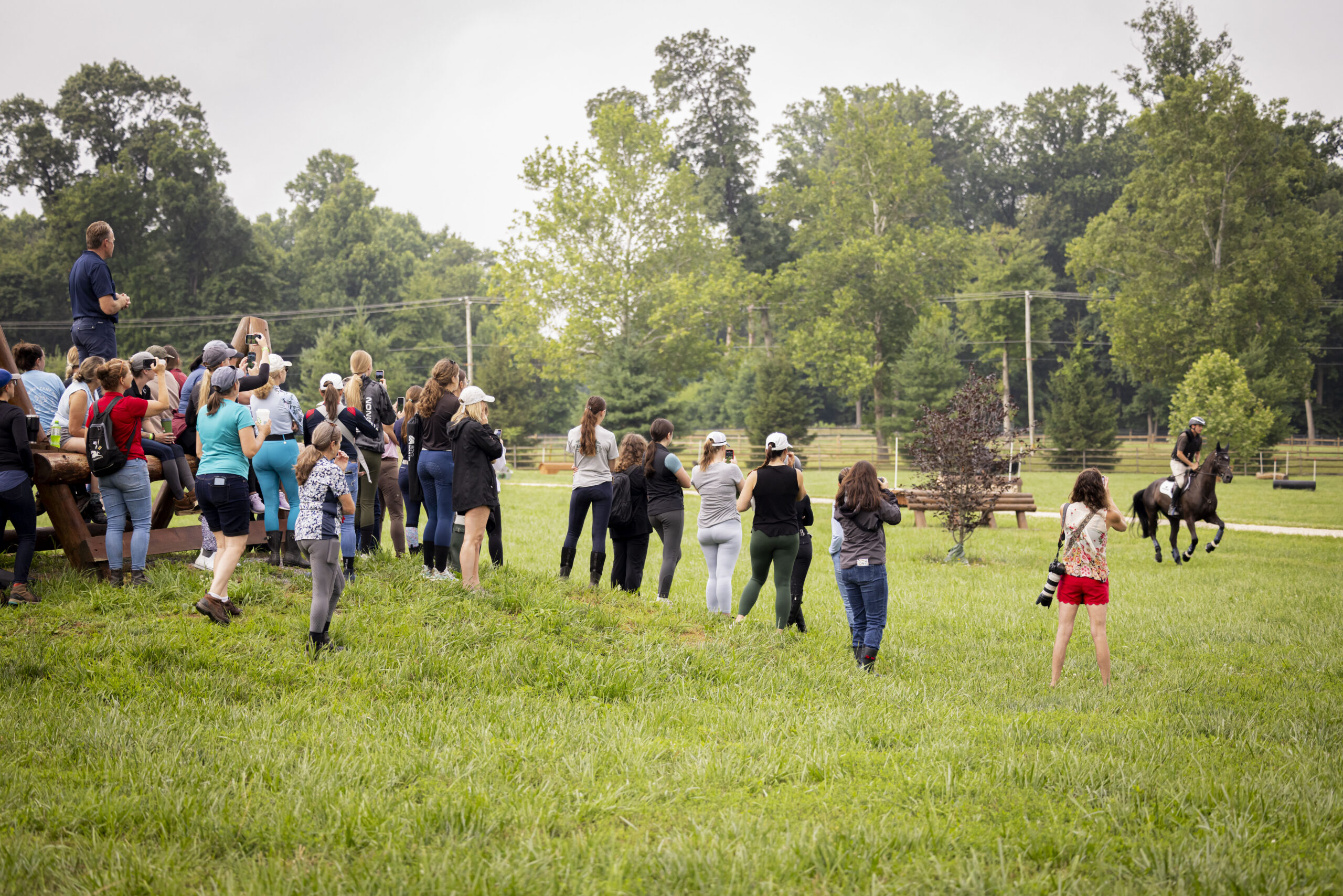
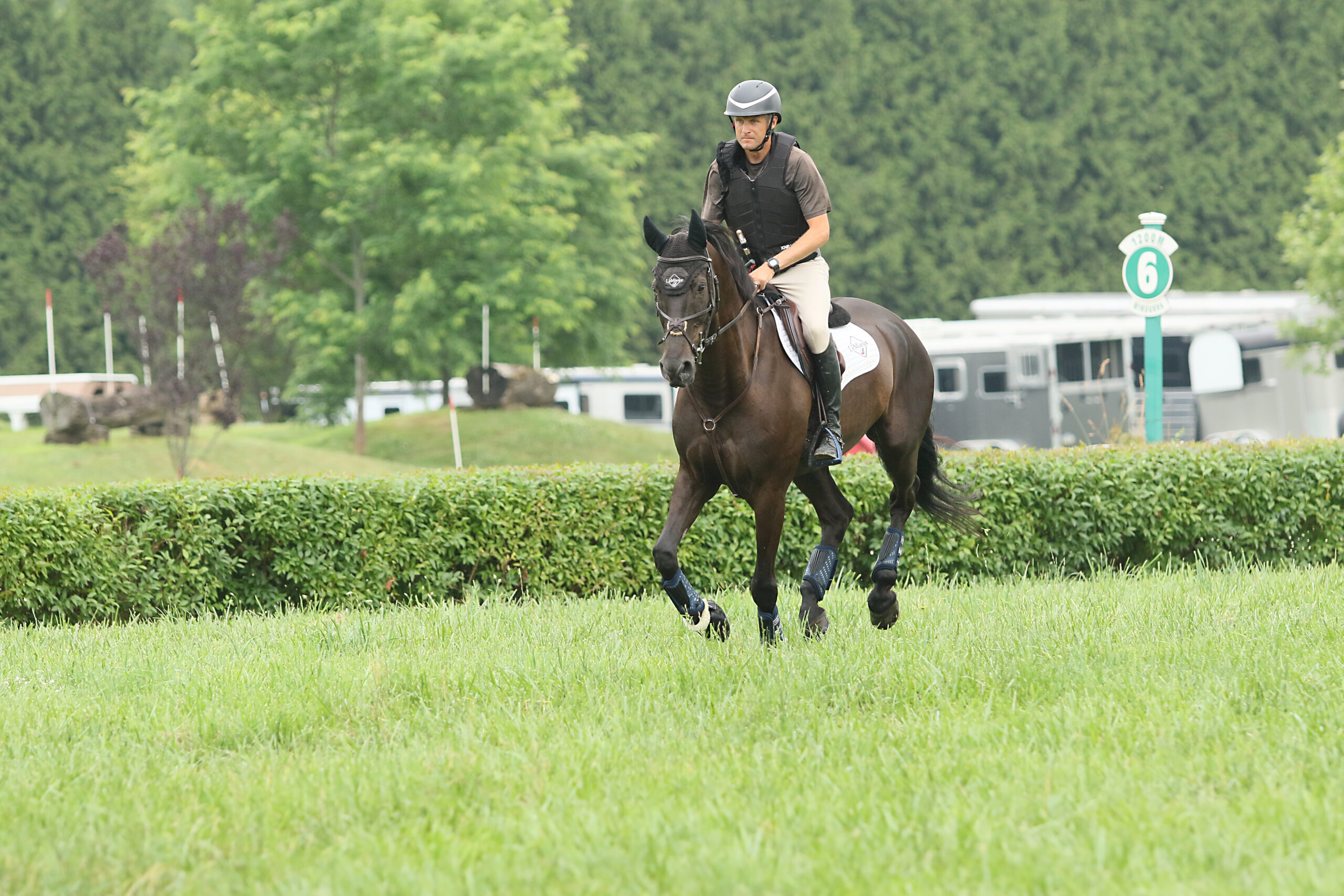
To warm up on cross country, Boyd worked some lead changes and then got Bali moving at a little more speed to catch a few jumps out of a nice, smooth rhythm. He then worked in a figure-eight pattern to catch a few boxes off both the right and left lead, very similar to their warm-up jumps in show jumping.
“For Boyd and Bali to make the time in the big five stars, we have to do to everything in the fewest strides that’s safe without making it rough. Top cross-country riding should look effortless, but you also have to train that into the horse a bit,” Wylde explained. “Boyd stays calm and relaxed while they’re warming up, and that will translate later on when he asks Bali to do more difficult combinations. When he gets a little spicy after a fence, Boyd lands and collects to correct him and then softens and floats to go on again.”
During the previous day’s show-jumping course walk with Wylde, he talked about the math involved when jumping a course and said it also applies on cross country. “At the higher levels, the math becomes even more significant. When the jumps are on level ground, you’re almost doing one less stride than you would in a show jumping round,” he said. “But when the terrain changes, and you add in water and banks, the math can get more complicated.”
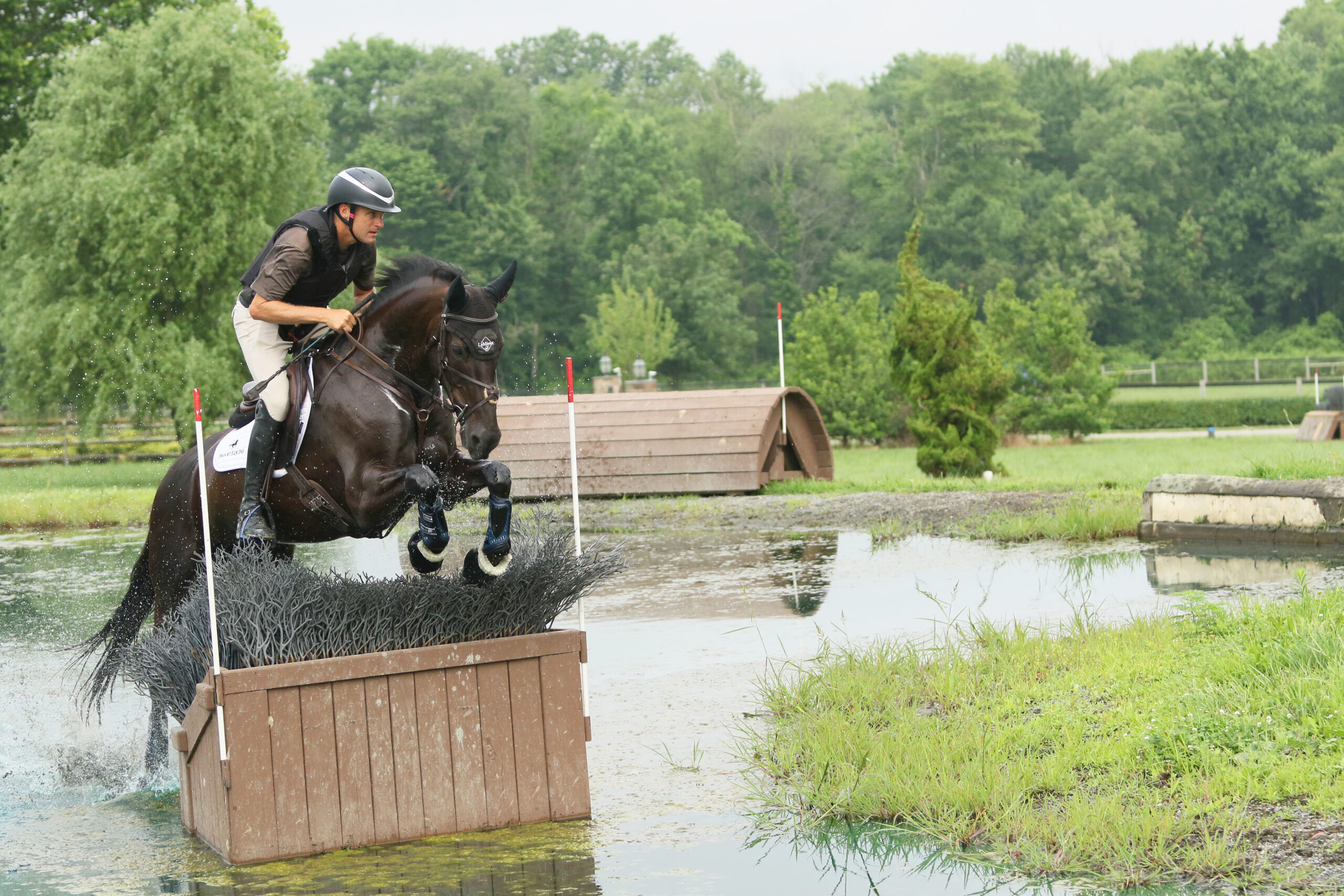
Wylde points to a course at the Luhmühlen CCI5* a few years ago that included a tricky combination with a hanging rail down to a boat fence into the water, curving to a chevron and then curving to another boat. “When we walked the combination, we all saw different numbers. We saw six, seven and eight to the first one; three, four and five in the middle; and two and three to the last one,” he said with a laugh. “But those distances are actually very similar to show jumping distances because it means you can slow down and collect to jump them in a solid way.”
Boyd said one of the hardest things about preparing for a five-star event is limited time, especially when trying to perfect all three phases. After reflecting on Bali’ show-jumping lesson with Peter a few days earlier at camp, he noted that the gelding jumped well but was pretty electric.
“Like Peter said, he’s had some time off since Kentucky, so today on cross country I wanted to do what I call a bit of a mini school,” Boyd explained. “A lot of times with these more seasoned horses, you have to take the time to do some reminder work.”
After their cross-country work, Boyd told campers there were two things he was going to lock away in the back of his mind going forward. “At the beginning of the course when he’s a little fresh, if there’s a turning question to the left, he gets a little stuck,” he said. “For example, if 4AB was a sharp left turn to a narrow or corner, I know he’s going to get excited, so we’re gently working on that.”
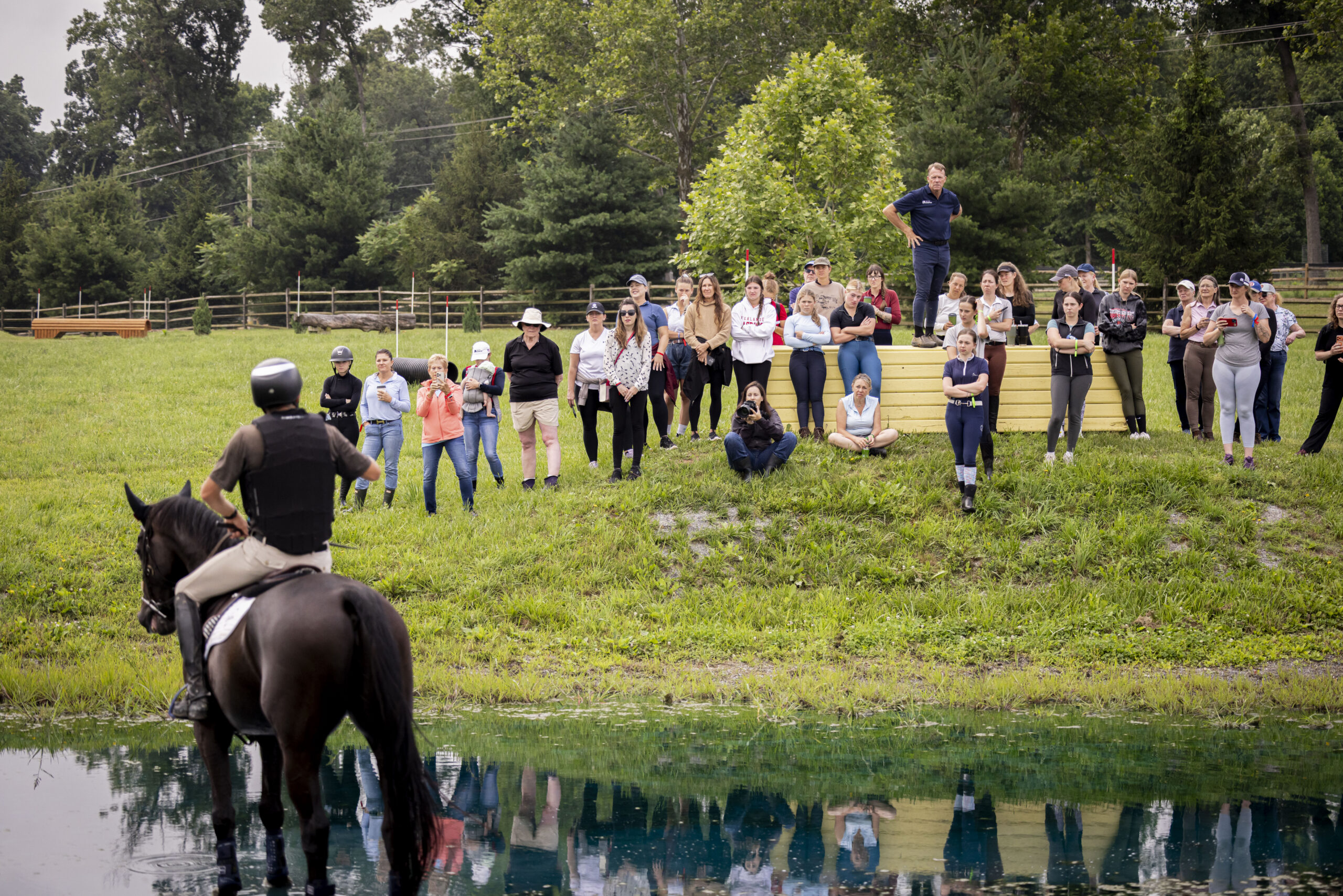
To also help with this, Boyd practices jumping and preparing for a left turn during their warm-ups at competitions. While he says that Bali is as honest as horses come and would jump anything on course, he also learned from Kentucky that he needs to get the gelding locking in on the accuracy jumps sooner on course.
“Even though he’s a little rusty in some areas, I also feel like he’s in really good shape. And sometimes with these more seasoned horses, less is more, and it’s better to just do a little refresher and not jump every fence on the course. So, that’s Cooley Nutcracker in a nutshell. But don’t clap for him! That might do him in for the day,” Boyd joked.
We look forward to watching the pair in action as part of the Defender U.S. Eventing Squad for the 2026 FEI Eventing World Championships hosted in Aachen, Germany, from Aug. 13 – 16.
For More:
- To read more about out coverage of Windurra Camp 2026, click here.
- Learn what other horse-and-rider combinations will be competing on the U.S. Eventing Team during the Aachen World Championships here.
- Watch a video from our Windurra Camp coverage this year of Boyd talking about his cross-country training with Bali here.
- For more information on Boyd and Silva Martin’s annual Windurra Camp, click here.