


 Video
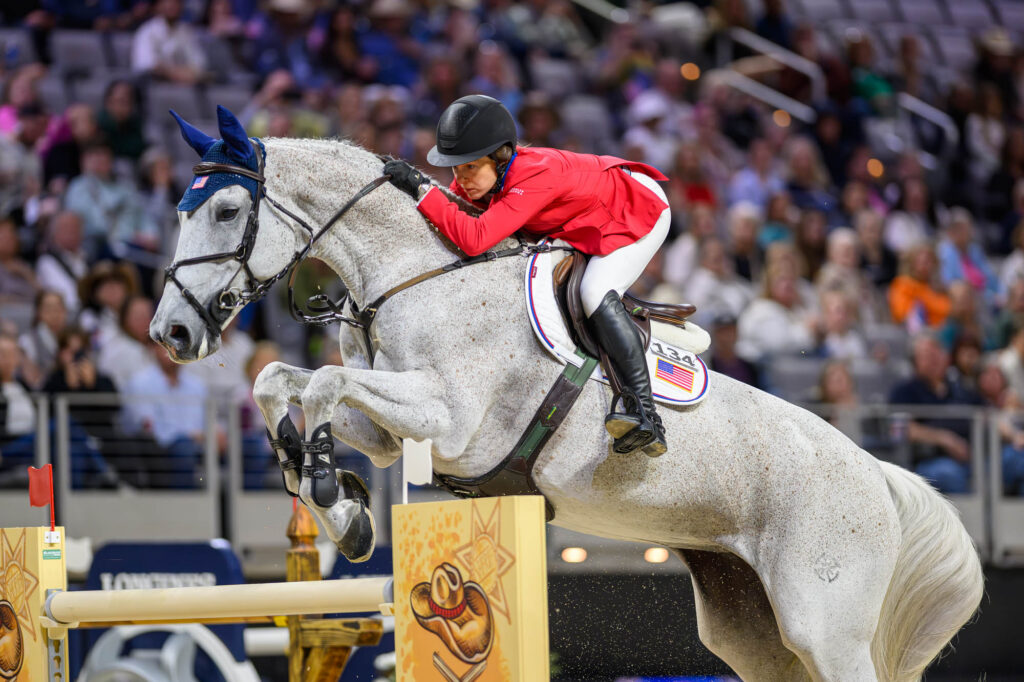
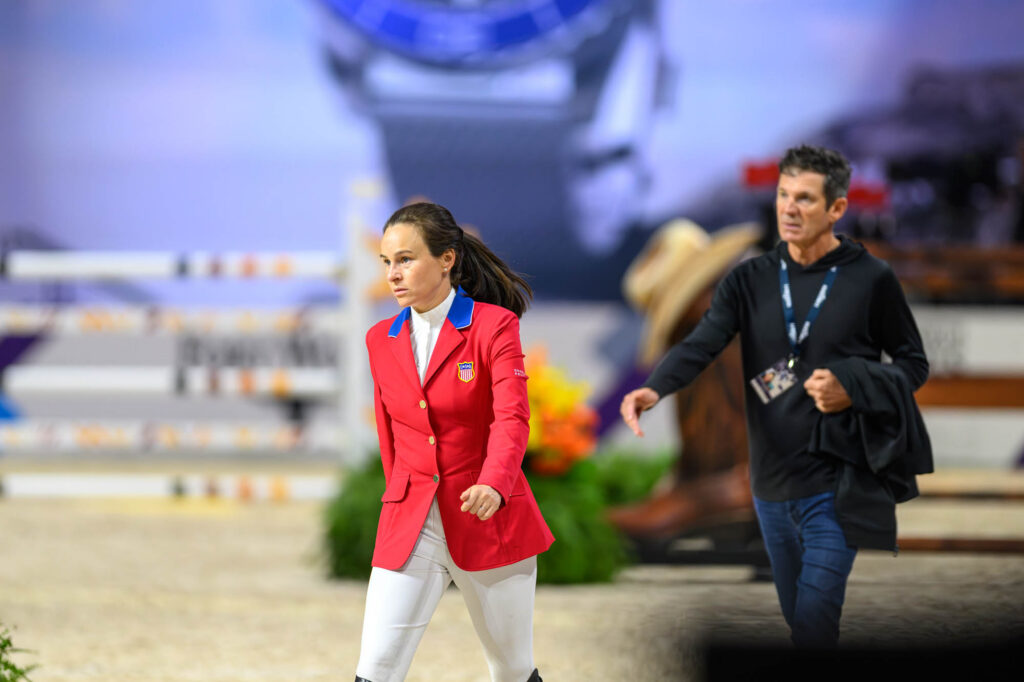
VideoU.S. show jumper Katie Dinan had a phenomenal performance at the 2026 Longines FEI Jumping World Cup™ Final in Fort Worth, Texas, from April 8-12. She rode 12-year-old U.S.-bred Belgian Warmblood mare Out of the Blue SCF to a third-place finish, making her the highest-placed female rider and giving her the best result in her seven World Cup Final appearances.
Over the years, Dinan has collected numerous top placings as well as represented the U.S. on several Nations Cup teams thus far in her career. She made her senior Nations Cup debut in 2013 and helped the U.S. earn a Nations Cup win at CSIO5* Dublin in 2014. In the fall of 2023, she won the Longines FEI Jumping World Cup™ Washington CSI5*-W at the Washington International Horse Show with Brego R’N B. The following year, Dinan finished second in the same class with Out of the Blue SCF.
Below is an excerpt from a past Practical Horseman Podcast episode with Dinan (Episode 103, released September 6, 2024). She talks about why she enjoys working with horses, her training philosophy and more.
Catching the Horse Bug
PH: How did you get your start with riding?
KD: I started riding horses when I was four years old. My mom, who started riding as an adult, brought me to the barn on Mother’s Day as a Mother’s Day gift to herself, which shows what kind of generous mom she is. I had my first pony lesson at Arcadia Farm in New York, and it was the beginning of a lifelong passion of mine and also a lifelong bond between my mom and me over horses and riding together.
I’m not from a horsey family per say. No one in my family had ridden in any way other than at a much smaller scale at that point. My mom did some competitions. She actually did a little bit of eventing and then did the adult amateur hunters, but no one really knew there was like a whole world of jumpers around the world. It was an adventure for all of us.
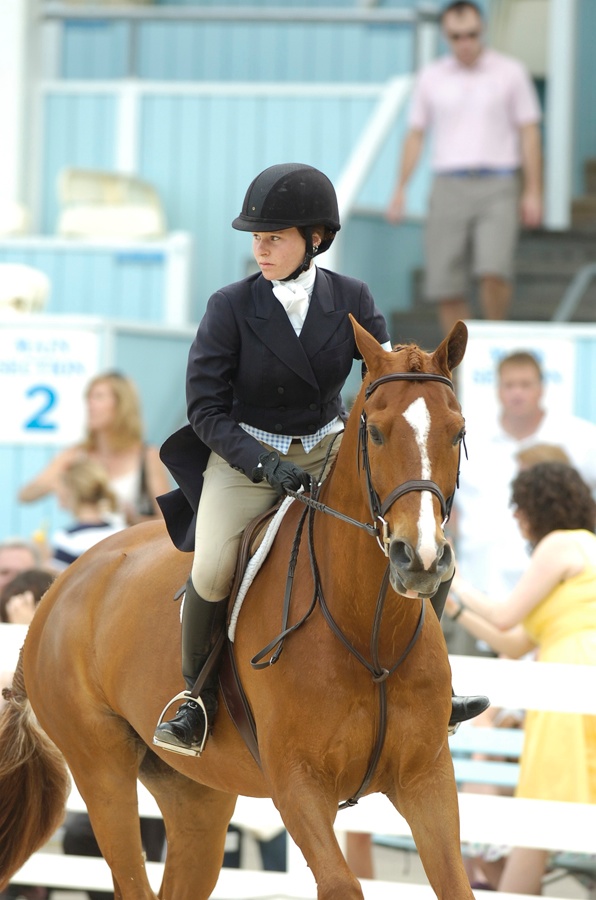
PH: What drew you to jumping versus another discipline?
KD: Jumping is my favorite part of riding. I actually still remember the first time I ever got to jump. I must’ve been like six, so I’d been riding for two years and I really, really wanted to jump. My first jump was a cross-rail, and I kept on jumping the side of the cross rail so it would be bigger. My trainer said, “You have to jump the middle of the jump,” so I wasn’t allowed to jump bigger jumps until I learned to start jumping in the middle.
I was always excited to jump more and jump bigger, and I always thought that that feeling was just so thrilling that you were doing something so athletic and in such tandem with your horse. It’s just so fun and exciting. And then as I progressed with jumping courses and the competition level, there’s so much strategy and you can be very analytical about it. I really liked that.
In terms of other disciplines, I would say that flat work was neither my forte nor my favorite thing to do. But over the years, I’ve grown to appreciate it more and more, not just for what it does for training and jumping, but also really as an end to itself and being able to feel really excited, appreciative and proud if I feel like I’ve worked through something on the flat. That’s something that I had to learn because it wasn’t naturally something I think was so passionate about.
Otherwise, I really love cross-country riding and riding outside, especially during the pandemic when we weren’t competing as much. I’m based up in North Salem, New York, where we’re lucky to have a lot of open land up there with a lot of jumps. I actually took out my show jumpers, jumped a lot of the natural obstacles and had a blast doing that. I would say if I could do a different discipline, it would be probably three-day eventing, but I would need a lot of dressage lessons to get to that point. For now, I’ll definitely stick to the jumping.
PH: What do think it is about horses and the sport that have kept you involved with it over the years?
KD: I would say that first and foremost, the horses. I’m an overgrown pony kid, but overgrown in the sense of age, not even height. I probably could still fit on a pony. I have always loved animals, and I really, really love the horses. That is what keeps me doing it, even when it makes life more complicated and even as I’ve grown up and gone through different life stages. In the sport where when things don’t go your way and when you have frustrating moments, it’s about coming back to that love of the horse. In addition to that, I love jumping. I love jumping courses and that riding element.
One thing that was an interesting and nice realization for myself over the pandemic was I didn’t show for four months and how much I still loved riding, being at the barn and riding in the ring or out on the field. I loved all of it, even when there wasn’t a competition to be getting ready for it. It was nice to know how much joy and purpose that still brought for me even when we had that unexpected break from competition.
But I also love competing. It pushes me to be the best version of myself in every way, not just with the riding itself. It gives me lot of discipline in my life with making sure I get enough sleep, I’m in the right fitness program, I eat well, and I’m really on my A game.
I also think what’s exciting about competing is it adds this dynamic element in your life where you’re not just going through the motions of life and you know when you wake up what’s going to happen the whole day and what’s going to happen before you go to sleep. There’s always this really exciting element where you don’t know what’s going happen and I think that’s a really exciting way to live life. There’s an element of the unexpected, and you prepare, have goals and keep going after these things.
Memorable Wins With Special Horses
PH: What are some of your most memorable wins?
KD: When I think of memorable moments, I always think it’s very horse specific. I’ve had a few really special horses in my career. One of my most memorable wins was the World Cup qualifier at the Washington International Horse Show with my horse, Brego R N, in October 2023. That was really special because Brego was a horse I had for about five years and he was 17 at that point. He is an amazing horse who just had so much physical ability and was such a great jumper, but he also had such a great attitude that he always, always, always gave a hundred percent. In the course of our time together, we had had several podium finishes at four- and five-star grand prixes. He’d won a few three-star grand prixes, but we hadn’t had a big win like that. I felt so strongly that he really deserved it because he had been such a champ for so long, always shows up and does this like a game. I knew at that point it was towards the end of his 17-year-old year, and you realize you are going to have fewer and fewer opportunities to compete together. To have that come together and to win that class at one of our biggest shows in America, that was really special.
Looking back in my career, I had a horse named Nougat du Vallet. We call him NuNu, and he was the horse that really put me on the map. I got him when I was 17, which was a while ago. The span of his career had a lot of really great moments. One of those was being on the winning Nations Cup team in Dublin and getting the Aga Khan trophy, which was a really special moment because being on the U.S. team is such a dream and a goal for any young American rider. Also, the show in Dublin is one of the best in the world. It takes a lot of things to go right to win a Nations Cup, and that was a really memorable day. We jumped a clear round in the second round, which we needed to do for the win, so that was a great moment of riding under pressure and having that result.
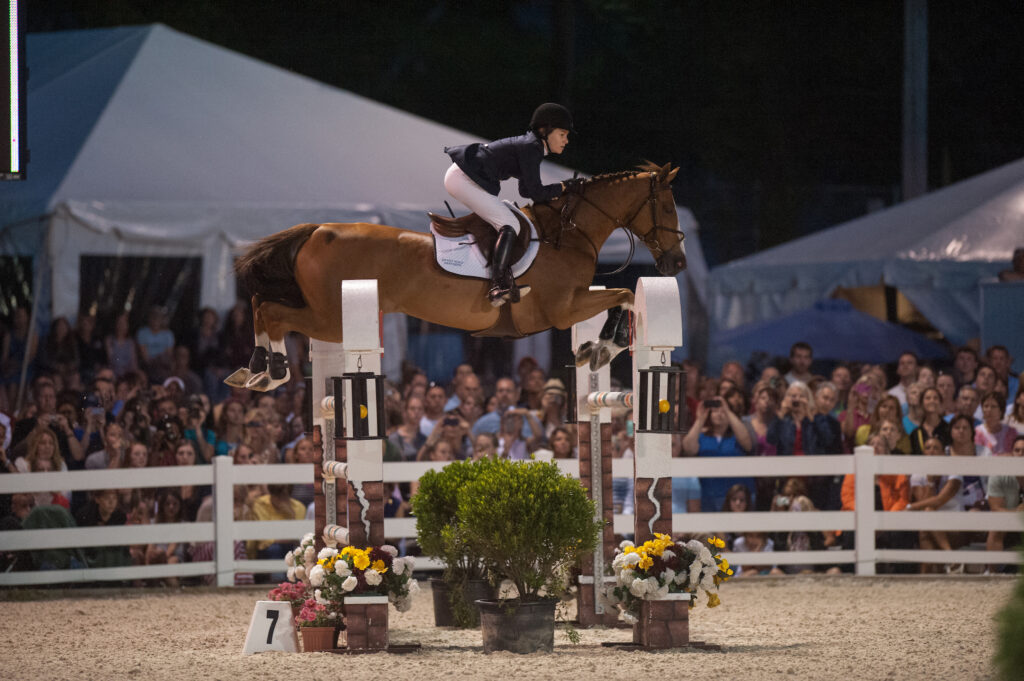
Another standout moment in my career, especially as an American, was winning the National Horse Show Grand Prix in Kentucky; that was also with NuNu. I’s like a class with so much history in the U.S., so I was very proud to have won at Washington and Kentucky in my career.
Putting Equestrian Sport in Perspective
PH: How do you handle disappointment in the sport?
KD: There are, of course, going to be moments that are frustrating and disappointing, and I would be dishonest to say that I don’t also feel that frustration and disappointment. What I try to do is realize that the good news is that there’s always another horse show and that I let myself be upset for a day, but then I really try to snap out of it and move forward in a smart way by basically analyze what went wrong, why didn’t this go the way I wanted, what can I do now to get better and then not let myself get stuck on it. I think that goes along with taking a long-term view of your career and your career with any particular horse and knowing that it’s not going to be defined by any one horse show. One thing that’s great right now in the sport is there’s so many big events and so many opportunities of keep moving forward and always be setting new goals.
PH: Is there any advice you would give your younger self?
KD: I have had a long career riding thus far, and I would say to my younger self that sometimes things that felt like they were the end of the world at that moment aren’t. Also, enjoy the special moments and enjoy the moments you have with your horse because you’ll look back on those moments fondly.
Handling Nerves and Being Disciplined
PH: Do you get nervous when you compete? If so, how do you handle your nerves?
KD: I think that everyone’s different, but when I get nervous, one thing I try to remind myself is that being nervous is a good thing. It means that you’ve made it somewhere and that something’s important to you. You’re not going to get nervous for some event that doesn’t matter to you. It’s a reflection both of how far you’ve come and how badly you want it, so treat those as good things, not as bad things. That shift in mindset can be quite helpful for me.
Another thing that I also try to revisit is finding the joy in what we do. With going to a big competition, that is why I do this. That is why I come to the barn at whatever hour every day, and that is why we’ve dedicated so much of our lives to this. One of these reasons is because you dream of coming to these big moments, and then when you’re there, you should try to find a way to enjoy it. Also, when you have come so far with your horse and the gratitude that comes along with having a horse in form like that, you don’t want to waste that and instead stay present.
Something that I do that may be a little bit more practical is meditation. The Headspace app has helped me. Even just for five or 10 minutes a day, I think it can be quite centering. I also like trying to do some deep breathing exercises to make sure I’m calm and focused.
Another thing is I try to stay off social media. There are some great content-driven things, but in general, I try to stay focused on what I’m doing.
PH: Do you have a routine that you like to follow at big competitions?
KD: I really try to make sure that I’m on my A game as much as I can be and control what I can control because there’s so many things that can happen that are unexpected, which you have to just be okay with. But one thing that is really important is sleep. I try to sleep eight hours a night, which I didn’t used to, and I’ve realized that is something I should take seriously, especially before big competitions. And not just the night before or the few days before, but to really be on top of that because I feel fitter, healthier and in a better mood. I owe that to myself, my team and my horses.
I also really like having a good plan for the morning. If you’re at a circuit show or a more local show where you really know the drill, it’s a little different, but if you’re in a new place then really have your plan set so you don’t have any day-of stress. I try to minimize as much stress as I can and like having my schedule intact and knowing my plan of exactly what I’m going to be doing the next day before I go to bed. Also, I make sure I have a good dinner the night before and always a cup of coffee in the morning.
I do make sure I always know how I’m going to get my coffee before I get to the barn. That’s something I think about the night before, especially when I’m in a new place and how far I’m going to go out of my way to get a cup of coffee depending on how good I think it will taste. Maybe that’s not the most strategic for everybody, but that’s something I do consider.
Training Philosophy and Exercises
PH: How would you describe your training philosophy?
KD: My training philosophy is that I want to be as one with my horses as possible and I want them to want to do it. I wany my horses to be as happy and as healthy as they can be and that we go into the ring with them feeling like they can do it, that they want to do it and that we’re on the same page. We are doing it together rather than me telling them what to do. I think that comes from really putting my horse’s welfare at center stage in terms of their conditioning and physical and mental health and that they are feeling really good. Also, it’s important putting horses in the most appropriate classes and divisions for them where they can thrive and not asking them to do more than they can. That comes with proper training and riding at home so that when the horses get to the big events, they’re focused too and they know what they need to do.
PH: Do you have a favorite training exercise?
KD: I have a few little things that I will share that may or may not be helpful. One thing that I love doing is riding outside. We’re lucky to be in North Salem where we have a farm that has some open land on it, but we’re also connected to a trail system. There’s a North Salem Trail Association with a bunch of riding trails that connect to some open fields with some natural jumps. I talked about how I had enjoyed doing some cross-country type jumps when we had a break from showing during the [COVID-19] pandemic, but in normal times, I think it’s really important to bring the horses out and be on different types of terrain, of course, within reason, but grass and the trails and walk, trot, canter and I think that really helps them strengthen their muscles, gets them strong through their top line and in their core, but in a natural, very happy way. Also, they think a little bit about where they’re putting their own feet, and I think can really be physically good for them.
Even though these horses are so important that we don’t treat them like they’re so too fragile, but I think that that’s important and it keeps them mentally and emotionally happy to see something different. It’s not every time that you ride them, you go back into the same arena to do the kind of very disciplined work. It’s more that they can be outside, see something different, go with other horses. So, and that riding is also fun for them. I think that’s really important. I want my horses to see me and be happy and then be happy to go out together. But of course, everything needs to be in balance.
We also do quite a bit of work in the ring when we’re training. I mentioned before that I’ve been working with Beat Mändli now for [12] years, and he helps me a lot at home. We do a lot of exercises on the flat and usually just smaller jump exercises more for general fitness and rideability and not so often jumping so big at home to really save the horses and their efforts for the show ring.
One very simple flatwork exercise I do is at canter, either in two point or sitting, do six strides forward, six strides back, six strides forward, six strides back, and I count in my head. I do that because it really like lets me know where I am with my rideability. I don’t ask like more than I think the horse can do at that time, but that they’re on my leg and then they come back. And that even if I’m not like fully as back as I want then I get them off the mouth again and get them moving forward. That back and forth really keeps me focused and knows where I am with them.
Also, after I’ve warmed up on the flat, I like to do a nice gallop and do a figure eight to really get them moving, let them open up their stride and loosen up physically before I ask for too much collection. I think sometimes you see collect, collect, collect, but it’s also about letting them go forward too. If they want to buck or whatever they want to do, they get it out of their system and they’re loosened up before you ask too much of them. And it’s really important that they’re properly warmed up before you start asking things that are more complicated.
One jumping exercise that I might do in between shows on a Monday or Tuesday is do a few bounces in a row on a curve on a very big circle. So somewhere between four or six bounces on the circle—not high, maybe cavalletti size. You can use this exercise to basically make sure that your horse has a good connection. They’re connected from the bit through their top line to you and that you’ve got them even on both sides with a little bit of bend in both directions. You can play around with the distance of the bounces if you want them to stretch out a bit or have them a little bit more collected.
I think this is also really good for the rider because it helps your balance a lot. It prevents you from leaning on the horse’s mouth, keeps you balanced in your core and makes you use this big circle to get your horse under the right stride beneath you for the exercise. If you’re doing it a little bit longer, you want to make sure your horse is extended and on a big stride because it’s not something you can make up while you’re doing the exercise. And that’s something that’s fun for the horses. It’s not complicated but it can be a nice training exercise. I try to make sure that I want to leave every time I ride feeling confident and happy, and that’s how I want my horses to feel.
Thanks to Zoetis for our coverage of the 2026 FEI World Cup Finals. It includes lead-up events, rider interviews, competition reports, photos and more.