




 Video
VideoQ: I live in a really humid climate and my tack sometimes gets moldy in the summertime. What’s the best way to remove and prevent mold without over-drying the leather?
~ Sara M., Florida
A: Mold thrives in damp, warm conditions. Unfortunately, once it starts to grow on leather, it’s difficult to kill. Even if it looks as if you have removed all of it, the leather is often more prone to getting moldy again. Mold can also discolor leather, leaving unsightly dark patches. The best course of action is prevention.
In an ideal world, we’d all have climate-controlled (heated and air-conditioned) tack rooms, which would reduce the risk of mold significantly. But not everybody has that luxury—including me! If your tack-storage area is more open to the elements, take extra measures to protect your tack, especially during periods of very rainy, warm weather. Cover it up however you can. For example, wrap your bridle in a towel and store it in a trunk. Or bring your tack home and stash it in a cool, dry room of your house.
Tack is especially vulnerable to mold when it goes unused for long periods of time—for instance, if your horse is laid up with an injury. In those situations, be sure to store it in the driest, coolest place possible. For extremely long spells of disuse, consider coating the leather with a thin layer of Vaseline and then wrapping it in brown paper. This technique has been proven to protect tack for years.
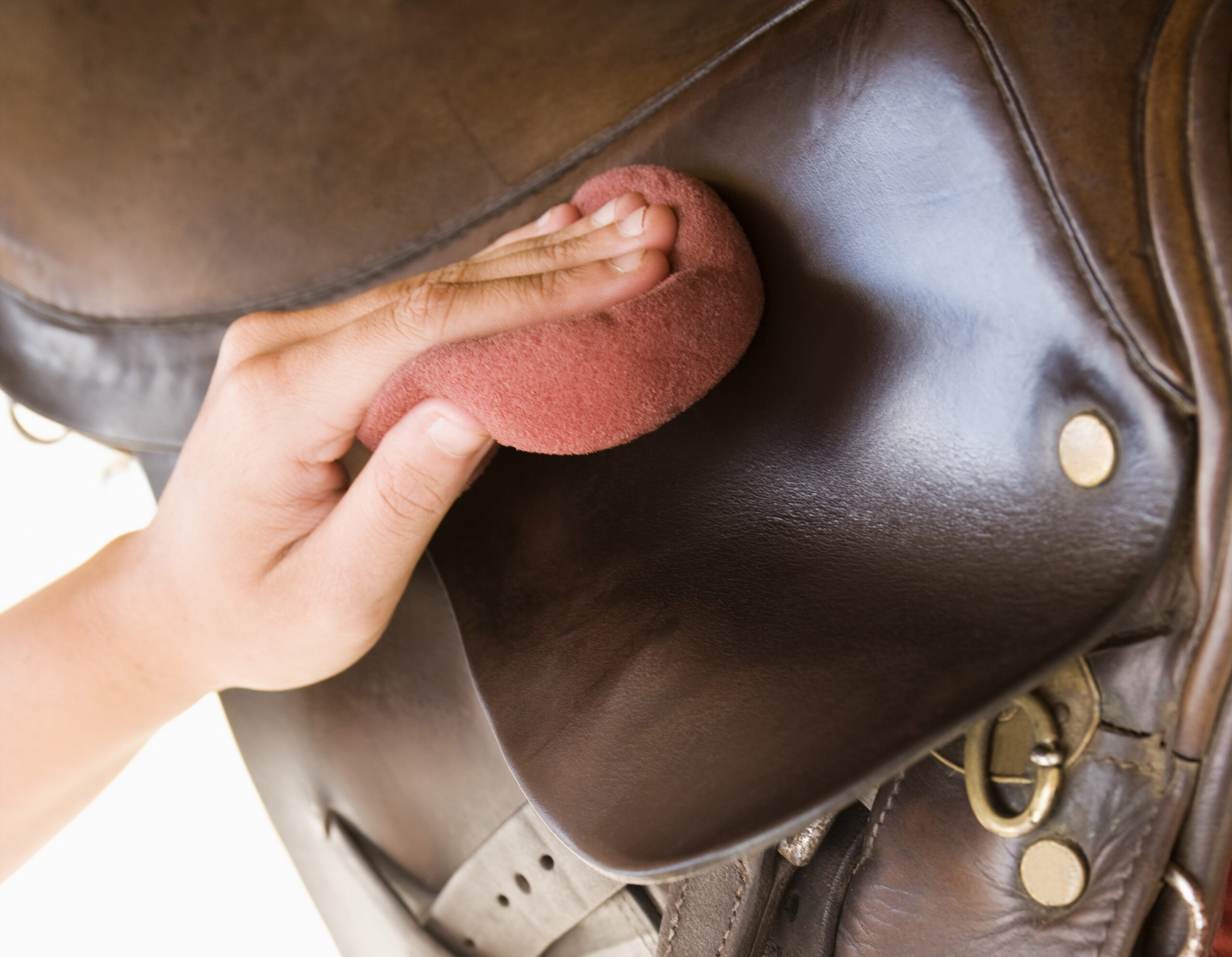
If, despite your best efforts, you still experience moldy tack, the worst thing to do is treat it with leather conditioner. This seems to work the mold deeper into the leather. Instead, wipe as much mold off as you can with a damp sponge. Then clean the leather with a quality product like Effax Leder-Combi by the German brand Effol, which strips the mold effectively from leather without disturbing the leather’s pH balance or finish.
Other products I’ve found effective in cleaning mold from leather include Ivory and Castile soap—both in bar form. Use either of these the way you would use regular saddle soap. They won’t dry out your leather unless it was dry to begin with. Ammonia is another effective mold cleaner. Mix it with water at a 1 to 10 ratio before using.
In general, I recommend cleaning tack after every ride, but this is particularly important on days when the weather is warm and wet. Conditions like this are an open invitation for mold. A good cleaning and dry, cool storage are your best defense.
PH Reader Tips
Here, Practical Horseman readers share their tried-and-true methods for preventing mold from growing on their leather.
Clean your tack regularly and store it in a dry place. At least once a year, take everything apart and do a thorough cleaning.
~ Michelle Dutoit, via Facebook
I keep my tack in cedar closets that I found on Craigslist and converted into tack lockers.
~ Sarah L. Ritter, via Facebook
I live in a very humid climate, so I recently invested in a Thorowgood synthetic saddle. I love it.
~ Claire Cash, via Facebook
I keep damp saddle pads and girths out of the tack room and let them dry out before they get in contact with the saddles. I keep my spare tack and saddles that aren’t synthetic or used every day in a trailer tack room. The room doesn’t seem to get damp and sunlight comes in from the windows. It has been successful in keeping mold off my tack for long stretches of time because they seem to be saved from the humidity.
~ Kim Elder, via Facebook
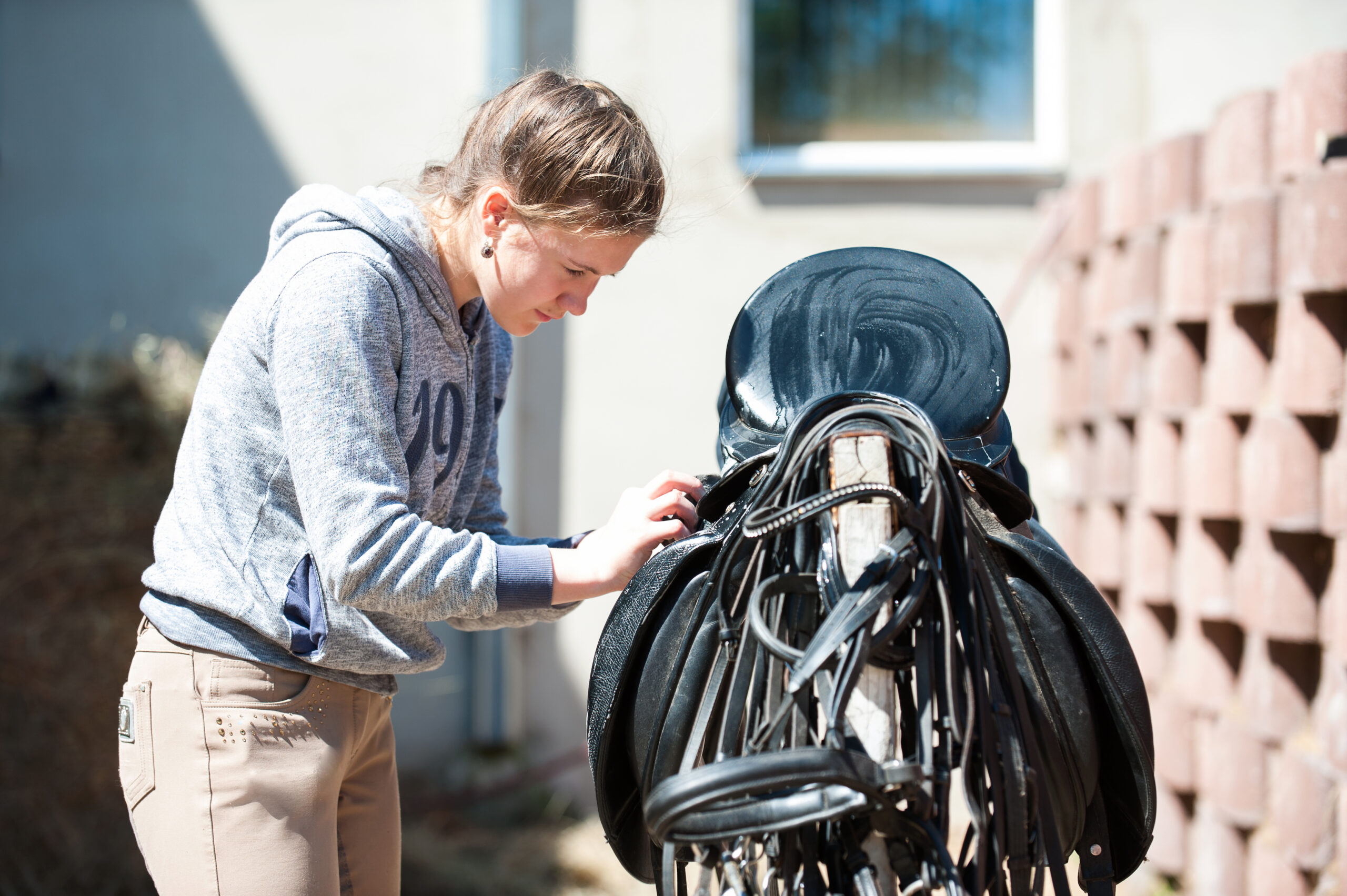
Use good leather tack, wash and condition religiously after every ride, and store in climate controlled conditions, i.e. an air-conditioned tack room and not the horse trailer.
~ Kathy Viele, via Facebook
I moved to New Mexico. Because it’s the desert, there is no mold. The only problem is keeping leather oiled up. I regularly oil with glycerin as a finish layer.
~ Lena Lopatina, New Mexico
Ach, I’ll make it easy. Don’t keep tack in Ireland!
~ Dianna Robin Dennis, via Facebook
DampRid in the tack boxes and I save all of the little silicon packs from store bought items like shoes, purses, etc., and place them in the bottom of my bridle- and saddlebags.
~ Tracy Bright, via Facebook
1. Don’t buy poor-quality tack. It’s been processed in a way that seems to make it easier for mold, mildew and dry rot to take hold. This is purely based on my own personal observation, by the way.
2. Don’t be afraid to use lots of soap and water to clean your tack!! You’ve got to get all that sweaty cruddy organic dirty gunk out of your tack, and water will not destroy your leather, so long as you dry it out properly and oil it when it’s about 98 percent dry. Kind of like caring for wicker, I have an opinion that leather needs a certain amount of correctly used clean water every so often. But do not forget to also finish up with a final round; using lots of a nice saddle soap like Fiebing after you get the crud out. And again, dry it slowly with utmost care in the least humid place you can, and again, oil it well.
3. Clean your tack regularly, and use clean rags, clean sponges, and clean water. Dry it off with a soft towel after. I see people use all manner of grungy rags when they clean their leather.
4. Clean with lots of soap and use a boatload of good-quality oil on your tack before you use your recently purchased tack (new or used). When I got my first nice saddle in the mid 80s, my trainer made sure it fit my horse, then sent me off with a couple quarts of Blue Ribbon Saddle Oil and told me to oil it (topside and underside) until it stopped squeaking. It soaked up almost 2 quart of oil, but I had that saddle 25 years and kept it in lots of weird places and it never got moldy. And it never squeaked. And I sold it a couple of years ago for darn near what I paid for it.
5. Keep your tack off the ground, esp. if your tack room has a concrete floor.
6. If it gets impossibly humid, take your tack home with you. I never had to do that with my frequently used tack, despite living in the fairly humid lower Midwest, but anything not in current rotation should be kept in a climate controlled situation.
7. If you notice a little teeny tiny patch of mold… clean it!
Tack should be an investment. If you don’t have the time or inclination to correctly manage your leather tack, go for the Wintec/Biothane.
~ Julia Jensen, Indiana
For More:
Read more about everyday tack care here.
About Lynn Thompson
Lynn Thompson has owned and managed The Horse and Rider Inc., an English riding apparel and equipment retail store, since 1990. In addition to its permanent location in Greensboro, North Carolina, Horse and Rider sends a mobile tack trailer to many area shows throughout the year. Lynn also operates a boarding facility, Hickory Hill Farm. She competes in the Adult Amateurs with her show hunter, Snow In Summer, and at Third Level with her dressage horse, Desert Queen.
This article was originally published in the July 2017 issue of Practical Horseman.