




 Video
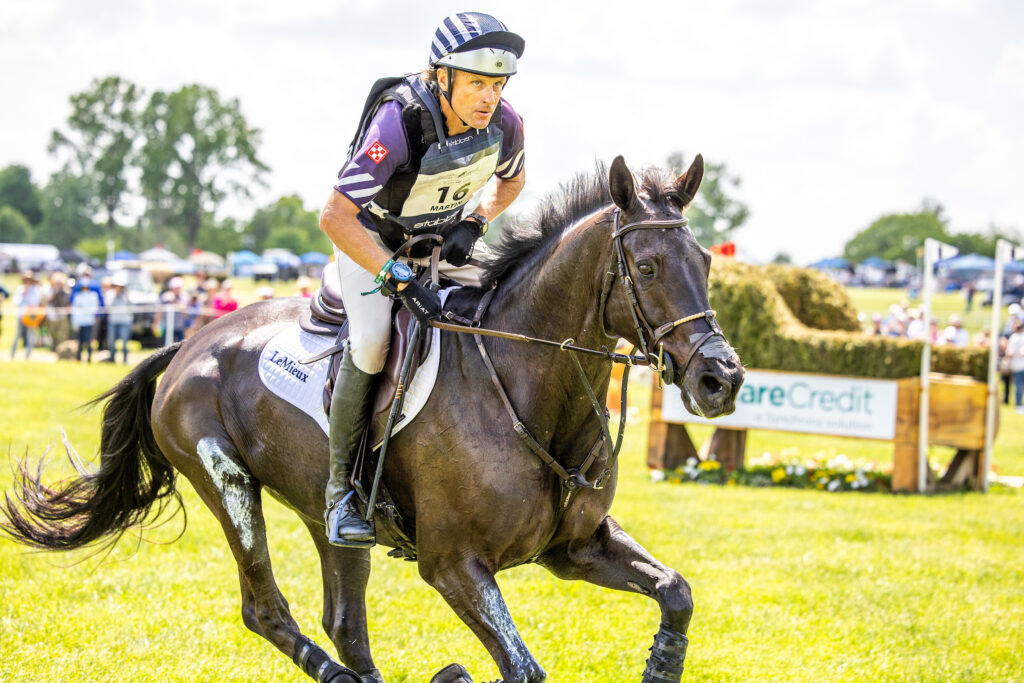
VideoAbout seven years ago after recurrent injuries—including a broken pelvis, leg, arm and wrist, as well as torn abductor muscles and numerous surgeries—four-time Olympian Boyd Martin launched an all-out fitness transformation to ensure he could continue performing at his full potential for as long as possible.
“For so many years, I felt like I was bulletproof. But eventually I realized I’m older, and I’m not Superman anymore. So, I really started to focus on becoming more of an overall athlete,” Martin admitted. “I started doing physiotherapy and yoga and ice baths—and just training like a demon. I had to make sure I was doing absolutely everything I could to perform the way I wanted to and to be as good as I can be.”
In addition to improvements in diet, sleep and stamina, yoga has become a key component of Martin’s wellness program, thanks to his longtime yoga instructor Biz Magarity. The two first partnered about a year before Martin competed in the 2021 Tokyo Olympics after he’d recovered from hip, groin and core muscle injuries that left him stiff and sore in areas he needed most to ride at the top of his game.
We’ve all heard that yoga is good for equestrians. And according to Martin, the practice has been game changing for his performance in the saddle. But why exactly? During our coverage of Boyd and Silva Martin’s 2026 Windurra Camp, Practical Horseman had the opportunity to learn how the practice benefits riders directly from Magarity during the yoga session on the final day of camp. Clinic participants—as well as dressage trainer Brett Parbery and Martin’s physiotherapist Andrew Russell, who both headlined at the camp—participated in the class.
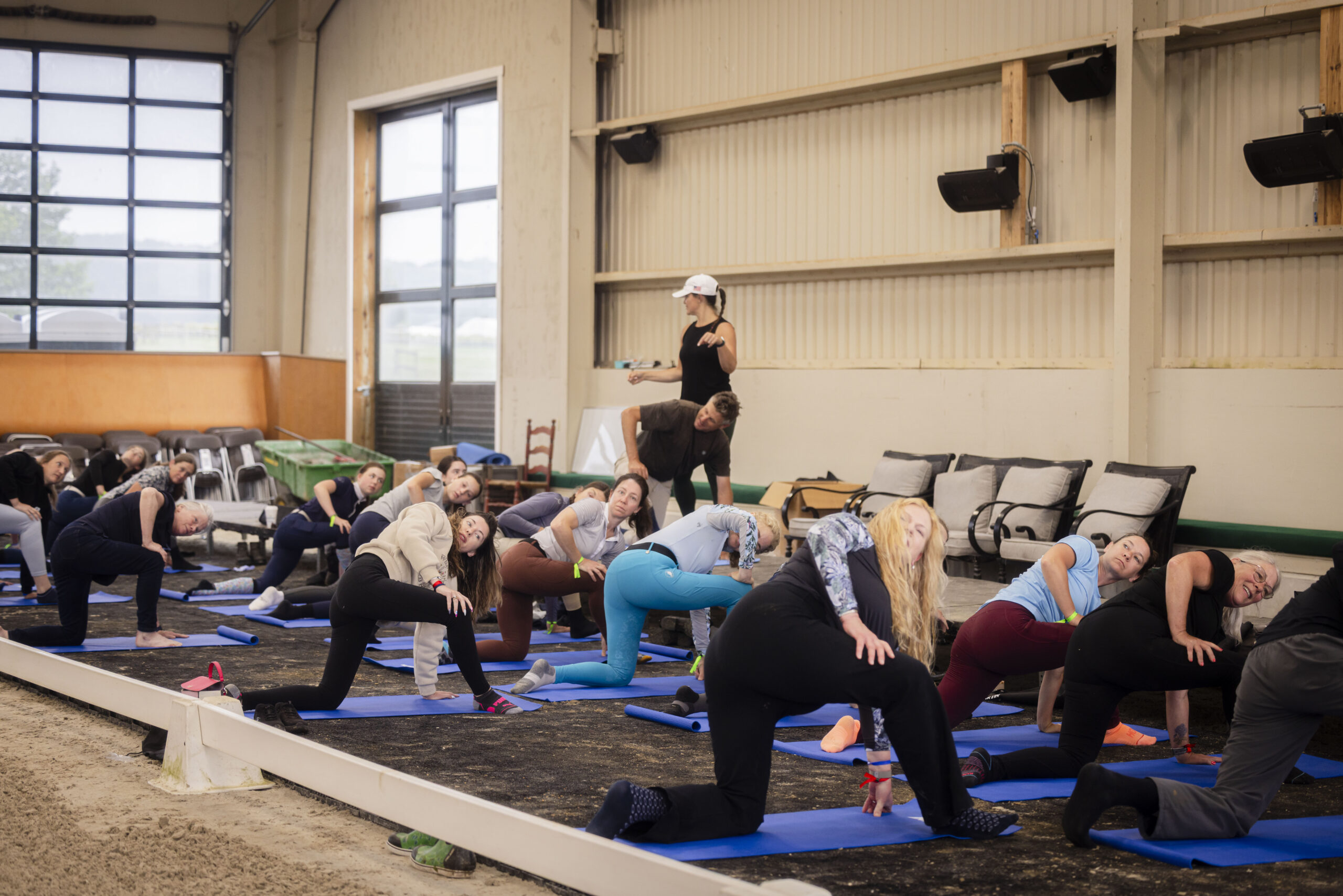
Here, Magarity details how yoga can help equestrians from both a physical and mental standpoint, the improvement she’s seen in Martin since he took up the practice and how to get started if you’re new to yoga. In Part 2 of this article series, we’ll share some of the movements Magarity demonstrated during Windurra Camp and explain their benefits.
Why Yoga Is Key to Performance in the Saddle
Over the course of her 15 years as a yoga instructor, Magarity has come to specialize in sports performance, stress reduction, pain management, injury recovery and prevention, and she’s a firm believer that yoga isn’t only for the super flexible but a practice that can meet riders where they are.
“We know how inflexible he is,” she joked, while pointing to Martin, during the early-morning class. “But it’s something he’s gradually worked on over time.”
Magarity explains that any time you do an activity that requires you to be in the same position or do a repetitive motion for a long time, like riding, your body is going to be more tense and rigid. “So, it’s important to find a movement practice like yoga that kind of counteracts that tension,” she said. “With riding in particular, your hips are always in flexion, which results in stiffness.”
She notes that riders also tend to hold tension in their shoulders. “When you’re holding the reins, your arms are always in front of your body, which causes your shoulders to come forward,” she explained. “This can negatively impact your posture.”
Tightness in certain areas, however, can often be deceiving. For example, she said if a certain muscle feels unusually tight, it often indicates weakness in another area. “You need to look at both tension and weakness. You can stretch all day long to help with tight muscles, but if you don’t address the weak muscle that’s maybe on the other side or corresponds to the tight muscle, it’s going to stay tight,” she noted.
Magarity has worked with a broad range of athletes and said she sees the same patterns across different sports. “The general idea is that you want to identify how you’re holding yourself in the saddle and what’s causing the tension and then find a way to do the opposite of that,” she said.
If you sit at a desk or in your car for hours every day, it works directly against a correct riding position and the relaxation you need in the saddle, she explains. The deep muscles in the hips and back need time to open up and relax in order for you to ride most effectively.
In addition to flexibility, Magarity said yoga also introduces you to postures and poses that will make you more aware of your muscles and skeletal system, and it promotes the same core position you use in riding, meaning it will help strengthen the muscles that elongate your spine.
Biz and Boyd’s Yoga Journey
Martin’s good friend and business partner Ava Chase—who co-owns his 2024 Paris Olympic mount, the 16-year-old KWPN Fedarman B, through the Annie Goodwin Syndicate—will never forget the first time she realized just how dedicated the five-star eventer was to his yoga practice.
While hosting a clinic at Chase and her husband’s Far View Farms Equestrian Center in San Marcos, California, Martin bunked in the couple’s home to help host evening dinner parties with clinic participants. “I would get up at 5 a.m. to get the coffee going, and there would be Boyd out on my lawn doing yoga over Zoom with Biz,” Chase recalled with a laugh. “That’s just how Boyd rolls.”
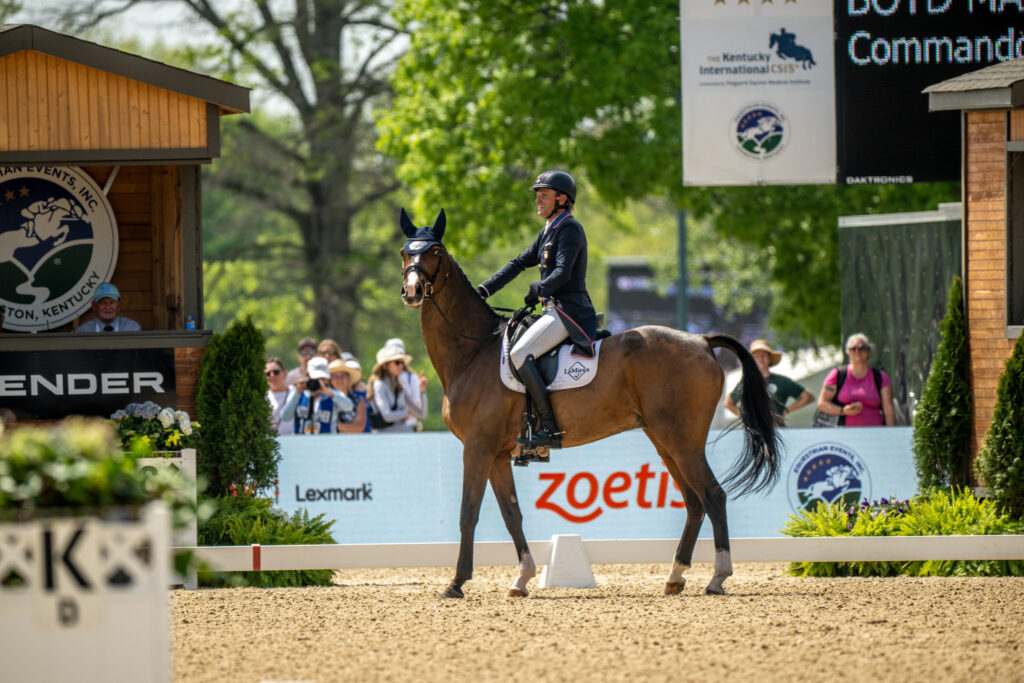
Riders certainly have an edge on longevity compared to athletes in other sports, Magarity noted, and for riders in particular, yoga can be a key tool in prolonging their careers. Leading up to the Paris Games and with an eye on his future career, Martin was laser focused on how yoga could help him ride to his full potential as he ages.
“Boyd recently turned 47 and is at the top of his game. Most high-level athletes in other sports are long retired by that age. There’s not one particular thing that yoga has done to help his career. It’s a combination of the mental and physical benefits and the fact that he can still do it,” Magarity said. “In addition to the yoga that we do together, the fitness and health routine he’s created is all about how he can stay in this game for another decade or so.”
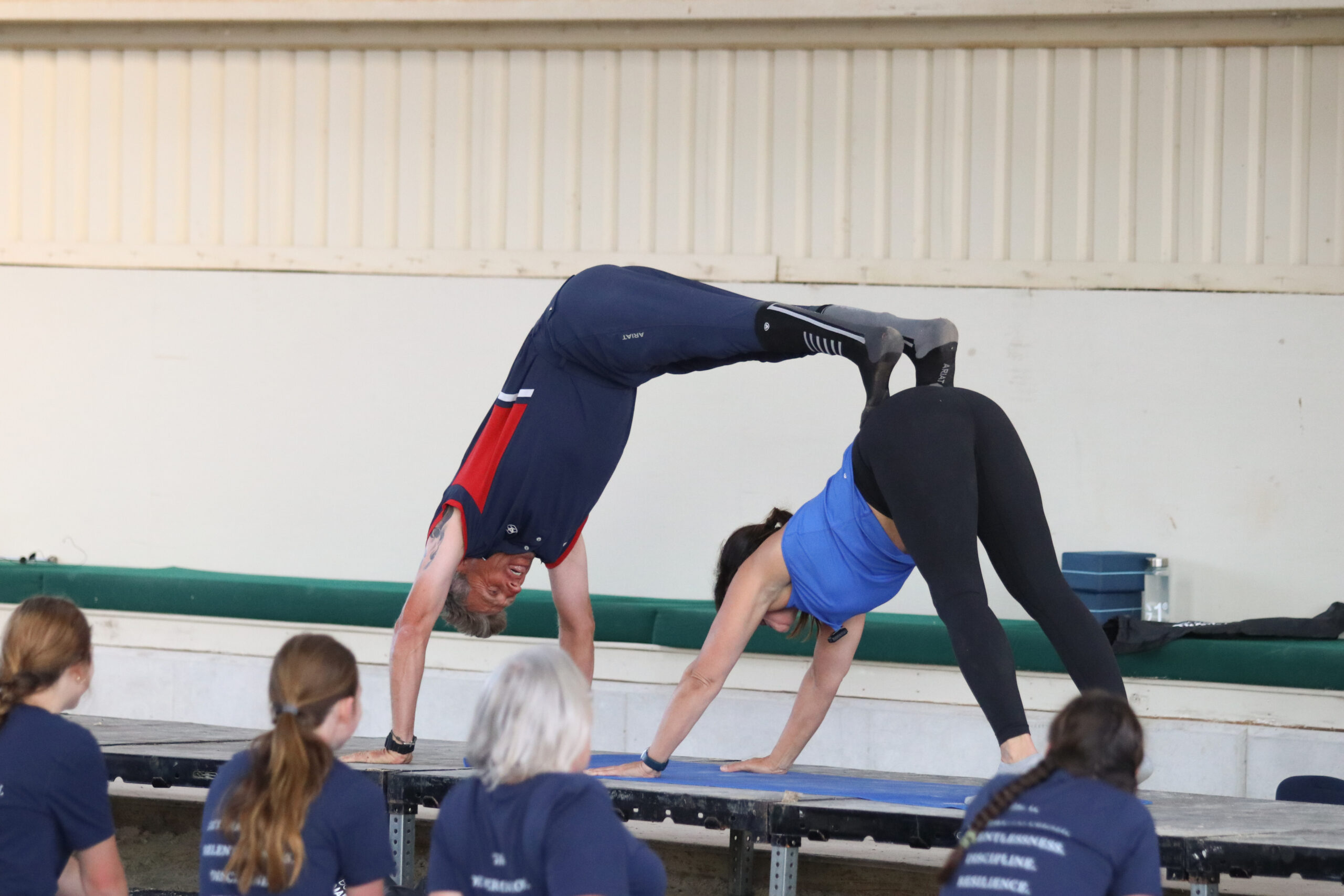
To maintain his flexibility and reduce soreness and tension from hours in the saddle, Martin and Magarity do a virtual or in-person yoga lesson at least once a week, depending on the rider’s busy travel schedule. Before bigger competitions, they typically do one or two extra sessions per week. She also provided Martin with a shorter movement session designed specifically for him and his weaknesses that he does daily.
“Boyd usually rides all morning and then sits down to have lunch,” Magarity said. “When he gets back up to ride in the afternoon, he has a lot of pain and stiffness in his hips. So, I created a little session that he does almost every day after lunch to help turn on the muscles in his hips after they kind of turn off while he’s sitting,” she said. “It’s like a little awareness and strengthening exercise he goes through to reactivate those muscles before his afternoon rides.”
While Martin’s prior injuries exacerbate his stiffness, Magarity said it’s common for all riders to tighten up when they sit down after doing the same activity for three or four hours straight. “During football games, you’ll see guys on stationary bikes on the sidelines to keep their muscles warm and prevent tightness from inactivity,” she said. “It’s the same with riders.”
Mind Over Matter: The Mental Benefits of Yoga
When Martin told his team that he was struggling with competition mindset issues ahead of the 2024 Paris Olympics, Magarity jumped into action.
“I told Boyd that we would continue working on his injuries, but we were also going to incorporate breathing and mindfulness practices to help him deal with pre-competition stress,” she said. “It’s so important, especially for upper-level riders, to learn how to use their time before a show to deal with their stress response and get their bodies and minds right.”
Magarity explained that when you’re competing and are under more stress, it can create an even higher level of tension which can have a domino effect and interfere with your mental capacity for stress.
“Through yoga, you can work on feeling that tension and pulling yourself out of it. Our bodies are magically built with all of these tools to bring us out of stress states. When you practice deep breathing and other mindfulness exercises, it helps you train yourself to relax even during times of tension or stress,” she said. “And this is so key to help riders perform better.”
While Magarity isn’t an equestrian, she’s made a common observation after watching riders train with Boyd. When riders are anxious or stressed, that nervous energy transfers to their horses.
“When you’re in an anxiety-producing experience, you need to be able to regulate your nervous system and yoga provides a wide umbrella to do this,” she said. “One of the most important things you can do as a rider is regulate your own emotions when those external factors start to fluster you, so it doesn’t start to affect your horse.”
Find a Yoga Practice That Works for You
For riders who are brand new to yoga, Magarity suggests taking classes in person with a qualified instructor to help master the basics and for one-on-one instruction. “It’s even better if you can find an instructor who’s open to helping if you tell them you’re a rider and have stiffness or pain in your lower back,” she said. “This will give you a solid foundation in the beginning.”
For consistency’s sake, however, she said doing yoga via online videos or an app is useful as a supplemental practice and can often be more convenient if you have a hectic work schedule or travel often while also trying to get time in the saddle.
“My caveat here though is that when you’re doing yoga by yourself, you don’t have an expert set of eyes on you. And you don’t want to repeatedly do a movement wrong because that can result in bad posture or other negative habits,” Magarity cautioned. “That’s why I strongly suggest doing a combination of in-person classes and online videos when you’re just starting out.”
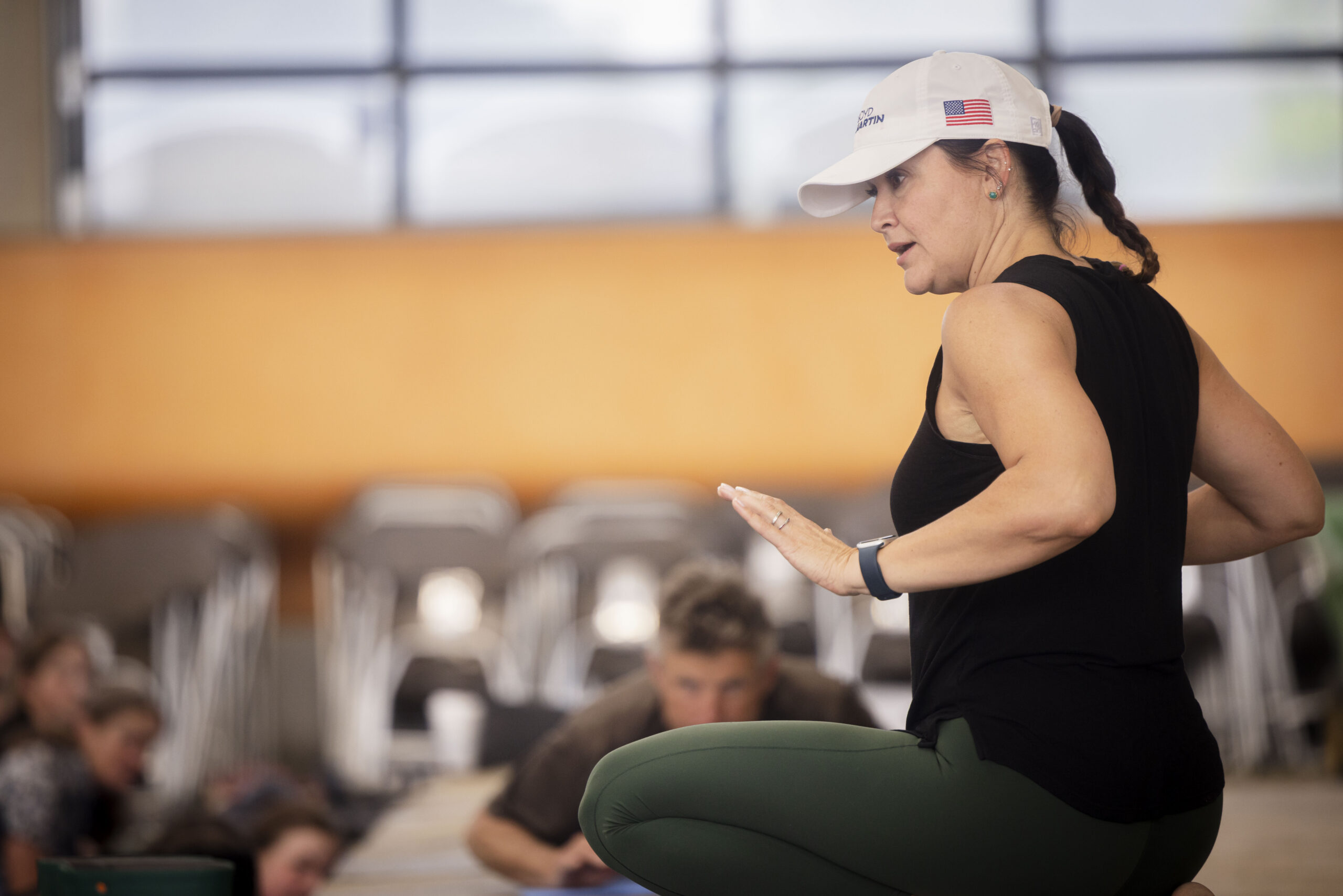
While there’s not a set rule of how many times she recommends riders practice yoga per week, Magarity is a big proponent of finding a routine that works for you and sticking with it the best you can.
“How often you practice yoga largely depends on the other exercise and stretching you’re doing and what you’re hoping to improve. Flexibility? Mobility? Recovery? From a nervous system and stress-response standpoint, doing yoga three or four times a week might be helpful,” she said.
Once you build yoga into your exercise program, Magarity suggests keeping your practice consistent. “When you’re inconsistent, it’s hard to notice if you’re getting the benefits. Consistency can alert you to any hidden tension or underlying weaknesses,” she noted. “If you’re all of a sudden really sore after riding or doing a workout that you’ve been doing for weeks that tells you something might be wrong. It’s a great tool for checking in with yourself.”
While Magarity is a strong proponent of routines, she also advises changing your program when it stops working for you—and notes that this is especially true for women. “When we start having major hormonal shifts as we get older, it affects the way our musculoskeletal systems work. So, stick with your routine until it doesn’t work. Then, reassess and make changes as necessary,” she said. “You might find that you need to make changes every couple of years.”