




 Video
VideoWhether you are a weekend-only pleasure rider or a serious, driven competitor, properly conditioning your horse for the task at hand is critical to ensure not only their success on the day, but their overall well-being. A successful program is tailored to the horse and circumstance, and will consider factors such as age, level and type of work, and preserving long-term soundness.
“If you are fit for an activity then it is much easier and much more fun,” explains Hilary Clayton, BVMS, PhD, ACVSMR, FRCVS, principal at Sport Horse Science and professor emerita at Michigan State University in Lansing. “Horses have a fabulous cardiovascular system, and they can do proportionally way more than people. But we still need to keep them fit enough for what they’re doing, without endlessly conditioning the horses, so they’re way fitter than they need to be.”
When a horse is properly conditioned, their body’s systems are acclimated to handle the demands of their intended job. In recent years, research done by Clayton and others has brought scientific validation to some traditional conditioning practices while debunking others, and new studies continue to add to that well of knowledge. Using this science as a foundation, fine tuning the specifics of a conditioning program often requires a bit of feel and intuition on the part of a horse’s caregivers, trainers, and medical team.
“At a basic level, you can ‘cookbook recipe’ it when it comes to conditioning, but there is so much individual variability—of the rider, the horse, the discipline, the level of work,” says Mark Revenaugh, DVM, owner of Northwest Equine Performance in Mulino, Oregon, and founder of Ignite for Equine Athletes, a consortium of professionals dedicated to using evidence-based practices to promote equine well-being in sport. “My advice to clients is it’s important to have a plan, even if it isn’t the best plan, and then you can recognize what works and what doesn’t.”
Getting Started
Creating a conditioning program requires you to chart a path from your horse’s current level of fitness to where it needs to be to do his job safely and comfortably. Being clear about the program’s end goal as well as its time frame will also help define the parameters.
“Conditioning is a simple word that has different definitions for every horse, every rider, and every owner,” says Casey Cromer, DVM, a professional services veterinarian with Boehringer-Ingelheim. “A‘pre-conditioning’ appointment allows owners to have a conversation with their veterinarian, so we are all talking about the same definition and same expectations.
“Think about performance: there’s a soundness component, there’s a respiratory component, a cardiac component, and an overall talent component,” Cromer continues. “We have to put all that together and make sure the expectations for that horse are actually appropriate.”
Involving your veterinarian from the beginning also means you can create a plan that is proactive in supporting your horse’s unique needs.
“From the veterinary side of things, if I can see the horse prior to it entering its conditioning or training program, I’m not working off a problem, I’m working off a baseline,” Cromer explains. “Especially as we move through the season, and different questions come up about how to get to the next level, if I have that baseline, then I can make better recommendations for that horse.”
Most programs begin with long, slow, distance work, gradually adding in hills, speed and skill exercises over time. A common guideline is to not increase the horse’s workload by more than 10 percent from week to week. The beginning stages of conditioning prepare the horse to work for about 45 minutes to an hour, on different terrain, and to be able to canter for about two minutes without a break.
“That prepares a horse for the basic going out and having fun, and lower-level competition,” says Clayton. “That’s what I regard as a baseline level of fitness, and for a lot of horses, that’s enough.”
The effects on the body’s systems and structures of progressive conditioning over time are cumulative. A horse who has never been fit will take longer to achieve baseline fitness than one who has been fit previously and taken time off.
“The more I look into all aspects of medicine, so much of it is based on adaptation—the body’s ability to react to any and all stresses that are placed on it,” says Revenaugh. “When there is effective adaptation, the body responds in a favorable way. When there’s ineffective adaptation, either the wrong things get stronger, or systems start to fail. For all of the body’s systems, you don’t go from zero to 10; there are 10 steps in between, and there is a sequence that needs to happen.”
If you don’t know what types of conditioning are most appropriate to help your horse achieve baseline fitness, consult with your veterinarian or a trainer familiar with your discipline.
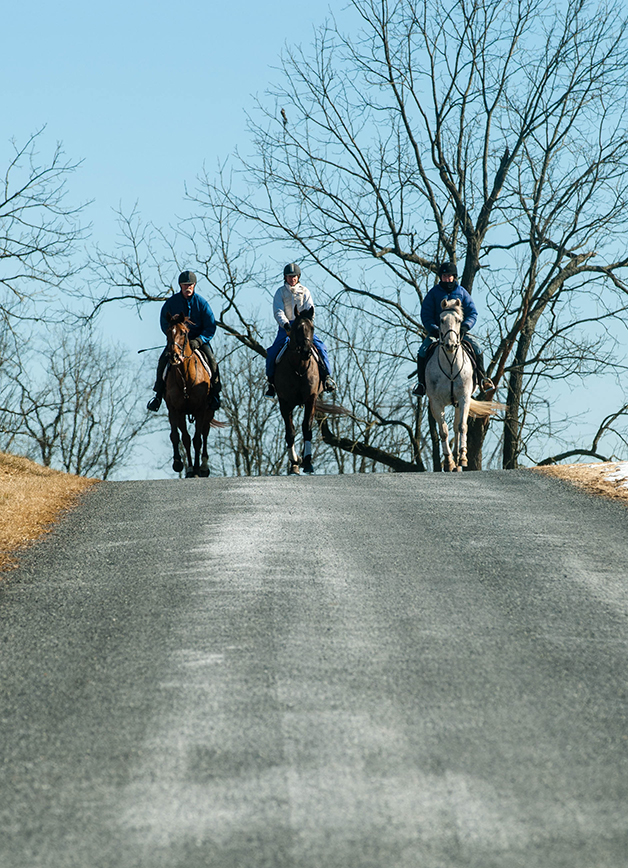
“I encourage people to build a network of others in your same sphere and sport, and competing at the same level, to get a sense of what their horses are doing,” says Tim Worden, PhD, a Canadian sport scientist who has worked with numerous FEI-level riders as a performance consultant and manager. “If you identify that everyone else is doing core training practices, for example, and you aren’t, it’s not necessarily that you are wrong, but it’s a chance to understand, be aware, and decide if that is something you should be doing with your horse.”
“There is an incredible amount of collective knowledge in the horse world,” adds Revenaugh. “People have figured out so much about what works and doesn’t work through the years, and that should not be underestimated.”
Evaluating Progress
Over time, a successful conditioning program will cause the horse to find his work easier to perform, while preserving soundness and overall health. The horse’s muscling and topline fill out, and under ideal climate conditions, the horse’s pulse and respiratory rate will come back to normal more quickly after work than when he is unfit, usually within 15 to 20 minutes.
“For somebody who is preparing to hack, or show at a lower level, if the horse is doing his job and is not stressed, and not taking an excessively long time to recover—they are typically plenty fit,” says Clayton.
Some riders turn to technology, such as a heart rate monitor, or various fitness tracking devices designed for horses, to more objectively monitor their horse’s development. Fitness wearables for the horse can quantify everything from the number of steps taken, to the amount of time spent in each direction and at each gait and can identify patterns of asymmetrical movement.
Experts recommend keeping a journal to track the horse’s progress, so you recognize what is working well and what isn’t. These notes can include everything from the content of the actual ridden program to external variables, such as who is working on the horse’s care team, what his shoeing program or diet look like, and how frequently he competes.
“People tend to take notes when [things] aren’t working,” says Revenaugh. “It’s arguably more important that you make a note of it when something is really working for your program, or for an individual horse.”
Research indicates that injuries in sporthorses are often directly related to asking the horse to do too much, often repetitive, work, thereby depleting energy reserves and straining tendons, ligaments, muscles and joints. It is always better to stop working for the day when it feels like the horse has a bit more “gas left in the tank” than to keep pushing to reach a particular duration of time for exercise. Regardless of discipline, it is important to include a range of cross-training exercises in your program to reduce the risk of overuse and overload-related injuries.
“We know that the intensity of exercise, the repetition of exercise, and the speed in which you exercise a horse all have medical consequences,” says Cromer. “Use a lot of different modalities in conditioning your horse, just like you would for yourself at the gym. Even if you want to build a strong upper body, you’re not going to do biceps curls six days a week.”
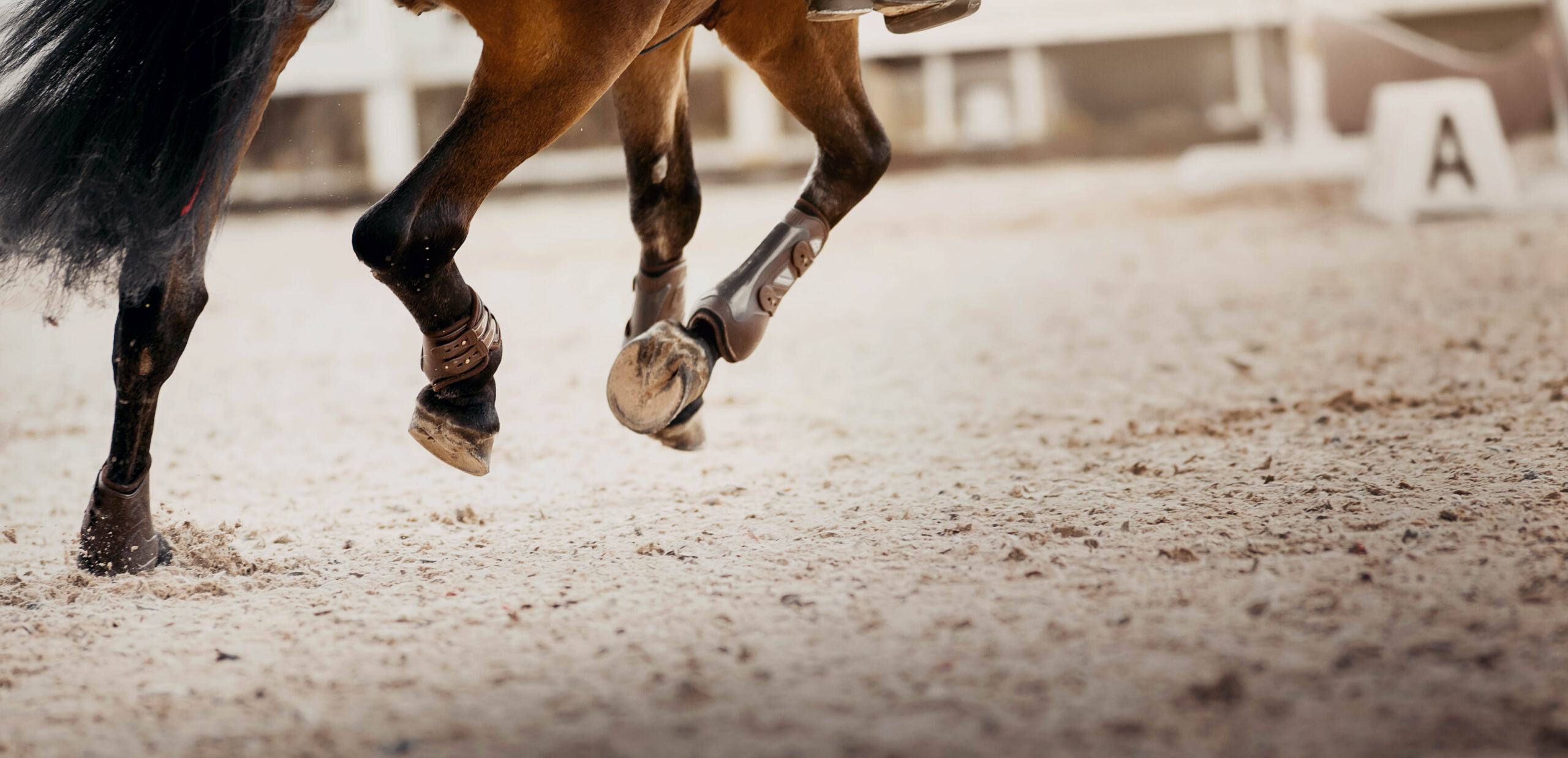
Unmounted exercises that improve a horse’s posture or coordination, or engage their brain, are a few examples of unique cross-training opportunities, particularly useful when weather conditions prohibit more intense exercise.
“Cross-training is not what gets the horses ultimately the fittest, but it’s what protects the horses against these injuries,” notes Clayton. “There’s no one type [of cross-training] where you say, ‘oh, I’ve got to do cavalletti, or I’ve got to swim the horse.’ You do whatever the horse and rider can do and enjoy doing—but something different than drilling in the arena.”
Finally, it is essential to ensure that sufficient recovery time is built into your horse’s program.
“The adaptation occurs not when you’re doing the hard work, but when you’re recovering from that hard work,” says Revenaugh. “If you don’t allow the horse the recovery time, you minimize the adaptation the horse is able to do.
Recovery can be passive, where the horse is simply turned out for a few days or weeks after an intense effort, or active, where the horse’s workload is reduced significantly, but still includes light flatwork or hacking on trails. For sport-horses, experts generally recommend active recovery over passive recovery.
“Don’t forget to look at the overall horse, in terms of determining whether you’re over doing it,” notes Revenaugh. “A knowledgeable horseperson can tell an awful lot just by looking at him. Is he stocked up? Eating well? Is he angry all the time? Does the hair coat look [poor]?”
Pushing for the Peak
Equestrians may be surprised to learn just how far up the levels baseline fitness can take their horses. In fact, most horses can manage dressage through Prix St. Georges level, eventing at the lower levels, and jumping fences up to 3’6” without requiring much additional fitness beyond baseline. But when it comes to enhancing fitness to tackle the upper levels, programs must become both more nuanced and individualized.
“You can divide the sports into the ones that need primarily strength, and the ones that need primarily cardiovascular fitness,” says Clayton. “Dressage and jumping are both highly strength related, whereas for eventing, the major limiting factor in high-level performance would be cardiovascular fitness.
“If you want to go on and do higher levels then you look at the sport, and you do extra work that will prepare the horse specifically for the type of work you want him to do,” she continues. “Dressage, for example, doesn’t have a very high cardiovascular requirement. You don’t need to go out and do gallops to get your horse fit, but you do need to do strength training exercises. Often, the sport itself is the training and strength. That’s part of why it takes so long to produce a fully conditioned Grand Prix horse.”
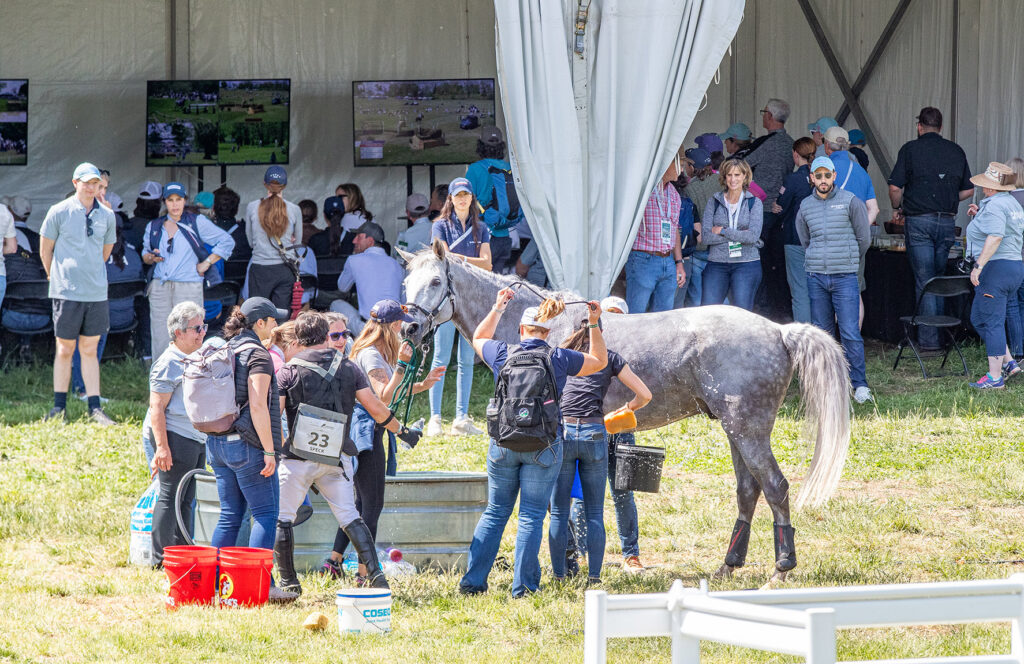
A program for an elite jumping horse might include a combination of jumping exercises with work outside of the arena on hills, or other innovative approaches. These adjunctive techniques build the anaerobic strength required for higher fences without adding excessive concussion or repetition.
Horses competing at higher levels in endurance sports such as eventing or distance riding, which require greater cardiovascular fitness, also require a mindful approach. Increasing a horse’s aerobic capacity improves their ability to metabolize oxygen, which fuels the body’s cells. As the horse’s cardiovascular system becomes stronger, he can do the same level of work at a lower heart rate, thereby using less energy. To avoid overuse injuries, experts recommend using the off-season to build cardiovascular fitness, and the competition season to add strength and fine tune sport-specific skills.
“There’s something to be said for competing your way into fitness, because if done effectively, the challenges your horse is expected to manage, there’s no substitution for that,” says Revenaugh. “But ideally, getting some serious baseline [cardiovascular] fitness going in the downtime of your year allows you to target that component of your conditioning on your terms.”
Where horses working in strength sports might be expected to maintain a fairly consistent level of fitness throughout the year, those in endurance sports typically are conditioned to reach a “peak” level of fitness a week or two before a major competition, followed by a lighter period of work leading to the event itself.
“You want them coming into the competition feeling good, and all their little aches and pains are fixed,” explains Clayton. “Then after the competition, you let them down a little and allow them to do easy stuff and things they like to do for a little while.”
Finally, all horses—regardless of discipline—require time off from competition throughout the year, which should be factored into their fitness program.
“When you are preparing for competition, it is a bit of stress and pressure on the horse,” says Worden. “Whatever sport you are in, look to the trainers who have horses who last a long time, and try to understand how much those horses are competing. You start to see riders get a lot more focused on getting horses out for certain events, with a lot more recovery built in, taking a lot of that stress off.”
Planning the arc of your season through the lens of fitness can be a helpful approach.
“Have an intelligent discussion, and consider the time frame,” says Revenaugh. “Then, how do you schedule your week, to your month, to your spring season, to your year; how do you schedule the horse going from one level to the next level. You have to consider all of these things in the grand scheme.”
The Aging Athlete
Aging equine athletes can still be successful in their jobs, but when it comes to conditioning, some adjustments are indicated. With age, soft tissues become less resilient, and the ability of physical structures to adapt diminishes. However, horses who have been conditioned appropriately throughout their lives often transition into their senior years with fewer fitness-related issues than those who were either never or improperly conditioned.
Clayton cautions that preserving a horse at the end of his career is contingent on the animal having the opportunity to run and play with other horses during his first six months to a year of life.
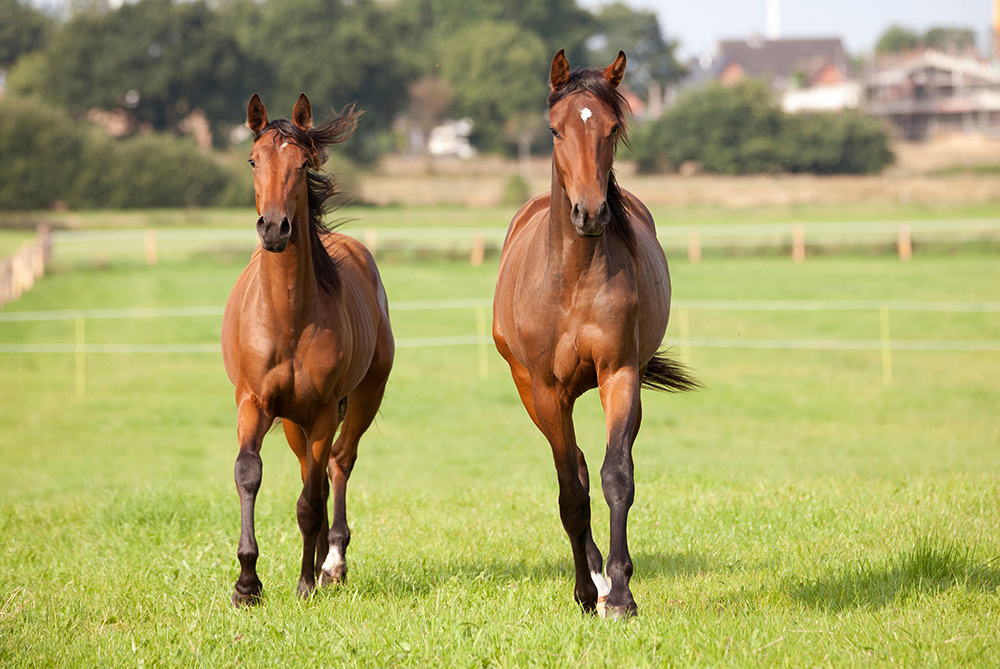
“If they don’t get that, then they never have fully formed and strong articular cartilage, tendons, and ligaments,” she explains. “Collagen is developing in those early months of life. After that, we can’t do a whole lot to actually improve those tissues. If we’re lucky, by the time they’re an early teenager, they’ve developed all the fitness they need, and we can be careful not to overtrain them—because a horse who is built sound and trained well, they are going on into their late teens and even 20s.”
“Horses that are successful at 18, 19, 20 years old—a lot of good decisions have been made in those horses’ careers,” says Revenaugh. “There’s a genetic component to it, too. But my experience has been once a horse has a strong baseline fitness, unless he has a prolonged period of time where he’s taken out of the game, that fitness carries over into the next season. And for the older horse, if conditioning and training has been successful along the away, it’s almost like you build and build and build on it, and they get better and better and better.
“A lot of it is contingent on being really effective at your decision making in the first 10 years,” he continues. “If you spend all the wear and tear on the horse in those first 10 years—it catches up with them.”
Even though older horses may have a reduced capacity for adaption in their bodies, sometimes introducing new or unique forms of exercise can reactivate this mechanism.
“If you have a horse who feels like he’s starting to not be able to do as much, and you begin to include new, different exercises, it can be a powerful stimulus for the body,” says Worden.
But when your aging athlete begins to show signs that maintaining condition sufficient to perform at their peak levels is no longer possible—often seen through loss of muscling, longer recovery times, and reduced performance—it is likely time to drop them down to an easier level, where they can perhaps serve as a schoolmaster for a rider learning the ropes.
Final Thoughts
Getting your horse to the optimal level of fitness for the job he is expected to do will go a long way toward ensuring the safety and success of the horse-and-rider partnership. And while it might be tempting to take shortcuts along the way, doing so is certain to cause setbacks instead.
“You do have choices as a trainer,” says Revenaugh. “The way to get your best result is keeping your horse healthy, and in the game, and flourishing.”