


 Video
VideoThis article is brought to you by Mad Barn.
A sporthorse’s topline often has a way of revealing problems before anything else. Maybe your saddle is sitting differently? Or maybe your horse looks flatter through the back and loin, or less powerful behind? Sometimes the change is subtle at first, appearing as a softer outline with less muscle over the croup or a frame that no longer looks as strong and uphill as it once did.
In this case, it can be tempting to immediately reach for a topline supplement. And in the right situation, targeted nutritional support can make a meaningful difference. But a poor topline is rarely explained by one missing ingredient alone. It can reflect low calorie intake, inconsistent forage quality, inadequate protein, imbalanced vitamins and minerals, age-related muscle loss, discomfort, health issues or a conditioning program that’s not working the right muscles.
This is why topline support should begin with a broader look at your sporthorse’s overall health, diet and exercise. Before selecting a supplement, consider his complete feeding program, the quality and quantity of forage, his workload, body condition and any changes in health or management. Your veterinarian and an equine nutritionist can help identify any gaps that are most likely limiting muscle development.
Topline Health Starts With the Whole Horse
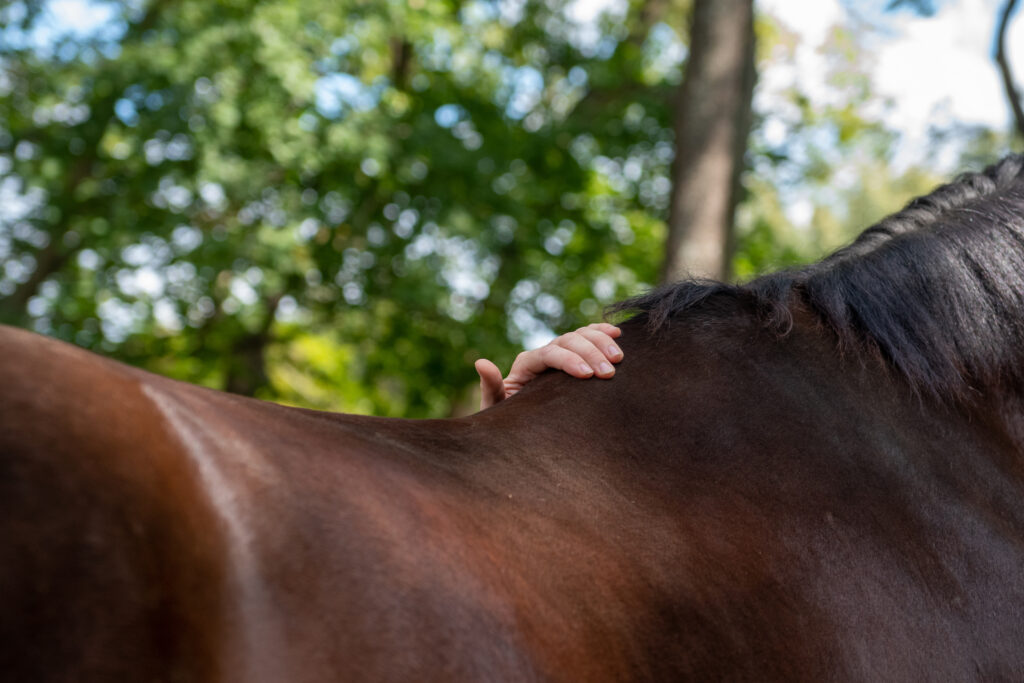
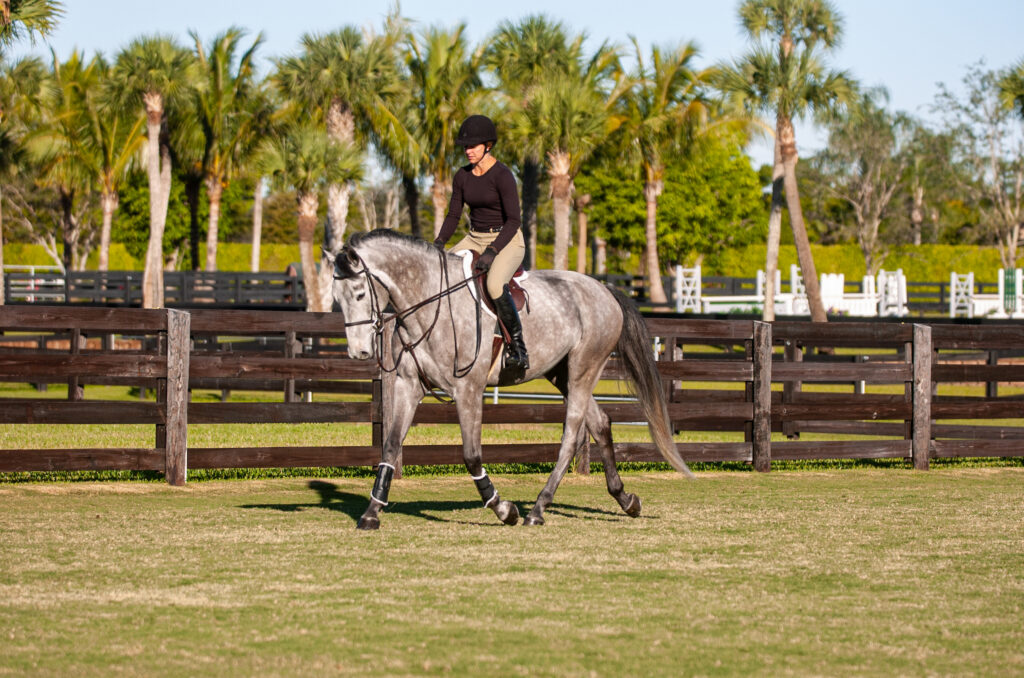
The topline muscles run along the upper portion of the horse’s body, from the neck and withers across the back, loin, croup and hindquarters. These muscles are central to strength, movement, posture and performance. They also shape the visual impression of condition, which is why topline loss can be so concerning for owners of sporthorses in active work.
In most cases, a healthy topline begins with the same fundamentals that support overall performance: a forage-based diet, enough digestible energy to maintain body condition, high-quality protein, appropriate vitamins and minerals and regular exercise that develops the horse progressively. Supplements can support this process, but they cannot replace an unbalanced diet or inconsistent training.
Forage deserves special attention because it supplies much of the horse’s daily energy and contributes to total protein intake. If hay or pasture intake is low, inconsistent or poorly matched to the horse’s needs, topline development may stall even when a supplement is added. A forage analysis, paired with a review of grain and current supplements, can help clarify whether the diet is truly meeting the horse’s requirements.
Topline Versus Body Condition: Know What You Are Looking At
One of the most useful first steps is separating poor topline from poor body condition. A horse with a weak topline may lack muscle coverage over the back, loins and hindquarters. The change can be most noticeable along the saddle area or over the croup, where the horse may appear less filled in than he did previously.
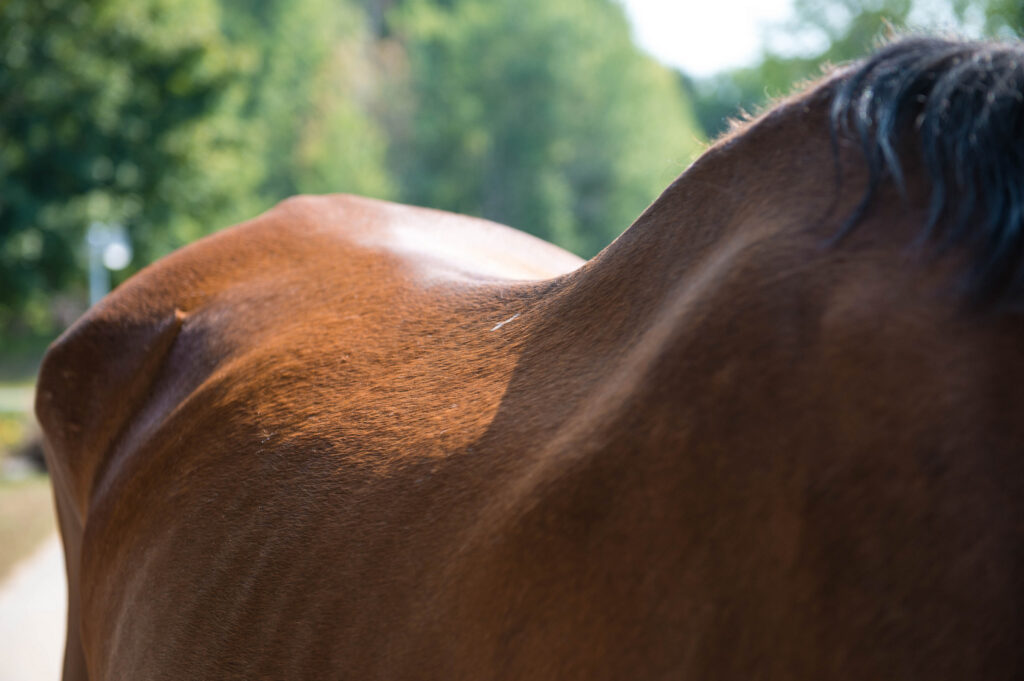
A horse that is underweight can look similar. Horses with low body condition may appear flat across the topline because they lack overall body mass and fat coverage, not only because muscle is lacking. These horses may also look ribby or tucked up. In this situation, increasing calorie intake, improving forage quality and building fitness gradually often create the most visible improvement.
Saddle fit can offer another clue. If the saddle begins to bridge, rock or shift more easily than it used to, a change in the horse’s back shape may be the cause. This doesn’t always mean the answer is a supplement, but it is a signal to reassess your horse’s diet, workload, pain, dental health and management before the issue becomes more difficult to correct.
Why Horses Lose Topline
Topline loss usually develops over time. It may follow a period of reduced work, a change in hay, a hard competition season, a health setback or the normal aging process. Often, several small factors overlap until the horse can no longer maintain the same muscle coverage as he previously did.
Calorie intake is one of the first variables to review. When a horse isn’t consuming enough digestible energy to maintain condition, the body prioritizes essential functions over muscle maintenance. The result can be a gradual softening or loss of definition over the topline.
Protein quality is equally important. Total protein on a feed label doesn’t tell the whole story because the horse must break dietary protein into amino acids before those nutrients can be used to build and repair muscle. Essential amino acids are especially important because the horse cannot make them in sufficient amounts; they must come from his diet.
Even when total protein appears adequate, an imbalance in key amino acids can limit normal muscle protein synthesis. Vitamin and mineral status matters, too, because normal muscle metabolism depends on a steady supply of micronutrients. Inconsistent exercise, dental disease, metabolic or endocrine conditions, chronic stress, back soreness, lameness, poor saddle fit, injury and prolonged rest can all contribute to the same outward picture: a horse who is losing strength and shape through the topline.
When Amino Acids Are the Missing Piece
Many owners are surprised to learn that a horse can be eating enough calories and still be short on his amino acids needed to support muscle. This is where targeted supplementation may be useful, especially when the broader diet is already balanced and the horse is doing appropriate work.
For horses whose main gap is essential amino acid intake, Three Amigos is the most direct option in the hierarchy of support. It provides lysine, methionine and threonine, three limiting essential amino acids, in a ratio designed to support muscle development, maintenance and recovery. In practical terms, it’s best suited to horses that need help supplying the building blocks for muscle while the rest of the feeding program is already on solid footing.
That distinction matters. Three Amigos is not intended to fix low forage intake, poor calorie supply or a broad mineral imbalance. It fits best when the horse’s diet has been reviewed, body condition is appropriate or improving, exercise is consistent and the remaining concern is support for protein synthesis and lean muscle development.
When the Whole Diet Needs More Support
Some horses need more than a targeted amino acid blend. If a horse is receiving little grain, has limited access to quality pasture or is primarily maintained on forage that has not been balanced, the overall diet may be missing more than amino acids. In that case, a complete vitamin and mineral supplement with amino acid support may be a better starting point.
Omneity® is designed for horses on forage-based diets and supplies key vitamins and minerals, including vitamin E, selenium, magnesium, potassium, B vitamins and trace minerals, along with amino acids. For many horses whose diets are built around hay or pasture with little fortified feed, Omneity® may offer a broader way to support the nutritional foundation that topline development depends on.
AminoTrace+ sits in a more specialized position. It provides enhanced nutrient levels, including higher levels of lysine, methionine and threonine, and is appropriate for horses in heavy work. It is also formulated for horses with metabolic considerations or those consuming forage high in iron. For these horses, the right answer may not be simply adding more calories or a single amino acid source, but choosing a formula that better matches the horse’s metabolic and mineral needs.
When the Horse Simply Needs More Calories
Not every horse with a weak-looking topline is short on amino acids. Some horses need more energy overall before they can gain weight, rebuild condition and respond fully to training. In those cases, the priority may be calories rather than a supplement aimed primarily at muscle protein synthesis.
For horses that need additional energy to gain or maintain body condition, W-3 Oil may be more appropriate. W-3 Oil provides a concentrated source of fat and omega-3 fatty acids, adding calories while supporting coat quality. It is not the same type of topline support as Three Amigos, Omneity® or AminoTrace+; rather, it fits horses whose appearance is being limited by overall calorie intake and body condition.
| If the Main Issue Is … | Recommended Supplements |
| Limiting essential amino acids, with the broader ration already balanced | Use Three Amigos for lysine, methionine and threonine support. |
| A forage-based diet that may lack broad vitamin and mineral balance | Consider Omneity® as a complete vitamin and mineral supplement with amino acids. |
| Heavy work, metabolic considerations or forage high in iron | Consider AminoTrace+ for enhanced nutrient levels and amino acid support. |
| Low body condition or a need for concentrated calories | Consider W-3 Oil for fat, omega-3 fatty acids and additional energy. |
The key is matching the product to the problem. A thin horse may need more digestible energy. A forage-based diet may need broader vitamin and mineral balancing. A horse with adequate condition and a balanced ration may need targeted essential amino acids. A horse in heavy work or with metabolic considerations may need the enhanced support provided by AminoTrace+.
What to Review Before You Supplement
Before making changes, step back and evaluate your horse’s complete program. How much forage is he actually eating? Has his hay changed? Is his body condition score appropriate? Is he chewing comfortably? Has his workload increased, decreased or become inconsistent? Does he show signs of soreness, lameness or saddle discomfort that would prevent him from using his topline correctly?
These questions are not meant to delay action. They’re meant to make your action more effective. If the root issue is poor forage intake, dental discomfort or pain under saddle, adding a supplement alone may disappoint. If your horse’s diet is already strong and he’s working correctly, targeted nutritional support can be a smart part of your plan.
A practical approach is to address the foundation first: forage quality and intake, total calories, protein quality, vitamin and mineral balance and appropriate exercise. From there, choose the supplement that fills the most likely nutritional gap rather than layering products on top of an unknown ration.
Takeaway
A better topline starts with a better understanding of your horse’s whole program. Calories, forage, amino acids, vitamins, minerals, health status, comfort and consistent conditioning all influence whether a sporthorse can build and maintain the muscle needed for performance.
Supplements can be valuable when they are used to solve the right problem. Three Amigos is the targeted choice when limiting amino acids are the main concern. Omneity® offers broader vitamin and mineral support for forage-based diets. AminoTrace+ provides enhanced support for horses in heavy work, horses with metabolic considerations or horses consuming high-iron forage. W-3 Oil is better suited to horses that need more calories and fat to support body condition.
The most successful topline programs are not built on guesswork. They come from evaluating the horse honestly, balancing the diet carefully and using supplementation to support clearly identified nutritional gaps.