




 Video
VideoFor five-star eventer Jennie Brannigan, her horses are not machines. They’re her longtime partners. Since 2010, she has competed at 12 CCI5* events, been part of five Nation’s Cups teams and won the Best First Timer award at the 2023 Defender Burghley Horse Trials with FE Lifestyle. In her training program at Brannigan Equestrian in West Grove, Pennsylvania, she finds it crucial to treat each of her special mounts as individuals and to pay careful attention to their different needs.
In our Q&A with Brannigan, the top eventer shares her strategies for addressing her horses’ specific needs and how she keeps them happy, healthy and performing their best over their long careers.
PH: How do you encourage picky horses to eat?
JB: I’ve found that it’s really about knowing your horses inside and out and what works best for each as individuals. Some horses do better with smaller, more frequent meals throughout the day, especially those who might need a lot of calories but tend to get food fatigue. Other horses might not like to eat in their stalls but are quite happy to eat out in the pasture.
My five-star Thoroughbred Twilightslastgleam (“Comic”) was really funny about wanting to look outside at his herd mates while he was eating. He’s very herd-bound and wouldn’t eat if he couldn’t see his friends. My brilliant groom Isabel Turner suggested we put his feed tub in front of his stall, and that helped a ton. A lot of times it’s those situational things and really taking the time to figure out where they eat best.
I’ve also found it helpful to use combination supplements for my picky horses who need multiple areas of support, so we don’t have to feed a lot of different individual supplements. One of our favorites is SmartPak’s SmartCombo Ultra because it combines five different products for joint, tendon and ligament, skin and coat, hoof and digestive support.
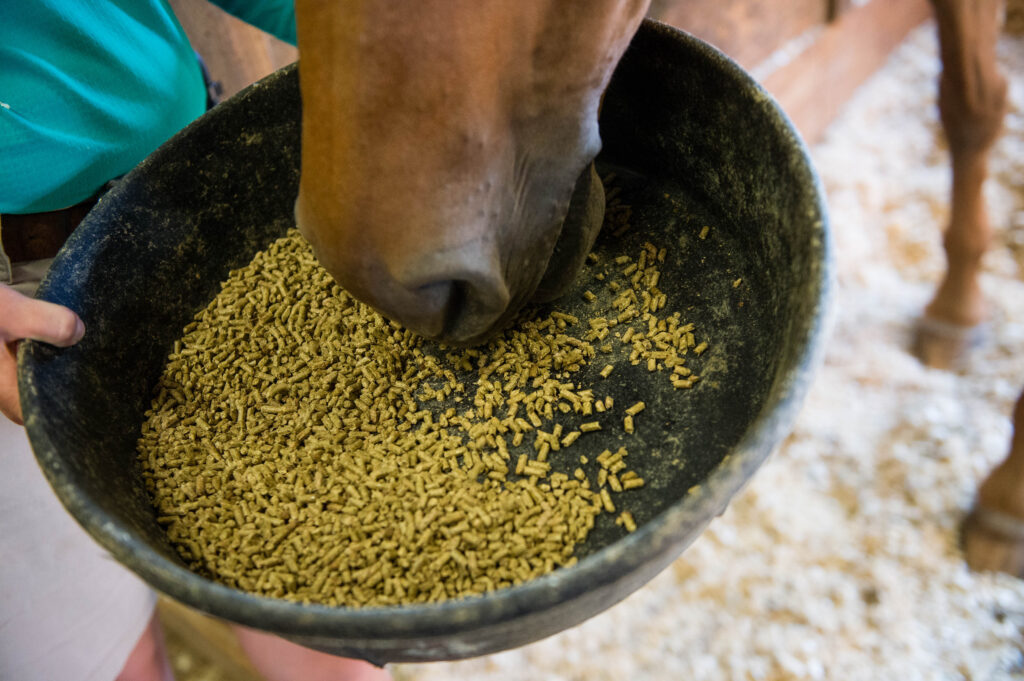
As horse people, it tends to make us feel better to always be doing something, but a lot of times less is more when it comes to horses, and the combination supplements help simplify our horses’ nutritional needs.
For horses who are picky about drinking different water or aren’t great drinkers during the summer, we use this amazing product called Gallagher’s Water. It’s an alfalfa-flavored electrolyte powder mix you add to the horses’ water to entice them to drink.
A few years ago at Burghley, my five-star horse FE Lifestyle (“Foxy”) tied up, and Boyd Martin’s groom Steph Simpson pulled out a packet of Gallagher’s Water for him, and he immediately drank, so now Isabel always has it on hand.
PH: How do you manage horses who are prone to digestive stress?
JB: What we ask our horses to do at the upper levels of eventing is difficult—being on the road and in their stalls much of the time with limited grazing. We essentially try to keep things as natural as possible for them, which can be hard when you’re traveling and competing.
I’m a big believer in giving my horses as much turnout time as possible because they’re built to constantly be moving. The more they can live naturally outside on grass, the better. At shows, I always get my horses out of their stalls for hand grazing.
That being said, Foxy tends to tie up, so we really have to limit his access to grass. I still want him to get his outside time, so we use a grazing muzzle, especially when the grass is high in sugar. Because Foxy doesn’t get all the vitamin E he needs from grass, we give him SmartPak’s Smart & Simple Vitamin E Liquid.
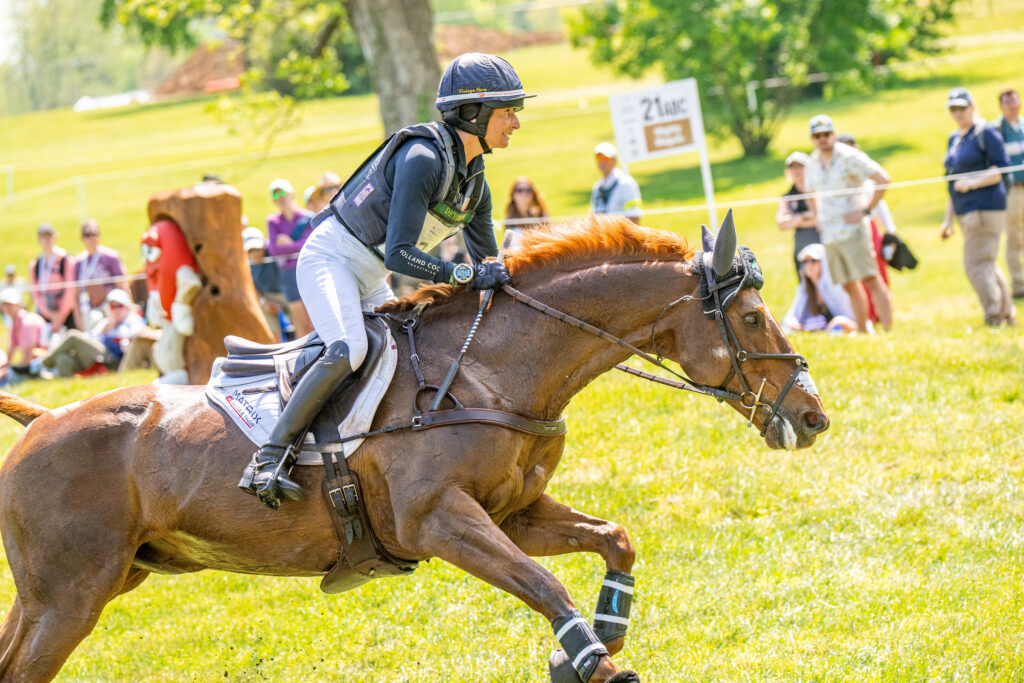
Horses’ stomachs are designed to constantly have small amounts of forage, so when my horses aren’t on grass, we make sure they always have access to free-choice, high-quality hay. When I lived in California, we had a lot of issues with colic because we didn’t have access to the same type of grass we have in Pennsylvania and the horses were exposed to more sand. There, we would also use a sand-clearing product and usually a vitamin E and selenium supplement if they were lacking in either of those.
The SmartCombo Ultra that we have most of our horses on contains prebiotics, probiotics and enzymes for hindgut health, ingredients to support stomach health and normal tissue healing, and psyllium to help remove sand build-up in the digestive tract. So, it covers a lot of different bases when it comes to stomach and digestive support.
PH: Can you share any advice on how you handle your more nervous or hot horses?
JB: I’m a huge believer in giving my horses as much turnout time as possible because they’re built to be constantly moving. And when they’re in their stalls, we make sure they can see other horses.
For horses who tend to be overly anxious or reactive, we use SmartPak’s SmartCalm Ultra. A lot of herbal calming supplements contain ingredients that are prohibited by many competition organizations, but this product is herb free and instead contains naturally calming ingredients like magnesium, vitamin B1 and tryptophan.
We’ve also found feeding alfalfa helpful. A lot of riders worry that alfalfa will make horses hot. But for some of our upper-level horses who need more calories, Isabel and I discovered that feeding alfalfa instead of more grain to be very beneficial.
PH: Eventing is of course demanding on horses’ joints. Can you talk about any preventative measures you take to help support your horses’ joint health?
JB: In our sport, it’s so important to keep our horses’ joints as healthy as possible because jumping and galloping at speed puts stress on their joints. Part of that comes from nutritional support. My horses’ SmartCombo Ultra contains the tried-and-true ingredients for joint health including glucosamine, chondroitin sulfate, hyaluronic acid, MSM and vitamin C.
When considering supplements for your horse, I encourage you to actually read the nutritional labels to make sure you know what’s really in the product. If you look at the ingredients SmartPak includes compared to some other companies out there, you’ll find that they’ve really covered their bases by including ingredients that are backed by research. So, the proof’s in the pudding there. A lot of times, it’s easy to think, “Oh, this supplement seems super popular right now, so it must be amazing!” Read the labels and do your research.
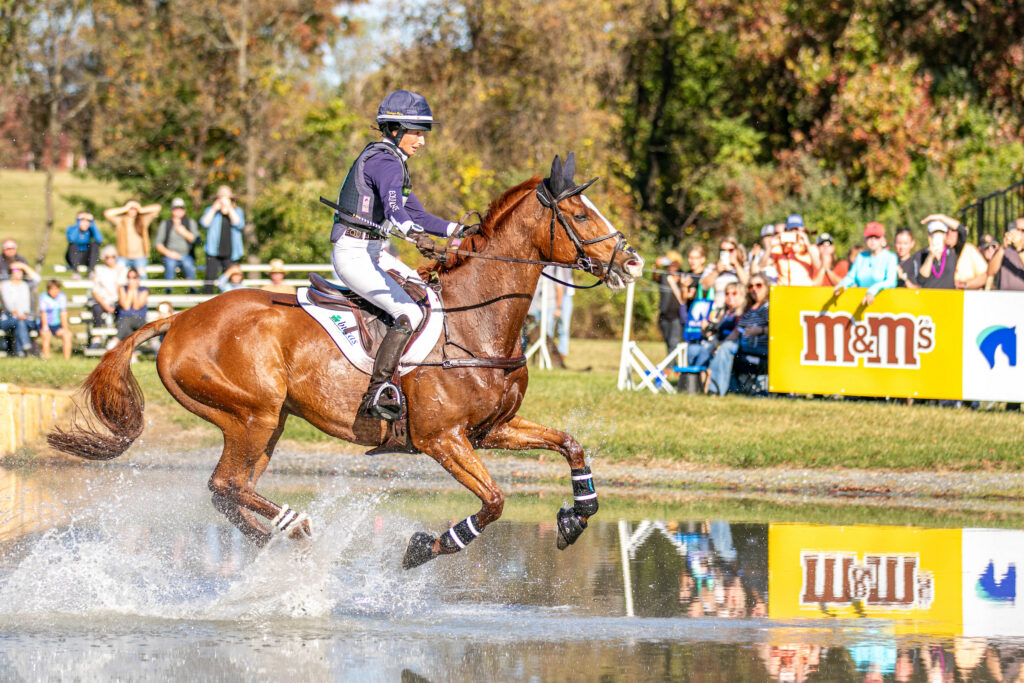
For horses who need it, we also use Polyglycan injections. But to promote my horses’ long-term joint health, I’m a big believer in keeping them moving. In addition to turnout, we also use a hot walker for low-impact movement. I also find it so important to give my horses plenty of warm-up time at the walk.
It’s easy to get into the habit of just getting on and going, but early in my career my coaches taught me that horses should always walk 15 minutes before trotting. It’s just a good way to give your horse a chance to loosen up, especially if he’s been locked up in a stall. If you lived in your bed most of the time and then were asked to do a hard workout, you’d probably want to warm up first.
PH: The adage “no hoof, no horse” couldn’t ring truer than in the sport of eventing. How do you support your horses’ hoof health?
JB: I’ve learned a lot more about hoof care recent years. Foxy was actually the first American horse to ever win “Best Shod” at Burghley. Having a good farrier is at the absolute top of my horse-care list. It’s not so much about the type of shoes you use; it’s more about finding a farrier who’s an expert at the balance of the trim.
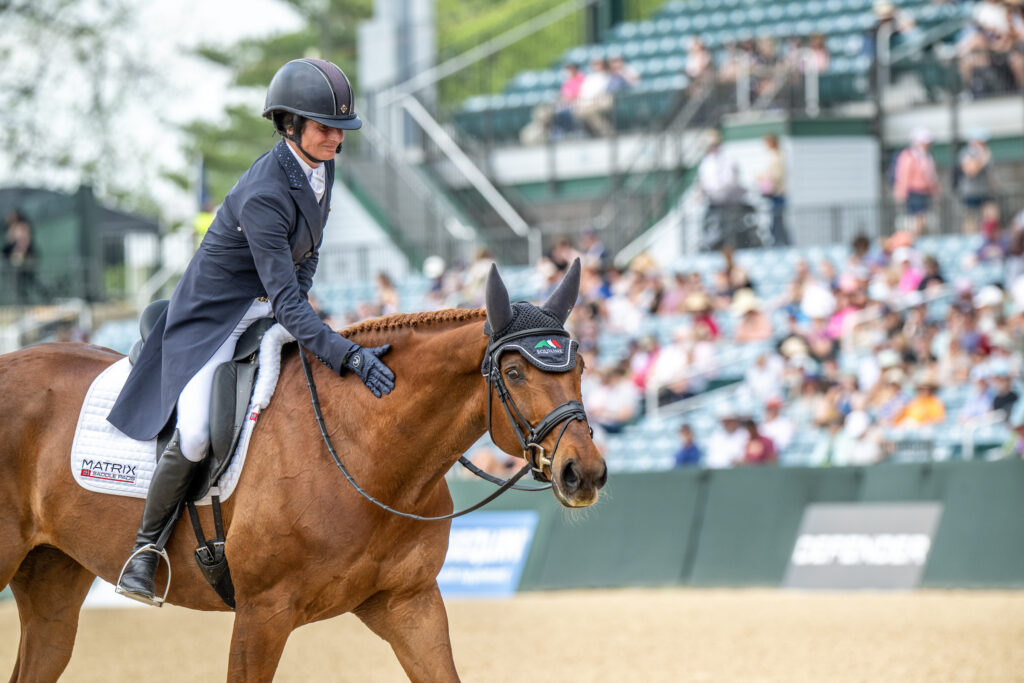
Comic had absolutely horrible Thoroughbred feet, so it’s pretty amazing what you can do with the right program and care. Good farrier work, however, also goes hand in hand with nutrition. My horses’ SmartPak combination supplement includes biotin, amino acids, copper and zinc to ensure they’re getting the key nutrients for hoof health.
PH: What other aspects of your training program contribute to your horses’ longevity?
JB: I believe in giving my horses plenty of time off between events. It’s crazy how much you can compete in the U.S. now; you can event every month except for December. Foxy is 16 and, knock wood, he’s never had an injury other than getting cut in a trailer. Every time you compete in eventing, especially at the upper levels, the horses get micro-tears in their tendons. If you gallop or do a jump lesson a few days later, you’re going to put them at much greater risk of injury, so I’ve found it’s so important to give those tears time to heal before competing again.
My horses aren’t machines. They’re my partners, and I’ve had them for years. So, I don’t compete with them at every event under the sun. I target the important competitions and give my horses a good break over the winter to allow them to fully heal. Then I slowly bring them back to peak performance. The Brits provide a great example of why taking these breaks is so important. Their weather makes it impossible to compete year-round but look at how well they do.
I also use heart monitor program and am in a study with the New Bolton Center at the University of Pennsylvania, so I have a huge amount of data from the past five or six years on what Foxy’s heart rates looks like and his elevation of gallop. This gives us a great basis on his fitness and where he needs to be going into a big event like Kentucky.
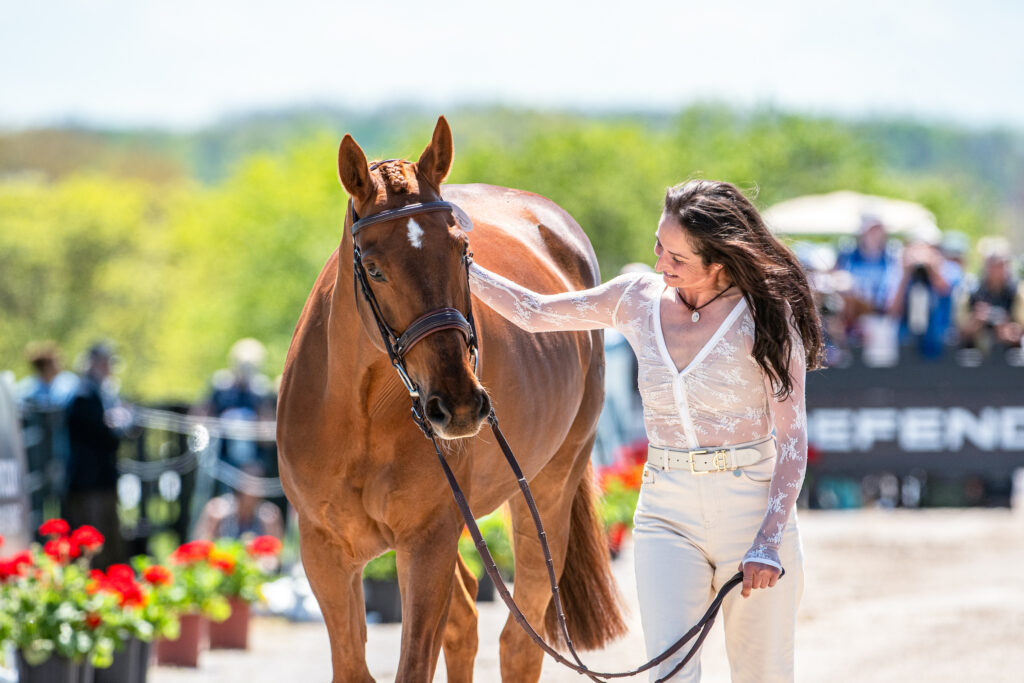
The better you know your horse, the longer they go and the less you have to do to prepare them. It’s a full circle: If you give them time to recover and keep them competing at few select events every year, you get a better base of fitness, and the longer and better they can do their jobs. To me, that’s just being a good horse person.
I’ve had most of my horses since they were 4 years old. Like a lot of my horses, Comic is a Thoroughbred and had a lot of physical limitations from the racetrack, so I’m so grateful he’s retired at 16 and is happy and sound in the field. That’s my goal as a horse person—not to just win a bunch of events.