


 Video
VideoThis is the next installment of Practical Horseman’s new series The Business of Horses, in which we talk to working professionals—trainers, riders and instructors—about how they run their operations. No two barns are built the same way, but the questions are: How do you structure your days? How do you price your services? How do you keep the lights on, horses and clients happy, and yourself in one piece?
This article features five-star eventer, popular clinician and U.S. Eventing Team selector Sinead Halpin Maynard, who runs her Copperline Equestrian with husband Tik Maynard in Citra, Florida. The couple also have two children, Violet, 4, and Brooks, 8.
Practical Horseman: To start, can you give us some background on your business?
Sinead Halpin Maynard: My husband and I have a farm in Central Florida called Copperline Equestrian, but to be fair, most of our business is done all over the place. We normally have between 15 and 20 horses here, but that’s getting smaller and smaller. We’re having more private horses and fewer horses in training.
We do a lot of clinics. That’s probably the majority of our income, and we do a couple of clinic tours, so we spend anywhere from 10 to 18 days on the road in the summer.
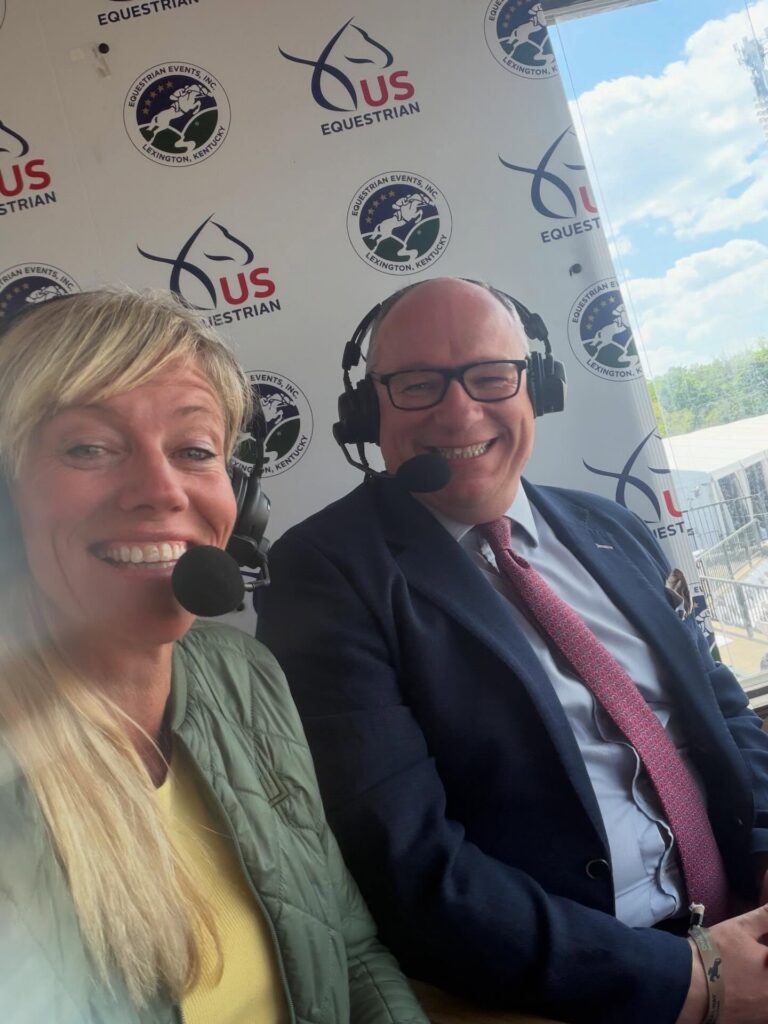
I also host the “In Stride” podcast, and I do commentary—some remote commentary and then live commentary at the Kentucky Three-Day Event, the U.S. Open at Morven, and the Maryland 5 Star, when that was going, and hopefully we’ll come back to it. I’m also a U.S. team selector, which doesn’t pay, but it’s definitely part of life. And I teach.
PH: How many weeks or weekends a year are you on the road?
SM: Right now, my husband is taking on most of the traveling; he’s gone almost two to three weekends a month. I manage the staff and the farm at home and fill in the gaps. I’d say I probably do around 30 days throughout the year. I have my staple few clinics in the summer and a staple few in the spring and fall that I go to, and he stays home.
PH: You’ve chosen to base your business in Florida year-round. Can you talk about that decision, and the ups and downs of it?
SM: We rented forever. I think that’s what a lot of people do, and that gives you freedom in some sense, but it doesn’t give you a lot of stability or the ability to build a business. We did the circuit back and forth, but when you do that, you’re kind of chasing your tail the whole time. We’d been in discussions for a while, right before we had kids, that we really needed to put down roots somewhere. Florida had always been the place we went in the winter, so that seemed like the place we knew. It’s also great because you don’t even really need an arena.
That’s another interesting thing about this business, which is really difficult: We’re so reliant on sponsors, owners, contributors or family members to get something going, and we weren’t in a position to have any of those things help us buy the farm. I had a wonderful gentleman I’d taught clinics to for a long time, and he was pretty adamant that we needed to buy a farm to have any type of financial security.
This is an interesting thing to note, because it’s something not a lot of people can figure out how to do: He ended up loaning us a significant amount for a down payment and gave us one interest-free year.
Then we had another married couple, clients of ours, who allowed us to do a balloon mortgage. They technically bought the farm, and we worked for five years to get it solely in our name. We did the deposit from our original client who lent us the money, and we paid the mortgage plus a little interest to the couple. We spent five years building enough credit and business to pay back the initial down payment and get the farm in our name.
That was a really big move, and it was kind of a scary one. It also meant putting some of our career goals aside to make it work. But I think it’s also what gives us the ability to do a lot of different things now in order to make a living.
PH: Tell us about the property. How big is it, and have you built out rings, a cross-country course, etcetera?
SM: We originally started with 20 acres, and it had kind of a shell of a barn, a small apartment and another nine-stall barn. We put staff in the apartment and rented our own house off the property for another two years. Since then, we’ve built out the barn, built an apartment where we live now over the barn, built a studio apartment in the other barn, and added another apartment in the maintenance shed. We also bought 10 more acres with a four-stall barn. So now, in total, we have 30 acres with three barns and five different accommodations.
That was also the evolution of the business. At one point we had 22 stalls and 30 horses in training, and it was ridiculous. Numbers-wise, you’re still hardly breaking even, and you’re running around like crazy. So a couple of years ago, we shifted to renting.
We now rent out a four-stall barn all year round, a two-bedroom apartment on the 10 acres year-round, and an eight-stall barn with a studio for the winter, which helps pay for the barn the rest of the year. That also allowed us to have less staff and get our numbers down, which helps with wear and tear on the property. If you’re taking care of 20 or 30 acres, depending on how many horses you have, you’re spending so much money on mowing, boards, everything is breaking.
We love having that much land, so we can hack out. The ground down here is really good even if it’s wet. We have three different round pens, and we put in a 200-by-200 arena. It’s our own sand; we didn’t add anything, we just leveled it and spent about $8,000 on irrigation, so it’s got really good irrigation, and it’s incredible to ride on. Then we have a big grass field with a little ditch and some other jumps out there.
PH: What are some of the biggest challenges to running an equestrian business in 2026?
SM: I think where there are challenges, there are opportunities. As long as you have a bit of a growth mindset, there is a lot of opportunity to be had. But I also see the challenge of rising costs. It’s so expensive to have horses, and when you put pen to paper, that’s why you see a lot of lesson barns closing and people not taking horses in training anymore. You cannot charge enough to make the transaction of your time worth it and still afford to take care of the horses the way you really want to.
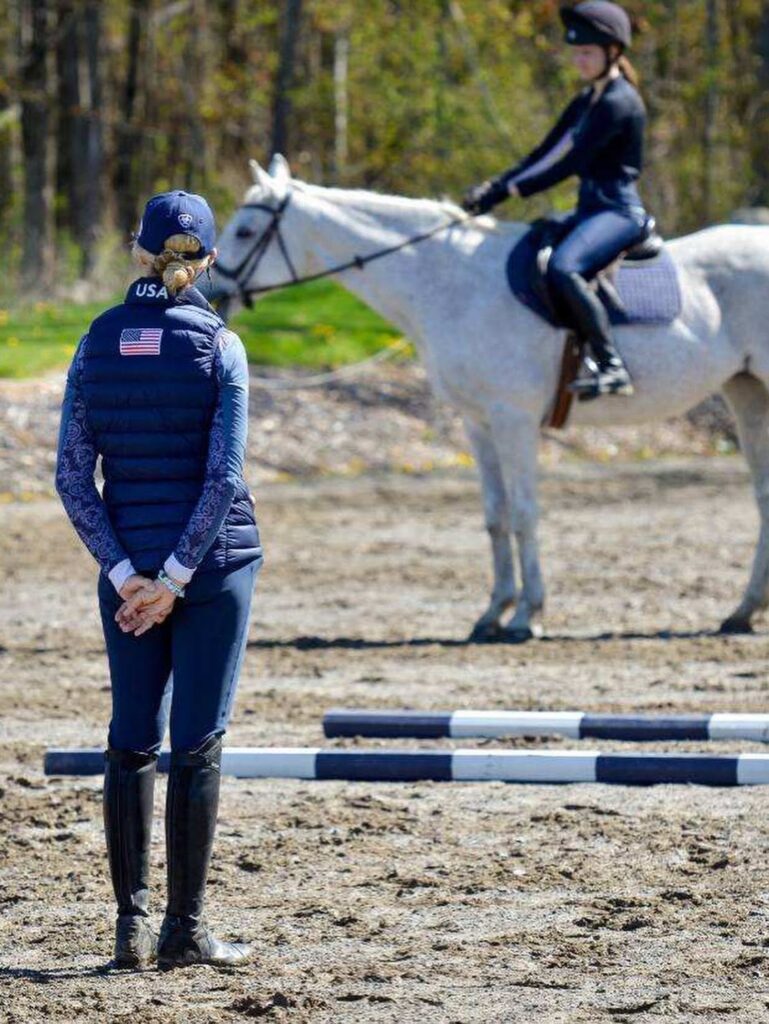
There’s been a lot of growth in virtual learning and clinician collaboration. There’s real opportunity there, in professionals working together and figuring out where their strengths lie. But the challenge is that it’s such a hard-working business that people are often working harder, not smarter. There’s still this underlying idea that if you’re not in the barn at 5 a.m. and up until midnight, you’re not trying hard enough.
I think there’s a problem on both sides. It’s really hard for horse trainers to make a living. But for people sending their horses into training, there’s also a kind of false narrative; they’re spending a ton of money, and the return or the care isn’t always what they’d want, because there’s a misunderstanding about what the costs actually are. Then it feels like a burden on everyone, and everyone gets burnt out and frustrated, and that’s not helpful either.
PH: How do you navigate that as a business?
SM: The more we’ve found our sweet spot, the more we’ve realized we really enjoy teaching clinics and getting education and knowledge out that way. I really enjoy the commentary and the podcast, getting information out in those ways, because training horses is so multifaceted. It has so much to do with the match between the person and the horse. It’s not always right, and if the rider or client isn’t involved all the way, the situation can look very different once the horse goes home.
So we’ve really said: We will teach clinics, and it will be an experience for you and your horse. The horses we do have here in training lean more toward ones we’d keep riding or have for a longer period—six months or so.
PH: You recently took a month-long trip to Greece with your family, which seems rare in the horse world. Can you talk about what led to that, what the experience was like, and how you made it work?
SM: When we decided to move to Florida, one of the things we knew we were giving up a little—and I hope this doesn’t sound bad—was culture. Tik is from Vancouver, and my parents immigrated from Ireland, so we traveled a lot as kids. We have kids now, and we work at the farm and live at the farm, and it was really important to me that when the kids were old enough, we’d work hard but also really take a break when we wanted one.
Last year we were driving 22 hours with our 3-year-old and 6-year-old at the time, from Florida to New York on our clinic tour, and I said, “We have a year from now until next year, and we’re going to take a month off.” My husband thought I was insane. He said he’d do it, but I would never actually take that time off.
So the challenge was on. We spent pretty much that whole trip picking a few things we were really interested in: culture, an ocean, and a house we could walk to everything from. It also needed to be somewhere big enough that we wouldn’t get bored in a week.
We stumbled on Crete, and I booked a house. We spent the whole year putting money aside—$100 from this, $10 from that lesson. We let all our staff and clients know, so everyone was prepared. We whittled down the number of horses for the month—July here is horrible anyway—and made sure our staff all got two weeks off before we left. And we went.
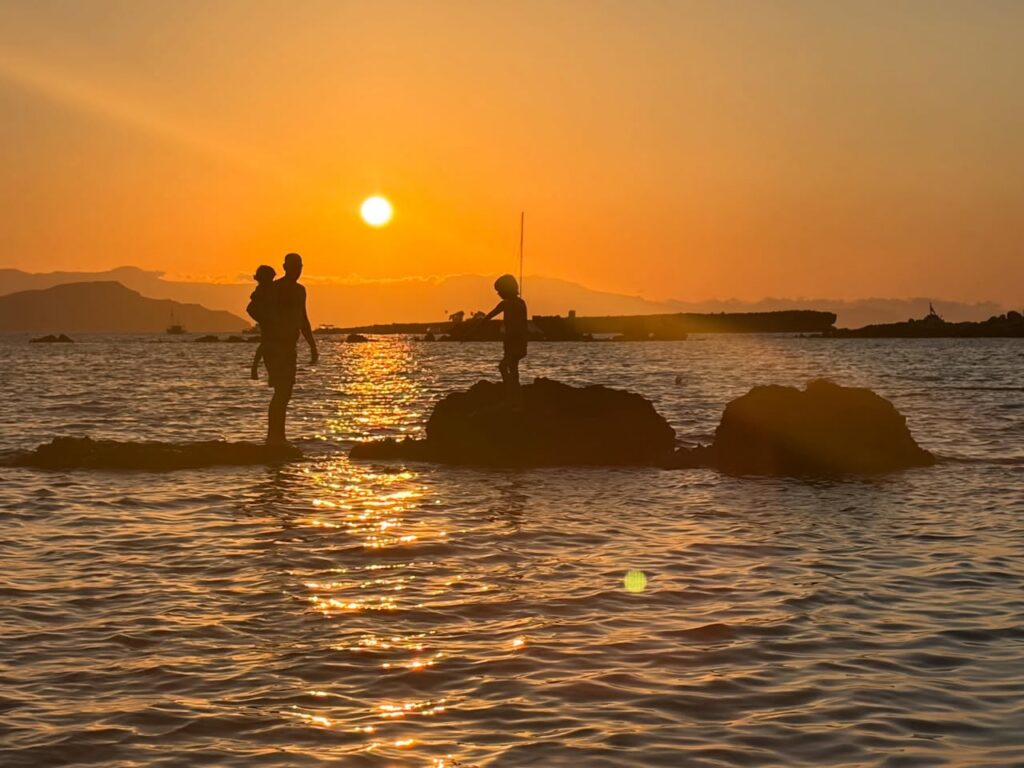
It’s so funny, because people ask how we possibly did it, and now when somebody says, “I don’t have time” or, “I don’t have the money,” I think: We didn’t have the time, and we didn’t have the money either. But we spent a year planning, and it was unbelievably worth it. It was incredible.
PH: Did you come back feeling like a new person?
SM: I came back with real perspective—that my days are important, my time is important, and that things need to be set up in a way that’s enjoyable. I’m 44, and I’ve been doing this my whole life, and even when I think I’m being laid back, I’m not. I don’t think I realized how much I was just hanging on.
It’s a wise man’s game, and you don’t get wise when you’re young, so it takes a while. At some point, you just take a breath and realize it’s not a race. It’s also not an industry where you’re suddenly going to become super wealthy; you’re going to be grinding, and it’s very hand to mouth. So you’d better take the time to enjoy it when you can. It’s a very lucky lifestyle, and I feel very fortunate to do it.
PH: Aside from that trip, how do you keep your passion for teaching and for the horses on a day-to-day basis?
SM: I really don’t struggle with that. I love it. I love learning and continued education. What’s helped me is doing a few different things instead of just one. Where I would struggle is if I were riding 10 horses a day like we did when we had 30 in training. I don’t know that you can do it well, riding that many. Doing a few different things and having a thumb on the pulse of the sport is really important to me. That’s why I enjoy the commentary and the team selection work. I’m getting to watch the sport all the time, see what the trends are, and that’s exciting.
PH: Rising costs seem to be affecting every part of the business and everyone. Can you talk about that?
SM: It’s so silly, but hay, mowing, gas and diesel for the Gators—it’s insane what we’re spending. You can’t avoid it. That’s what led us to get our numbers and staff down, so we could take care of the property, because that side of it is astronomical, and you don’t have much control over it. It’s also not an industry where you can just call clients and say, “We’re raising your board $500 this month.” They’ll take the horses elsewhere. So we just couldn’t rely on that side of it.
PH: What’s good about this time in the industry? What changes or technologies are helping your business?
SM: There’s so much good going on. There’s so much shared knowledge now through podcasts and online learning, and livestreaming is really taking off. People are watching, getting more involved, communicating. You can watch horse shows all day and see what’s happening in Germany, England, all over the world.
I think we’re also finally catching up on animal behavior and psychology—how horses learn and think—and people are becoming more accountable for how they interact with their horses. That’s really positive, even though there’s still huge room for growth there.
I also think having to move past the idea of just being “a horse trainer at a barn with 57 horses” is causing people to dig deep and figure out where they want to spend their time, what they’re good at. There are so many ways to be involved in the horse industry.
A huge area of opportunity is good young-horse trainers. In Europe, being a producer of young horses is a prestigious job, and I don’t think we have enough of that here. There’s a real struggle for breeders, who can’t afford to send horses to top professionals, and a lot of good horses get missed because they’re not produced or started well. So I think people getting creative about how they carve out a lifestyle with horses is a real opportunity.
PH: What would help your business the most right now?
SM: For us personally, I think collaboration is huge. Tik and I have worked hard to create this foundation. We’ve spent a lot of time staying current in the industry with our skill set and knowledge.
Two things would help: One is some type of collaboration with a company or a bigger sponsor—a reciprocal relationship where that person or business could help us with things on the property. I’d love to put in a cross-country course built around educating young horses and training young people. We have some wonderful facilities here [in Florida], almost like show facilities—they’re beautiful, with beautiful jumps—but they’re not always built for the training side. Pairing with an organization that aligns with our values, where there could be some back-and-forth, would be huge for us, because I think we have a lot of reach, but sometimes our ability to act on what we’d like to do is financially limited.
The other thing that would be huge for me is finding a sponsor—corporate or individual—for competition horses. I personally need two more. Everything I have to offer the horse community comes from my experience with competition, training and education, and that’s a real need I have right now. I have a couple of nice young horses, but staying relevant matters. There are people with very strong opinions, and unfortunately their opinions don’t get listened to because they’re a little out of touch with what’s going on.
PH: Can you say more about why competition matters to you as a clinician and trainer?
SM: I find competition very valuable, for a lot of reasons. Competition is feedback that what you’re doing is on the right track, that it’s on par. We work with a lot of different types of professionals—people in the Western world, people in the liberty world, cowboys starting horses.
I do find that people who don’t have some type of competitive outlet tend to end up in a bit of an echo chamber, surrounded by people who have already bought into them, so the messaging that gets sent back can be very unilateral. It’s not growing as much. When I see people who, even if they teach horsemanship clinics for a living, also compete in dressage or eventing on the side, they’re getting real-time feedback.
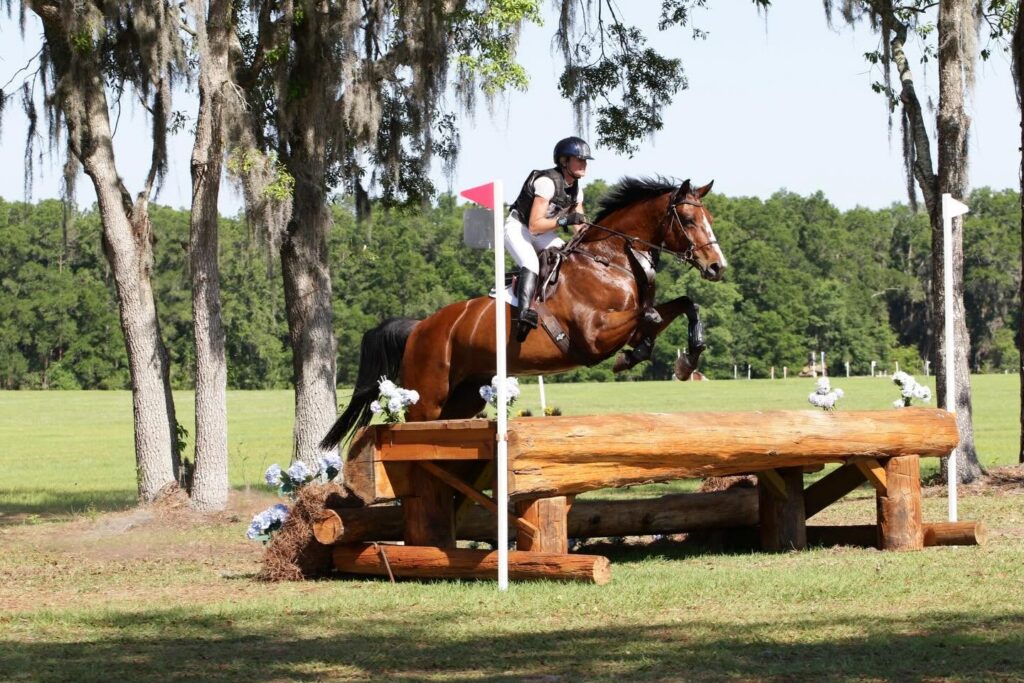
That’s a huge driving factor in how I teach. What I’m learning on my horses is what I’m teaching. What I’m experiencing at the horse shows is what I’m messaging about. What I’m seeing go wrong in the warm-up ring is what’s important to model—and then try to push people in the other direction from the bad stuff.
We’re all awesome at home; everyone online can do it perfectly. Especially if you compete, you feel like you really have it, and then you go to the horse show and you’re like, “I do not have it. I need to go back to work.”
PH: Is there one piece of advice you’d give someone starting out in this industry right now?
SM: I’d really spend some time writing down your values and principles. We do that a lot internally, between Tik, me and our team, so you can speak to it quickly, and it can keep you in check with what you’re doing.
I’d explore different avenues and see what really makes you different—what excites you. Is it young horses? Competition? Flat work? Jumping? Try to become as knowledgeable as you can in that avenue, because that will help you become an expert in some small nuance of it. That’s really important.
And there’s so much information out there. If you’re going to be in the horse industry, you can’t get enough information about how horses learn. It changes the horses’ lives, it changes trainers’ lives, it changes the lives of the people you teach. The whole experience becomes way less emotional and way more interesting.
PH: What could you personally not live without?
SM: Continued education—I love learning and taking lessons. I show jump, and I probably have two or three lessons a week myself. I love reading, too. I love any bit of knowledge I can get, to a fault, probably.
PH: Anything we haven’t touched on that you think is important to mention about running a business now, or responsible business leadership?
SM: You don’t have to be an expert at everything, but you can find people who are. We have an accountant, a bookkeeper—people who help with the stuff we’re not experts at.
Really knowing what your costs are is huge, because it takes the emotion out of it. It’s very easy to acquire horses and think, well, it was free—but there’s no such thing as a free horse. Then you can’t figure out why you’re working so hard and still can’t pay your mortgage. It’s because you own four horses that are “free,” out in the field.
So get really in touch with the numbers, as painful as that can be. If it’s something you’re uncomfortable with, hire somebody to help you with it, especially if you’re looking to work with professionals from other industries. If someone thought I was handling my own numbers, they probably wouldn’t send their horses to me. But when I say I have a bookkeeper and an accountant, and I ride the horses, that’s different. You shouldn’t be expected to be an expert in every single thing in the world.